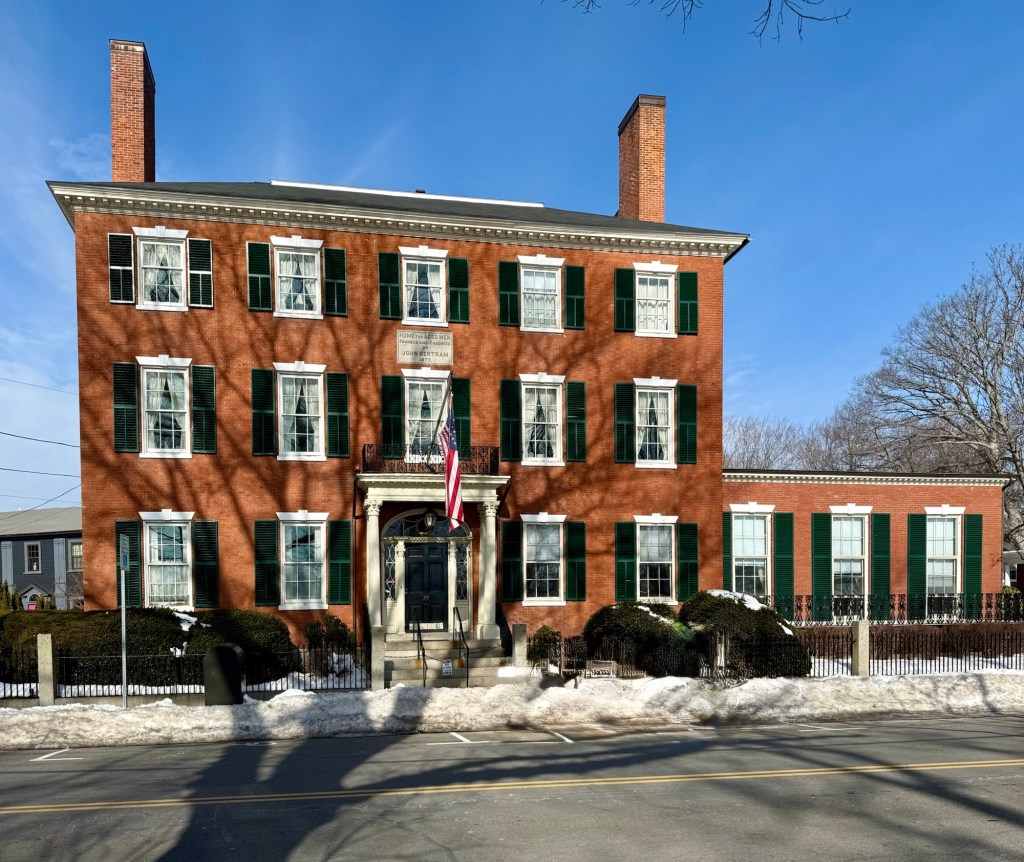
Overlooking the Salem Common, this 1818 Federal style dwelling has served as everything from a single-family home to a boarding house and ultimately an assisted living facility, showcasing that old buildings can always be repurposed into new uses. The home was built for Captain John Forrester, son of Simon Forrester, one of Salem’s most successful merchants. The Forrester House was purchased in the 1830s by George Peabody, who added the one-story ballroom wing. Peabody lived in the house until 1892 and the building later housed the Salem Club, a men’s social organization with over two-hundred well-connected members. In the 1920s, it became the Bertram Home for Aged Men, named after Captain John Bertram, who founded the organization in 1877 as a charitable residence providing housing and socialization space for aged men in Salem. The home had fallen into disrepair when it was closed in 1988, to reopen two years later as the first free-standing assisted living community for men and women in Massachusetts, today known as the Bertram House.
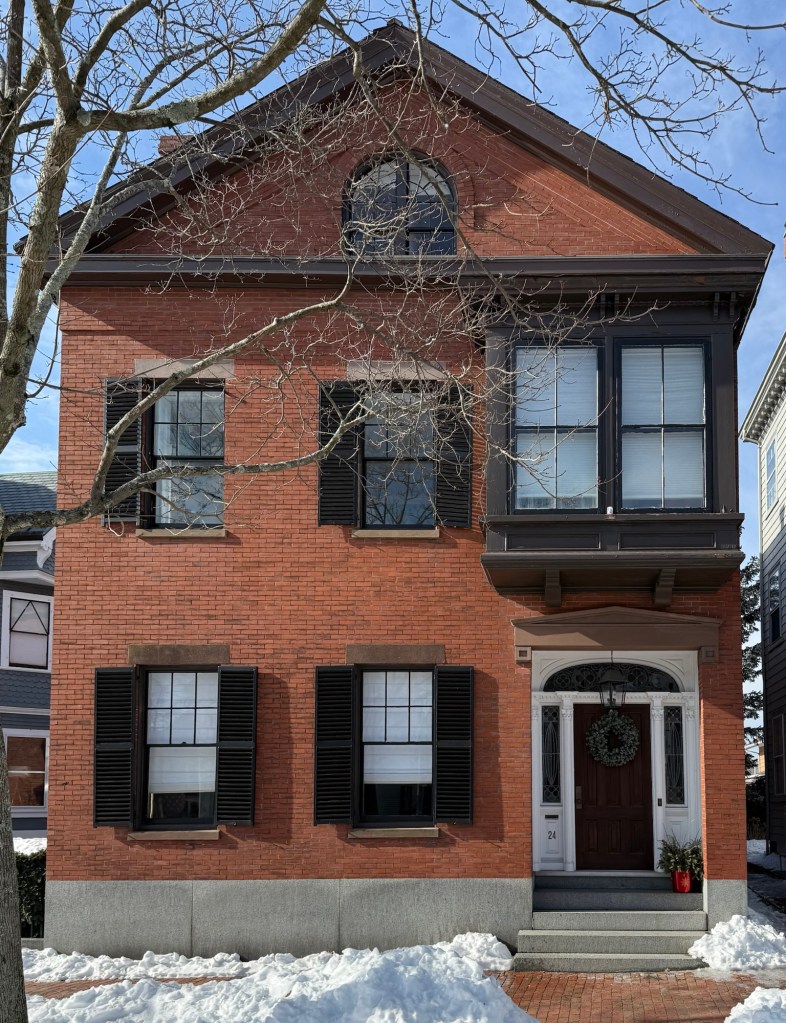
This lovely brick house on Winter Street in Salem was constructed for Capt. John Bertram in 1842-3. John Bertram (1795-1882) as a boy had his first job as a cabin boy and would work his way up to become a commander, ship owner and investor. He was extensively involved in shipping around the world including to Zanzibar, South America, and California and later he invested in railroads and real estate. He retired from actively commanding boats at age thirty-six with a vast fortune which he would become a philanthropist, giving much of it to charitable causes and his home city of Salem. Captain Bertram continued to own this property until 1855, when he moved to his new house on Essex Street, which he later gifted to the City of Salem as its public library. By the time of his death in 1882, he donated funds to the Salem Hospital, Old Men’s Home, Home for Aged Women, and various colleges and scholarships. Bertram sold this Winter Street house to John Jewett in 1855 for $10,000. Jewett began his career as a cabinet maker in Beverly in 1817 and subsequently became a dealer in mahogany, fancy woods, furniture and grain. Jewett died in 1874 and the property was sold by his heirs to Henry Appleton Hale in 1890. Engaged in the hardware business, Hale also served as president of the Salem Gas Light Company and as a vice president of the Salem Five Cents Savings Bank. Mr. Hale also served the country during the Civil War, and was shot in the face at Antietam on September 17, 1862. The bullet knocked out his front teeth and sliced off a piece of his tongue. Despite the severity of his wound, he recovered and returned to the regiment months later, and mustered out in 1865 following another injury. Henry A. Hale died in 1927. The property is significant not only for its owners, but also for its architectural quality and integrity. The transitional Federal-Greek Revival house features a recessed entry with original leaded sidelight and transom windows, brownstone trimmings, and alterations (likely by Hale) from the second half of the 19th century, including the projecting bay and arched window in the gable.
 Buildings of New England