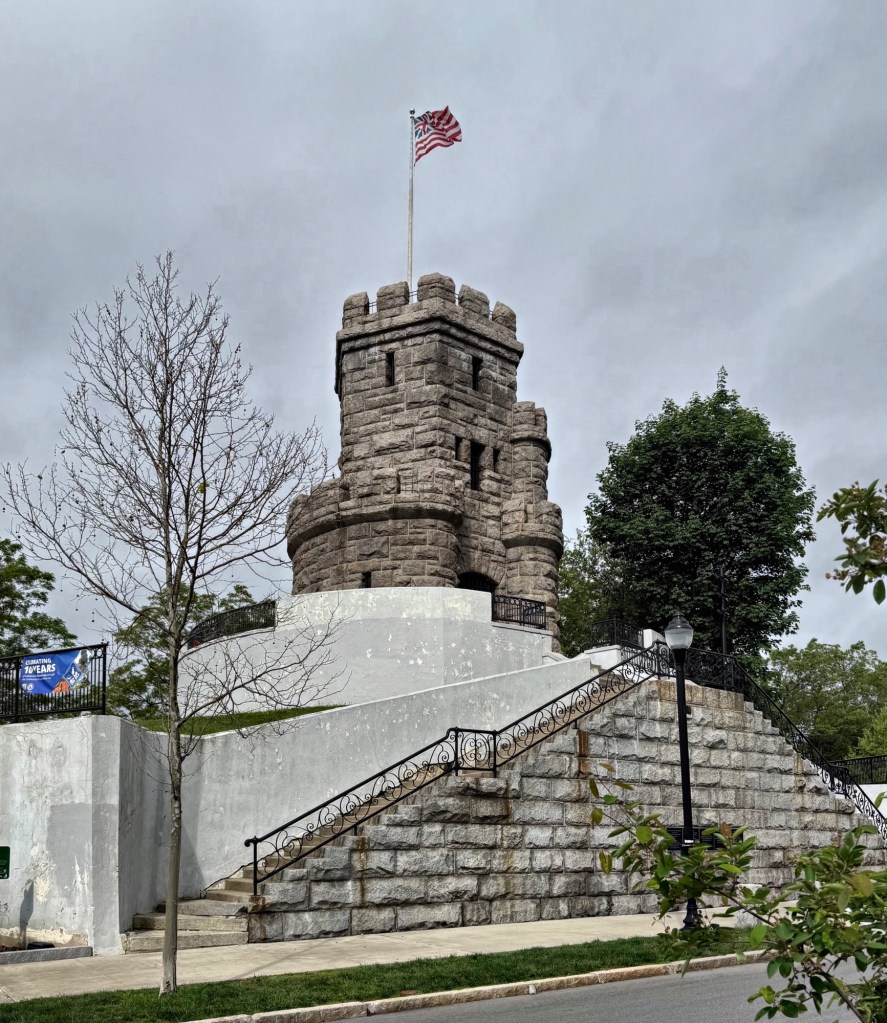
Prospect Hill Tower // 1903

Originally part of the town of Charlestown, Massachusetts, Prospect Hill is now located in the nearby town of Somerville, established in 1842. As one of the hills closest to the city of Boston, the hill played a pivotal role in the line of defensive works constructed after the Battle of Bunker Hill. The area developed slowly, with old farms around Prospect Hill, largely subdivided in the late 19th century for residential development. Around this time, in 1886, the Prospect Hill Park Association was formed, and in 1898, land here was purchased for a public park. The focal point of the iconic neighborhood park is the stone castle structure at the top. Completed in 1903 to commemorate soldiers of the Revolutionary and Civil wars, the rusticated granite tower was designed by Ernest W. Bailey, the City Engineer of Somerville, who also worked to landscape the surrounding park. The granite blocks were shipped in from Deer Isle, Maine. By the 1960s, the structure began to suffer from deferred maintenance. The City of Somerville added the concrete retaining walls to shore up the landscape, which worked for some time. Decades later in the early 2000s, the structure was at risk of further deterioration. Through Community Preservation Act funds, the tower and surrounding landscape were restored and made safer, making this important memorial accessible and enhanced for all to enjoy. 

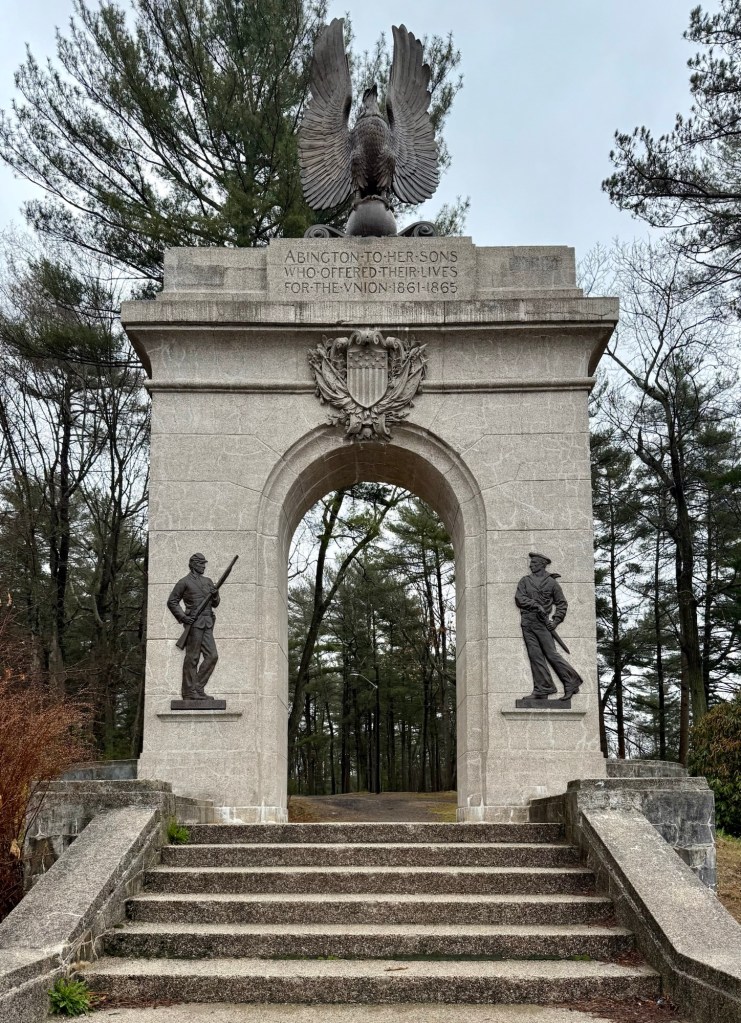
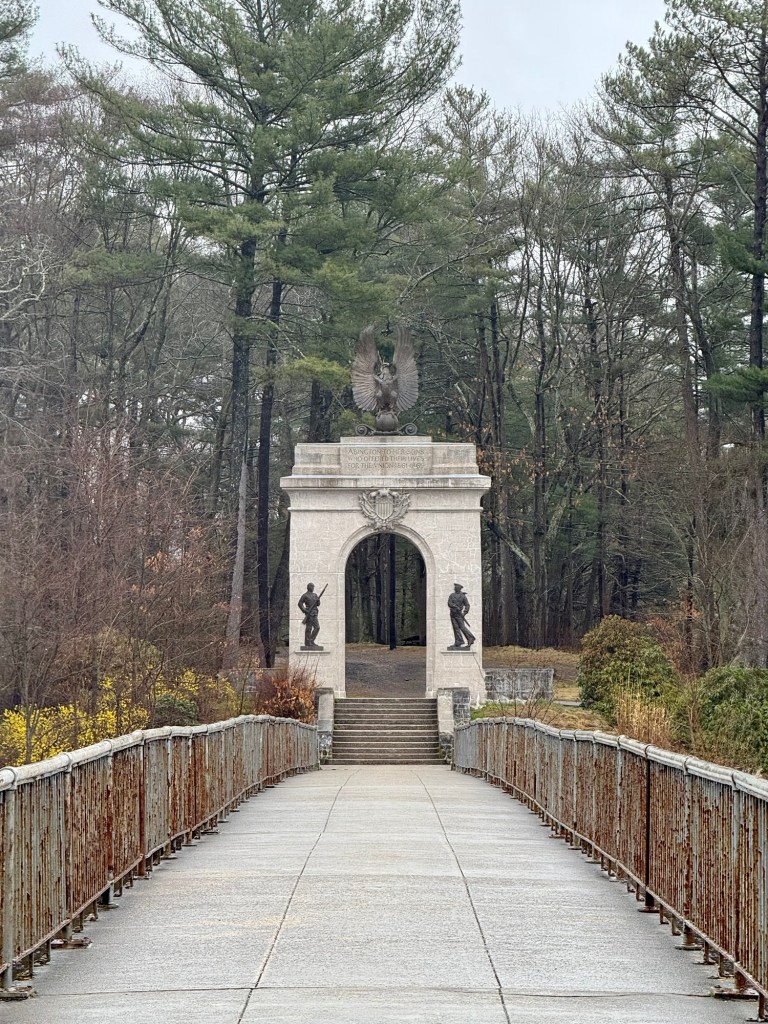
Island Grove Park Memorial Arch // 1912

The Abington Memorial Arch and Bridge at Island Grove Park was dedicated on June 10, 1912 as part of the town’s bicentennial observances. The Grove had been a popular meeting place for the Massachusetts Anti-slavery Society, with William Lloyd Garrison, Wendell Phillips, Abby Kelley Foster, and Lucy Stone among the many prominent reformers who spoke there. Abington resident and Civil War veteran, Capt. Moses Arnold, donated a large marker in 1909 to commemorate the abolitionist meetings at Island Grove, this act led the local GAR Post to begin planning a Civil War Memorial Bridge and Arch for the community. The 17-acre park is comprised of a peninsula jutting into Island Grove Pond, a 35-acre body of water which was created by impounding the Shumatuscacant River in c. 1700 for industry. The area has a significant history, first as an industrial site, then as an amusement park, before it became the wooded park it is now. The Memorial Arch and Bridge serves as the main entrance to the park, and was designed collectively by architect, J. Williams Beal, landscape architects, the Olmsted Brothers, and sculptor, Bela Pratt. The municipal park is a beloved local landmark and host to many events.

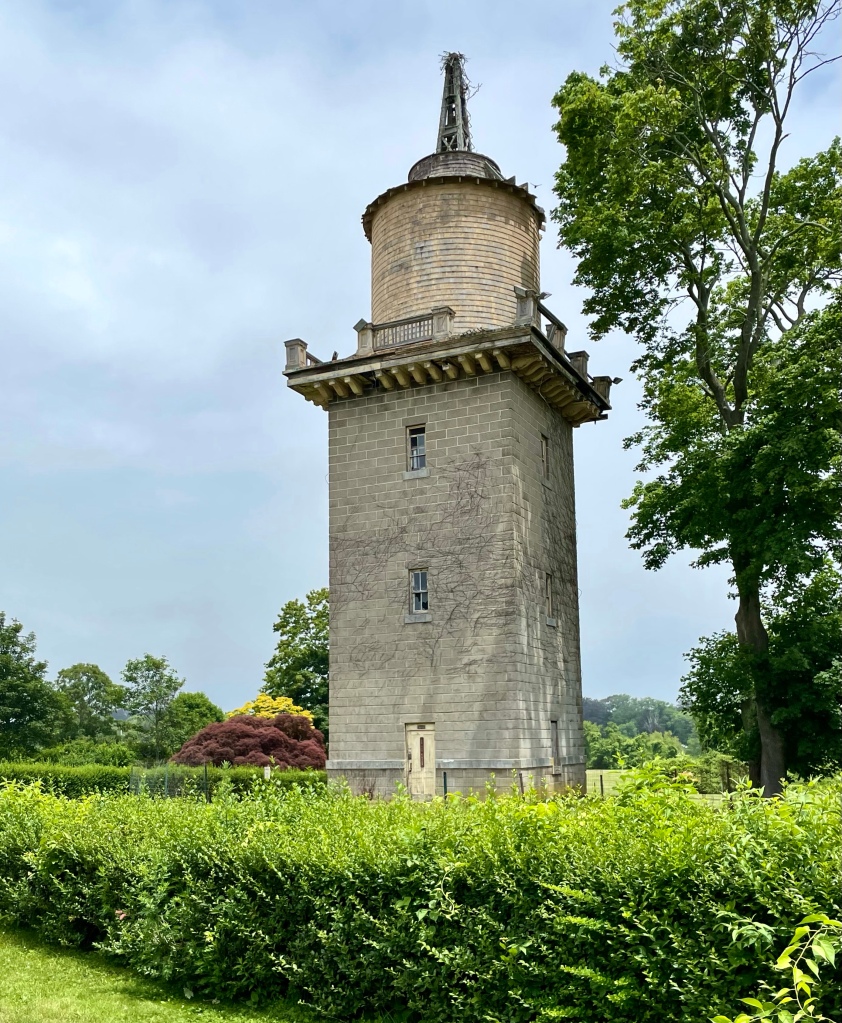
Harkness Estate – Water Tower // 1910

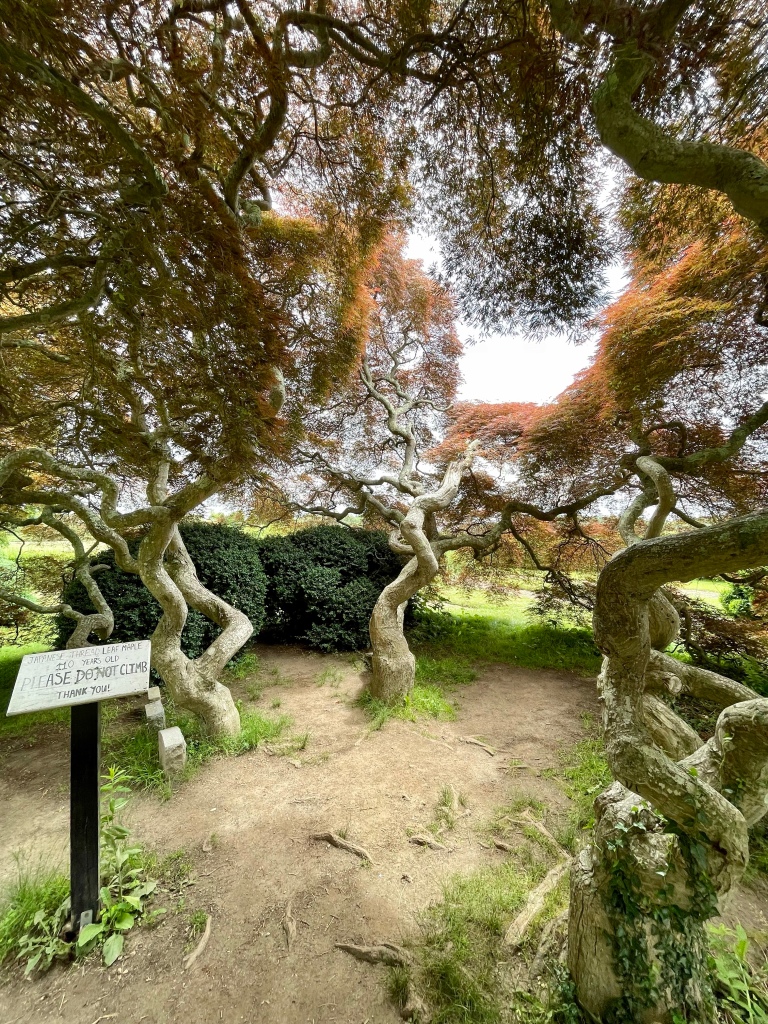
One of the most unique buildings on the grounds of the Harkness Estate has to be the most functional, the 1910 water tower. The structure was designed by architect James Gamble Rogers, a really under-appreciated architect who was commissioned by Edward and Mary Harkness to revamp their summer compound. The water tower features a skeletal frame with concrete block tower protecting it, surmounted by a shingled water tank which once had a functioning wind mill on it! Nearby the water tower, a garden designed by female landscape architect Beatrix Farrand frames the tower very well. In that garden sits a 110+ year old Japanese Thread Leaf Maple tree, which is probably the most beautiful tree I have ever seen.

Juniper Hill Cemetery Gate Lodge and Chapel // 1869 & 1913

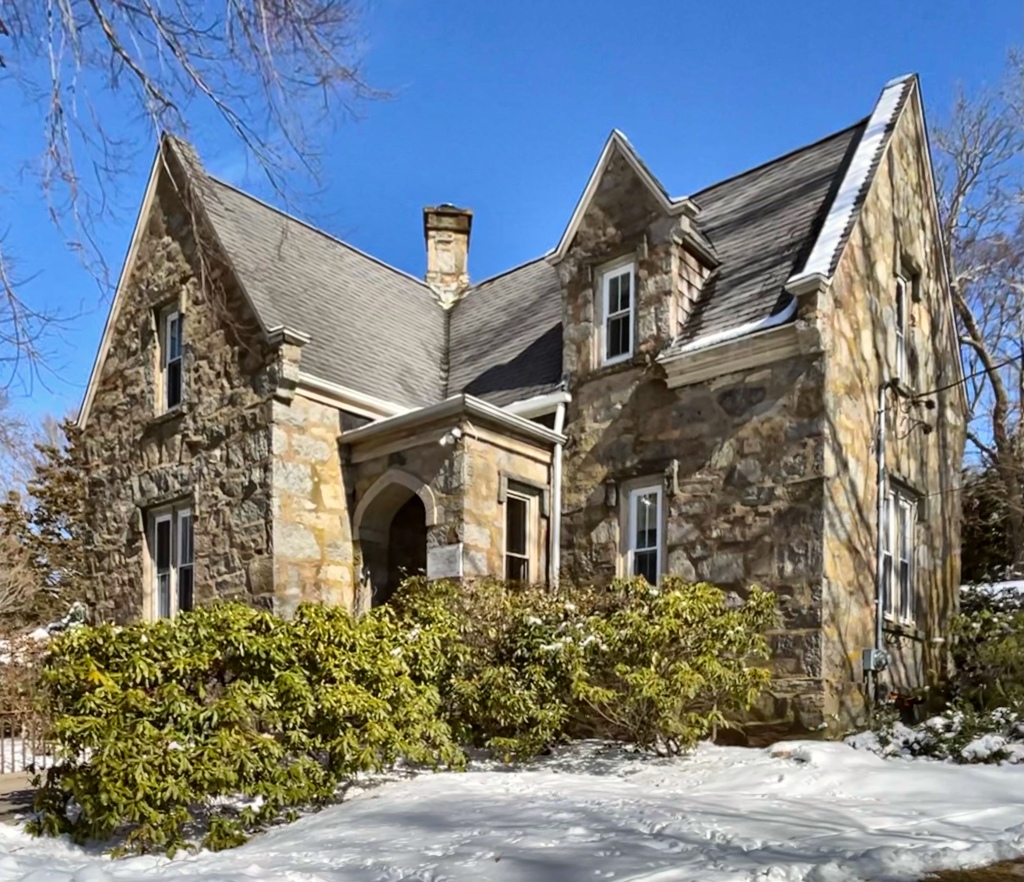
As Bristol grew to be a dominant financial center in Rhode Island in the mid 19th century, prominent families there decided that their loved ones (and later themselves) needed a place of beauty to rest eternally. In 1855, descendants of Levi DeWolf, of the infamous slave-trading family, donated 22-acres of land for use as a cemetery. The old Levi DeWolf home remains fronting Hope Street, featured previously as the Reynolds-DeWolf House. It is a fine example of the mid-19th century rural cemetery movement, with winding lanes and paths. The landscape was designed by Niles Bierragaard Schubarth, who had done similar work at other Rhode Island cemeteries. Upon the opening of Juniper Hill, many families relocated their loved ones from other cemeteries in town here, so the families could be interred nearby each-other. The cemetery has three main structures; a gateway, the gate lodge, and a chapel/receiving tomb. The gate is a massive stone archway set at the entry to the cemetery, and was built in 1876 by the Smith Granite Company of Westerly, R.I. The Gate Lodge was built years earlier is located at the side of the entry into the grounds, and is a stone Victorian Gothic Revival building, designed by Providence architect Clifton A. Hall and constructed of granite quarried on the site during construction of the landscape. Yards away, the charming Amory Chapel and Receiving Tomb, built in 1913, is a 1-story stuccoed structure with a tile roof, designed by the firm of Angell & Swift of Providence. The small chapel stands out as it is a rare example of the Spanish Revival style, but has seen better days, and is apparently being used as a tool shed.