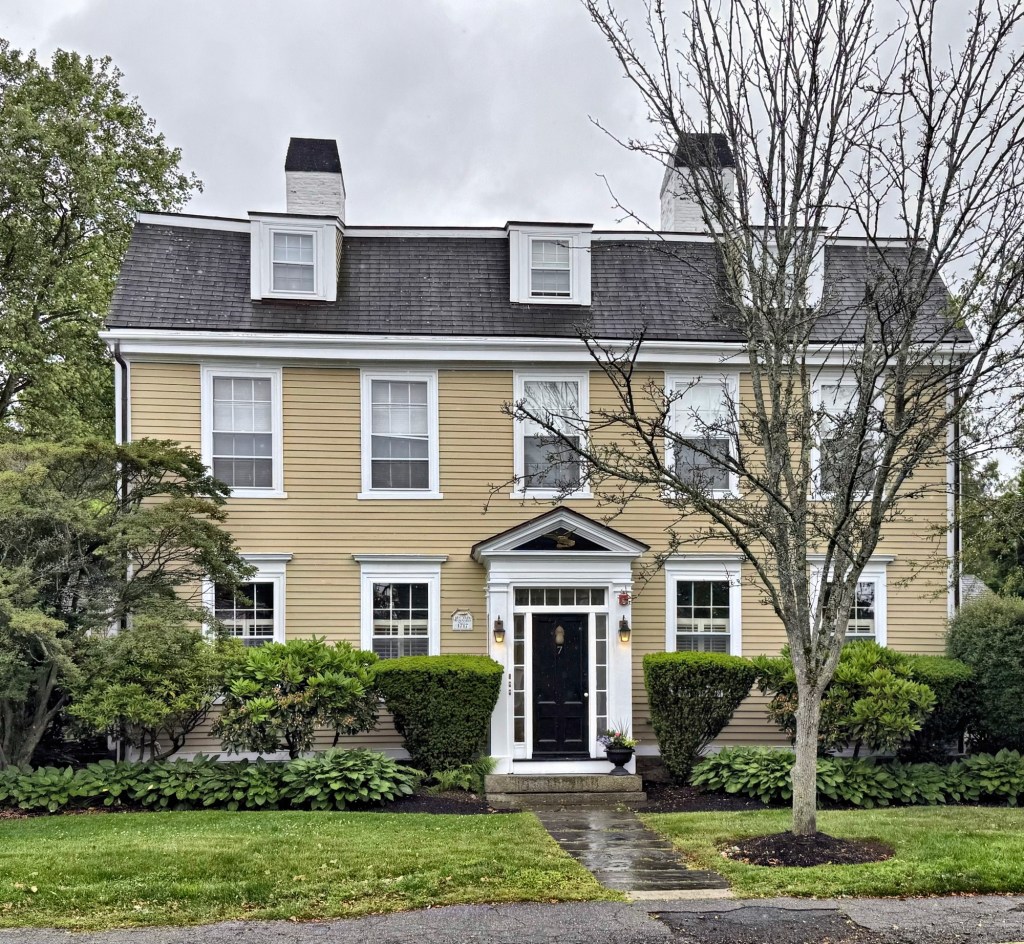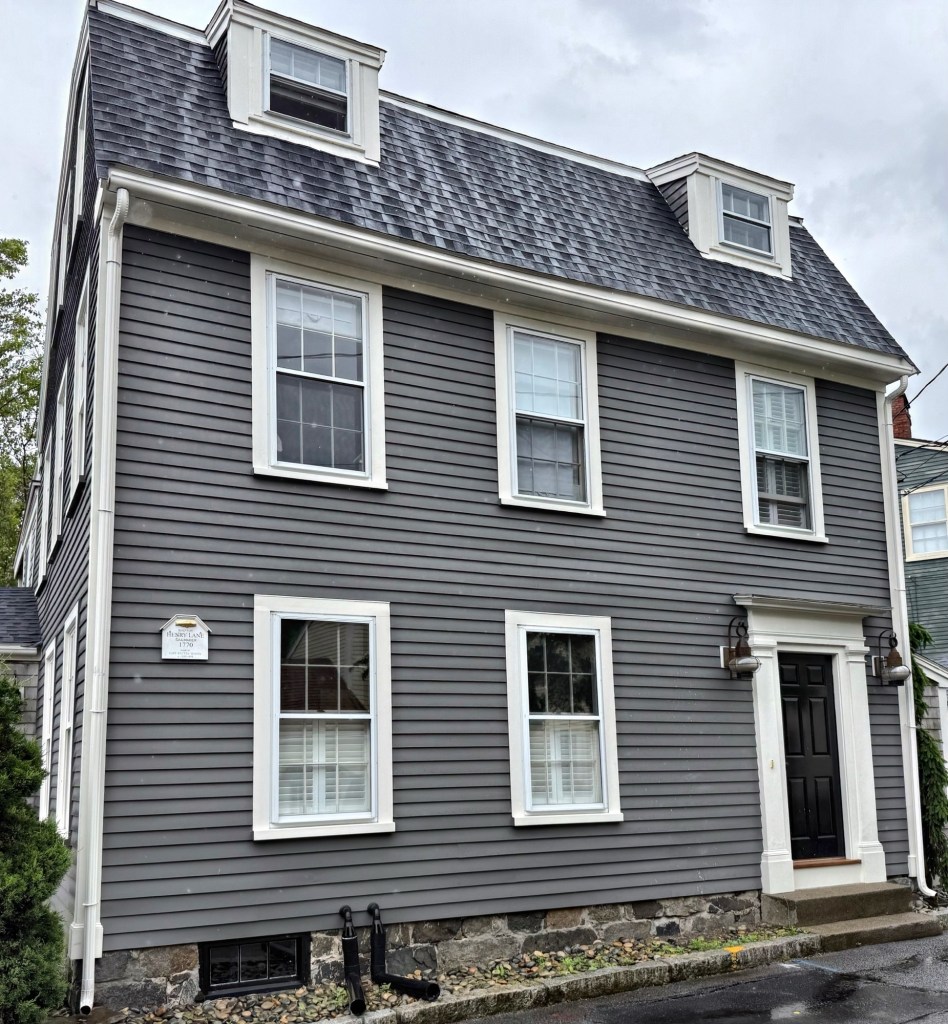
Captain Knott Martin House // 1770

This gambrel-roofed Georgian house on Franklin Street in Marblehead was built before the American Revolution for Mr. Henry Lane, a sailmaker, but is best-known as being the home to Captain Knott V. Martin. Knott Martin (1820-1898) was born in town as was descendants from early settlers of Marblehead, and after attending local schools, became a shoemaker beginning at the age of just thirteen. After over a decade as a shoemaker, he began a butchershop and had a slaughterhouse to the rear of his property. When the Civil War broke out, Captain Knott was among the first to reach Faneuil Hall to begin duty. A Boston Globe article from 1918 detailed his finding out of the war, “Late in the afternoon of April 15, 1861, Lieut. Col. Hinks of the 8th Mass. Regiment rode into Marblehead to notify the Commanders to be ready to take the first train, the following morning to answer President Lincoln’s call for troops… I found Captain Martin in his slaughter house, with the carcass of a hog, just killed. On communication to the Captain my orders, I advised him to immediately cause the bells of the town to be rung, and to get all the recruits he could. Taking his coat from a peg… with his arms stained with blood and his shirt sleeves but half rolled down, he exclaimed, ‘Damn the hog!” In a battle at New Bern he was wounded by a spent cannonball and lost eight inches from the main bone of his right leg, becoming permanently disabled. Following his discharge from the War he was elected a member of the Massachusetts House of Representatives serving in that capacity during 1866 and 1867.  He was then appointed Messenger to the House of Representatives for two more years. In May 1869 he was appointed Postmaster in Marblehead, a position he held until he retired on May 16, 1885. Knott Vickery Martin died at his home in 1898, but it has been lovingly preserved ever-since.
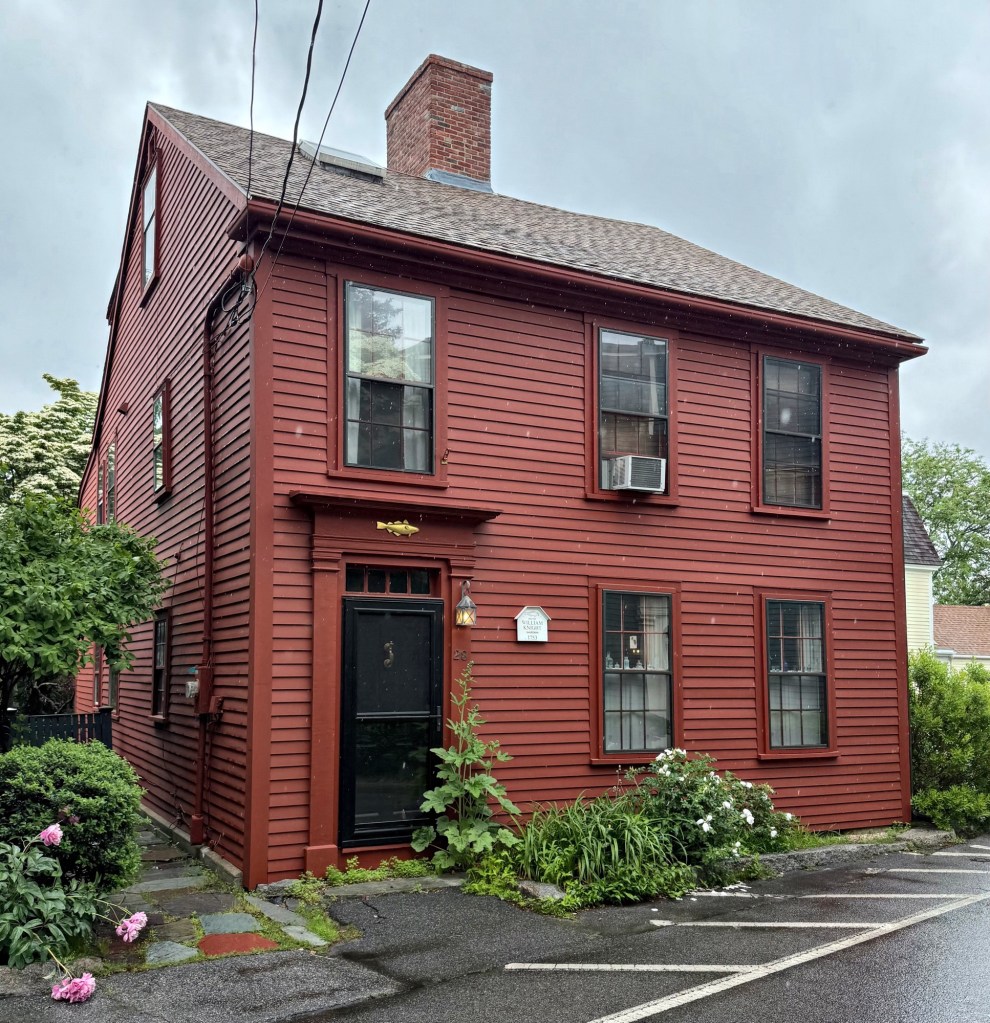
Knight-Tutt House // c.1750

The Knight-Tutt House on Franklin Street in downtown Marblehead, Massachusetts, is a great example of a pre-Revolutionary Georgian home built for the working class. The house, like its neighbor, has a three-bay, side-hall facade with a large, central chimney. The residence was built around 1750 for William Knight (1722-1799), who worked as a shoreman, loading and unloading the many ships that docked in Marblehead harbor. By 1850, the house was jointly owned by an F. Bateman and William Russell Tutt, a shoemaker. The residence remains one of a large number of well-preserved Colonial homes in the town of Marblehead, a testament to preservation planning and its effect on streetscapes and vibrant communities.

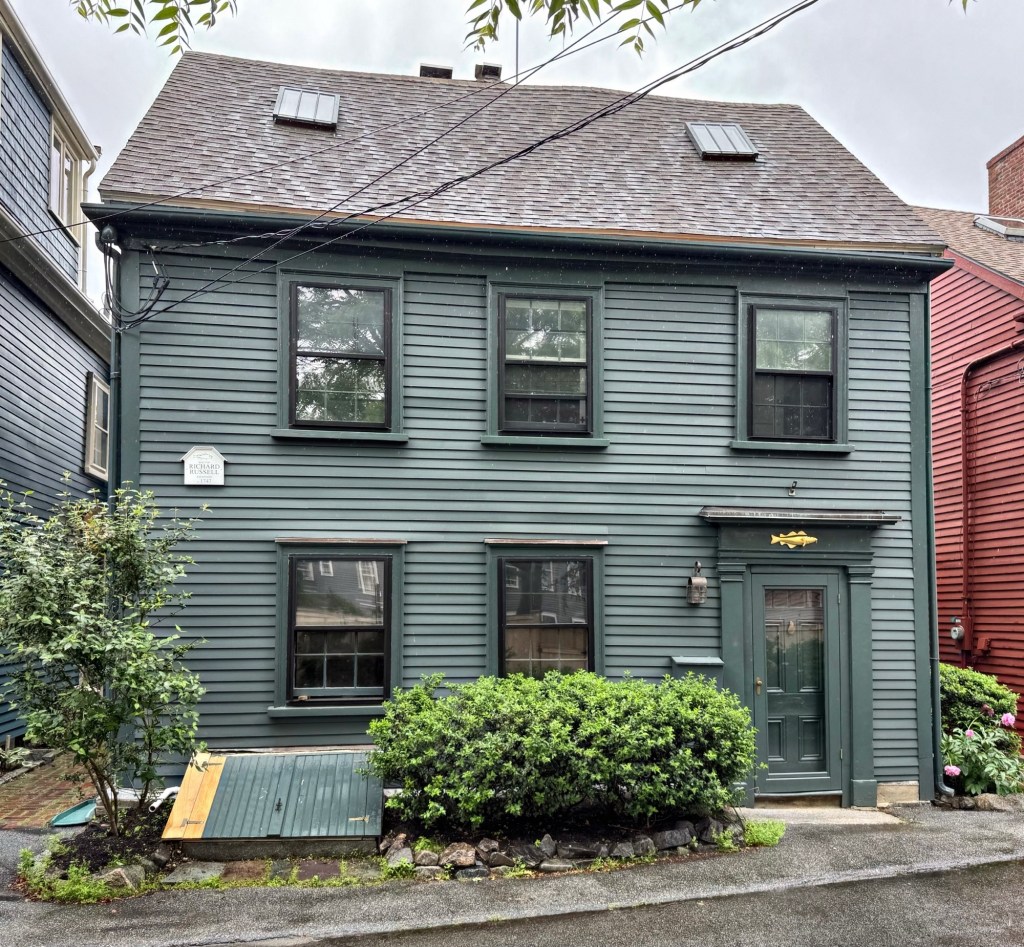
Russell-Goodwin House // c.1750

Marblehead is one of the oldest towns in America, first settled by colonists in 1629 and incorporated twenty years later. For the following decades, the coastal community grew, and was even one of the ten largest towns and cities in the colonies in 1790! From this history, the town has worked to preserve the unique character and walkable warren of narrow streets, that makes the town feel so charming and a great place to visit. There are dozens of pre-Revolution houses in Marblehead’s downtown area, including this side-hall Georgian house on Franklin Street, with a neighboring “sister house”. The residence dates to about 1750 and was occupied early on by Richard Russell, who according to the house plaque, was a fisherman. Later, in 1850, the house was occupied by John Goodwin Jr., who fought in the Civil War, and ultimately lost his life in the Battle of Roanoke Island, on February 8, 1862, when he was killed when he was struck in the chest by a cannonball. After his death, local Marblehead veterans established the G.A.R. Hall, John Goodwin Jr. Post 82 in his honor. The Russell-Goodwin House remains one of the many charming Colonial-era houses in Marblehead’s walkable village, telling a story of the generations of families who made this coastal community home.

Reverend John Barnard House // 1717

John Barnard (1681-1770) was born in Boston, Massachusetts, and received his degrees from Harvard in 1700 and 1703, reading theology under Cotton Mather. After graduating, he was appointed one of the five chaplains for the expedition against Port-Royal, a French-colonized settlement in present-day Nova Scotia. After time in Barbados and England, Barnard was ordained by the Marblehead Congregational church on in July 1716, and served that church for the rest of his life. Upon arriving to Marblehead, he had this Georgian residence built on Franklin Street, completed by 1717. The house is said to be one of the first Georgian facades in the town, showcasing Reverend Barnard’s standing in the community and knowledge of English Georgian residences across the ocean. The early Georgian house exhibits a gambrel roof, nearly symmetrical facade with center hall plan, and high ceilings inside for its time. The house was converted into condominiums in 1988 and has retained its historic appearance, at least at the exterior, ever since.

Trevett House // c.1715

One of my favorite houses in Marblehead, Massachusetts is the Trevett House on Washington Street, a perfectly preserved stretch of Colonial-era homes that transports you to centuries past. The Trevett House was built around 1715 by merchant Samuel Russell, a wealthy merchant and slaveholder in town, who had this house built as a gift for his sister Elizabeth Trevett and her husband Captain Benjamin Trevett. The house passed to their son Russell Trevett and then on to his son Captain Samuel Trevett. Captain Trevett (1751-1832) was born in this house and is best known for leading the Marblehead artillery company to Boston, fighting at the Battle of Bunker Hill in 1775. At the battle, Captain Samuel Trevett was the only artillery officer that day to make a pretty good account of himself. He disobeyed Col. Gridley’s orders to remain off the Charlestown Peninsula and fire at the navy from the relative safety of Cobble Hill. He survived the battle and the war and died at his family home in 1832. The Marblehead Arts Association bought the house in 1928, and the amazing paneled interiors were featured in publications on early Colonial architecture, and documented as part of the Historic American Buildings Survey.