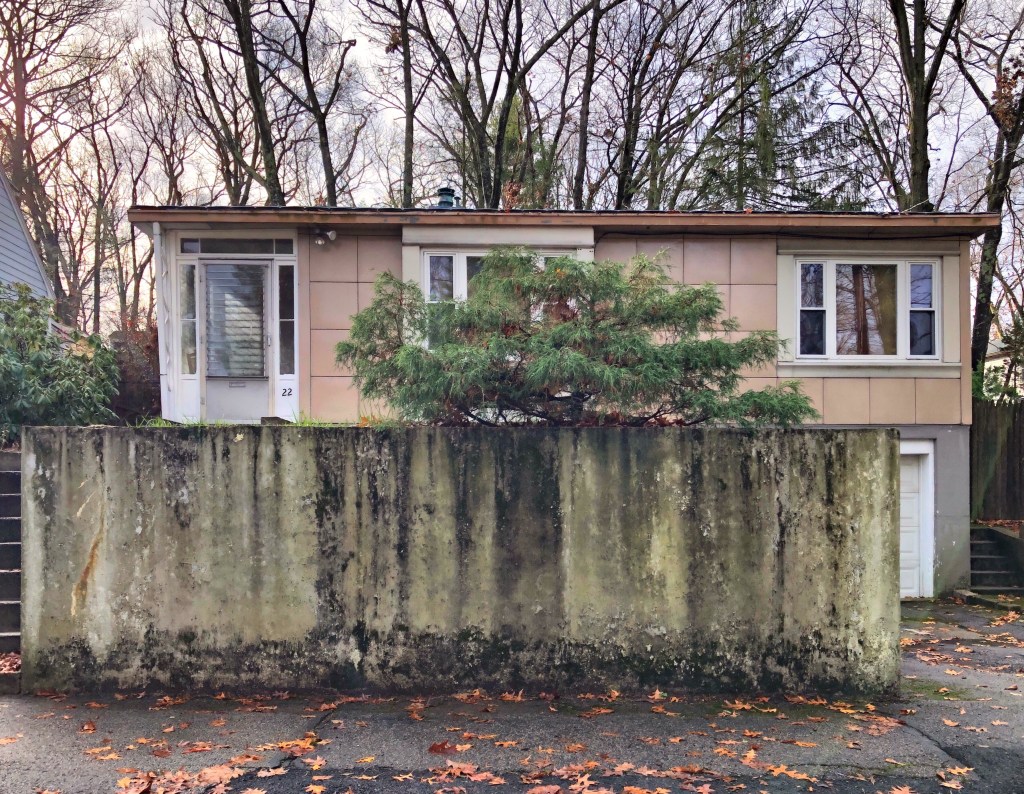
Jennings House // 1949

Tucked away on an un-assuming side street in South Brookline, you will find this oddly fascinating home. Without architectural history knowledge, you may think it is just a normal 1940s house, but it’s actually a Lustron House! Between 1948 and 1950, the Lustron Corp. built prefabricated metal homes across the U.S. as part of an effort to combat the housing shortage for returning soldiers post–World War II. Despite these futuristic homes being considered low-maintenance and highly durable, only about 2,500 were constructed, as the structures were seen as too costly and complex to manufacture and assemble. The homes came in just three models and came in four available colors: “Surf Blue,” “Dove Gray,” “Maize Yellow,” and “Desert Tan”. The home is covered in porcelain enamel metal panels set into a steel frame which can be replaced when damaged. At the interior, the homes had metal-paneled interior walls with mostly pocket-doors for space saving. This home in Brookline was built for Edmond and Helen Jennings, in the Westchester model in the Desert Tan color. The only major alteration is the enclosure of the porch, but it retains a high degree of integrity from when it was assembled in 1949.

What do you think of this iconic 1940s home and style?
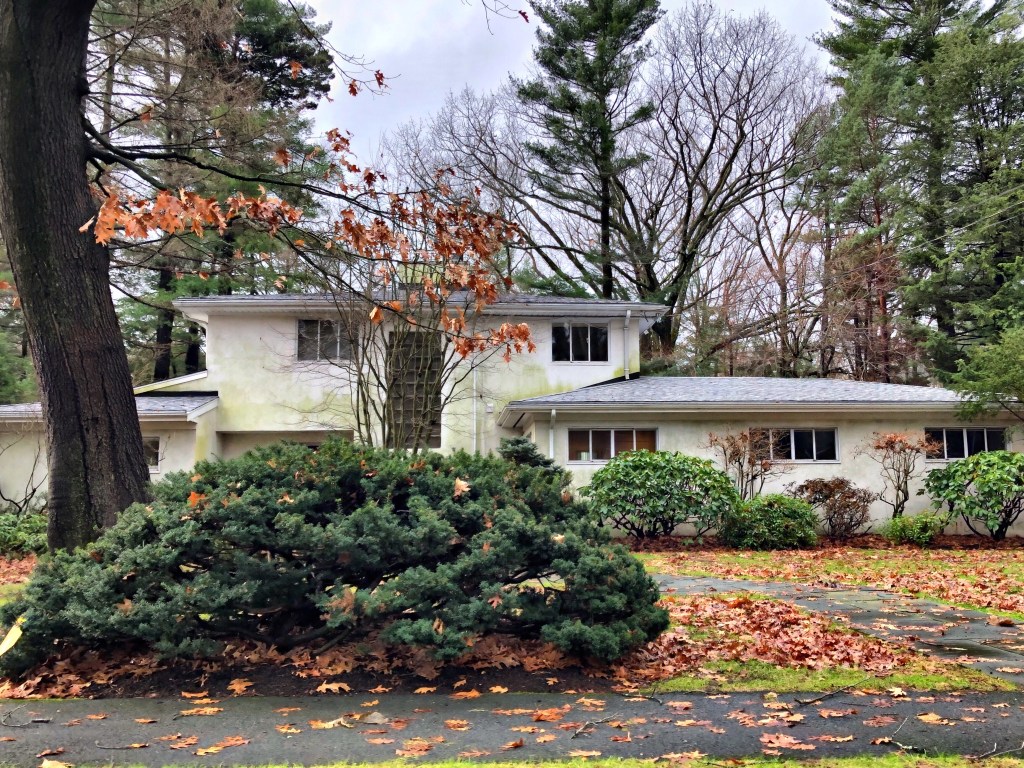
Melnick House // 1935

Built in 1935 (the same year as the Webber House in the last post), the Melnick House in South Brookline shows how the historically oriented designs of colonial New England converged with the Modern principles brought over from the Bauhaus movement from Germany. The 1930s were an interesting time for residential design around Boston as the two diverging styles were often located in the same neighborhoods. The Melnick House was designed by architect Samuel Glaser for Edward S. T. Melnick and his wife, Ethyle Melnick. Edward worked in Downtown Boston as the assistant division manager at Filene’s department store. Architect Samuel Glaser (1902-1983) was born in Riga, Latvia and at the age of four came to the United States with his family, settling in Brookline. He studied architecture at MIT and started his own practice in Boston a niche as a designer of moderately priced homes, particularly in the expanding suburbs where young Jewish families had begun living. The Melnick home combines the austere stucco walls and lack of applied ornament typical of late 1930s Modern architecture in the Boston area with a hipped-roof main block and flanking wings more commonly associated with traditional style houses of the same period. The home features a vertical glass block window which illuminates the interior stair hall.