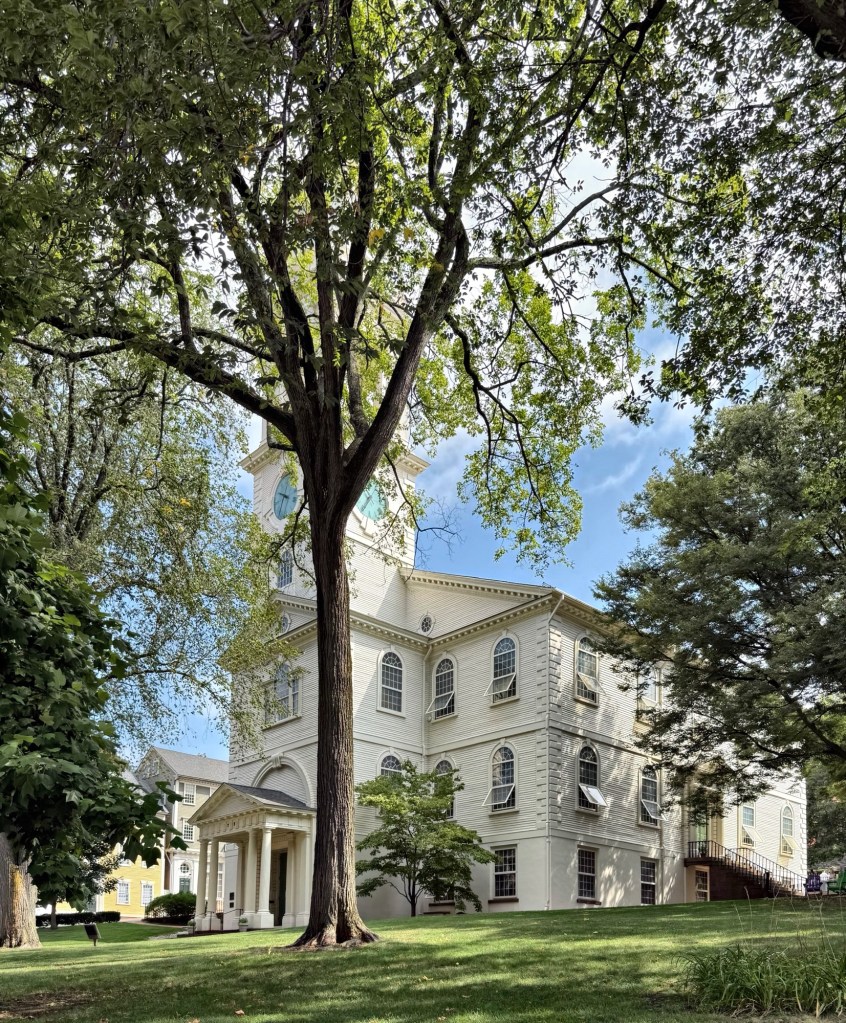
First Baptist Church, Providence // 1774

The First Baptist Church of Providence, also known as the First Baptist Church in America is the oldest Baptist church in the United States. The Church was founded in 1638 by Roger Williams, who before building this church in 1774, often met in private residences or in more plain meetinghouses to not show vanity. By the early 1770s, a new building for Providence Baptists was needed, and it was conceived in a very large (and ornate) way. Built to accommodate over 1,200 people (just under a third of the entire population of Providence at that time), this church was built “for the publick Worship of Almighty God; and also for holding Commencement”, referring to the commencement ceremonies of Rhode Island College (later Brown University), also founded under Baptist auspices. The church was designed by local amateur architect, Joseph Brown, who was likely inspired by Sir Christopher Wren’s London churches in James Gibbs’s Book of Architecture (1728). The construction was greatly aided by the fact that the British had closed the port of Boston as punishment for the Boston Tea Party. Many shipwrights and carpenters were thrown out of work and came to Providence to build the meetinghouse there. The structure was dedicated in May 1775, and the 185-foot steeple was added shortly thereafter. This was the first Baptist meetinghouse in New England to have a steeple, and it has survived dozens of hurricanes and hundreds of years of change since. The church is a National Historic Landmark and remains as one of the most significant buildings in New England.
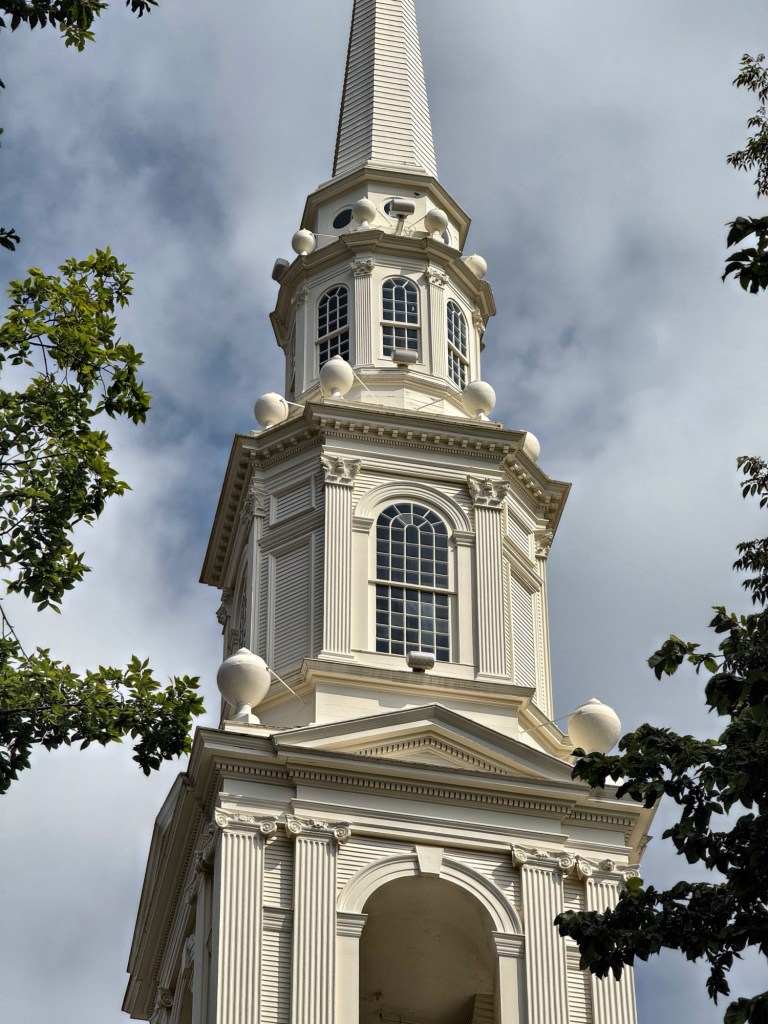
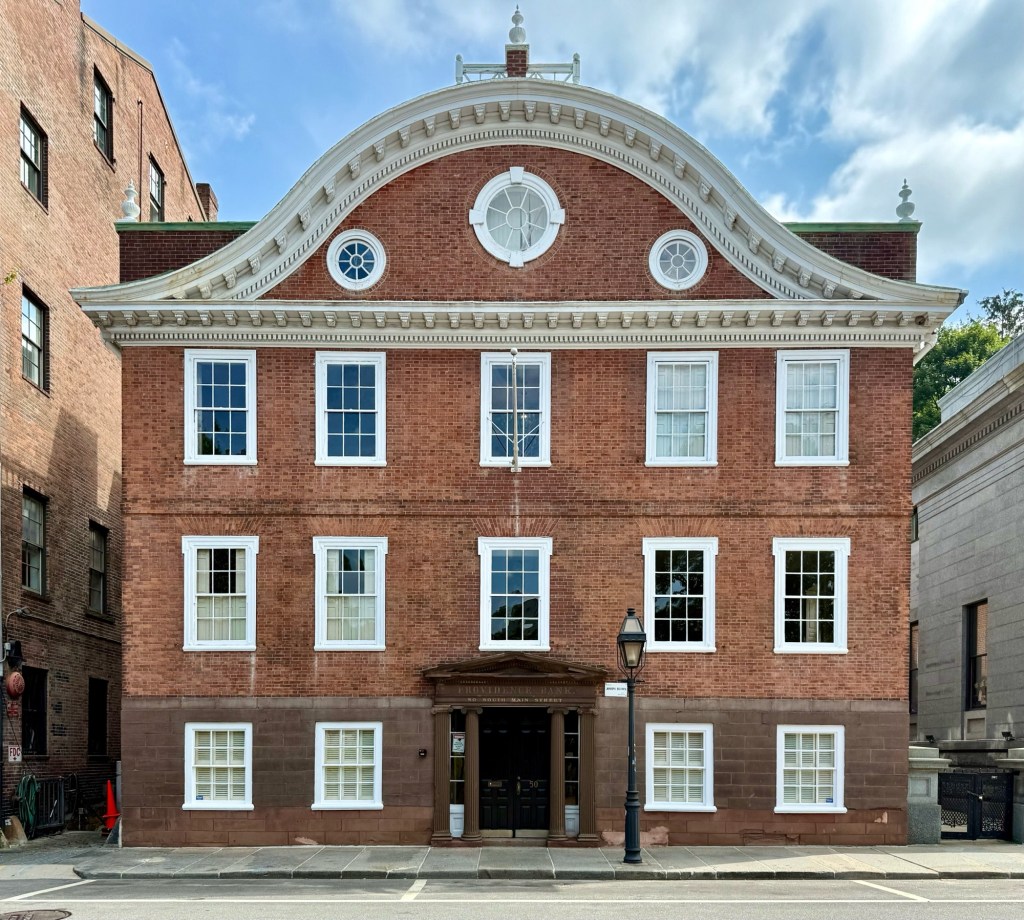
Joseph Brown House // 1774

Constructed in 1774 by architect Joseph Brown (1733-1785) of the Brown family of Rhode Island as his personal residence, the John Brown House of Providence, stands as one of the oldest (if not the oldest) house built by an American architect for his own use. Joseph Brown, while a member of the Brown Family, was not as much in the shipping business as others in his family, instead turning his attention to scientific matters, becoming an expert in astronomy, electrification, and architecture. He was an architect in the Thomas Jefferson-gentleman mode, owning English architectural books from which he selected motifs for inclusion in his designs. It is believed that the eccentric curved ogee gable that caps the façade was adapted from the roof design of a garden house published in William Salman’s Palladio Londinensis, owned by Joseph Brown’s builder, Martin Seamans. The same ogee gable was later replicated in the Colonial Revival period in Providence. The residence’s entrance was originally raised above ground and accessed via symmetrical flights of stairs; in the late 18th century, the entrance was moved to street level in the brownstone basement level. Over a decade after Joseph’s death in 1785, the structure was acquired by the Providence Bank, an enterprise founded by Brown’s brothers John and Moses, and used as an office. The bank occupied the structure until 1929, and the Joseph Brown House was subsequently owned by the Counting House Corporation, and still appears to be owned by descendants of the Brown Family.

Owen Building // 1866

The Owen Building sits on the edge of Downtown Providence, near the Providence River which divides College Hill from Downtown. This mansard roofed commercial building is one of the finest in the city and was designed by architect Alfred Stone for George and Smith Owen (G. & S. Owen), whose sons operated a wholesale yarn business on the premises. In 1877 Stone, as Stone & Carpenter, returned to remodel the building, seemingly adding the mansard roof and much decorative trim on the new north facade. The building retains its cast-iron storefront and prominent siting as a lasting example of 19th century architectural heritage.