Danvers Town Hall // 1854

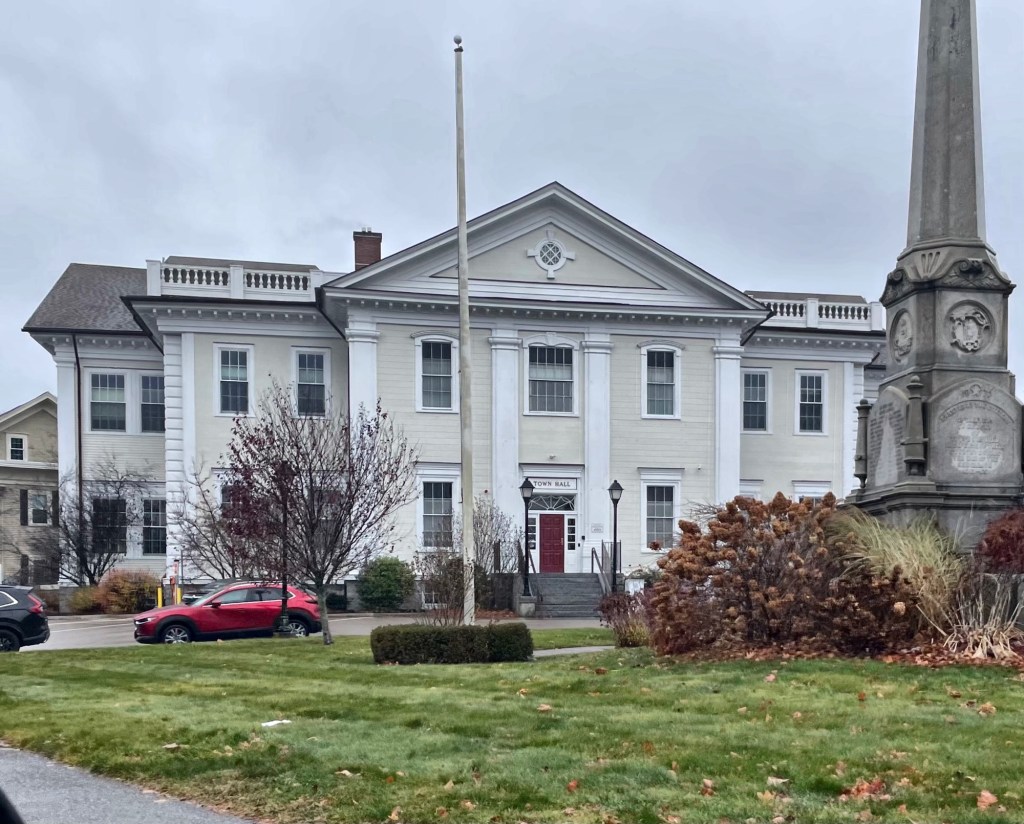
The land that is now Danvers, Massachusetts, was once owned by the Naumkeag branch of the Massachusett tribe. Permanent European settlement began in 1636, when present-day Danvers was known as Salem Village, a village of Salem. The historical event for which Danvers is best-known is the Salem witch trials of 1692, which began in the home of Rev. Samuel Parris, in Salem Village. Danvers officially separated from Salem in 1752 and is likely named after Sir Danvers Osborn, a Colonial Governor of New York. In 1757, Massachusetts incorporated Danvers as a town and, according to legend, King George II later vetoed this act of incorporation and returned his decree with the message, “The King Unwilling.” They simply ignored this royal veto, which was later included on the town’s seal! Danvers would eventually build a central town hall building , this structure, in 1854 which partially functioned as a high school as well. Plans were drawn by the Salem architectural firm of Emmerton & Foster in a pleasing blending of Greek Revival and Italianate styles. As the town grew, the building was expanded in 1883, and in the 1890s. When a new, purpose-built high-school was constructed elsewhere in town in the early 1930s, it was decided to renovate the town hall building. Due to financial constraints during the Great Depression, the town got a lifeline by the Federal government, who in 1934, appropriated $6,500 to the town for a renovated town hall as part of the New Deal. Additional funds from the WPA went to murals (many of which still adorn the walls inside). Architect Lester S. Couch of Danvers, a partner in the firm Little & Browne, oversaw the renovations in the Colonial Revival style.
Blue Hill Public Library //1938

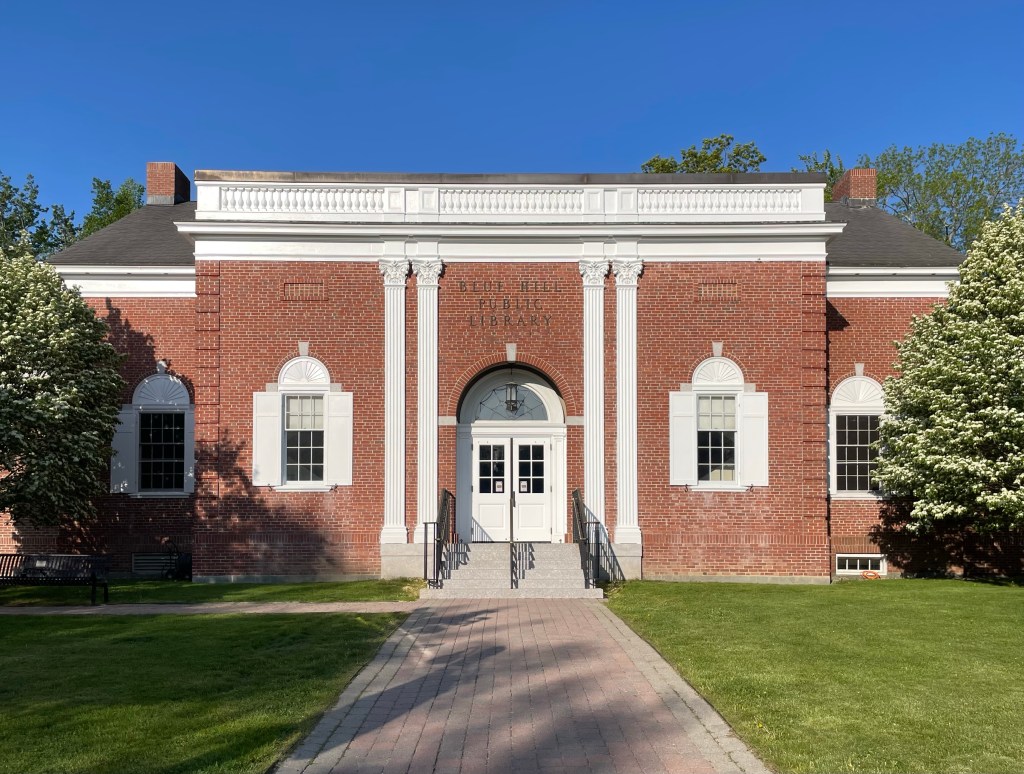
Some small town libraries really pack an architectural punch! Blue Hill had long had a public library building, which eventually outgrew its limited space in the 1895 Town Hall building. During the mid-late 1930s, in the depths of the Great Depression, plans began for a new library. Adelaide Pearson, who had moved to Blue Hill in 1928, took on the formidable task. She was described as “a small woman who got things done” and had a vision for a library that was an integral part of the community, serving more than as a place to store and retrieve books. To fulfill that dream, she organized a fundraising campaign to buy a vacant lot in town. Local pledges came in ranging from 25 cents to “one dollar or a day’s work.” With the help of librarian Anne Hinckley, Adelaide Pearson petitioned the federal government for funds from the Public Works Administration, part of the New Deal program. At last, in March of 1940, the Colonial Revival style library building designed by Bunker and Savage Architects of Augusta opened its doors. The library has been a centerpiece of life in the coastal town of Blue Hill ever since.

Kennebunkport Post Office // 1941

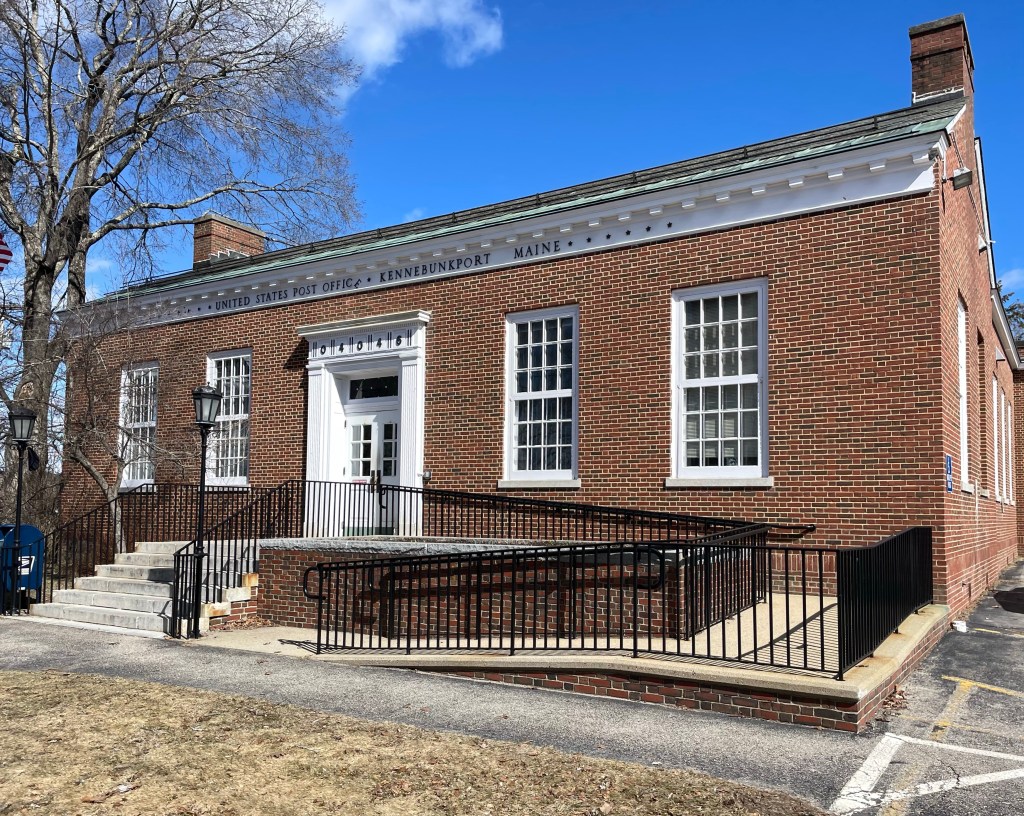
During the Great Depression, the federal government built over 1,100 post offices throughout the country as part of the New Deal’s Federal Works Agency. Many of the post offices funded and built in this period were designed by architect Louis Simon, Head of the Office of the Supervising Architect for the U.S. Treasury. Few architects had such a role in designing buildings nationwide than Federal architects who designed buildings ranging from smaller post offices like this to courthouses and federal offices. They really are the unsung designers who impacted the built environment in nearly every corner of the nation. As part of the Treasury Department Section of Fine Arts, artists were hired to complete local murals inside many post offices built in this period, depicting local scenes and histories of the towns they were painted in. In Kennebunkport, artist Elizabeth Tracy who submitted a preliminary sketch of her piece “Bathers” which was approved depicting a beach scene, though the townspeople had not been consulted. Unfortunately, the opinion of a vocal part of the Kennebunkport populace was highly negative to Tracy’s painting, largely due to the fact that her beach scene depicted people on a beach in adjacent Kennebunk, not Kennebunkport! Within a few years, the townspeople gathered funds to hire artist Gordon Grant to paint a satisfactory replacement mural in 1945. The new mural remains inside the post office.

Millbury Post Office // 1940

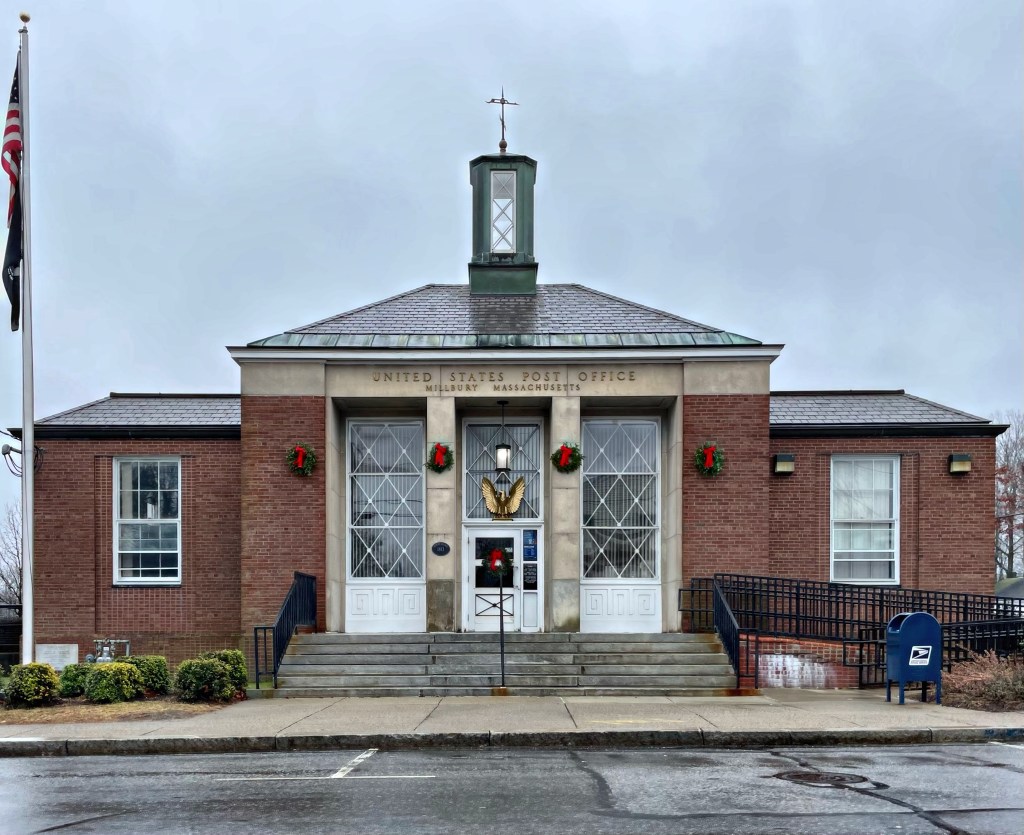
Located in downtown Millbury, MA, the town’s local post office stands as a great example of Art Deco and Colonial Revival architecture styles, showing how well different styles can be incorporated into a single, complimentary design. The Millbury Post Office building was constructed in 1940 from plans by Louis Adolph Simon, who served as Supervising Architect in the Office of the Supervising Architect for the U.S. Treasury from 1933 until 1939, when the office was moved to the Public Works Administration / Works Progress Administration. The post office was designed at the tail end of the New Deal programs to help stimulate local economies by building infrastructure and providing jobs to locals. Inside, a mural “An Incident in the King Philip’s War, 1670” was painted by Joe Lasker and installed in 1941 and was “revivified” in 1991.