“The Old Castle” // c.1712

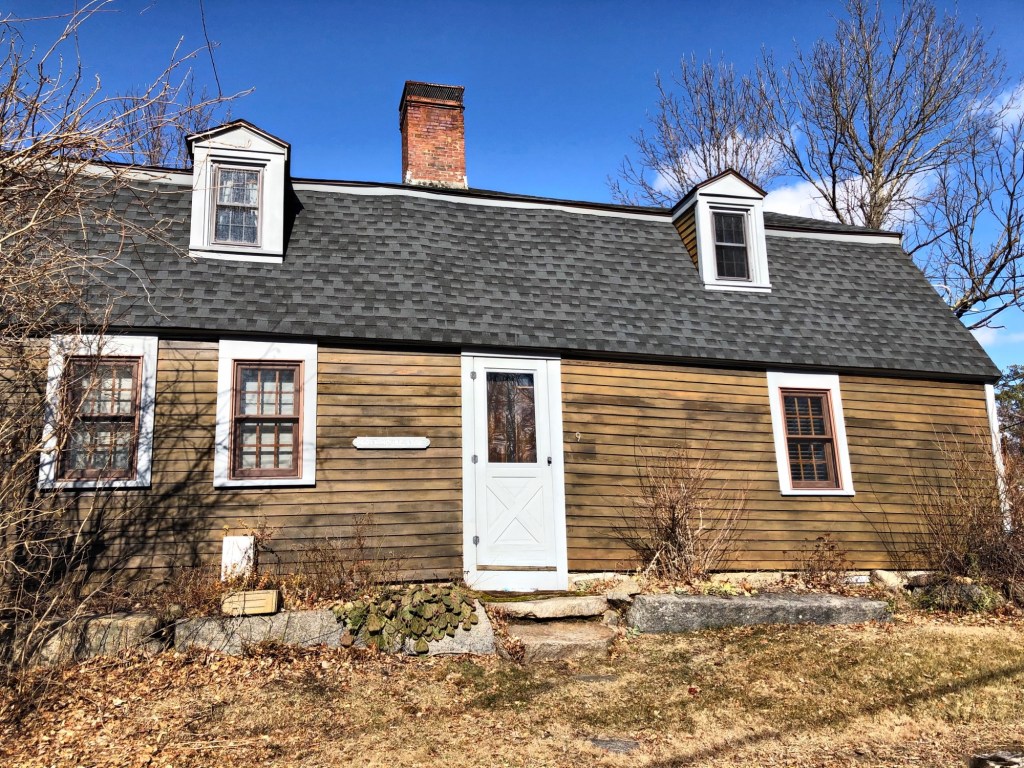
Located in Pigeon Cove, the northern section of Rockport, Massachusetts, the “Old Castle” is an iconic landmark in the charming coastal town. The exact year it was built is not known, but it is believed to have been built in 1712 by Jethro Wheeler (1692-1755), a shoemaker who settled here from nearby Rowley. In 1724, Jethro deeded the property to his son Benjamin, and he moved out of town. Benjamin, is turn sold the property to his son Benjamin in 1769. Benjamin Jr.’s son, John D. Wheeler in 1792 inherited the property and added the lean-to/kitchen room to the rear to create the present saltbox roof form. Various Wheelers continued to own the Old Castle for another hundred years. The property was gifted in 1929 to the Pigeon Cove Village Improvement Society, and is presently under ownership of the Sandy Bay Historical Society, who manage the property as a house museum. The house with its overhanging second story reads like a garrison, a common element in First Period houses in Essex County.
Norwood-Babson Farmhouse // 1799

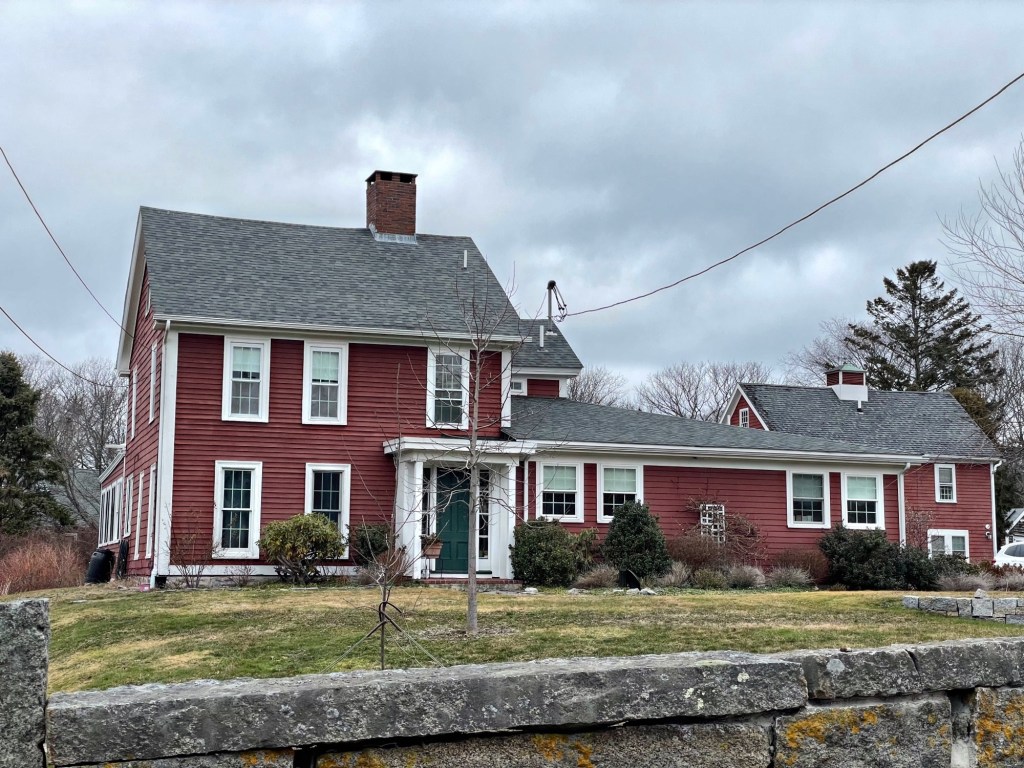
Located in northern Rockport, Massachusetts, you will find this charming Colonial-era farmhouse set amongst the backdrop of ocean cliffs and granite quarries. At the tip of Pigeon Cove, adjacent to the present-day Halibut Point State Park, James Norwood purchased land and would erect this house by 1799 for his family (possibly built from an older dwelling formerly on the site). After James’ death, the property was willed to his daughter and son-in-law and sold a few times until 1820, when it was purchased by David Wallis Babson who raised his family here. As granite-quarrying became a lucrative trade in Rockport by the early-mid 19th century, David’s son Joseph bought twelve of the Babson Farm acres from other family members to organize a stone cutting business here. The property would leave the Babson Family decades later, but retained the family name until today. Edwin Canney would purchase the remaining 70-acre Babson Farm, selling it to the Rockport Granite Company. For the next thirty years, industrial-scale mining and shipping would redefine Halibut Point over the next thirty years. The quarries are now a State Park, and the former Norwood-Babson farmhouse remains intact as a significant piece of the town’s earlier history.

Gott House // 1702

Halibut Point State Park in Rockport is one of the most enchanting places in Massachusetts and it has so many layers of history! Before white settlement, Halibut Point was used seasonally by the Pawtucket people who came to harvest its wild fruits, fish and game on the land. In 1702, Samuel Gott (1677-1748) purchased eight of the 6-acre lots on Halibut Point. At the time, there were no roads to Halibut Point, but Samuel built this house on the land, and he began to farm here. The property passed down the family line and was later owned by Joshua (1754-1846), who came of age just as the War for Independence began. Joshua enlisted with the Revolutionary Army as it was being formed in Boston, and in 1776, he joined General Washington’s forces in the unsuccessful defense of New York. He returned home to lead a long and useful life as farmer and fisherman and was known as Captain Gott. As of the 2010s, the property remained in the same family, handed down through the generations from Samuel Gott over 320 years to today. How cool!

Grader Block // 1885

Commercial districts and Main Streets in historic New England towns are full of amazing architecture that is meant for pedestrians. Strolling through these areas, the varied styles, materials, storefronts, and signage provides a sense of artistry and community that is impossible to achieve in suburban strip-malls and shopping centers. Historic buildings serve not only as visible anchors to communities, but are more often occupied by local, women, and/or minority-owned businesses compared to modern buildings and districts. Marblehead has many historic (sometimes Revolutionary-era) buildings that are commercial and contribute so much to the town’s vibrancy. This building was constructed in 1885 as a high-style Italian Renaissance Revival style commercial block, replacing a late 18th or early 19th century building. The Grader Block features a rounded corner, scored siding to resemble ashlar masonry construction, and Classically inspired design features like pilasters and pediments. Today, the storefronts are occupied by local small businesses.