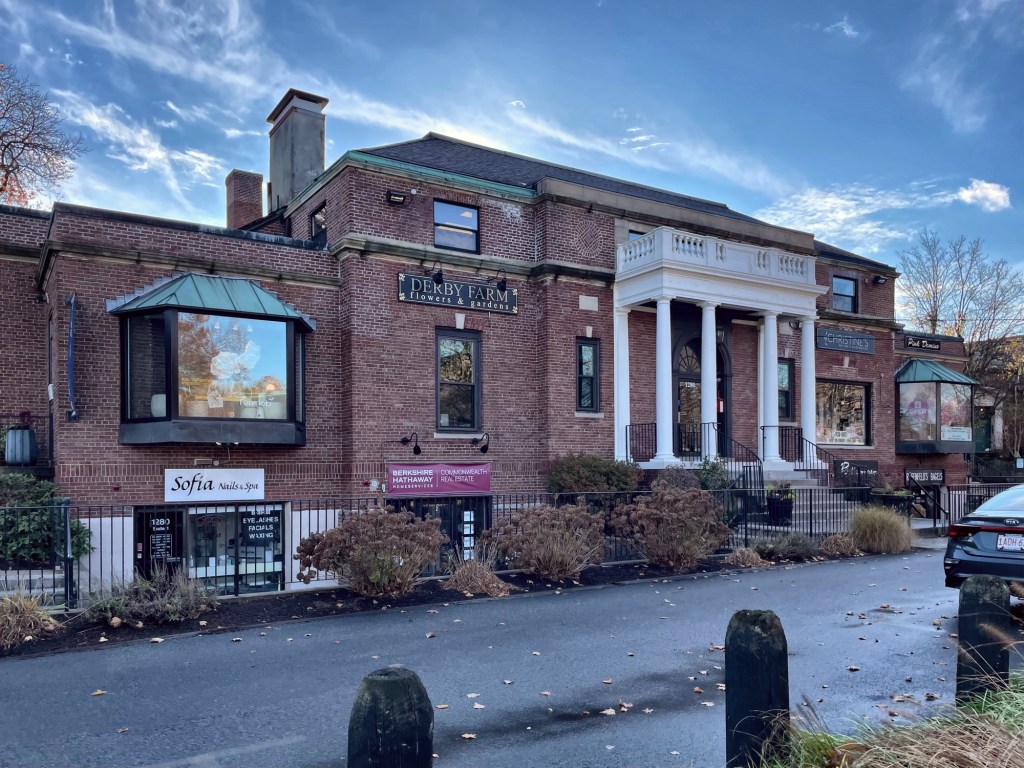
Former Newton Centre Women’s Clubhouse // 1922

The Newton Centre Women’s Club began in 1887 when a group of women in the village came together to work for the relief of disabled veterans from the Civil War. Their objectives included giving aid to charitable causes, mutual improvement through literary, along with artistic and educational pursuits. Expanding membership over the next two decades strengthened the club, enabling them to build their clubhouse in 1922 on land given to them. The Georgian Revival style clubhouse was designed by architect Oscar A. Thayer and the building featured a large art gallery for artists to showcase their work as well as members to bring in art of their own collections to study and discuss. Due to shifting social structures and an aging population of members, the clubhouse was sold in 1973 and converted to commercial use. The building was renovated with more modern windows and other features and was renamed Picadilly II. In the spirit of the club and its push for community, the building houses many local companies frequented by residents today.
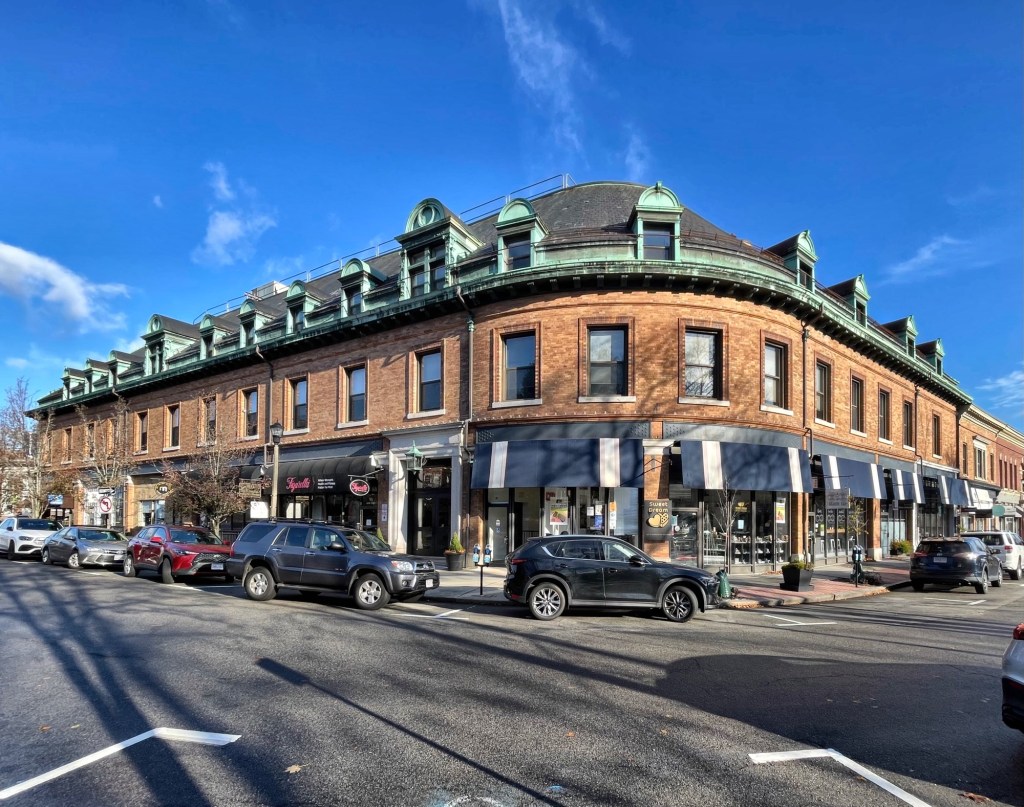
Bray’s Hall // 1893

As Newton Centre’s new railroad station and following development boom transformed the once sleepy village into the main commercial center for the city, landowners capitalized on the opportunity by developing commercial blocks to serve the community and line their own pockets. Mellen Newton Bray (1856-1946) became a major landholder in Newton Centre and would develop the areas directly surrounding the new train station there. On a curving site, he built Bray’s Hall, this three-story commercial block renting out spaces to local banks and stores with a large assembly hall and bowling alley in the building as well. Initially, Bray planned for an eight-story structure, having contracted a solid foundation that could support such a structure, pending the success of the initial construction. That is mixed use before it was “cool”. The building was designed by the firm of Kendall & Stevens, likely led by Henry H. Kendall, who resided in Newton Centre. Kendall would also design the apartment block across the street for Mr. Bray. The building is constructed of light Tuscan bricks and is notable for the bracketed cornice and dormers all in copper. The building was restored in the 1970s by owner David Zussman, and rebranded as Piccadilly Square, following his recent trip to London being impressed with by the atmosphere of Piccadilly Circus.