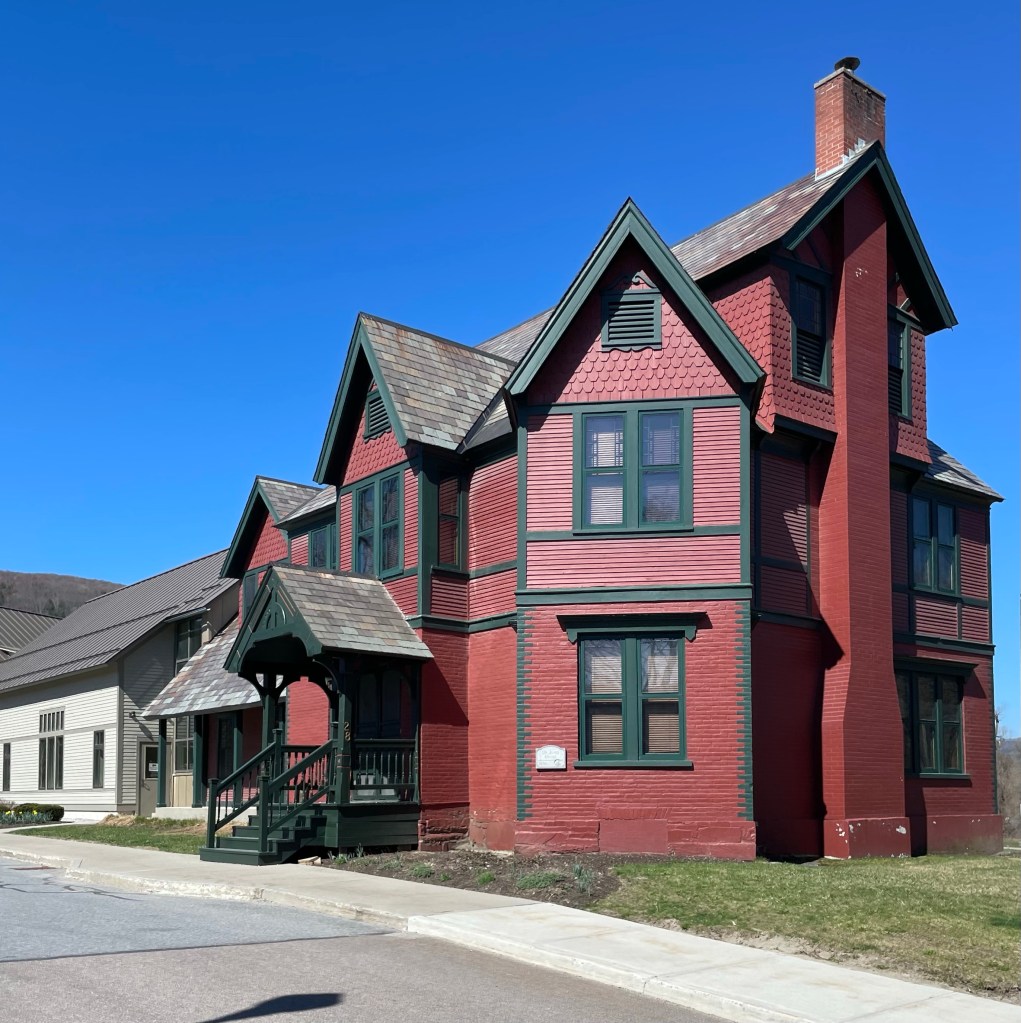
Dr. Henry Janes House – Waterbury Municipal Center // c.1890

Probably best known for being in charge of all the military hospitals in the Gettysburg area after the bloodiest battle of the Civil War, Waterbury, Vermont native, Dr. Henry Janes (1832-1915) had a decorated career and gave much to his country and hometown. Janes attended local schools before enrolling at St. Johnsbury Academy, later graduating from New York City’s College of Physicians and Surgeons in 1855. After a few years working in NY and MA, he moved back to Waterbury to take up a private practice. This was disrupted by the Civil War where he was a major surgeon on the front lines and had over 250 surgeons under his command. After returning home from the war, Dr. Janes was involved in politics and business, and had a home built in town. According to local historians, this present home of Janes was built in 1890, but it definitely could date to the 1870s with Stick style features. Upon his death, the Dr. Janes home was gifted to the town for use as a public library. When Tropical Storm Irene hit the region in 2011, the town offices were destroyed and Vermont Integrated Architecture was hired to expand the Janes House adding space for town offices, meeting space, a modern library and to reconfigure the historic home for the Waterbury Historical Society. Everything about this is perfect, down to the paint colors!
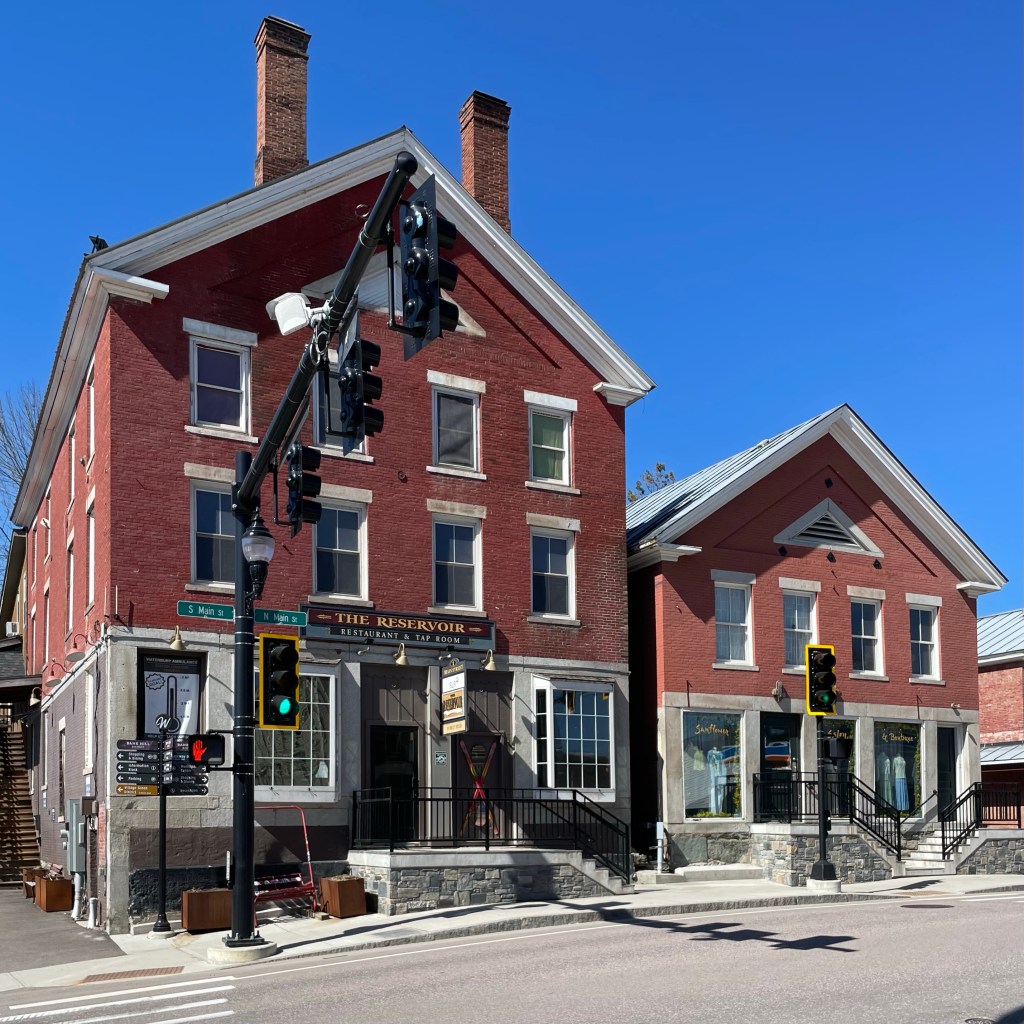
Vincent’s Pharmacy and Waterbury Masonic Hall // 1834

While of different scale, these two brick buildings on Main Street in Waterbury, Vermont compliment each other very well. Vincent’s Pharmacy, the smaller building, was built in 1834 in the Federal and Greek Revival styles by Dan Carpenter, early lawyer and judge, to house a pharmacy business that he ran with his son, William. Next door, dating from approximately the same year as the pharmacy, the larger structure housed Waterbury’s first Masonic hall in 1860’s and in successive years a hardware business. The former Masonic hall is now home to The Reservoir, a great local restaurant that I grabbed lunch in while visiting the town.

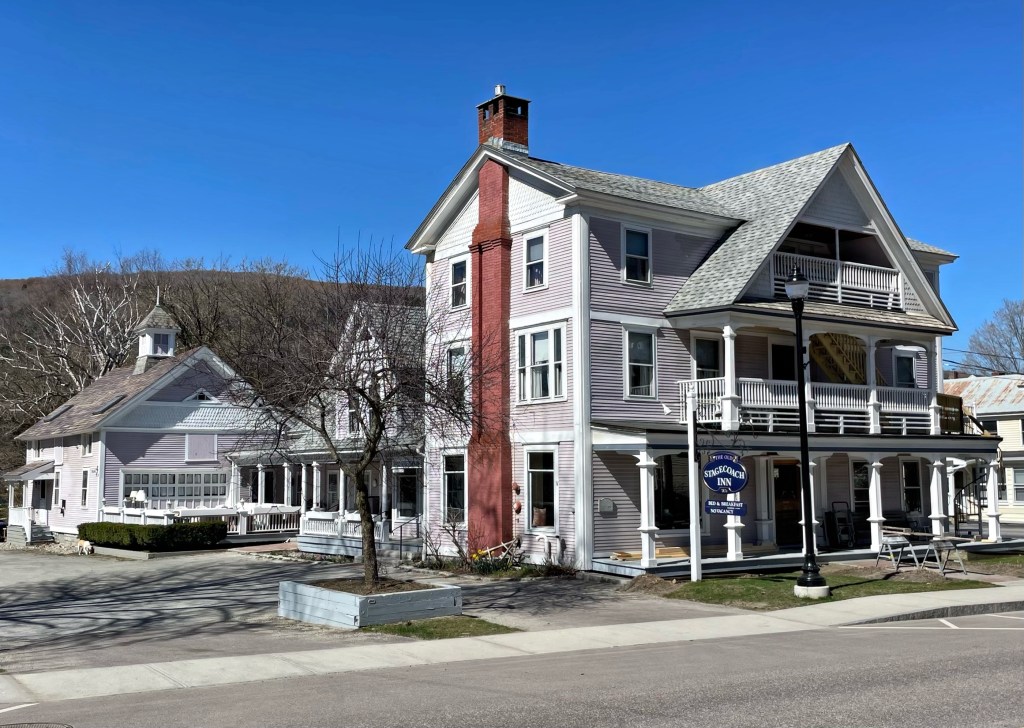
Stagecoach Inn // 1826

Built by the Carpenter brothers in Waterbury, who also designed and built the neighboring Congregational Church (last post), this large structure was a stagecoach stop on the road to Stowe for much of the nineteenth century. Briefly, the Inn served as a private residence for Albert and Annette “Nettie” Spencer. Nettie grew up in Waterbury and married Albert who owned rubber factories in Ohio and invested in real estate in Burlington. At one time, the Spencers’ residences included their Waterbury house, a suite at the Waldorf Astoria in New York City, a house in Newport, an apartment in Paris, as well as one in London. Albert died in London, and Nettie continued living in Waterbury until her death in 1947, approaching 100 years of age. Within a year, the property was sold and the owners reopened the main house as a sort of boarding house. The property was restored and operates today as the Old Stagecoach Inn.

“The Old Corner Store” // 1833

White settlement in Waterbury Vermont began in about 1770, with the establishment of a small cluster of houses along the Winooski River near what is now Winooski Street. When Main Street, a stagecoach route paralleling the river opened in the 1790s, development moved to that area, including the construction of churches, residences, and businesses. Industry followed, and a town was formed. Many settlers arrived here from Waterbury, Connecticut, and named their new village Waterbury as a result. Many early commercial buildings were constructed with wood frames, but as the town prospered, businessmen developed more substantial brick blocks. This charming Federal/Greek Revival commercial building was erected in 1833 at the most prominent corner on Main Street in Waterbury, by Leander Hutchins (1798-1879). It is apparently the oldest extant commercial structure in the downtown section of Waterbury! The building has been restored in the late 20th century, down to the multi-pane windows and granite lintels. This building is just so perfect.

Belding Homestead // c.1820

David Belding (1785-1860) was born in Swanzey, NH and at 25 years old, moved to Moretown, Vermont in 1810, marrying an eighteen-year-old Florinda Freeman a year later. The couple built a farmhouse on the outskirts of town near a brook. David worked as a farmer and would later officiate as a justice of the peace, the town lister, selectman, and represented the town in the State Legislature for two terms. From his enhanced wealth, David appears to have expanded his farmhouse in the 1820s or 30s with this vernacular Federal and Greek Revival style residence. The Belding Homestead would remain in the family for decades and eventually became the Belding House Bed & Breakfast.

Moretown Town Hall // 1835

The township of Moretown, Vermont was chartered on June 7, 1763 by Governor Benning Wentworth of New Hampshire. The original charter contained approximately 23,040 acres of land to be divided into about 65 shares of proprietors. Active settlement did not occur until after the Revolutionary War with early buildings constructed on the Winooski River (the northern boundary of the town) and subsequent development along the Mad River (which cuts through the middle of town). Saw and grist mills were built and the town developed as a rural farming and industrial community on the rivers. The Moretown Town Hall was erected in 1835 in the Greek Revival style. It has a pedimented portico with Doric columns that support a large pedimented gable peak in imitation of a Greek temple. Like most buildings in the Mad River Valley, the building is unapologetically Vernacular which means it relies on local materials, local builders, and not on architect-designed finishes. This is an aspect of Vermont architecture that makes the state so charming.

South Duxbury Church and Hall // 1855

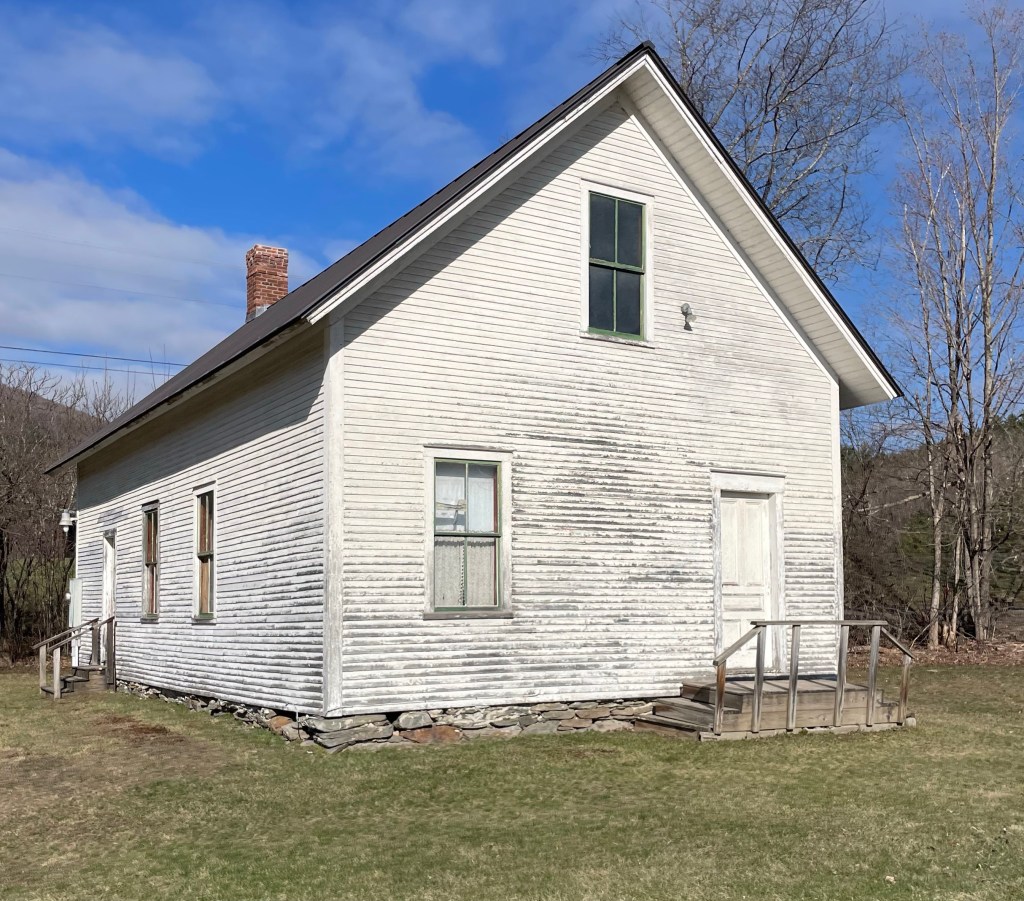
This is the first church ever built in Duxbury, Vermont. On December 18, 1854, at the South Duxbury schoolhouse, representatives from six denominations in the newly formed town, gathered to form the First Union Society of Duxbury. The participants were: the Congregationalists, Universalists, Free Will Baptists, Protestant Methodists, Episcopalian Methodists, and the Adventists. Twenty-five names appear on the original subscription list, indicating the pledged money or materials that each would contribute to the construction of the church. Samuel Cook Turner was contracted to build the church, with pews inside purchased by individual families to help fund the construction. The building is vernacular and modest due to the rural character of the congregations and town’s location, but it has a more Classically inspired door enframement. In 1890, funds were gathered for a church hall, which sits nextdoor. The meeting hall would serve as the meeting space for a temperance organization known as the “Independent Order of the Good Templar”. The church hall appears to have some deferred maintenance, but both buildings together share an early history of a rural and often overlooked small Vermont town.

Coolidge Homestead // c.1840

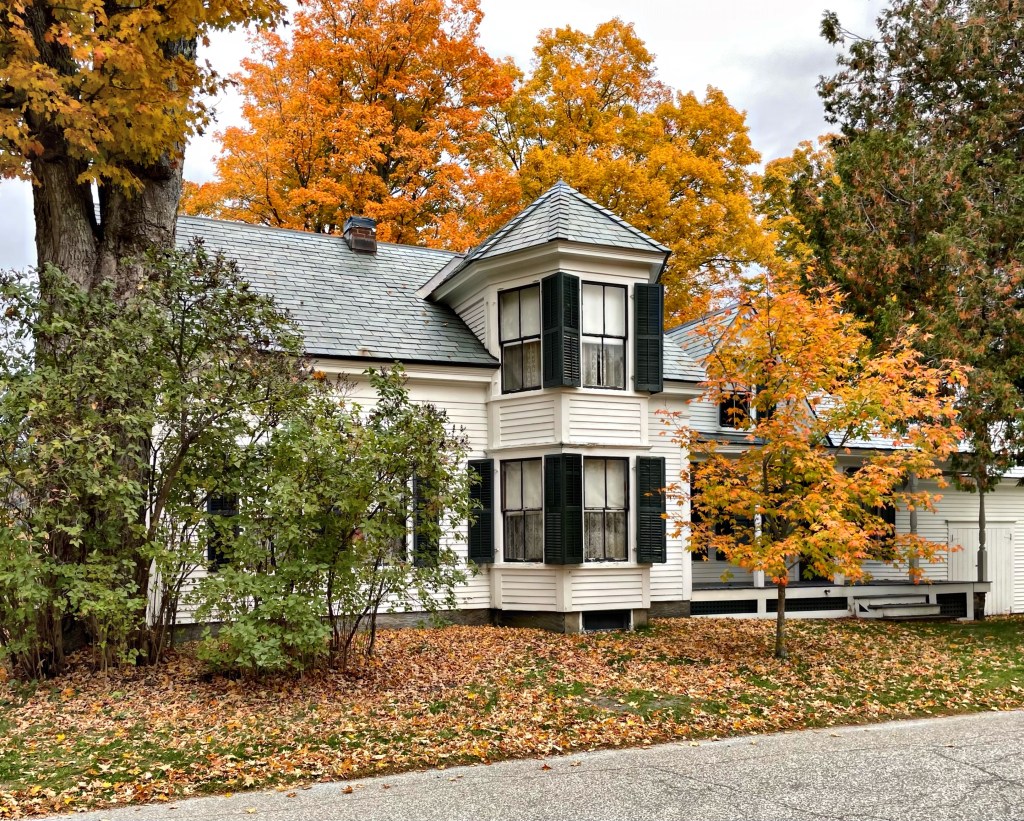
In 1876, a four year old Calvin Coolidge moved to this house in sleepy Plymouth Notch, Vermont, which was purchased by his father and he lived here continuously until 1887 when he began to attend the Black River Academy at nearby Ludlow, Vermont. The house was likely built in the mid-19th century as a modest Greek Revival cape and was Victorianized in the late 19th century by Calvin Coolidge’s father, when he added the two-story bay window, dormer, and side additions. The house remained in the Coolidge family until 1956 when it was given to the State of Vermont as part of the Calvin Coolidge Historic Site.

Coolidge Cheese Factory // 1890

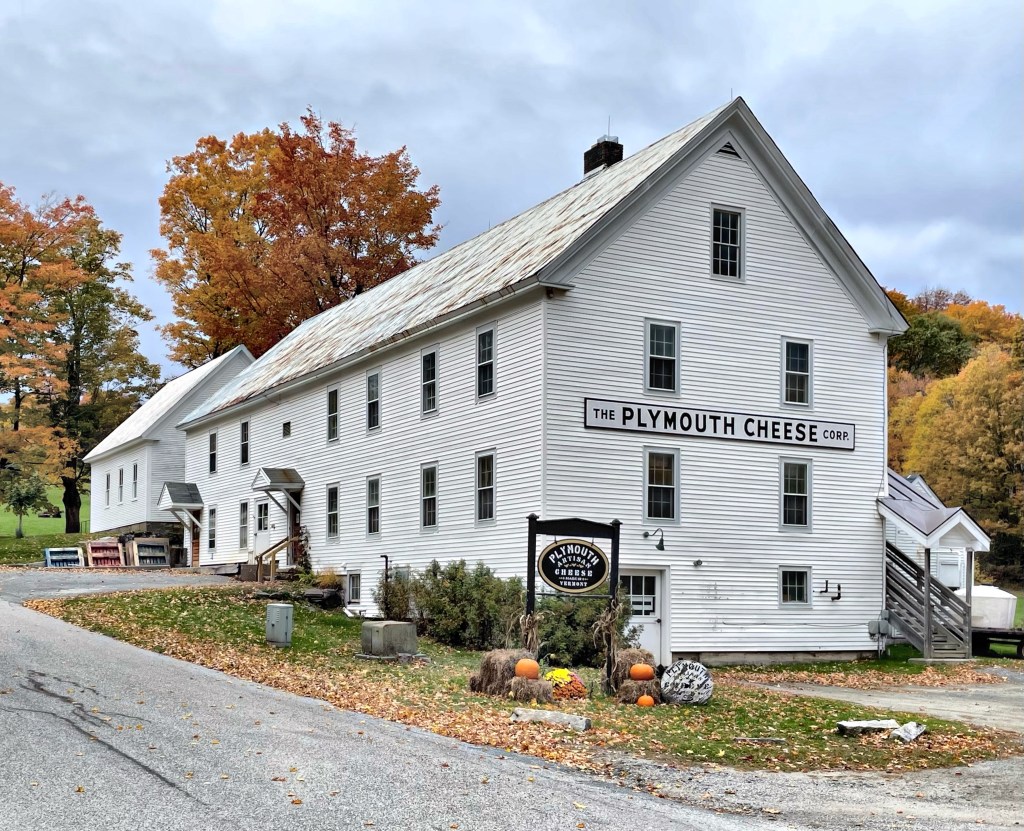
Does it get more Vermont than a cheese factory?! The Coolidge Cheese Factory in Plymouth Notch, Vermont was built in 1890 by Col. John Coolidge (President Calvin Coolidge‘s father), James S. Brown, and two other local farmers so that they would have a convenient market processing milk produced by their farms into cheese. The vernacular building was a short walk from the original Coolidge home and is evocative of many such buildings in rural Vermont. The cheese factory continued to operate until the 1930’s. The factory was renovated in the early 1970s in honor of President Coolidge’s 100th birthday and now produces cheese according to the original formula. The cheese would make a great Christmas gift!

Union Christian Church of Plymouth Notch // 1840

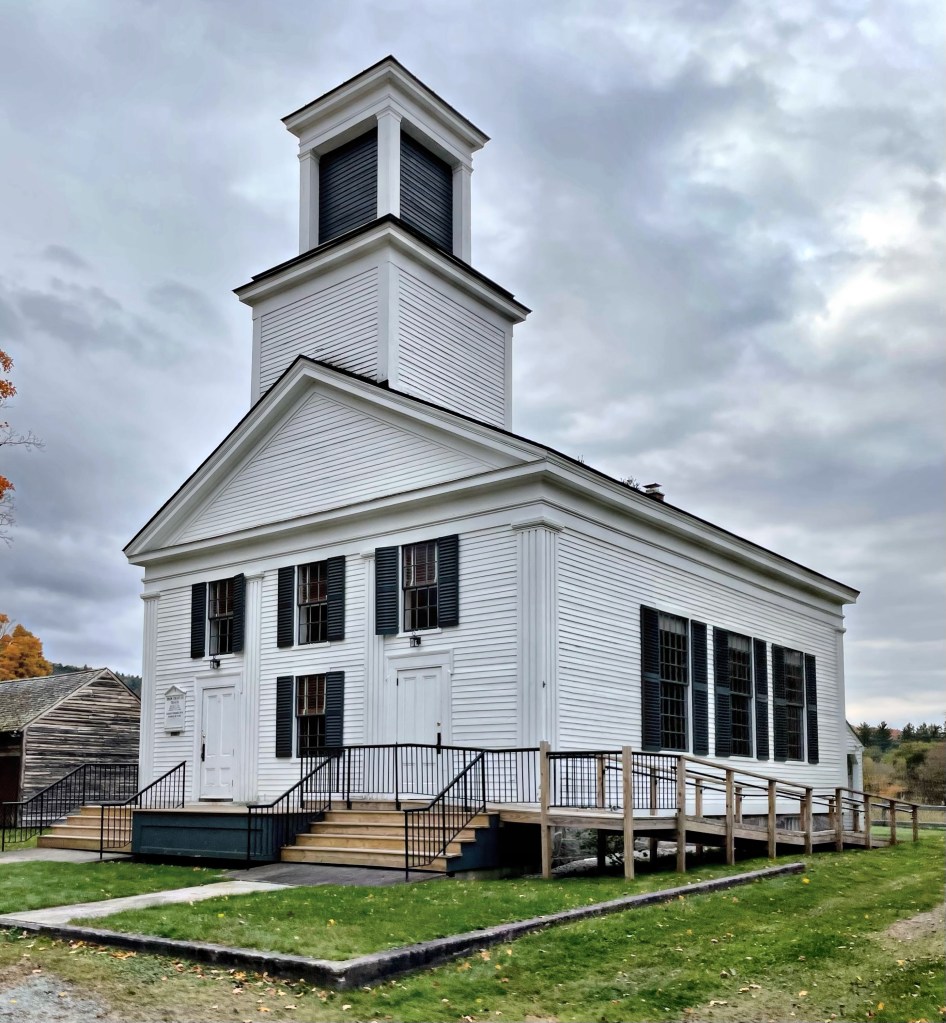
Located next to President Calvin Coolidge’s birthplace and the Coolidge Family store, the Union Christian Church of Plymouth Notch in Vermont stands as another of the village’s well-preserved buildings with direct ties to the former president. The church was built in 1840 as a modest, vernacular Greek Revival building with a two-stage tower and originally was the town’s meetinghouse. The building was dedicated as a Congregational church in 1842. President Coolidge attended services here as a child and later when visiting his hometown as Governor of Massachusetts and President of the United States. In 1942, the
building became a union church for all congregations.