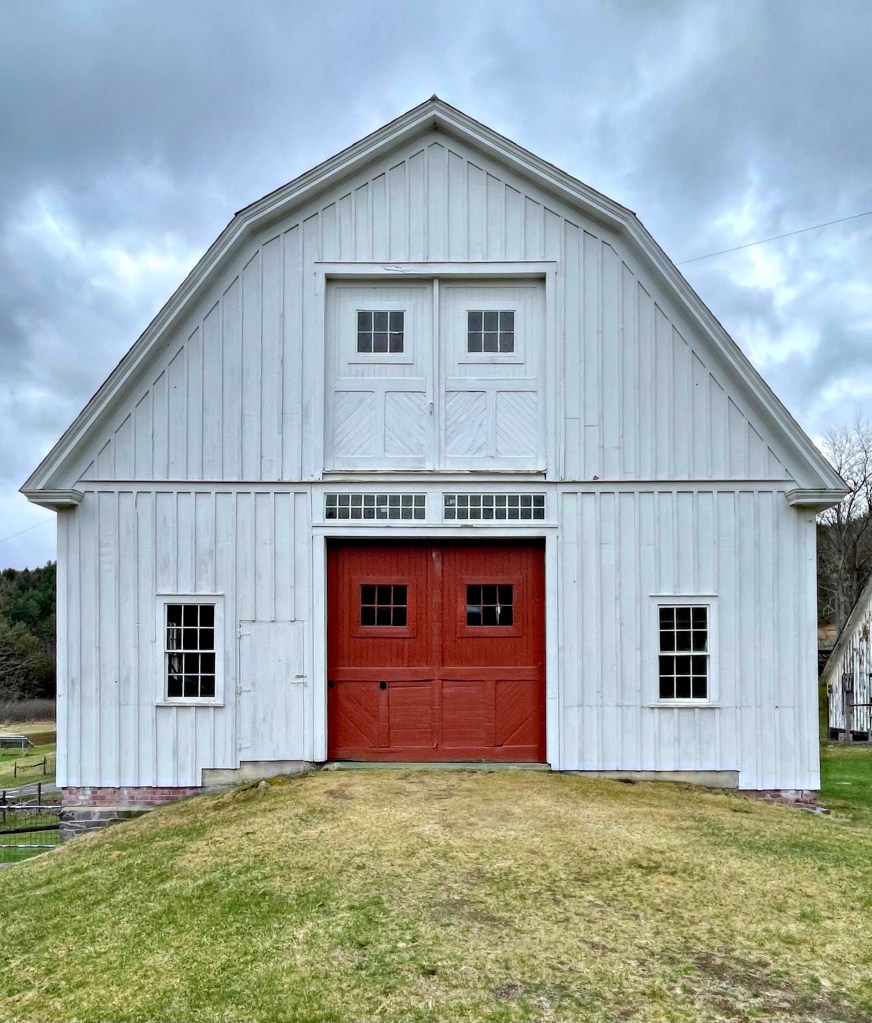
Scott Farm – Horse Barn // c.1910

You saw the cow barn at Scott Farm, now you can see where the horses lived! The Horse Barn at Scott Farm in Dummerston, Vermont is a very photogenic building with its symmetrical facade and bright colors. The barn was built not long after Frederick Holbrook II of Boston acquired most of the farm to add to Naulakha, where he lived. Holbrook used the farm as a gentleman’s farm where he would have laborers managing the grounds and supplying him with the freshest produce and dairy products. Inside, there is a ramp down to the basement which still retains the horse stalls, it’s so charming!

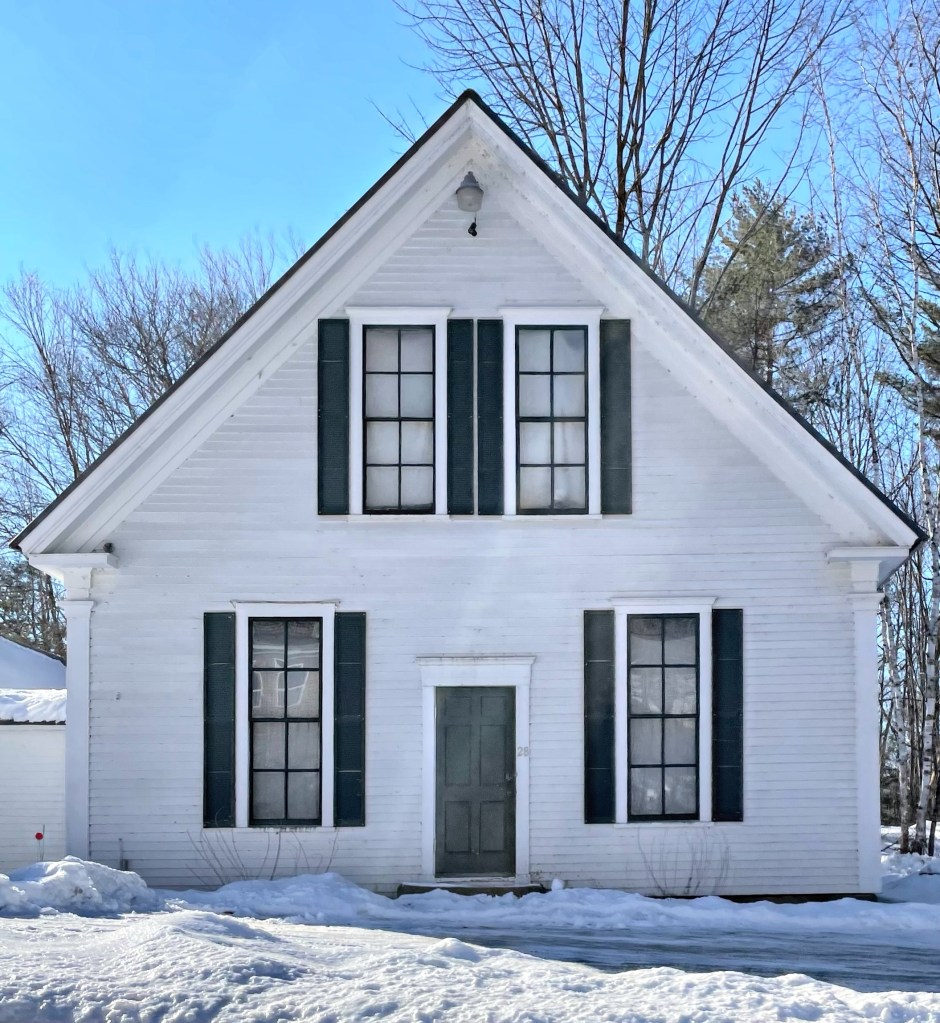
Denmark Old Schoolhouse // c.1850

Welcome to Scandinavia of Maine, Oxford County! The rural county is home to towns named Denmark, Norway, and Sweden, but no Finland sadly! The land that is now known as Denmark, Maine, was once part of Pequawket, a village of the Sokokis Abenaki tribe. In 1725 during Dummer’s War, the village was attacked and the tribe abandoned the area fleeing to Canada. Settlers established a township with many settlers coming from Andover, Mass. The town was incorporated as Denmark in 1807, and named in a show of solidarity with the country of Denmark, after England attacked Denmark’s capital, Copenhagen that year. The town was mostly agricultural, with some industry along the ponds and the Saco River. The town saw a boost in popularity in the early 20th century as a location for summer camps, including Camp Wyonegonic, founded 1902, which is the oldest girls’ camp in the country.

This building in Denmark Village appears to have been constructed in the mid-19th century as the village school. The vernacular Greek Revival building has very tall, multi-paned windows, Greek Revival trim, and modest proportions which really are pleasing to look at. It shows up on an 1880 map as “Old School House”, and appears to be a private home today. Stay tuned for more on the Scandinavian towns of Maine!