Hiram Ricker House // 1893

The Hiram Ricker House sits in the Poland Springs Historic District of Poland, Maine, and was built as the personal residence of its namesake, who developed this formerly sleepy town into a destination in the 19th and 20th centuries. Hiram Ricker (1809-1893), the son of Wentworth Ricker and Mary Pottle, helped turn his father’s country inn in Poland into a popular late 19th century resort, bringing in droves of tourists to take in fresh air and the healing natural spring water. He and his wife, Janette (Bolster) Ricker had six children, all but one of which helped run the resort. This Queen Anne style residence was designed by Lewiston architect, George M. Coombs, and is set back down a long drive overlooking the resort grounds. Sadly, Hiram Ricker died the same year his residence was built, but the home was occupied by the Ricker Family for years after, notably by Hiram’s son, Hiram Weston Ricker. It is covered in later siding, but the trim details are preserved and typical of high-end Victorian homes of this period in Maine.
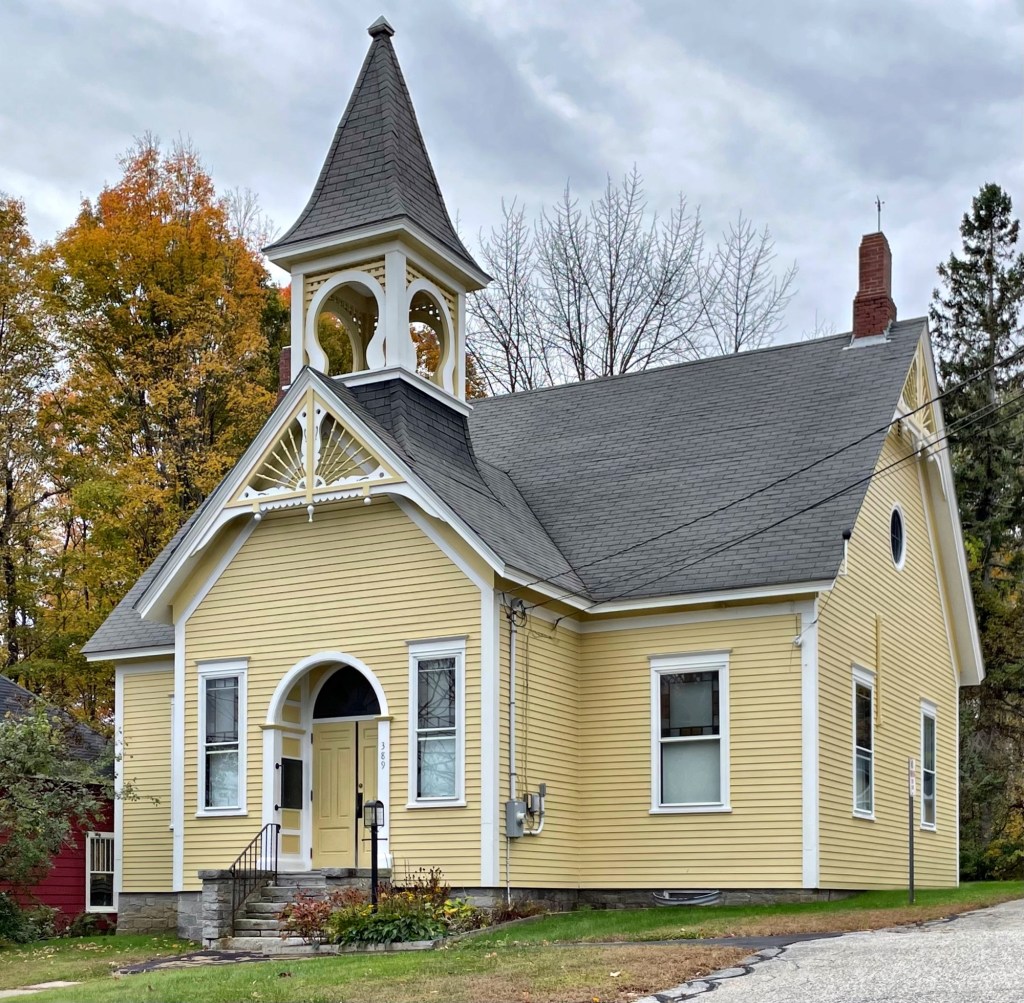
Old New Gloucester Public Library – New Gloucester Meetinghouse // 1895

The original New Gloucester Public Library is located in the central village of New Gloucester, Maine, and is one of the finest architectural buildings in the town. The library was established in 1888 when voters passed a resolution to establish a public town library as before this, a private, social library existed here. A committee was chosen to purchase books and make decisions for expenditures and staff. The library was originally located in the town hall building, and was supported by an annual poll tax of 50 cents. The first librarian was Helen A. Moseley, with a salary of $50 a year, she remained the town’s librarian until 1920. By 1895, the library had grown to more than 2,100 volumes and it was decided a new, purpose-built library was needed. That next year, a lot was purchased and this Victorian style building was constructed adjacent to the Town Hall. The wood-frame building has a decorative central section with recessed, arched entry and gable with decorative Stick style ornament. Additionally, a tower protrudes from the roof, giving the building additional whimsy. The library was eventually outgrown and relocated in the former High School, two buildings down the street. The old library has ever-since been the town’s meetinghouse.

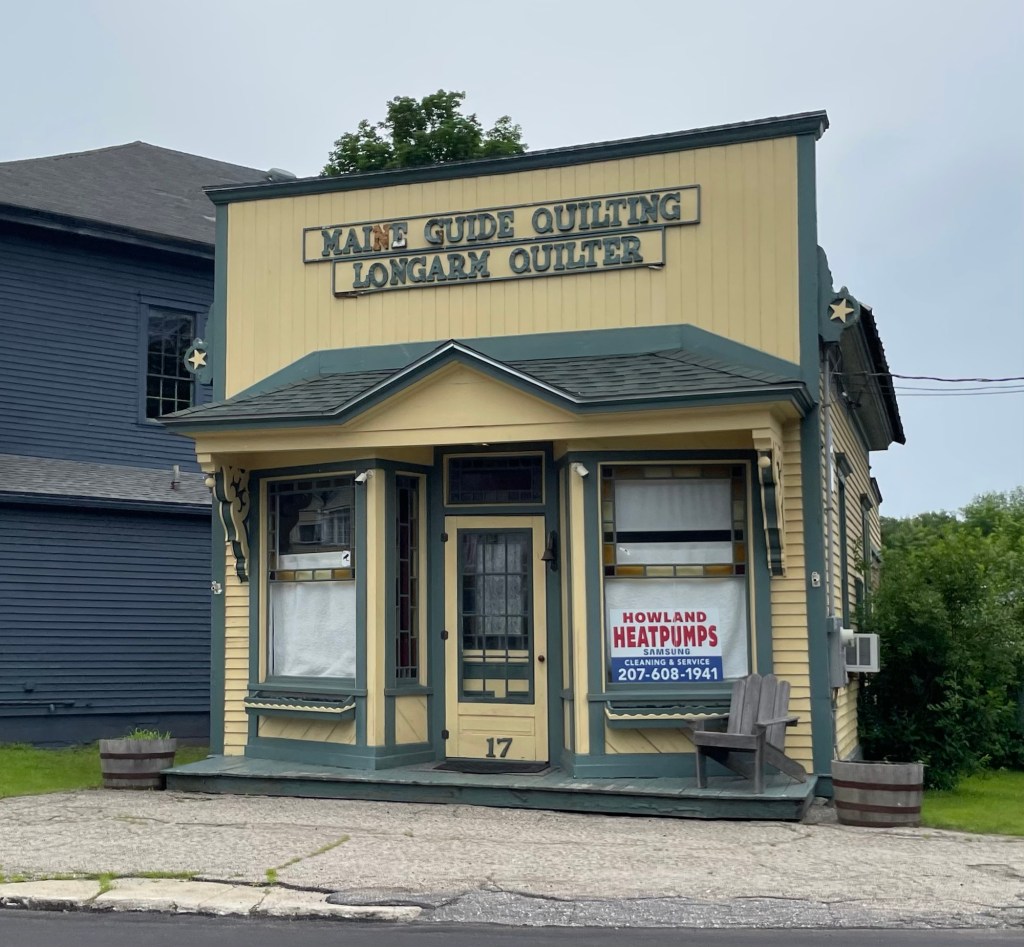
Ms. Perkins’ Millinery Shop // c.1890

This charming one-story shop sits on the Porter-side of Kezar Falls village, a district that spans the Ossipee River between Porter and Parsonsfield, Maine. This shop was built at the end of the 19th century as a millinery shop (womens’ hat store) for Ms. Florence Perkins (1862-1950), who appears to have been unmarried all of her life. Retaining almost all of its original decorative detail, the building has a symmetrically arranged facade with two-sided projecting bays; the upper sash in the facade windows, including that in the entrance door, has a border of small rectangular colored glass panels. The storefront is a rare survivor of this period, with not many other examples in the area.

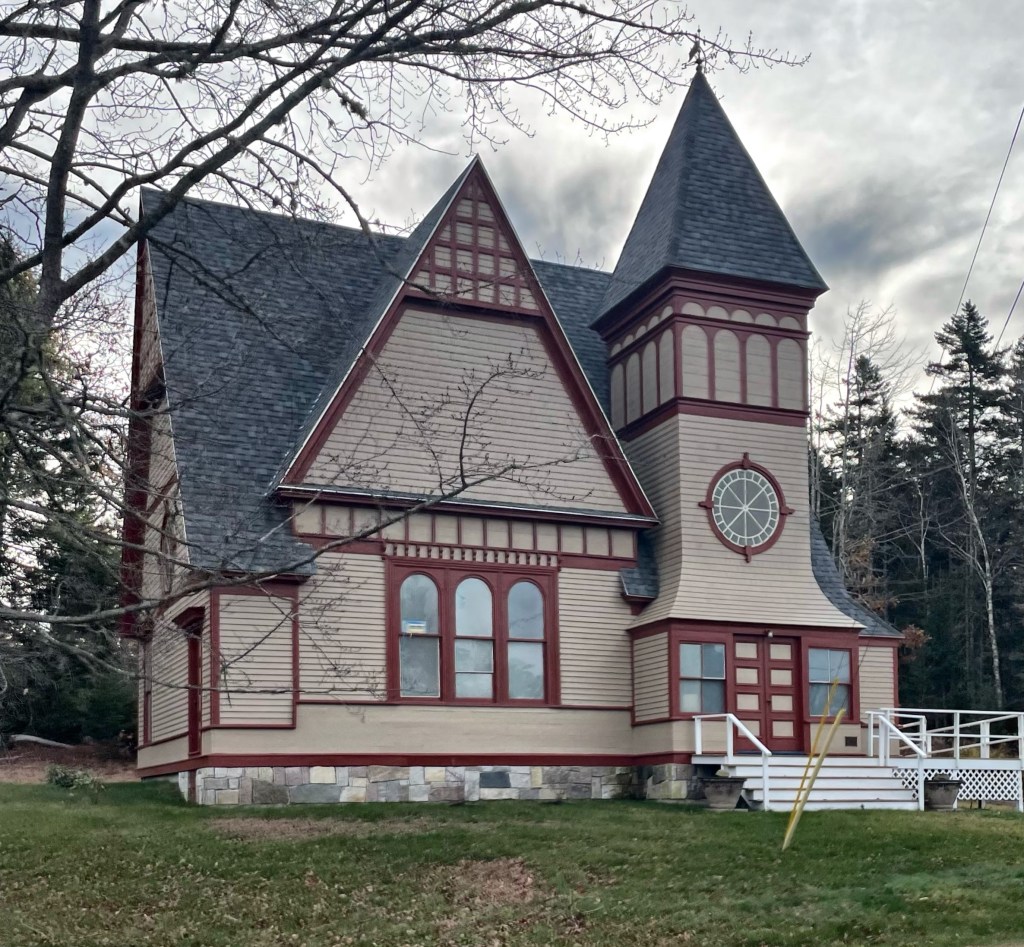
West Gouldsboro Union Church // 1888

In 1888, the West Gouldsboro Union Church Society had enough funds to build this Queen Anne style church, built completely from member donations. By November 1888, the exterior was completed, but so much money was spent on the detailing on the exterior, no funds were available for the exterior painting and interior spaces. In 1891, the new church was finally dedicated. The West Gouldsboro Union Church is a stunning example of a church in the Queen Anne style with varied siding forms, asymmetrical plan, and square tower capped by a pyramidal roof. My favorite part about this building is its historically appropriate paint colors. For a long time, the church was fully painted a bright white, but now its details really shine!