Shedd Free Library // 1881

Aren’t tiny old libraries just the best?!

Located in Washington, NH, the Shedd Free Library is the only Victorian Gothic building in town, and packs a punch for its small size. The library was named for Sarah Shedd, a Washington teacher and poet who went to work in the cotton mills of Lowell, Massachusetts to support her family and educate her siblings. When she died in 1867 she bequeathed $2,500 to her hometown to establish a free public library, an amazing gift! The gift did not appear to be enough as nothing was built until 1881, after Boston architect S. S. Woodcock was selected by Luman T. Jefts, a wealthy shoe manufacturer in Massachusetts, to design the library after a gift to his hometown.

Old Brick Store // c.1810

While many buildings around the Town Green in Washington, NH are wood-frame construction, some brick buildings stand out. This brick building was constructed in the early 19th century, possibly as a single-family home. The building had commercial use after the Civil War, when Benjamin Muzzey ran a store out of the building with a business partner. After successive owners and uses, Pearl Young leased it around 1920. Pearl saw the use of automobiles growing and had gasoline pumps installed, turning the old brick store into a gas station. Pearl and Mary Young operated a successful a store and post office here for over 30 years before closing up shop. The brick building has since reverted back to a residence.

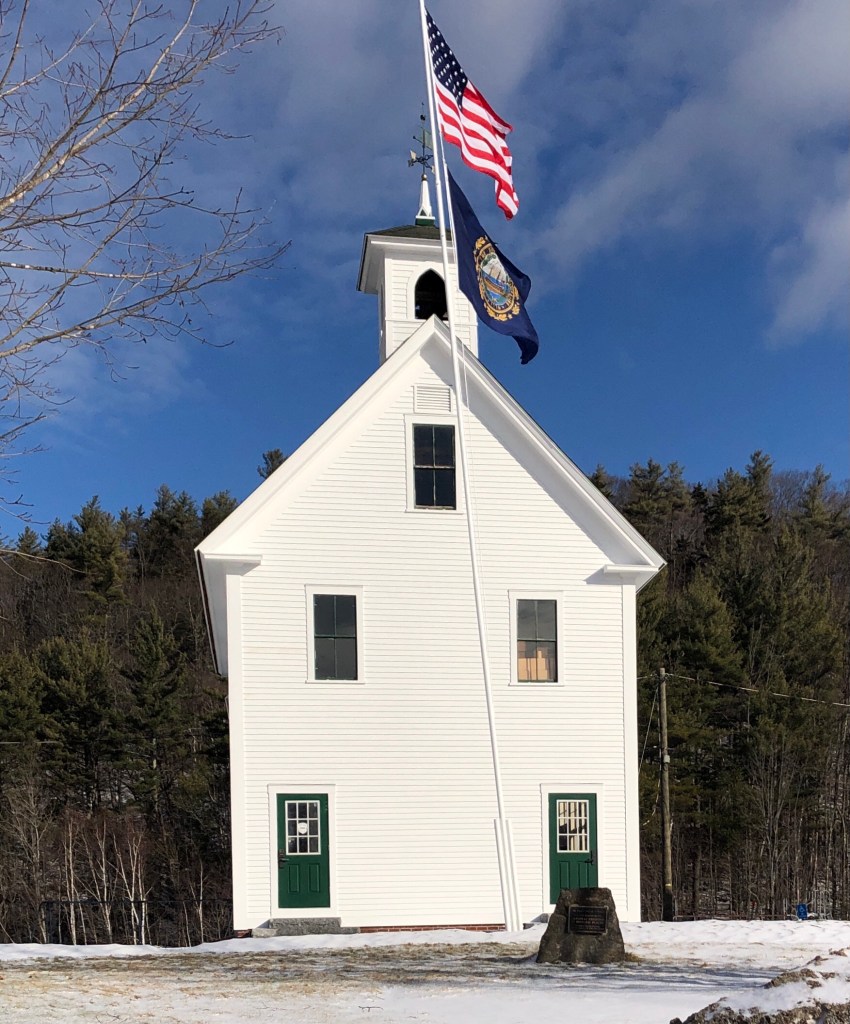
Washington Center Schoolhouse // 1883

Adjacent to the Washington Meeting House, the Washington Center Schoolhouse perfectly compliments the Georgian building, despite being constructed 100 years later. Constructed in 1883, this building served as the principal school house in Washington, and was known as the Center School. There had been an earlier school house near this site, a small brick structure, but by the 1880s it was both worn out and too small and replaced. Eventually, it was decided to build a new school in the general style of the other town buildings, and place its facade flush with the Church (next post). The building now appears to be home to the town’s police department.

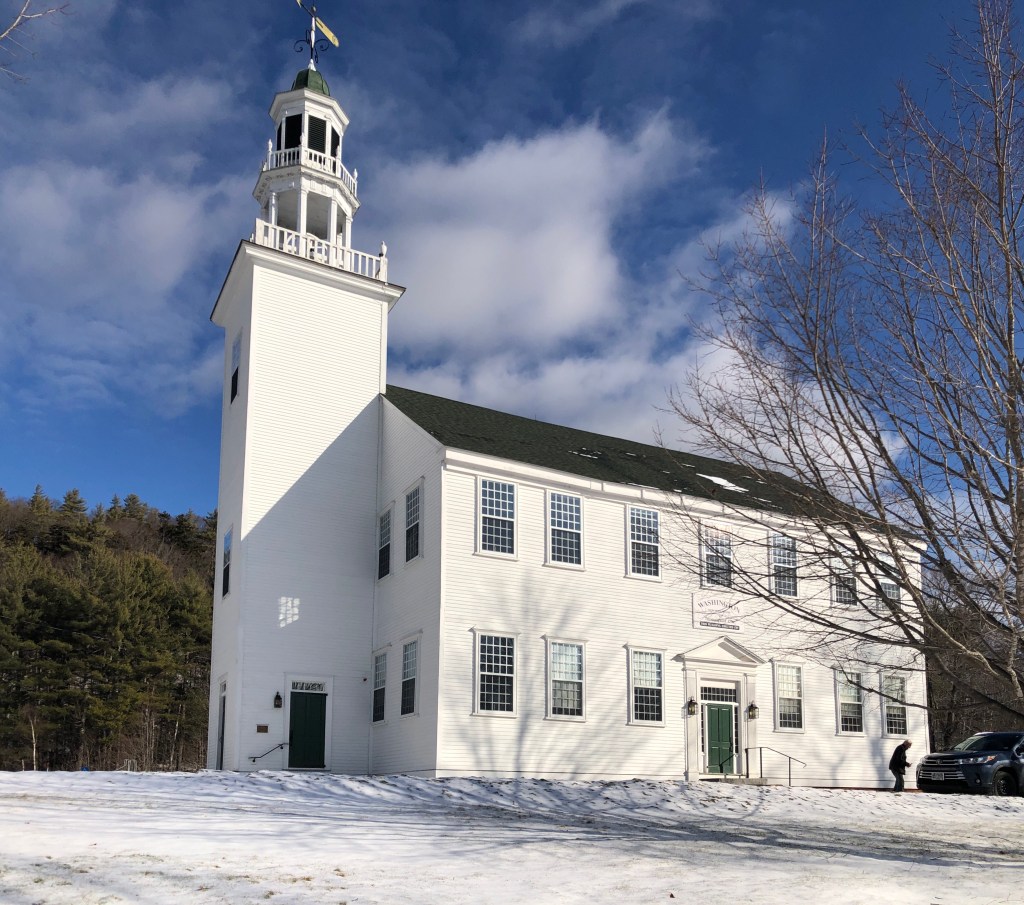
Washington Meeting House // 1787

The Washington Town Hall, originally raised as a meetinghouse in 1787, is the civic and visual focal point of Washington Center in New Hampshire. Land here was first granted in 1735 by Colonial Governor Jonathan Belcher of Massachusetts. The town was one of the fort towns designated to protect the colonies from attack by Native peoples, and it was named “Monadnock Number 8”. The first permanent settlers arrived in 1768 and built log houses. By 1773, the community had 132 inhabitants. On December 13, 1776, the newly established American revolutionary government incorporated the town as “Washington”, after George Washington — one of the first named in his honor. A small townhouse was built but was replaced a decade later with what we see today. The current structure was originally a simple, two-story clapboarded structure, with east and west porches. The tower and belfry rising from the end were added in 1820. The building committee specified all details of the meeting house, including “that the windows should be glazed with squares of glass, seven by nine inches, forty panes to the window”. This attention to detail shows how the meeting house would be a source of pride for the new town and all details were to be discussed to the smallest detail.

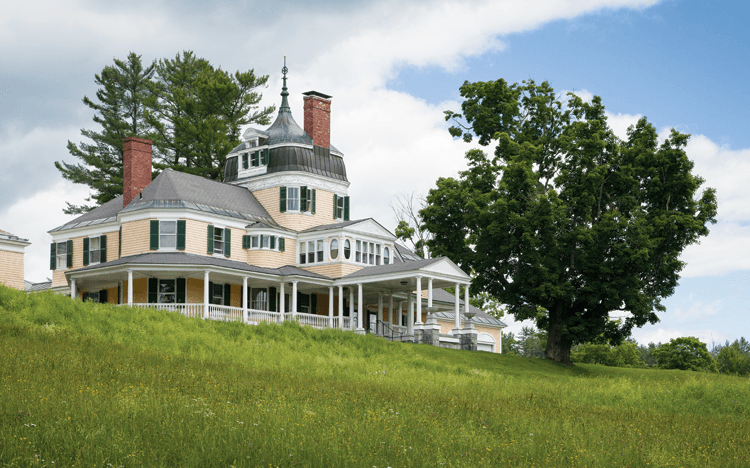
Corbin Estate // 1880

Austin Corbin (1827-1896) was a 19th century railroad man known for consolidating what we know today as the Long Island Railroad. He was born in Newport, New Hampshire and eventually graduated from Harvard Law School in 1849. He eventually moved to New York, and founded the Corbin Banking Company, which he leveraged into a successful banking firm, which funded his diversifying into resorts and railroads. In 1873, while following doctors advice of ocean air for his ill son on Coney Island, Corbin recognized the area as an untapped natural location for a summer resort, and proceeded to purchase 500 acres, opening a large hotel and a new railway system to deliver New Yorkers to the resort in 1878. He is infamous for strong-arming the Montaukett tribe on Long Island out of nearly 10,000 acres they occupied around Montauk. The tribe is still seeking compensation for this tactic. In 1880, he built this summer estate in his hometown of Newport, NH as a castle for his greed, also acquiring over 100 acres for the estate. He soon after bought out over 25,000 acres of land for an ultra-private members-only hunting club. Corbin died on the estate in 1896 and the property was eventually purchased by William Ruger. The home was vacant for decades following WWII until Ruger, who co-founded Sturm, Ruger & Co. purchased the estate, likely utilizing the hunting reserve next door. The property and another owned by the Ruger Family were sold separately at auction in 2019.

Eagle Hotel // 1826

Built in 1826 as the Eagle Hotel, this stunning federal structure is representative of the transition from the 18th century tavern, with its domestic scale and features, to a larger-scale 19th century hotel. The town of Newport was situated at the convergence of two stagecoach turnpikes, which transported people through the town regularly. Due to this, James Breck and Josiah Forsaith built the Eagle Hotel to meet that demand. By 1856, additional hotels were built and then owner, S.H. Edes converted the building into a business block. The upper floors were later occupied as apartments and porches were added to the front facade on each floor (since removed). The building is now home to Salt Hill Pub.

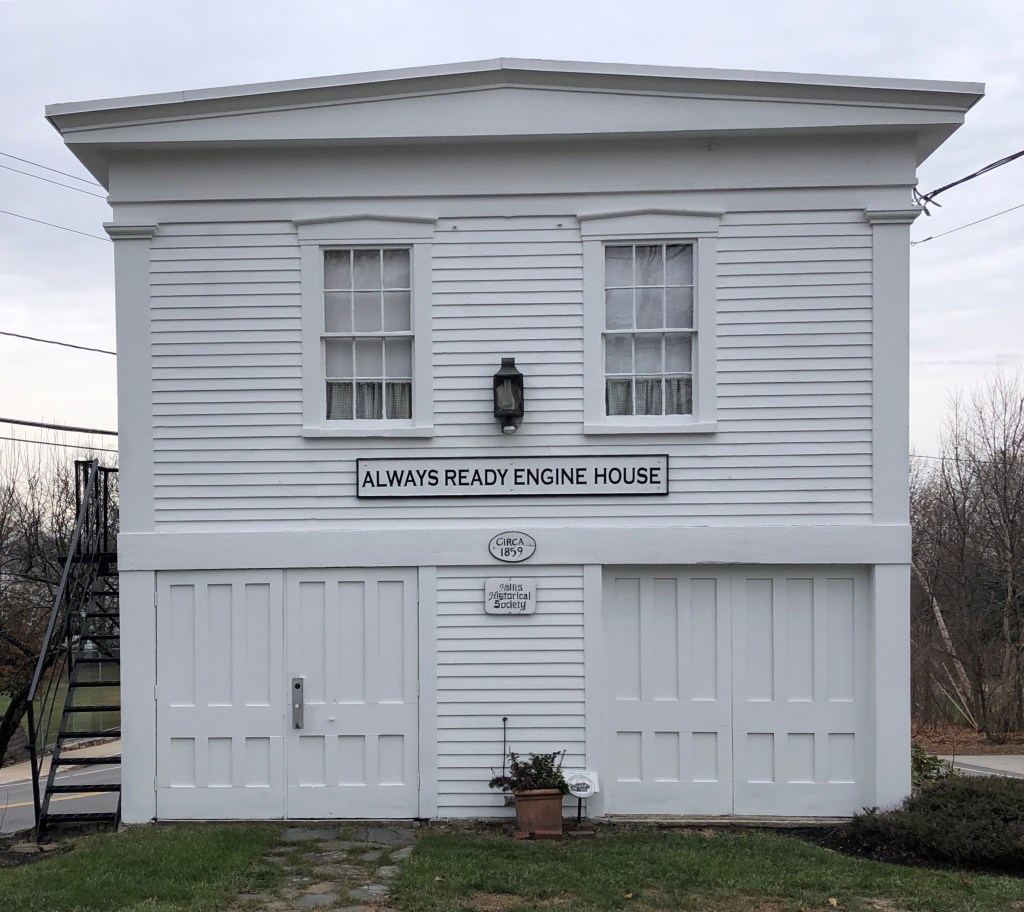
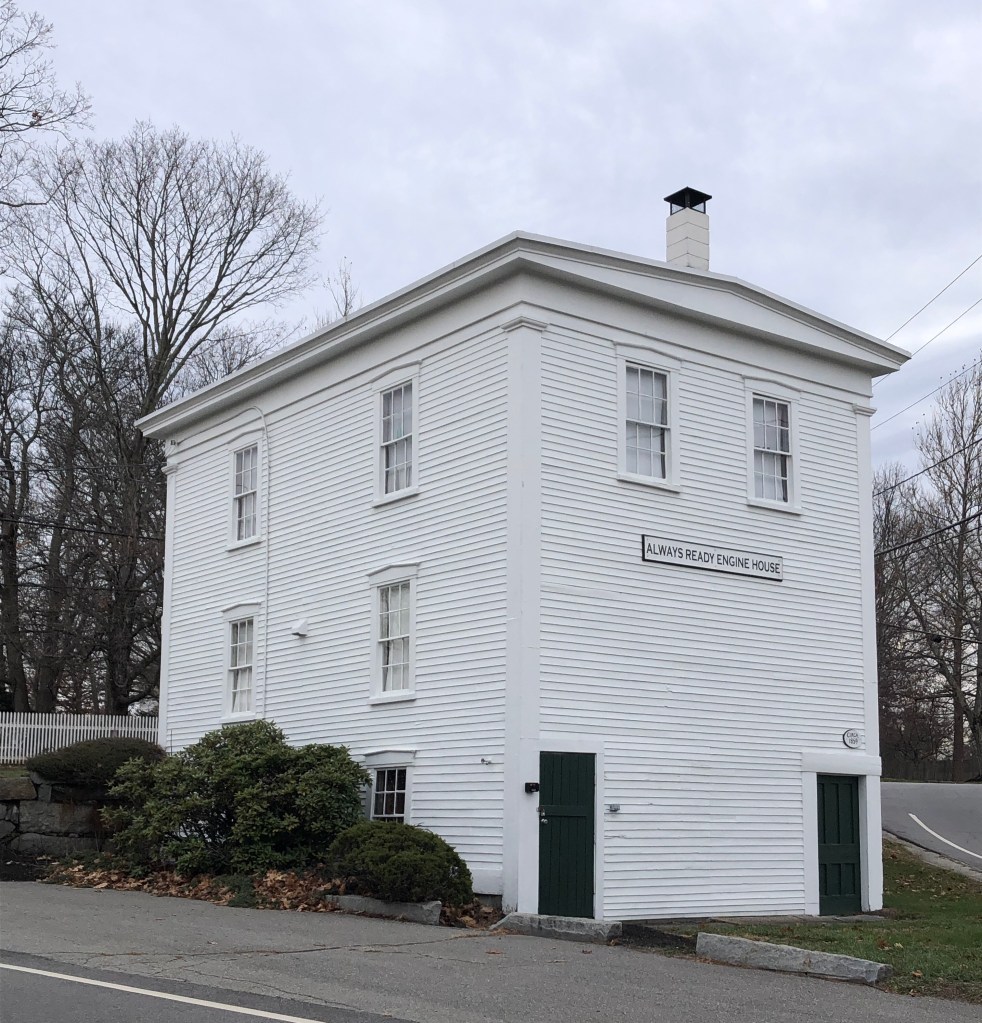
Always Ready Engine House // 1859

Located in a triangular island at the corner of Main Street and Monument Square in the charming town of Hollis, NH, the Always Ready Engine House is a two-story clapboarded building with a lower level exposed on the east end due to the sloping site. The simple Greek Revival-style building is capped by a low-pitched gable roof and is outlined by simple pilaster cornerboards. The building was constructed in 1859 by the Town and furnished by the local fire company. Initially the building was kept for the exclusive use of the engine company but in 1862 the Soldiers’ Aid Society was granted permission to meet here. In 1877 the building was altered to accommodate the Town Hearse and in 1878 part of the basement was fitted as a local police lock-up and tramp shelter. The fire department finally vacated the structure in 1950 and the building served as the police station from 1971 to 1987. It was given to the Hollis Historical Society shortly after who hold documents, objects and photos which display the history of the town inside.

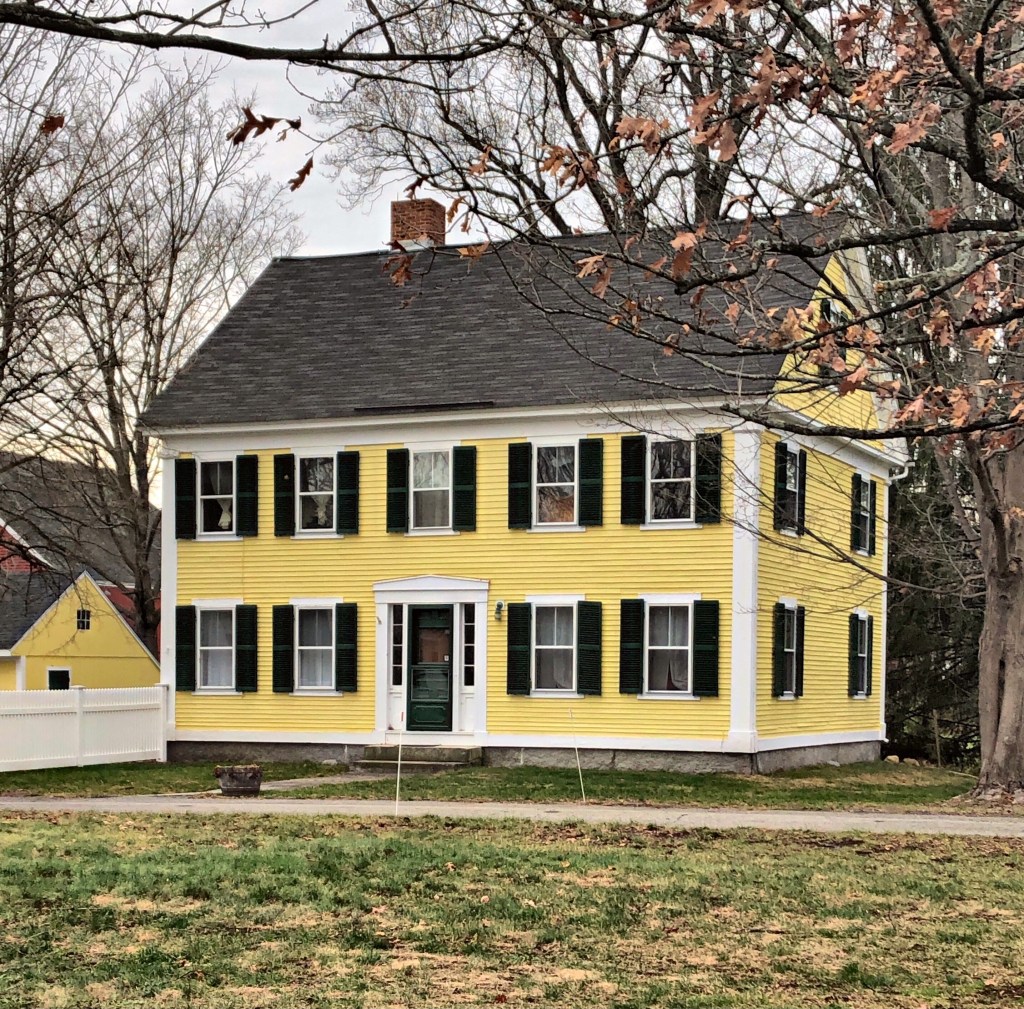
Smith House // c.1847

This home on Hollis’ town green was built around 1840, seemingly for a member of the Smith Family. The family was well-known in town as the patriarch, Rev. Eli Smith, took over as minister of the Congregational Church in town after the death of Reverend Emerson (last post). It appears that after Elias Smith’s death, the home was constructed by a member of the family who then used the land for agricultural purposes, adjacent to the former family home. The home does not face the Green or the street, but faces eastward, and features a symmetrical, five-bay facade with a modest Classically inspired door surround. The home retains its agricultural use today since the property was purchased by Robert and Martha Valicenti. The property is now known best as the Valicenti Pasta Farm, who make some of the best home-made pastas, stuffed ravioli and sauces. I even bought some for Christmas gifts. Shop Local!

Deacon Daniel Emerson House // 1768

One of the oldest extant homes (and one of my favorites) in Hollis, NH is this charming gambrel-roofed Georgian built in 1768. The home was built for Deacon Daniel Emerson Jr., the son of Reverend Daniel Emerson, who was the first minister in Hollis (his home was the last post). Besides serving as the Deacon for the Congregational Church, Daniel Jr. (1746-1820) also was Coroner and High Sheriff of Hillsborough County. He was Captain of the Hollis Company that went to Ticonderoga in July 1776 returning a year later. The home retains the massive central chimney, a common feature in older homes, to radiate heat to the entire home from the central heat source.