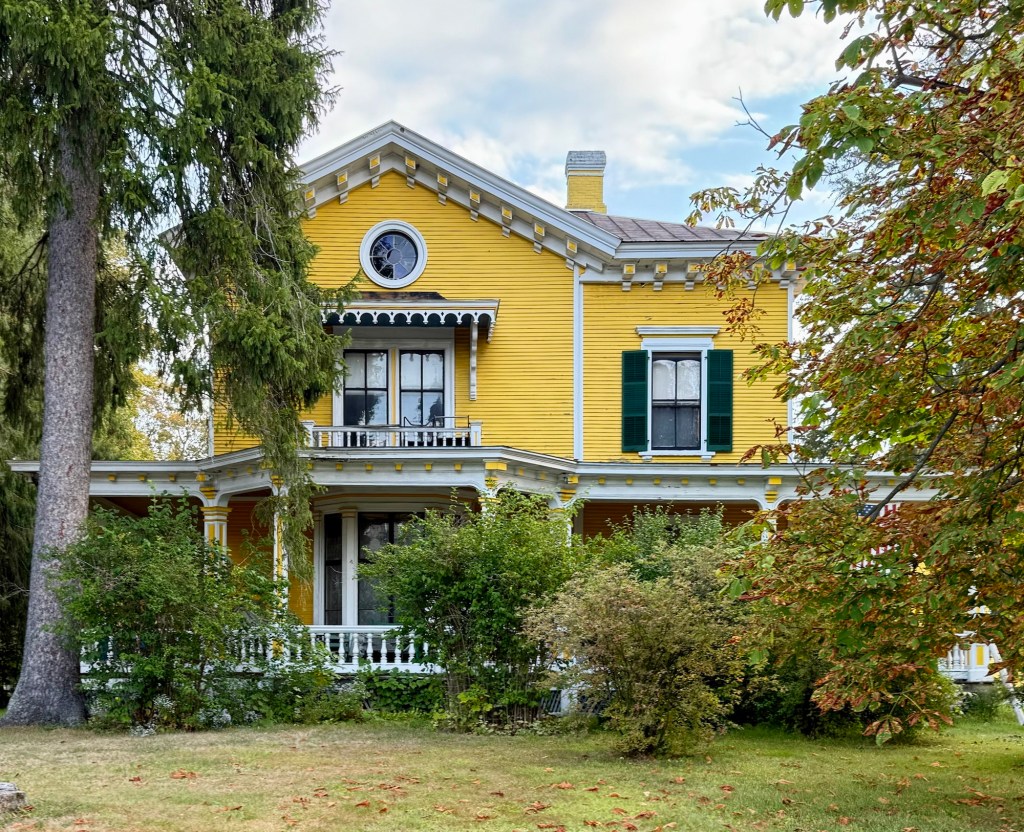
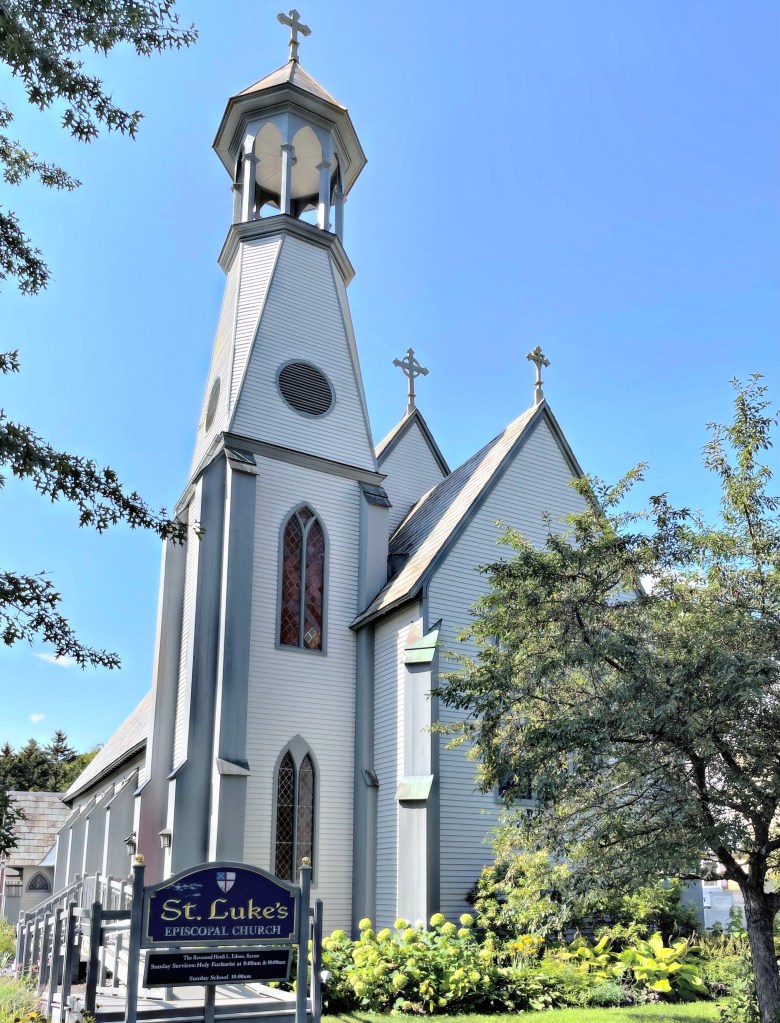
This distinctive Italianate Villa style house in the charming village of Chester, Vermont, was built in 1861 for wealthy merchant, Frederick Fullerton (1817-1869). Mr. Fullerton worked in his family’s mercantile business in Chester, and was involved with cotton manufacture in Springfield and with the Cavendish woolen mill managed by his older brother, Henry, who built an equally distinctive residence in Cavendish called “Glimmerstone“. Basically cubic with asymmetrical gabled corner pavilions, the Fullerton House is an excellent example of an Italianate Villa with bracketed cornice, two-over-two sash windows, a wrap-around porch, and second floor balcony with a bracket-supported hood with decorative valance and an oculus window above. The residence is said to have been designed by architect, William P. Wentworth, who designed the St. Luke’s Episcopal Church across Main Street a decade later.
 Buildings of New England