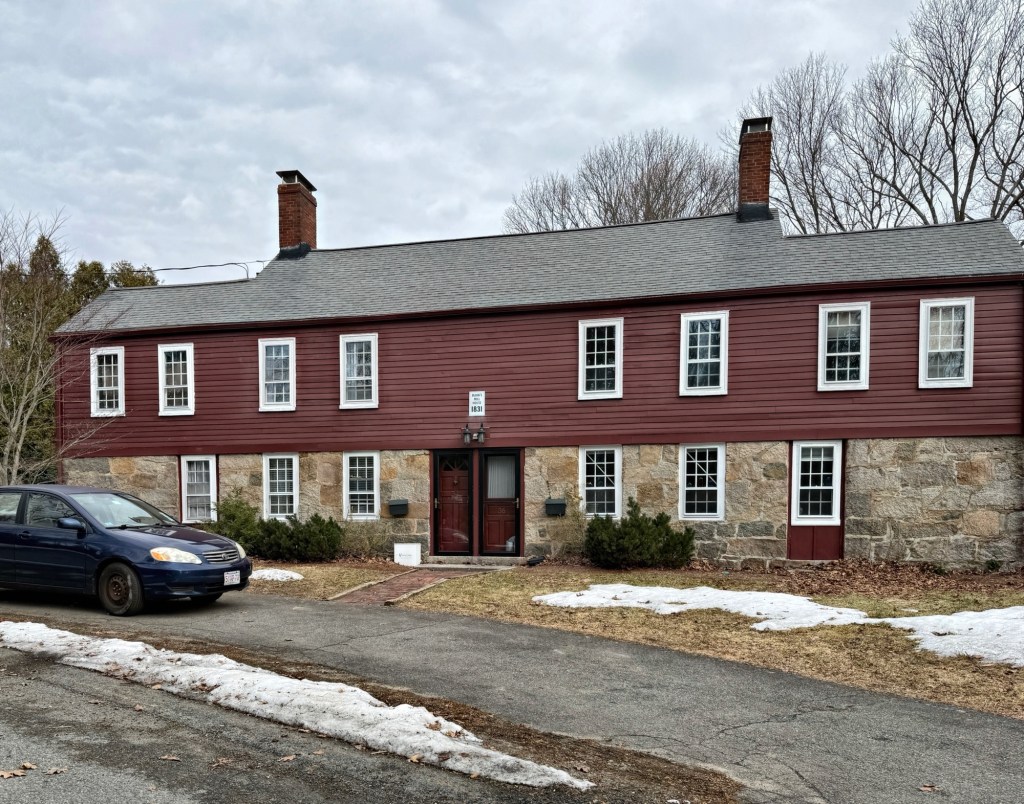
Mann’s Cotton Mill Double House // 1831

Located on the aptly named Mann’s Hill Road in Sharon, Massachusetts, this historic double-house was built in 1831 as worker’s housing affiliated with the former Mann’s Cotton Mill. The first Mann’s Cotton Mill was constructed in 1831 by George Harvey Mann on Devil’s Brook on the East Branch of the Neponset River. George Harvey Mann (1793-1847) bought the water privileges from Joseph Warren Revere, the son of Paul Revere, and built a factory. The business carried on until a fire in 1840 destroyed the factory and it was rebuilt by George and his son, George Rodney Mann. As part of the original mill complex in 1831, a series of double-houses were built nearby for workers at the mill, making them always available for long days at work. The Mann’s Mill closed in 1900, and it was destroyed by fire in 1919. The double-houses like the one seen here, were sold by the heirs of the family at the turn of the 20th century and feature a stone base and wood frame second floor. 
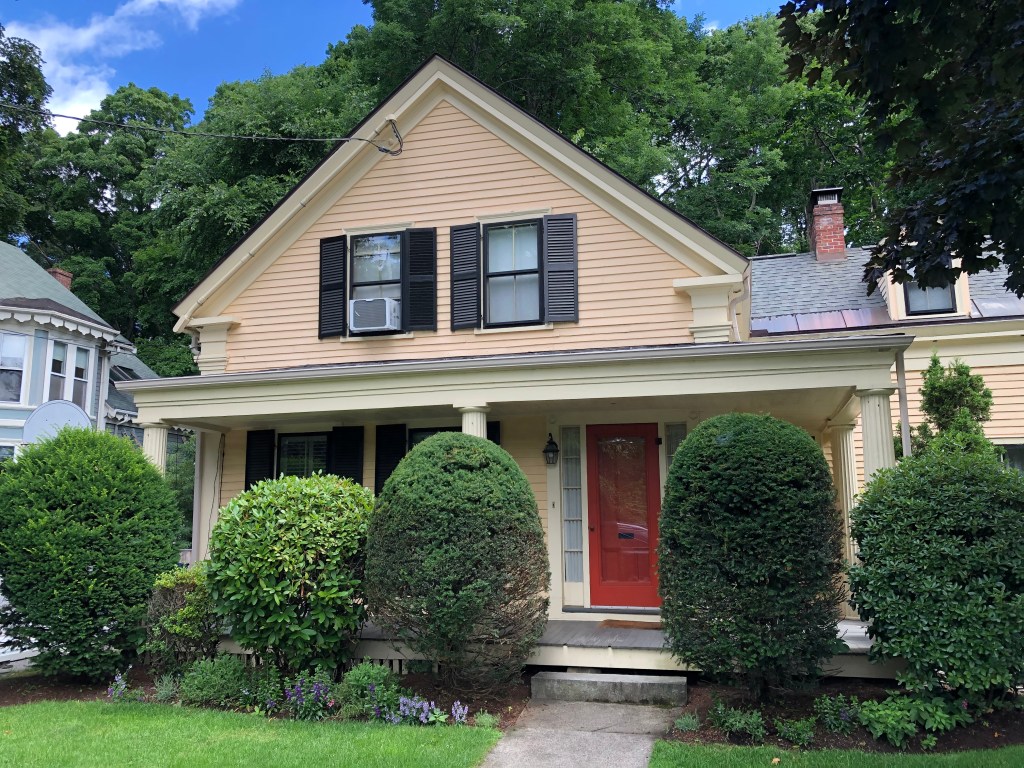
Crehore Mill Worker’s Cottage // c.1848

Toward the middle of the 19th-century, the Newton Lower Falls Village developed into a premier paper-manufacturing center of eastern Massachusetts, largely due to the forests and water power supplied by the Charles River. One of the most successful paper mills in the area was owned by Lemuel Crehore (1791-1868), who with his success, built workers cottages for his employees and their families (imagine if businesses did that today)! This Greek Revival workers cottage was occupied by employees of the mill before it was sold when the mill closed, to a house painter. The modest house stands out for the gorgeous wrap-around porch supported by fluted Doric columns, an off-center entrance with sidelights, and corner pilasters.

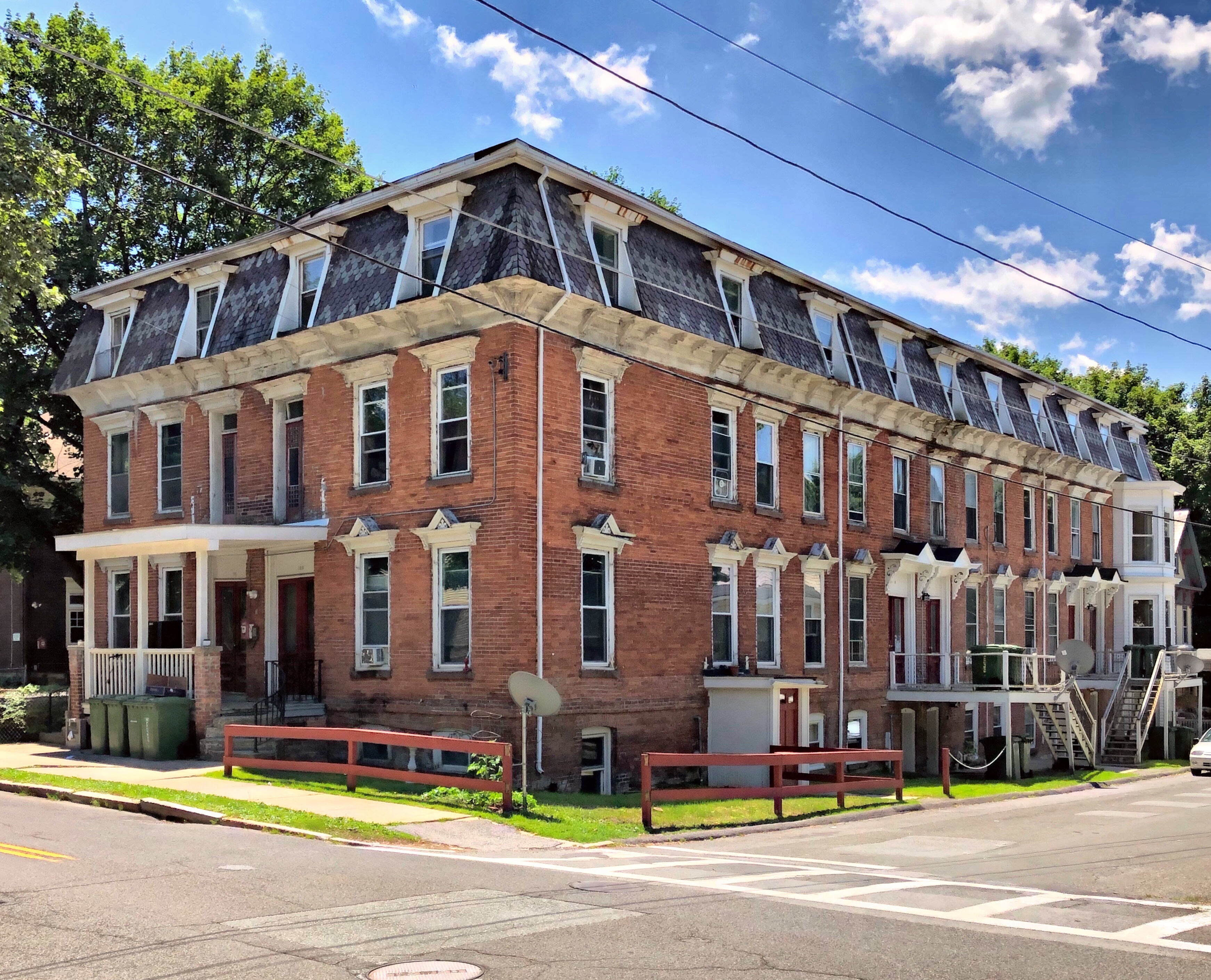
Church Street Tenements // 1872

Industrial cities and towns all over New England drew in thousands of European immigrants looking for work. Due to the massive influx of workers and families, many towns and companies constructed tenement housing and other worker’s housing to provide living spaces close to factories and mills. This six-unit tenement house was built in 1872 and is a high-style Second Empire example of worker’s housing in North Adams. The use of brick, mansard roof, and window hoods was likely a concerted choice by the developers as they were located on a street lined by mill owners houses and the who’s who of North Adams.