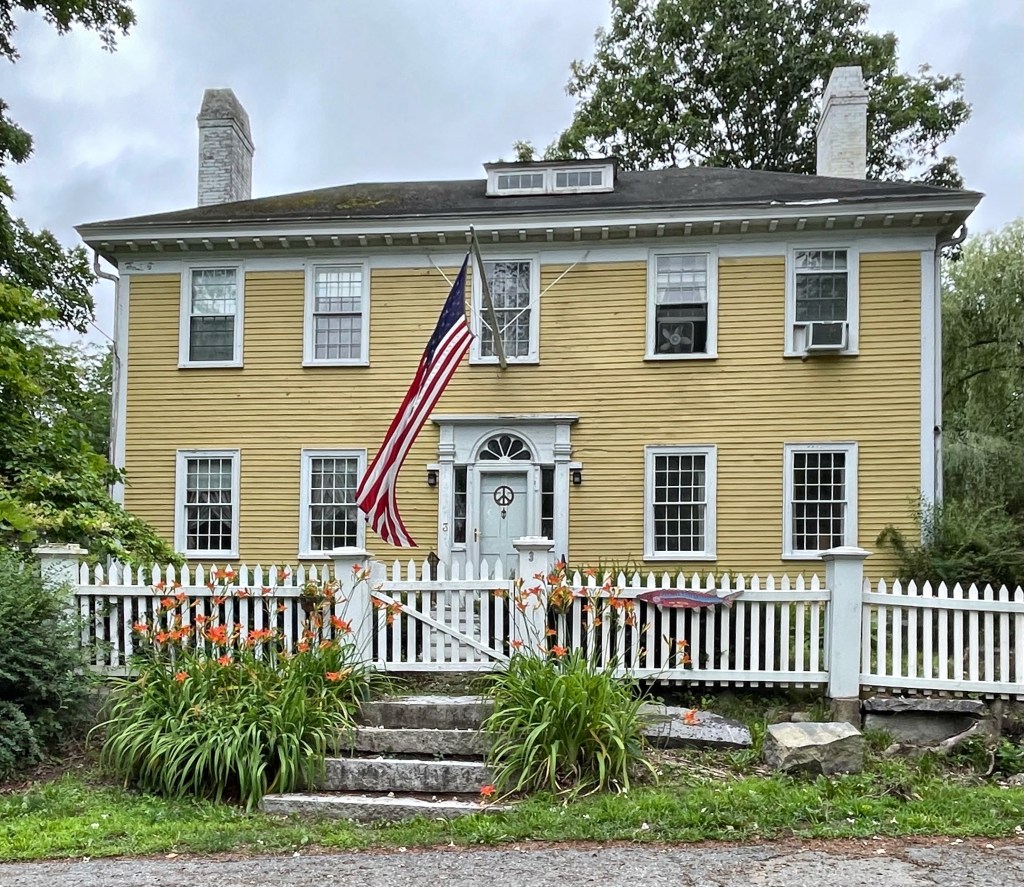
Laura Richards House // 1810

This stunning Federal style house in Gardiner, Maine, was built about 1810 by Ebenezer Byram, who had purchased the land from Robert Hallowell Gardiner, a descendant of Dr. Sylvester Gardiner, the “founder” of the town. Dr. Gardiner was a resourceful Boston druggist, who was one of the principal owners of the Kennebec Purchase, known as the Plymouth Company, who purchased land on the west side of the Kennebec River in Maine. Dr. Sylvester Gardiner had been attracted to the Gardiner area for a number of reasons, primarily because of the depth of the water of the river to the point of Gardiner as the head of navigation for ships here. This house overlooking that river was purchased in 1878, by Henry and Laura E. Richards. Laura Richards (1850-1943) was the daughter of Samuel Gridley Howe, an abolitionist and the founder of the Perkins Institution and Massachusetts School for the Blind. Her mother, Julia Ward Howe wrote the words to The Battle Hymn of the Republic, a tune that I am sure most of you have heard of, but never knew the name. Henry and Laura moved to Gardiner in 1876 after suffering financial reverses in Boston, where Henry worked at his family’s paper mill, and it was about that time that Laura Richards began her writing career. At this house in Gardiner, Laura wrote more than 90 books including biographies (including one on her mother), poetry, and several children’s books. Even more impressive, Laura was awarded one of the first four ever Pulitzer Prize in 1917 for her biography on her mother, years before women were even afforded the right to vote!
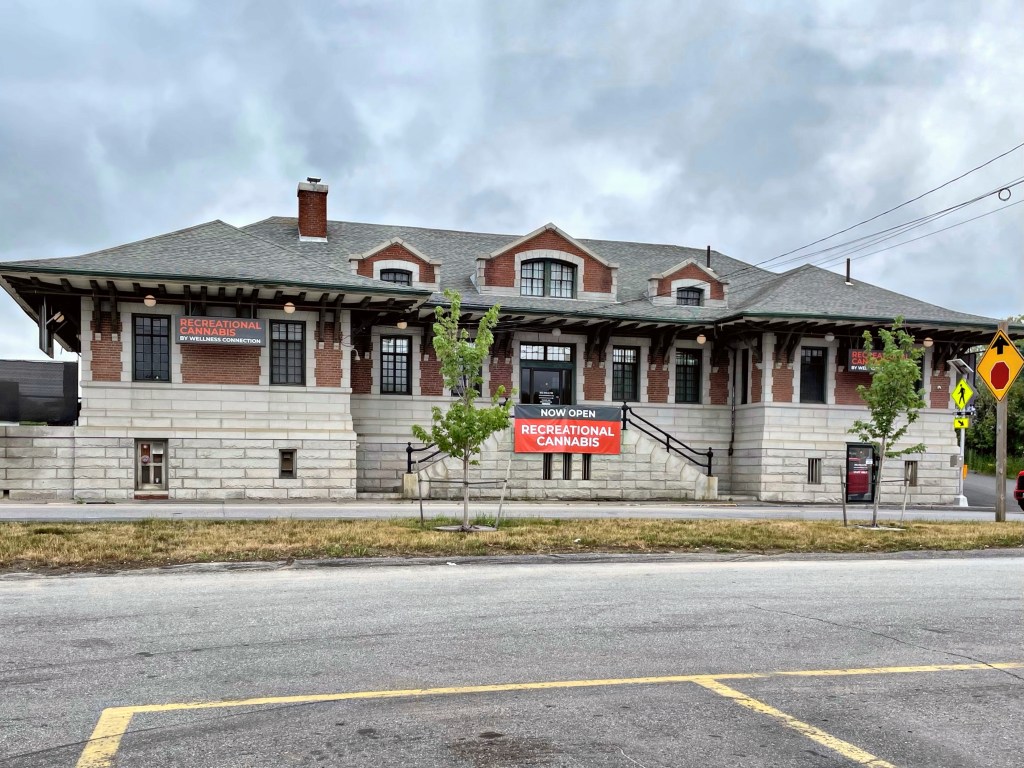
Gardiner Train Depot // 1911

The first train arrived in Gardiner, Maine in 1851. Rail here introduced a new mode of transportation for passengers and freight, which previously relied on horse or ship up the Kennebec River. When the old station was deemed too small and outdated, the Maine Central Railroad Company decided to hire Portland architect, George Burnham to complete plans for a more fitting station. This building is a mix of styles, the two I would categorize it as are Romanesque Revival and Spanish Revival. The building incorporates a number of influences of the two along with a deep overhanging roof supported by large brackets, heavy rusticated granite blocks at the base, and quoining around the windows and corners. The station was in operation until about 1960 when rail service here halted. Since that time, the building has been adaptively reused as a retail store, today as a recreational cannabis dispensary. So you can get high and look at cool architecture!

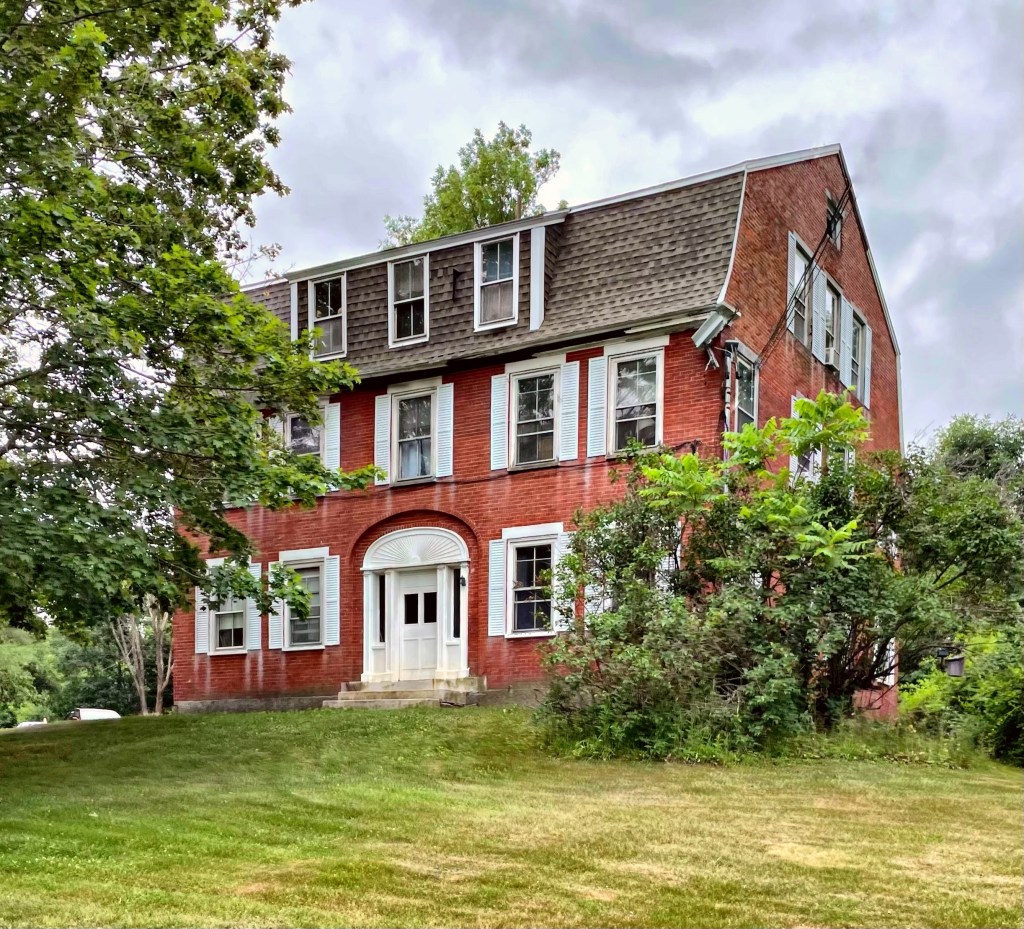
Gardiner Almshouse // 1834

This large brick Federal house was built on the outskirts of Gardiner, Maine, in 1834. Ebenezer Moore, the builder, worked as a carpenter and house-wright in town and showcased his skill on his own brick mansion, selling it to a C.E. Bradstreet. By the late 1840s, the town of Gardiner decided that it would need a new almshouse, city-provided housing for the poor, so they purchased the Bradstreet house and 14-acres of land. In the 1848 town report documents noted, “The establishment is a brick one, of two stories, containing thirty-six fine rooms, including seven fitted for the insane in the most admirable manner, together with a spacious hall. The building is every way a most excellent one for the purpose, and is a monument of the humanity and generosity of the city.” The almshouse served as a working farm where the poor could harvest their own crops and contribute in a small, closed society. The almshouse burned in 1909, and was immediately rebuilt using the outside brick walls. In the Colonial Revival manner, a gambrel roof replaced the former gable roof, which added a third story to the almshouse. The building was eventually sold, as new housing models for low-income residents took off. The former almshouse was converted to an apartment building in 1970, a use that appears to continue to this day.

Tucker Octagon House // 1856

The Octagon form of architecture was conceived in 1848 in the prolific mind of Orson Squire Fowler, phrenologist and author of books on sex, family relations, and many other subjects. His book A Home for All, or, the Gravel Wall and Octagon Mode of Building struck the fancy of a certain few, and Octagon homes were built across the country, for just about a decade until they fell out of favor almost overnight. This home in West Gardiner, Maine, was built by Jesse Tucker in 1856 on land his father had cleared, replacing a more standard structure. The new octagon house was being constructed as a gift to Jesse’s soon-to-be wife, but tragically fell from the roof of the barn when building, and died. The home was completed, and it was seemingly acquired by Jesse’s twin brother David. The home remained in the Tucker family until the 1950s.

Peter Grant House // 1830

The this 1830 home in Farmingdale ranks as one of the first Greek Revival temple style residences in Maine. Situated on a rise overlooking the Kennebec River, the house reflects a dignity befitting the commercial success of its original owner, Peter Grant. Peter Grant was born in 1770 in Berwick, Maine. He was a fourth generation descendent of an earlier Peter Grant, born in Scotland in 1631, and one of 3,000 Scots taken prisoner by Cromwell’s army at the Battle of Dunbar. In 1650, he was sent as a convict laborer to the iron works in Lynn, Massachusetts, for a term of seven years. A number of the Grant family settled in Berwick, Maine, and from there, Peter, builder of this house, and his father, Capt. Samuel Grant, moved to Gardiner. Peter Grant soon involved himself successfully in land speculation and shipping in the area. In 1796 he and a group of associates, purchased a large tract of land along the west shore of the Kennebec River, which later became Farmingdale. Grant became sole owner of better than 200-acres of this land in 1800 and built a substantial house soon after. The original house was destroyed by fire and was replaced by Grant with the present house in 1830 six years before his death in 1836.

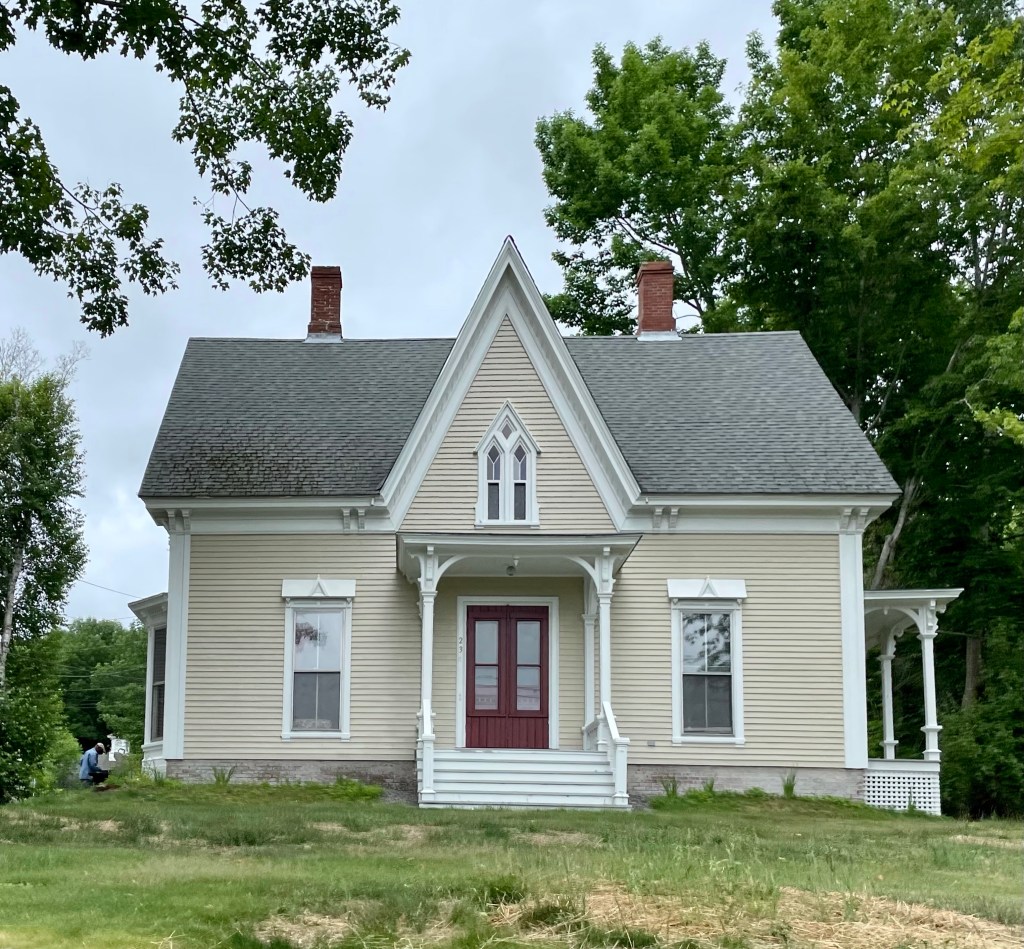
Dr. Gertrude Heath House // c.1850

Constructed c. 1850, this Gothic Revival house in Farmingdale, Maine, has many identifying features common in the style: a symmetrical facade, steeply pitched gable, and lancet windows in the front gable. Besides its architectural significance, the home is also historically significant as the home of Dr. Gertrude Heath. Gertrude Emma Heath (1859-1935) was born in Gardiner, Maine in January 1859. When Gertrude was just three years old, after the American Civil War began, her father died in battle at Fredericksburg, leaving his widow Sarah to run the family affairs. She excelled in school and received her early education in the public schools of Gardiner, afterward attending Hahnemann Medical College at Chicago, Illinois, taking special courses. She graduated from this institution in 1883 with the degree of Doctor of Medicine, and began medical practice in Chicago in 1884, moving back home within that year. Soon after returning to Maine, she accepted a position at the Maine State Hospital, at Augusta, where she specialized in eye and ear conditions. It is amazing learning stories about such strong women, when at the time, women medical practitioners were almost unheard of and women were decades away from earning the right to vote.

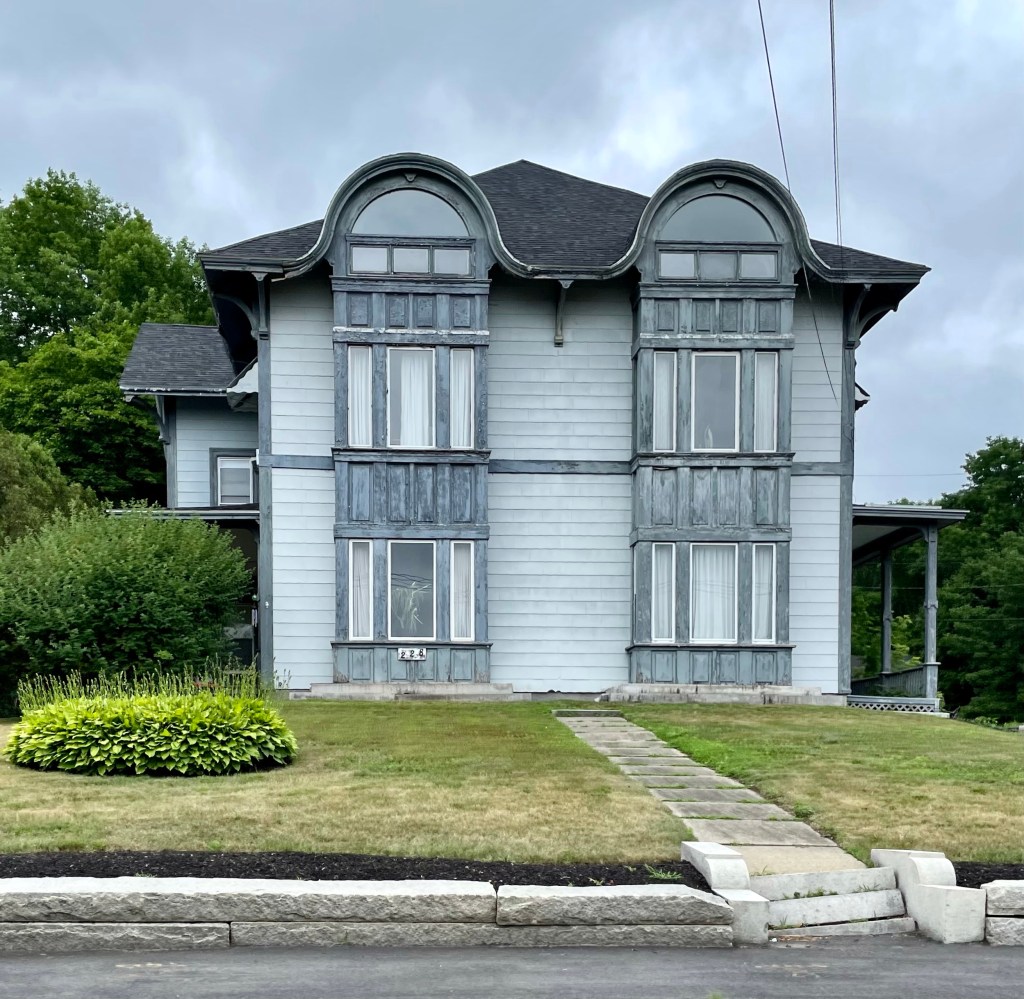
Folliett Lally House // 1855

One of the most unique homes in the state of Maine has to be this stunner in the small town of Farmingdale. Perched high on a hill overlooking the Kennebec River, the mansion was built in 1855 for Folliett Lally, a wealthy Civil Engineer. In 1842, Lally was hired by the U.S. Government to map out the border between present day Maine and New Brunswick, Canada. The issue arose after the Treaty of 1783 ending the American Revolution had described the northeastern boundary of the new United States, but with unclear boundary descriptions. After the Aroostook War in 1838-9, a cold war between the U.S. and Britain (who controlled New Brunswick), the long-standing controversy was ended with the Webster-Ashburton Treaty (1842). The new boundary was proposed by the King of the Netherlands, a mediator, who granted the U.S. more of the disputed area. We have Folliett Lally to thank for mapping and charting out the present northestern boundary of the United States. Now back to the house. The home was designed by Charles Alexander, a Portland-based architect. The home was sold, likely after Lally’s death, to two men, who converted the it to a double house, with entrances on both side elevations. A brick wall was run through the center of the home separating the house in half. The building was since divided up more and apparently has eight units.

Robert Thompson House // 1867

Just a few doors down from the Nathaniel Stone House (last post) in Farmingdale, Maine, this large Italianate style home similarly commands the prominent siting overlooking the Kennebec River. The house was built in 1867 for Robert Thompson (1806-1888), a Scotsman, who took over a pottery company in nearby Gardiner. Robert and his wife Phebe had two children, Lucy and David, the latter died within his first year of life. After the couple passed, they willed their home to daughter Lucy, who married a druggist, James Jackson. The Colonial Revival style doorway was added sometime after their passing in the early 20th century.

Captain Nathaniel Stone House // 1872

The Captain Nathaniel Stone House in Farmingdale, Maine was constructed in 1872 on a small plot of land overlooking the Kennebec River. The charming home was constructed by Nathaniel Stone (1797-1884), a retired ship chandler,(a dealer in supplies or equipment for ships) who moved back to his hometown after making his fortune in Boston. He lived here with his wife, Martha, and his adopted son, Uriah, in this fashionable Second Empire style. Nathaniel died in 1884, outliving his wife by two years. The property was willed to his adopted son Uriah, who quickly sold the home on account of him seeing ghosts inside, he refused to live there because of it. The home was acquired by William Ring, a businessman who owned real estate in nearby Gardiner, Maine. Between 1886 and 1912 he and his family resided at the former Stone House, but by the turn of the Twentieth-century he grew increasingly in debt, and on several occasions he borrowed against his property to meet his obligations. Before the home went up for auction in 1912, a massive fire broke out in the home, destroying all the interior woodwork, and William perished inside. Although significantly damaged, it was largely rebuilt to its original appearance by its eventual buyer and has been an architectural landmark on the Kennebec River ever since. Now that I think of it, maybe Uriah Stone could see the future and saw William Ring as a ghost!