Justin Morrill Homestead // 1851

One of the most stunning Gothic Revival homes in New England has to be the Justin Morrill Homestead in the tiny town of Strafford, Vermont. The home was designed by and built for Senator Justin Smith Morrill (1810-1898), who was born in town and worked with his mentor Jedediah Harris at the local store. He later expanded and owned numerous stores in the area and diversified, investing in railroads, banks and real estate in the region. He retired in the late 1840s and became a gentleman farmer, building this Gothic Revival home in town. In 1854 Morrill was elected to the Thirty-fourth Congress as a Whig. He was a founder of the Republican Party, and won re-election five times. In 1866, Morrill was elected to the U.S. Senate as a Union Republican, serving until his death in 1898. Morrill is best known for sponsoring the Morrill Act, also known as the Land Grant College Act. This act was signed into law by Abraham Lincoln in 1862, and established federal funding for higher education in every state of the country. Senator Morrill primarily used this house as a summer residence, as he spent much of his time in Washington, DC. The property remained in the Morrill family, until World War II. The house was eventually acquired by preservationists, who sold it to the state in 1969 for use as a Historical Site and museum.
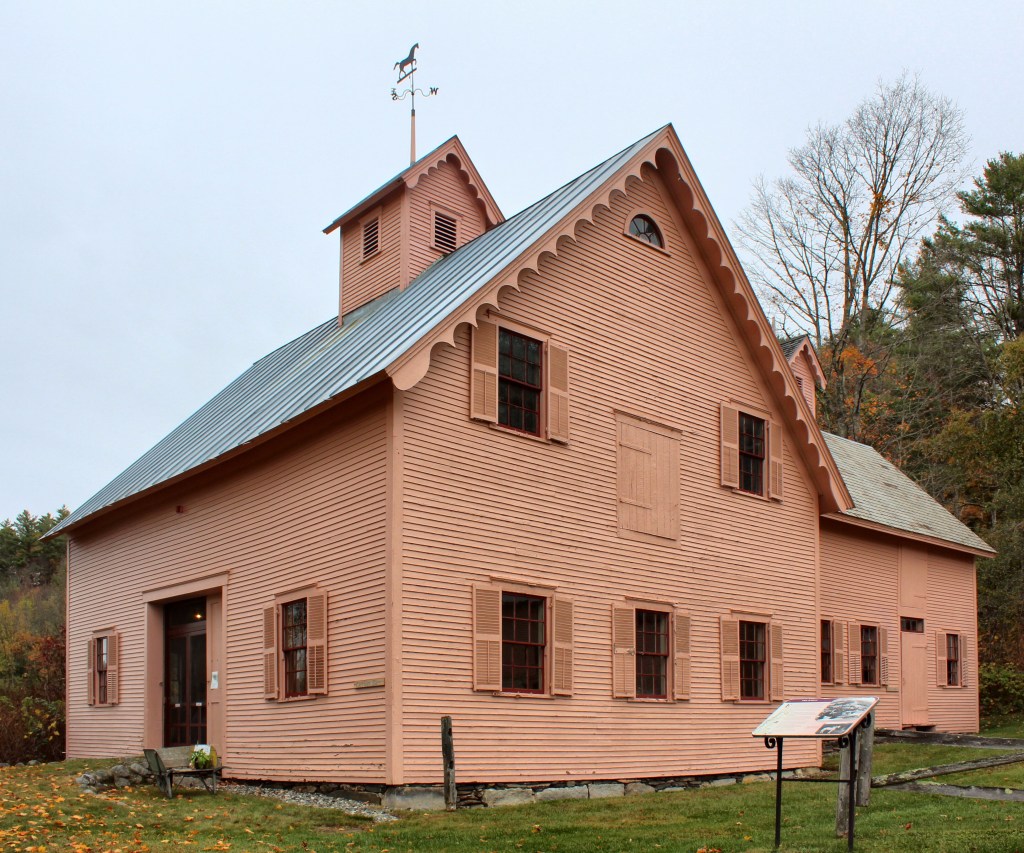
Justin Morrill Barn

Universalist Church of Strafford // 1833

The Universalist Society of Strafford, founded in 1798, is the second oldest in Vermont and fourth oldest in the nation. In the early years, Universalists met in Strafford’s Town House, sharing the building with other denominations. Eventually the Universalists, Baptists, and Congregationalists all built their own churches, with the Universalists building a structure in 1833 in South Strafford Village. The white clapboarded church sits high on a hill with a gorgeous belfry and large stained glass windows.

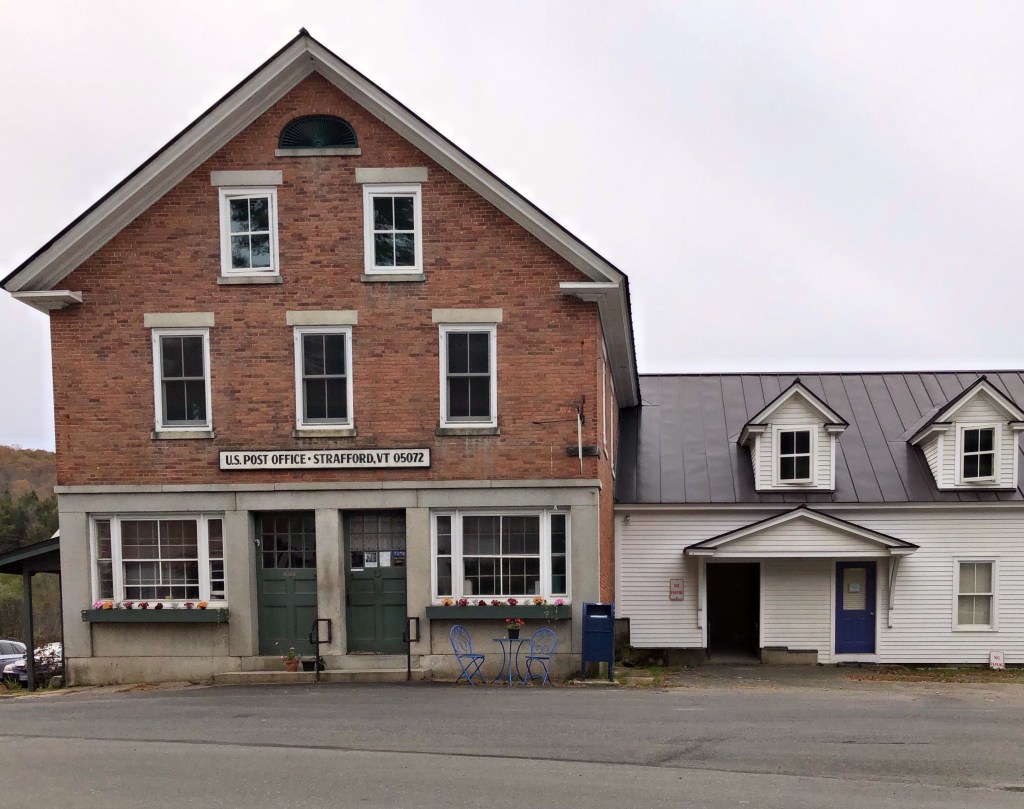
Harris Store // 1834

In 1833, Jedediah H. Harris, who had run a general store in Strafford village since 1803, commissioned a local contractor to build a new brick and granite store. Harris and his then-partner, Justin Morrill, opened the store in late fall 1834, selling provisions to locals and visitors to the small town. Morrill would later go on to construct a stunning Gothic home nearby and become a leading U.S. Senator. For more than one hundred years the store passed through a succession of owners, until C. William Berghorn Jr. closed it in 1951 to make it his residence. The building has since been converted to the local post office branch, with a residential unit likely above.

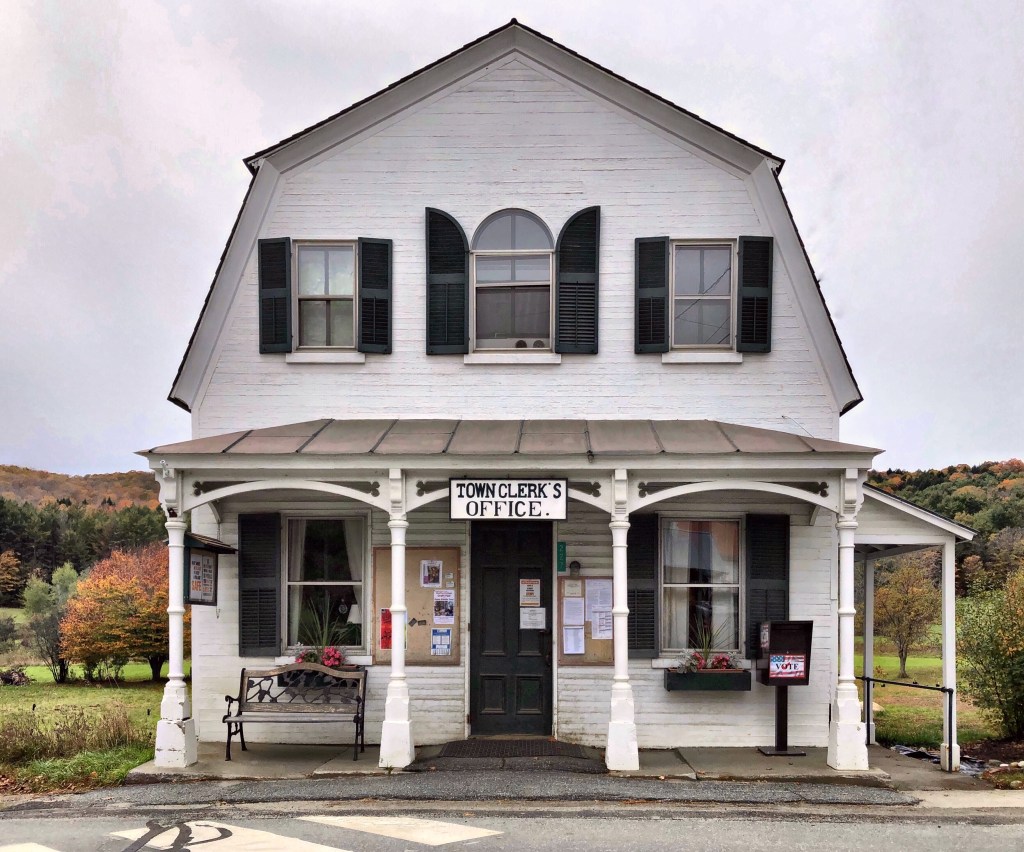
Strafford Municipal Building // 1883

Designed and built by Senator Justin Morrill in 1883, this building was donated to the town of Strafford by Morrill in memory of his mentor Jedidiah Harris. It was given to the town as a public library in part to house the Harris Library, which in turn had been created by a bequest from Harris. This structure remained a library until the Morrill Memorial Library building was completed in 1928 and its collection was joined with Morrill’s. It is currently used as the Town Office building providing space for the Town Clerk/Treasurer and Town Records, and town boards. The white clapboarded building has Victorian detailing with the spindled posts at the porch with a prominent gambrel roof covered in slate. Cute!

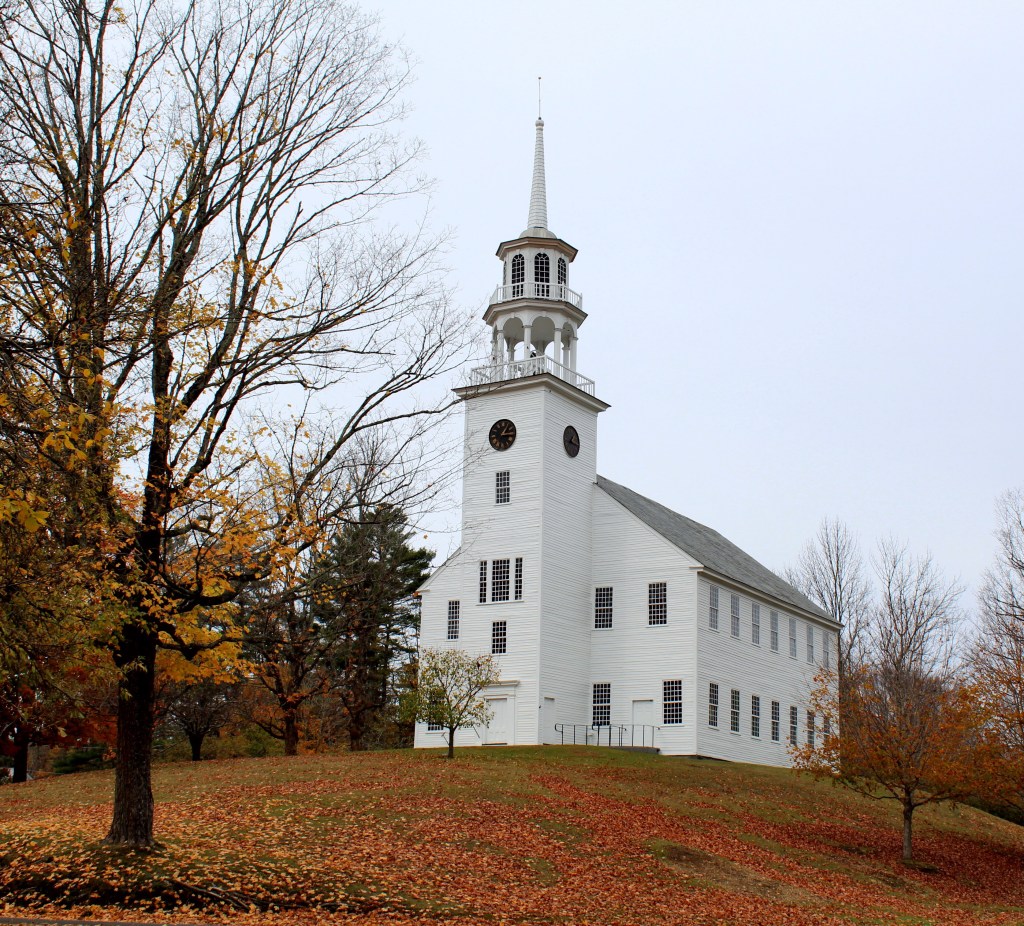
Strafford Town House // 1799

Perched atop a hill at the edge of the town common in Strafford, Vermont, the Strafford Town House epitomizes rural New England charm. The town house was constructed in 1799 by local carpenters as a place to do public business and served for a brief period in the early days as a meeting house for various local congregations. The building is one of the oldest meeting houses in Vermont and was one of the first meeting houses to put the entrance at the tower-end and the pulpit at the other end of the building. The change from a side-entrance orientation reflected a time when New Englanders were clearly deciding to separate their political business from their ecclesiastical affairs.

Peabody Library // 1867

Located in the Post Mills Village of Thetford, Vermont, the Peabody Library is one of the cutest library buildings ever! The library was a gift to the community of Post Mills by George Peabody, one of the first great American philanthropists. Peabody spent some time in Post Mills as a teenager, where his maternal grandfather lived. Peabody’s grant of $5,000 paid for purchase of the land, construction of the building, and acquisition of 1,100 volumes. He also donated funds for other libraries including the Peabody Institute Library in Danvers. The library exhibits a unique blend of characteristics from both the Greek Revival and Italianate Revival styles, being an outstanding representative of the mid nineteenth-century transition in architectural fashion. Oh to see inside this little library!

Hezekiah Porter House // 1822

Hezekiah Porter (1783-1851) built this house in 1822 for him and his family, right in Thetford Center, Vermont. Porter was born in 1783 in Hebron, Connecticut, where he presumably learned the clothier trade, before moving to Thetford in 1806. Porter later operated a brickyard, serving as contractor to the Thetford Center Methodist Church, Town Hall and several other brick homes in town dating from the 1820s and 1830s. Porter lived on this large property with his wife and ten children until his death. The property was later occupied by Hezekiah’s son, Amos P. Porter. In 1888, Amos farmed about 200 acres and had 7 cows, 50 Merino sheep and 18 Jersey cattle!

Thetford Center Methodist Church // 1838

An outstanding example of the Gothic Revival style churches in Vermont, this brick, three bay, gable front church was constructed in 1838 in Thetford Center Vermont. The Gothic Revival style is expressed here primarily in the pointed louvered insets above the windows (including the pointed louvers in the steeple) and the finials at the steeple. The church building was constructed using brick made in the local brickyard owned by Hezekiah Porter. Designed to seat 250 people, it was constructed for the cost of a mere $1,400. Behind the church is the Evergreen Rest Cemetery, administered by a Cemetery Association, in which are many of the early residents of Thetford and members of the congregation and its founders.

Hosford Stone House // c.1835

Josiah Hosford of Thetford, Vermont built this stone house for his family in about 1835. Hosford was a stone mason who built a series of stone houses in town, using stone quarried in nearby Lyme, New Hampshire. Josiah Hosford (1802-1883), was the grandson of Aaron Hosford, one of the earliest settlers in the North Thetford area. The distinguished family contributed resided and contributed to the town’s vibrant history, as ministers, teachers, artists, farmers, and tradespeople. A fire at the home in the early 1900s gutted the interior, and the owner at the time, a carpenter, reconstructed the interiors, shingled the side gables, and added on the porches.

Child Farmhouse // c.1835

Constructed out of stone quarried from nearby Lyme, New Hampshire, the Child Farmhouse is one of a handful of stone houses in East Thetford, Vermont. This house is a particularly fine example of a Cape Cod with Federal detailing, as translated into granite construction. The home features stone lintels over the door and window openings. It was built for Bela Child (1786-1866), likely after the death of his first wife, as a new home for his second. The family operated a massive farm along the Connecticut river.