Governor Oliver Ames Mansion, Easton // 1860-1937

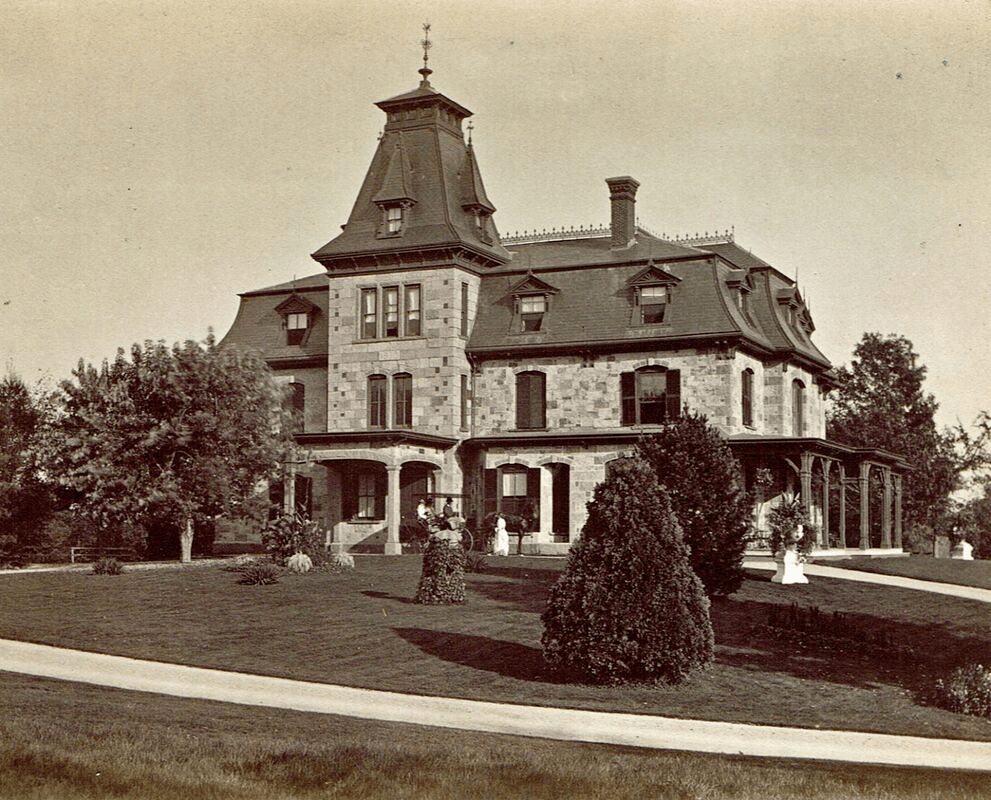
Oliver Ames (1831-1895) was born into the wealthy Ames Family of Easton, Massachusetts, best-known for their shovel-making empire and later philanthropy through generous gifts to their hometown. Oliver was executor of his late-father’s estate and took over many of his business interests, later entering the political arena, where he was elected as the 35th Governor of Massachusetts. In 1860, Ames married Hepsabeth “Anna” Coffin of Nantucket, and the couple went about building their large mansion in Easton, a stone’s throw from the company shovel works. The architect is not widely known for the stone, Second Empire style mansion, but it is possibly the work of Boston architect, George Snell, who also designed Langwater, a residence for Oliver’s cousin, Frederick Ames, around this time. The palatial mansion would later serve as the couple’s country retreat and after the death of Oliver and Anna, the heirs maintained the home for some time, until it was ultimately razed in 1937. A new, Neo-Colonial residence was built in 1951 on the original foundations, but that too was ultimately demolished in 2022 by the Trustees of Reservations, who maintain the property. A three-season tent is now located on the site of the mansion.
Ames Shovel Works Stable & Offices // 1897

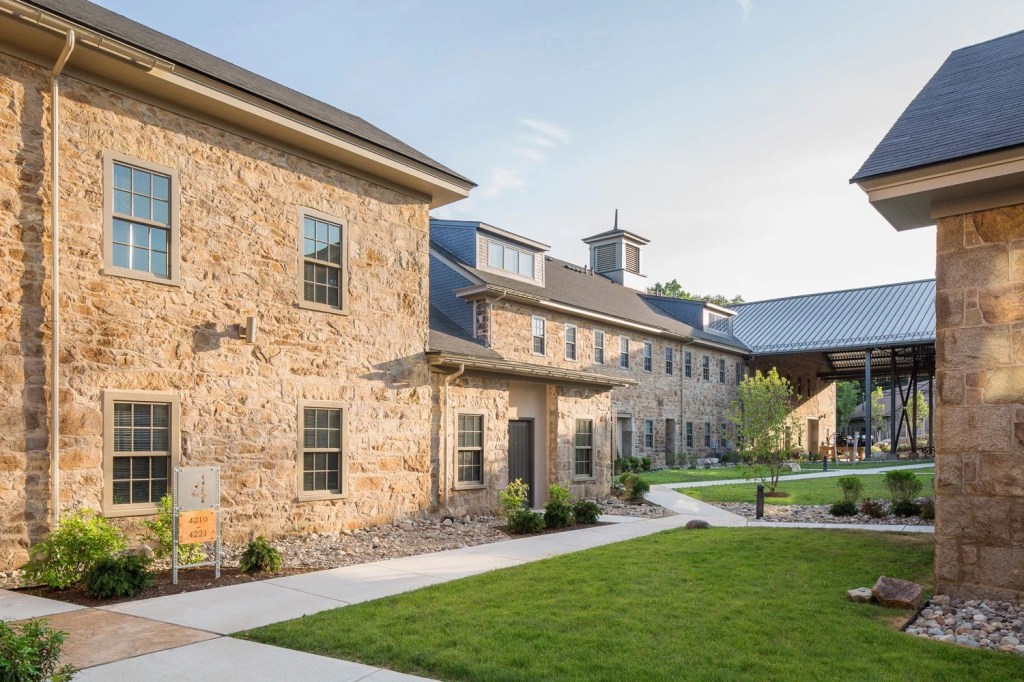
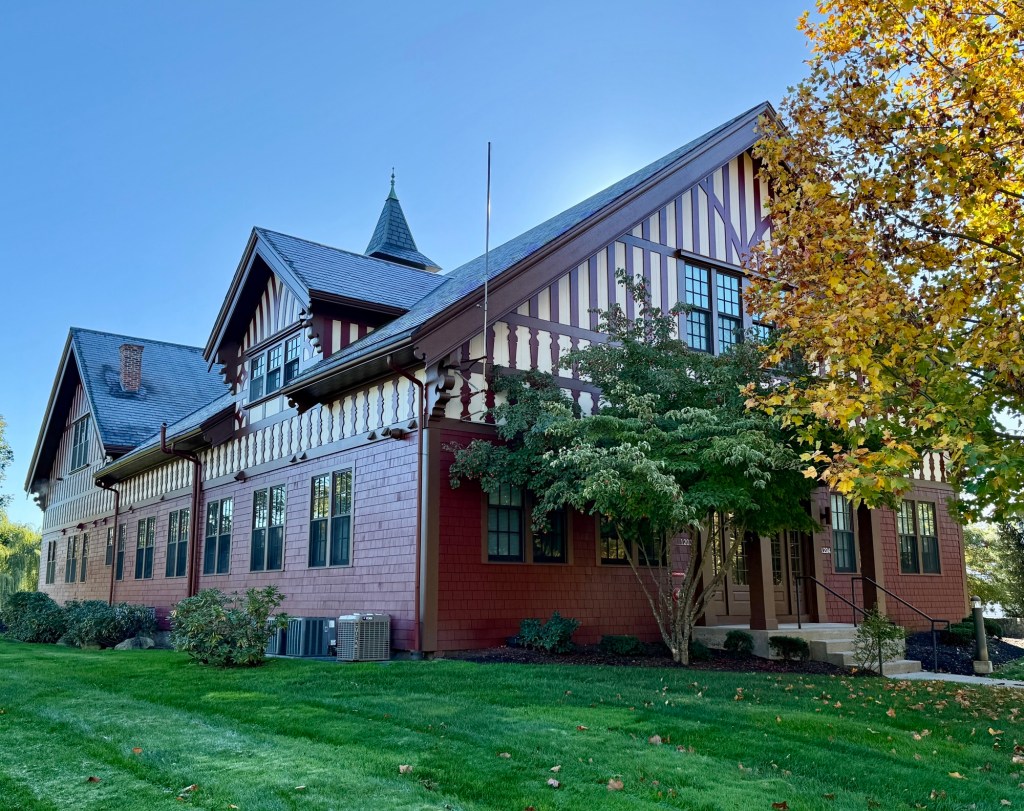
The former Ames Shovel Works comprises an area of roughly eight acres in the middle of the village of North Easton, Massachusetts, and it was here that the Ames Family and the village became known for incredible wealth and amazing architecture. The firm was started by Oliver Ames (1779-1863), who moved to Easton and began manufacturing shovels. After a fire destroyed many of the original wooden shops in 1852, O. Ames & Co., now run by Oliver Ames’s sons, Oakes and Oliver, Jr., opted to rebuild in fireproof granite for the new buildings. The company saw rapid growth in the second half of the 19th century, and by 1879, the company is said to have produced 60 percent of all the shovels in the world. Ames shovels were bought as America was expanding westward with its products used to move dirt for the transcontinental railroad and the Panama Canal. After a fire destroyed the company’s old barn/stable in 1887, the company held horses and oxen in a nearby structure until 1897, when this handsome stable building was constructed. The new, elaborate barn is designed in the English half-timbered style, with its proximity to the Ames family’s fancy residences Main Street, likely leading to its distinctive architectural appearance. In 1928, the stable was converted to company offices and after the company closed following WWII, it was rented until a massive rehabilitation of the site into housing, was completed in 2014. The stable building was converted into seven condominium units by PCA Architects, who preserved the stately exterior and modified the interiors to meet the new residential use.

I could not locate the architect of the 1897 building, so if anyone knows, please share!

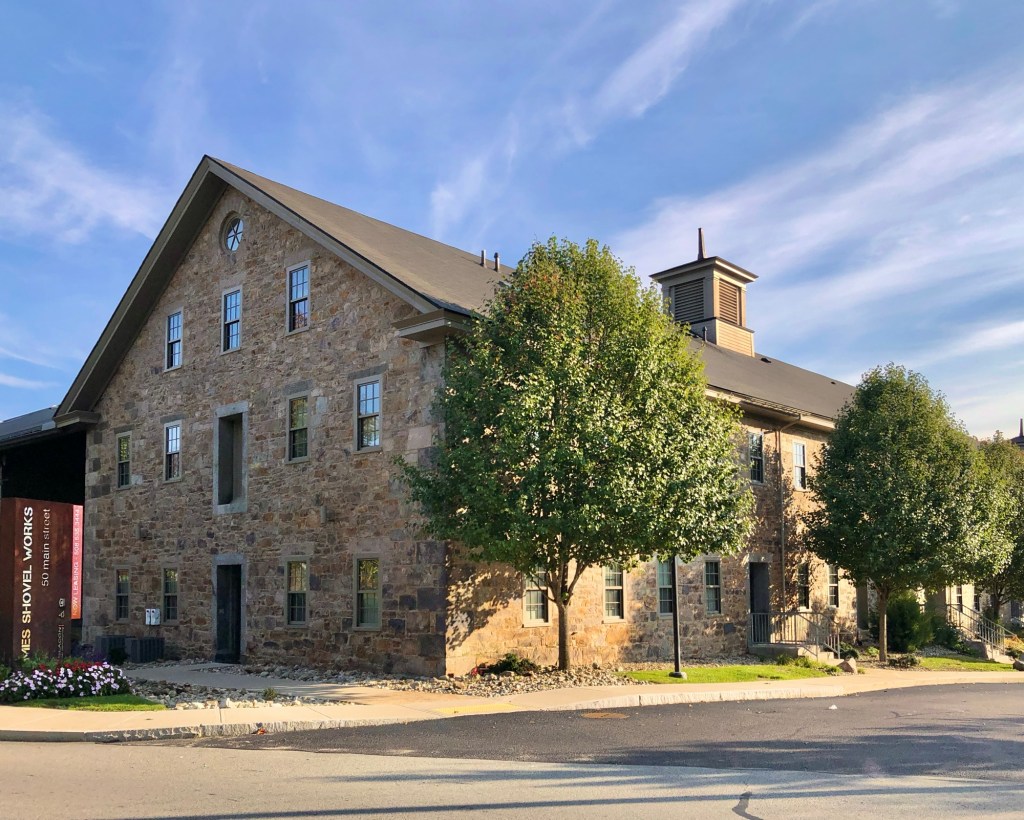
Ames Shovel Works // 1852

The former Ames Shovel Works comprises an area of roughly eight acres in the middle of the village of North Easton, Massachusetts, and it was here that the Ames Family and the village became known for incredible wealth and amazing architecture. The firm was started by Oliver Ames (1779-1863), who moved to Easton and began manufacturing shovels. After a fire destroyed many of the original wooden shops in 1852, O. Ames & Co., now run by Oliver Ames’s sons, Oakes and Oliver, Jr., opted to rebuild in fireproof granite for the new buildings. The company saw rapid growth in the second half of the 19th century, and by 1879, the company is said to have produced 60 percent of all the shovels in the world. Ames shovels were bought as America was expanding westward with its products used to move dirt for the transcontinental railroad and the Panama Canal. After WWII, North Easton, like many other industrial villages, saw disinvestment and industry change. Production in Easton wound down by the early 1950s, and the sturdy stone buildings sat neglected for decades, with only a few serving commercial tenants. Instead of letting them be demolished, the town and local preservationists rallied behind a plan to save them. In late 2013, the Ames Shovel Works was rehabilitated and converted to a mixed-income apartment community. The project by PCA Architects, restored these significant stone buildings and provide much-needed housing, where residents live inside the walls where the shovels that helped build a nation were made.

North Easton Fire Station // 1905

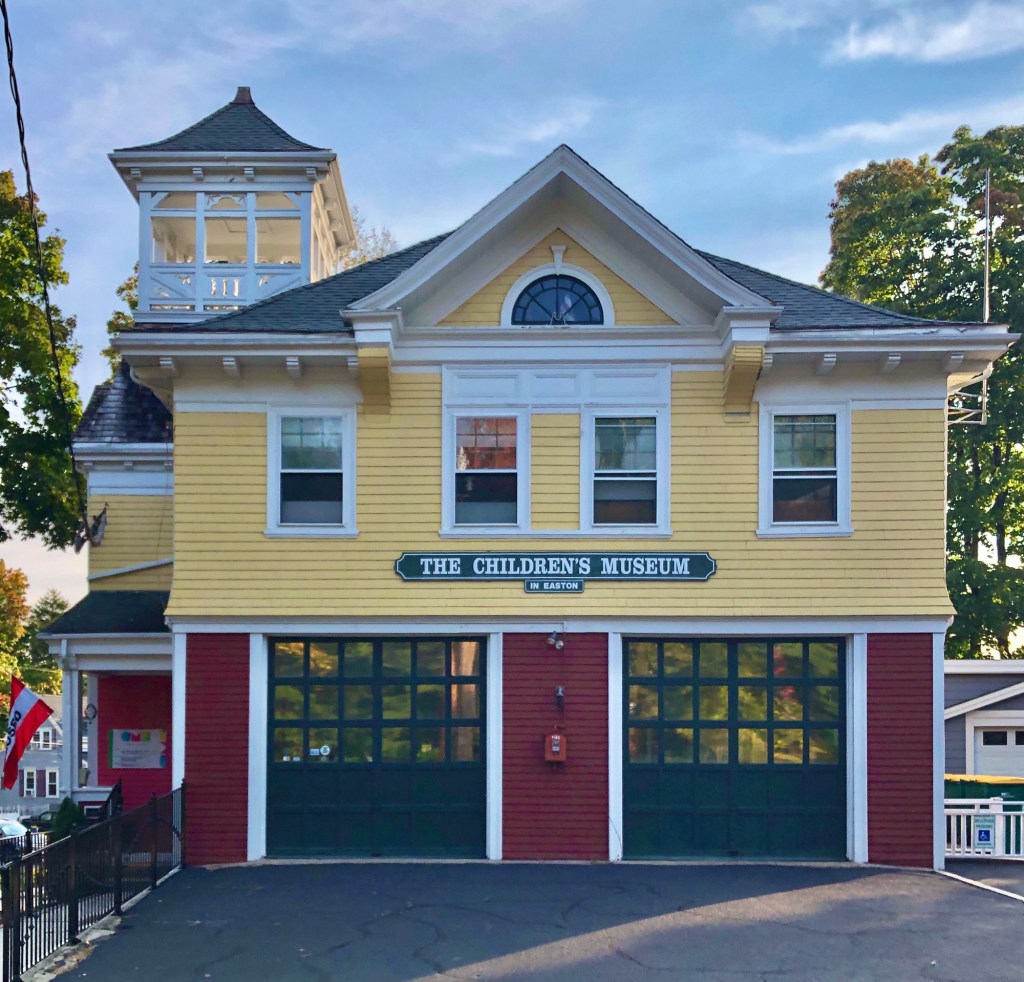
In the late 19th and early 20th centuries, the village of North Easton, Massachusetts saw immense growth, largely due to the Ames Family, who operated a massive factory and funded many civic buildings for the community. The town previously operated a volunteer fire station, but due to the growth and significance of the buildings in town, a modern fire station and propert fire department was needed. In 1904, Mary S. Ames (later Mrs. Louis Frothingham) donated land for the purposes of building a fire station across from the Ames Shovel Works. The fire station, completed in 1905, remained active until 1968, when the town’s modern firehouse that could accommodate larger fire apparatus, was constructed. In 1991, the former fire station became the home of the Children’s Museum in Easton, which it maintains the building to this day.