Trippy Tower House // 2002

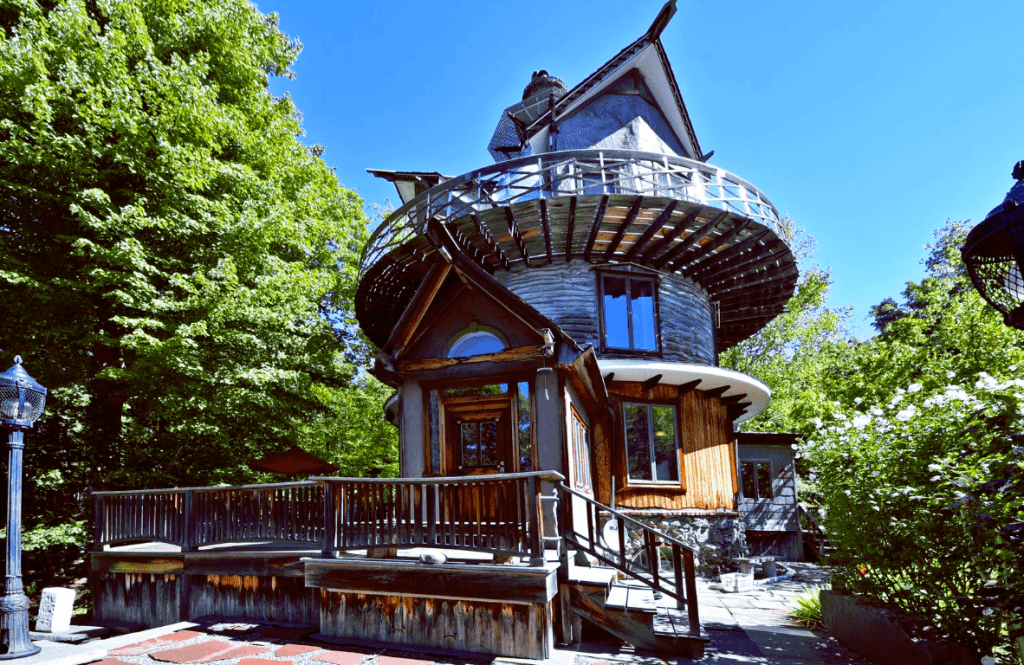
One of the most unique buildings I have ever stumbled across is located in the mountain town of Woodstock, NY. Often referred to as the Trippy Tower House, the house was built over the course of 15 years by artist John Kahn, who designed sets for the Muppets and “Fraggle Rock”. The Tower House is crafted from repurposed materials such as slate, copper, aircraft grade aluminum and redwood with the property being considered his largest “sculpture” and his life’s work. The 3,518 square foot home has three bedrooms and four bathrooms across its five floors The cylindrical house was completed in 2002 and sold five years later when Kahn moved to Easter Island. Kahn sold the house to Rhoney Gissen Stanley, who was former secretary to the Grateful Dead and wife of Owsley Stanley, the Dead’s sound man and the alleged first mass producer of LSD. It was listed for sale again in 2017 for $1.2 Million.
Woodstock Reformed Church // 1844

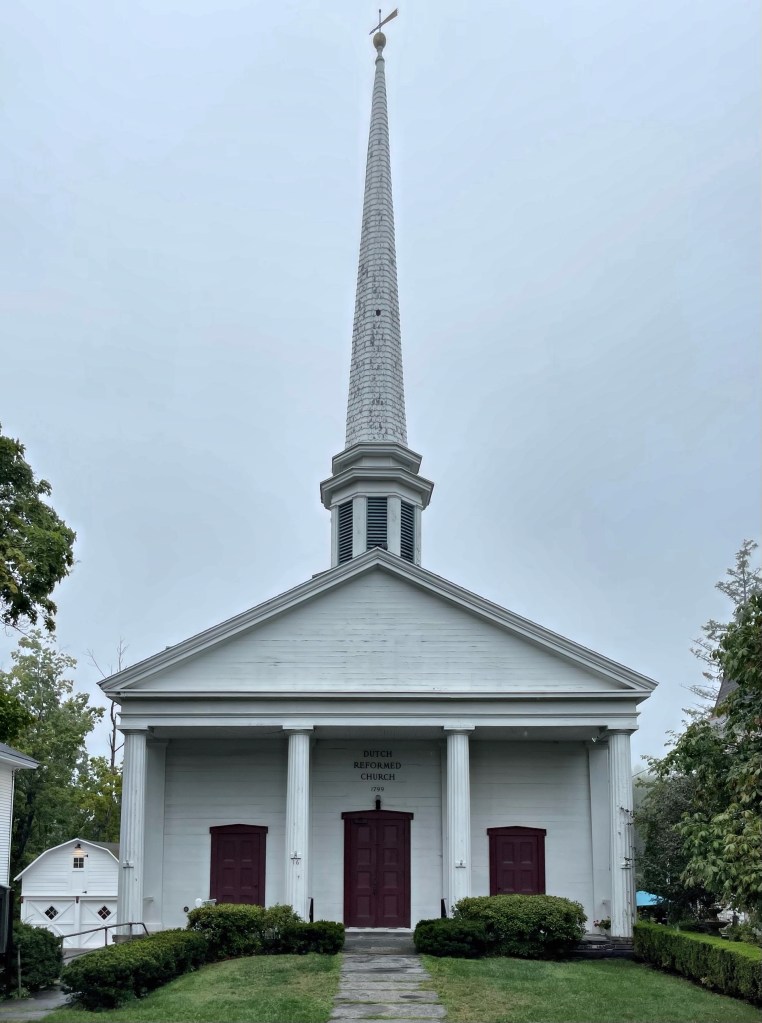
When Dutch and German colonists began to settle along the Hudson River Valley, they brought with them their own religious beliefs and desire for community in a new home. In the Village of Woodstock in Ulster County in 1799, the Dutch settlers began meeting in homes to worship establishing a church. By 1805, they petitioned the denomination for an organized church and purchased land, which is now known as the Village Green. In the heart of Woodstock, they built the first church structure. In 1844, that building was torn down for a new, Greek Revival place of worship on the outskirts of the Green. Architecturally, the church exhibits a prominent temple front with pedimented gable and Doric portico capped by an octagonal steeple. Inside, the sanctuary is lined on the walls and ceiling with decorative, pressed tin, which is apparently from the mid-19th century. The church remains very active in local and current events.

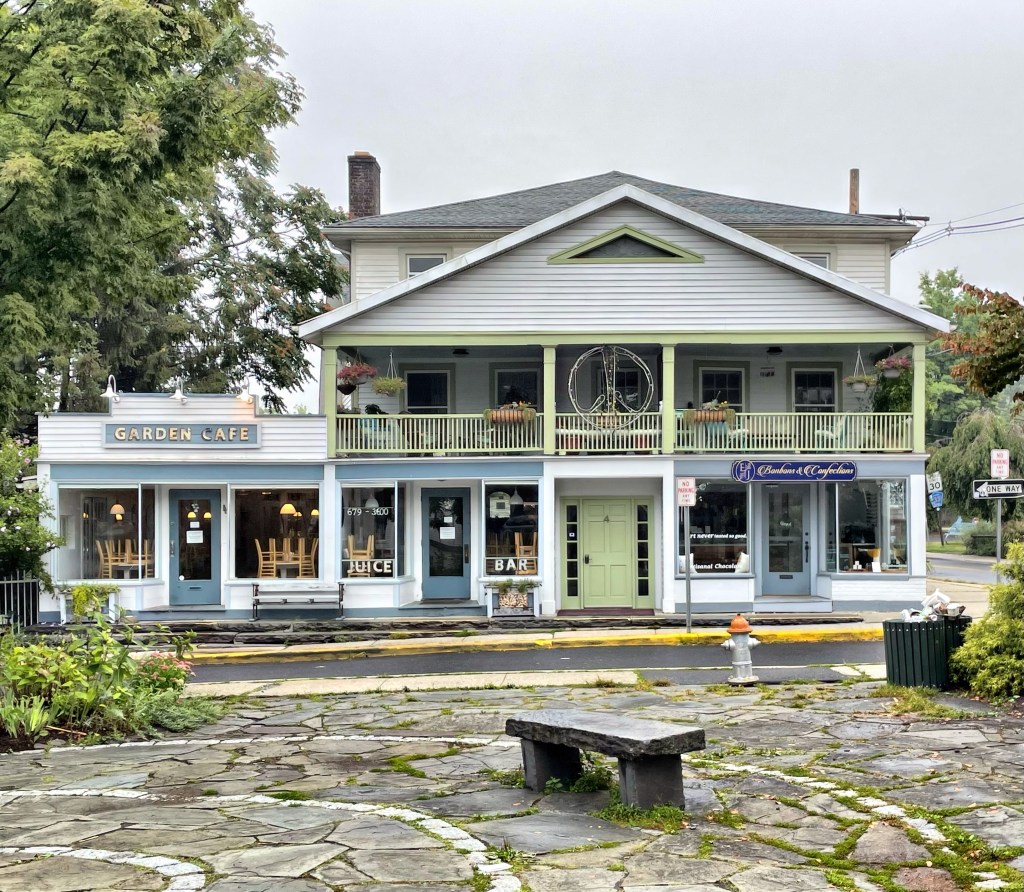
Tannery Brook House – Old Forge House // c.1780

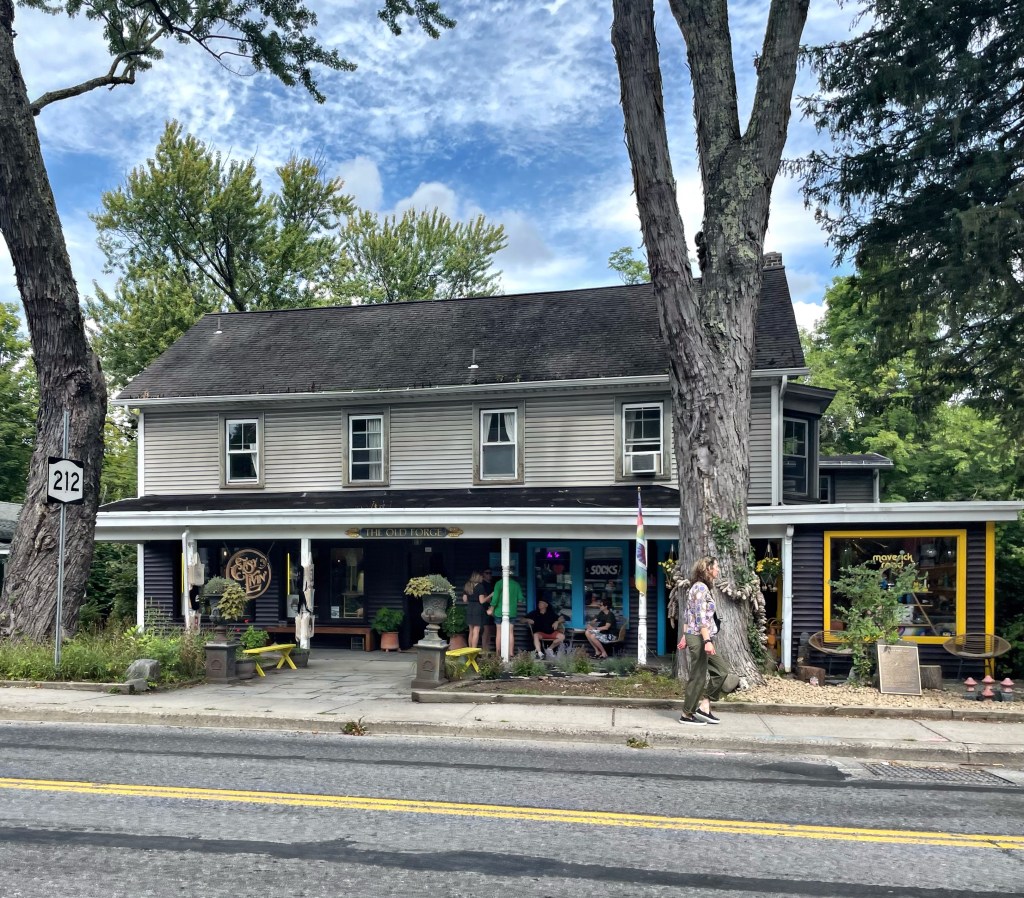
One of the oldest extant buildings in Woodstock Village is the old Tannery Brook House. The building (or a part of it) was originally an old grist mill developed by Isaac Davis and it was later turned into a saw mill. Around the end of the Civil War, the structure was home to the village blacksmith operated by John Wigram Davis, then it was enlarged as a barn for wagons and carriages. Later, owner Peter Longendyke operated a boarding house from the building. Around 1904, the New York Art Students League is believed to have had their first summer art class in the upstairs rooms of the building. In 1935, owner Lamonte Simpkins remodeled it as “The Art Shop”. Upstairs Mr. Simpkins sold clothes, shoes and drygoods, while downstairs The Art Shop and Tannery Brook Garden Flourished. The building was rebranded as the Old Forge House, as a nod to its historic use. It remains a vernacular, and important piece of Woodstock’s rich history from sleepy industrial village to vibrant artist community.

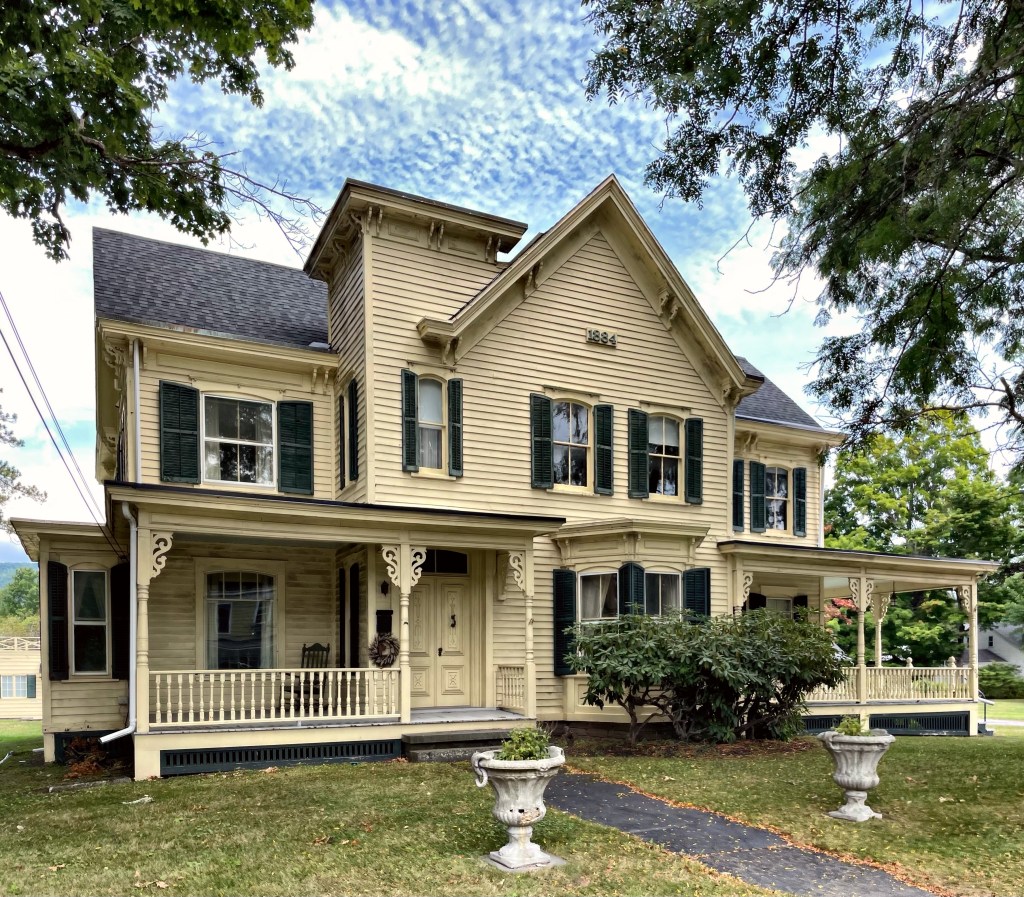
James Nelson Lasher House // 1884

The James Nelson Lasher House in Woodstock, NY was built by James Nelson Lasher (1829-1906) in about 1884. “Nelson” Lasher, a farmer from Bearsville, acquired 45 acres on the outskirts of the village of Woodstock and established an undertaking business on the property, in 1879. Over the next two decades, he farmed the property with his son Franklin “Frank”, who by 1890, also began to manage the undertaking business. Frank Lasher (1864-1912) may have added the Queen Anne porches and tower to the house around this time. In the early 1900s, the Lasher household consisted of Nelson and wife Elizabeth, and Frank and his wife and three children. Nelson died in 1906 and Frank died six years later, leaving the property to his son, Victor, who continued the family undertaking/funeral home business. The property was sold out of the Lasher family in 1960, but operated as a funeral home until 2019. The property has recently been eyed as a hotel and for town offices, I wonder what its future holds!

Krack House // 1870

One of the largest buildings in the charming village of Woodstock, NY, is the former Krack House… I know what you are thinking, and no it was not due to illegal activity! The Krack House was developed in 1870 by Charles H. Krack (1824-1893), as a response to the success of other summer hotels built nearby as the area saw a boom in tourism. Charles Krack was born in Germany and after serving in the military there, he arrived to America in the mid-1800s. Here, he served as an overseer of a Georgia plantation, and moved to New York City after the Civil War, operating a hotel in Manhattan. He later became the owner of a floating bathhouse on New York City’s East River anchored near Grand Street, and made great money, investing it up the Hudson in Woodstock. In Ulster County, he got involved in politics. The Krack House was a summer lodging facility with food service and all the best amenities in the village. After Charles’ death in 1893, the property was eventually purchased by Stanley Brinckerhoff Longyear, who rebranded the hotel in his name, The Longyear. The building appears to now contain apartments above commercial spaces.

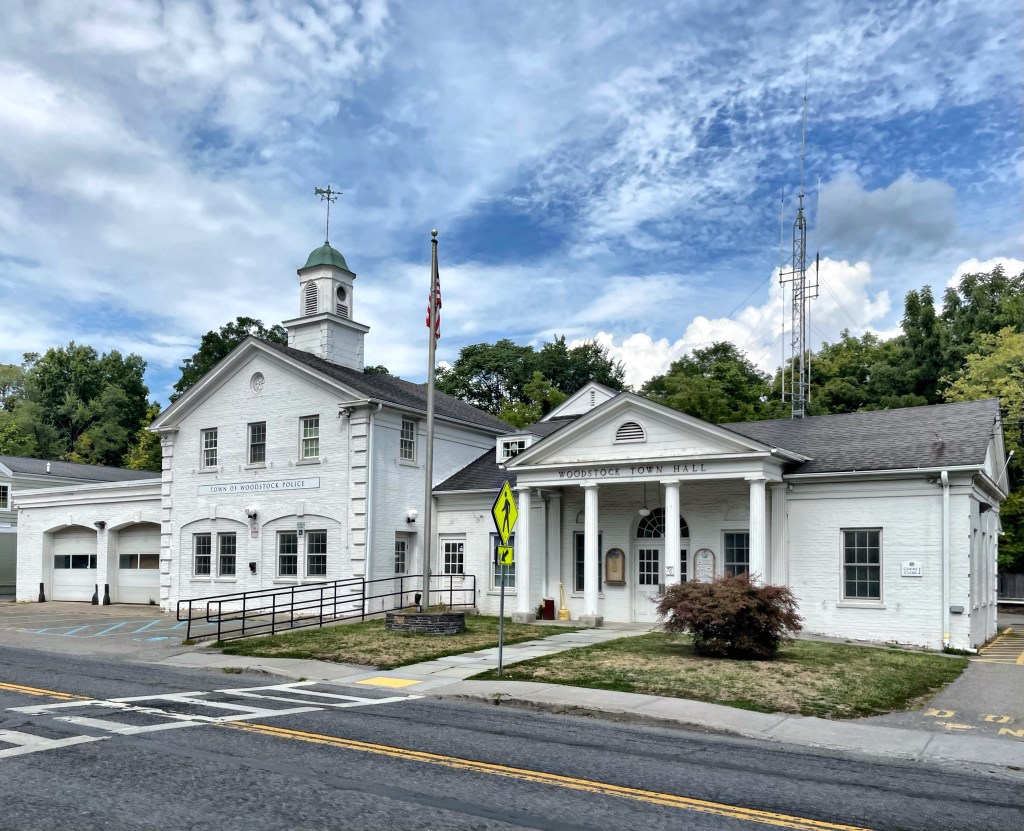
Woodstock Town Hall and Police Station // 1936

Buildings of New England hits the road! Occasionally, I like to explore and learn about towns and villages in places outside of New England, and one place that has always piqued my interest is Ulster County, NY. One of the more well-known towns in Ulster County is Woodstock, an absolutely vibrant and charming village in the mountains. The first European settlers in the Town of Woodstock were Dutch, along with a few Palatine Germans, who established farms on the fertile land. The town saw some industrial development along Sawkill Creek, but experienced substantial building growth in the early 20th century after the area attracted artists of all types to the area. The village saw population growth which necessitated new city facilities like a town hall and police station. In 1936, construction began on a combined town hall office and police station for the village, in the midst of the Great Depression (possibly using New Deal funds?) The Colonial Revival style building exhibits brick construction with corner quoins, Classical elements like the pediment and columned portico, and a cupola. The only notable alteration since its construction is the infill of the former fire station doors.

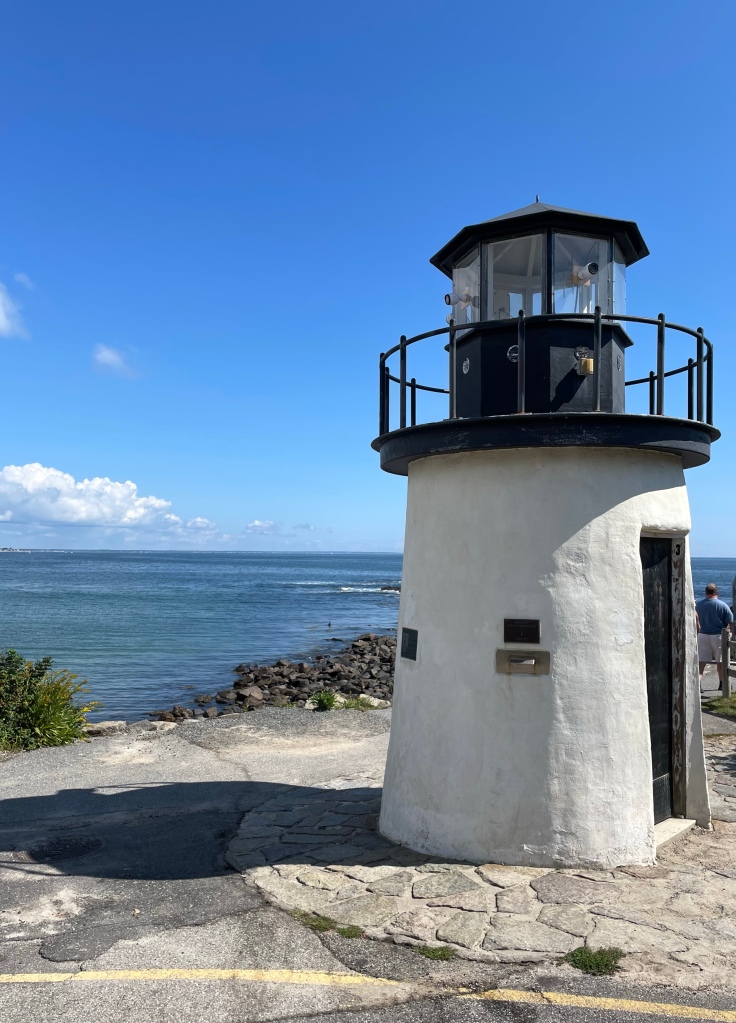
Lobster Point Lighthouse // 1948

When you walk along Ogunquit’s Marginal Way cliff walk, it is missing one thing, an iconic Maine lighthouse… or is it? This mini lighthouse on the route always has people lining up to snap a picture and its quirky roadside attraction appeal is undeniable. The original Lobster Point Lighthouse was constructed in 1948 by Winfield C. Littlefield of the local family who first settled in the town. The “lighthouse” was designed by Grover S. Perkins. Much like the real lighthouses on the coast, the original structure was badly beaten by the salt air and high winds and parts of the structure were replaced. Notably, in 1993, the top (lantern) was replaced with fiberglass. Additionally, in 2009 the structure was upgraded, all from donations. The iconic roadside lighthouse will continue to ‘light the way’ for the droves of tourists and locals alike who navigate Marginal Way.

Ogunquit Public Library // 1897

One of Maine’s most charming libraries is right in the coastal village of Ogunquit, and like many of the greatest, it was built as a memorial to someone. George Mecum Conarroe was born Nov. 9, 1831. His father, George Washington Conarroe, was an accomplished Philadelphia portrait artist who provided his family with every advantage mostly from an inherited family fortune. The Conarroes and their cousins, the Trotters, who summered at Cape Arundel, had been associated in a very successful steel venture for several previous generations. George M. Conarroe apprenticed in a Philadelphia law firm and was admitted to the Bar in 1853. He ran a successful probate law practice and his prudent real estate development investments enhanced his formidable fortune. Nannie Dunlap, daughter of another leading Philadelphia lawyer married George M. Conarroe in 1868, they were inseparable. He built a summer estate in York Cliffs, a burgeoning Summer colony just south of Ogunquit (then a part of Wells). George died in 1896, and Nannie fought to keep her late husband’s legacy living in the coastal area he loved so much. She hired Philadelphia architect Charles M. Burns to design a new summer chapel in York and this beautiful village library in Ogunquit. The library was constructed of fieldstone taken from the site and is a lovely example of the Romanesque Revival and Queen Anne architectural styles in Maine.

Perkins Cove Drawbridge // c.1941

The Perkins Cove wooden footbridge in Ogunquit, overlooks one of the loveliest little harbors in the Maine coast and spans the narrow entrance to the port. The iconic bridge is perhaps the only double-leaf draw-footbridge in the United States and luckily for us, is right here in Maine! The small channel was once very shallow, but in about 1940, the cove was dredged to make room for larger fishing vessels. A new drawbridge was soon added to allow access to the small peninsula while also permitting fishing vessels to pass underneath. The bridge has been modified a couple times since it was constructed in the early 1940s. The new bridge spurred development of some of the area which was already a mix of fishing shacks and artist studios. Since then, many of the original fish shacks have been converted to restaurants or shops due to the high value of the land now. It was also announced this year that the bridge would soon be demolished and replicated with Federal funds with a new harbormaster building. Hopefully the replacement will closely match the existing, which is a huge draw (pun intended) for the tourists who flock to the area.

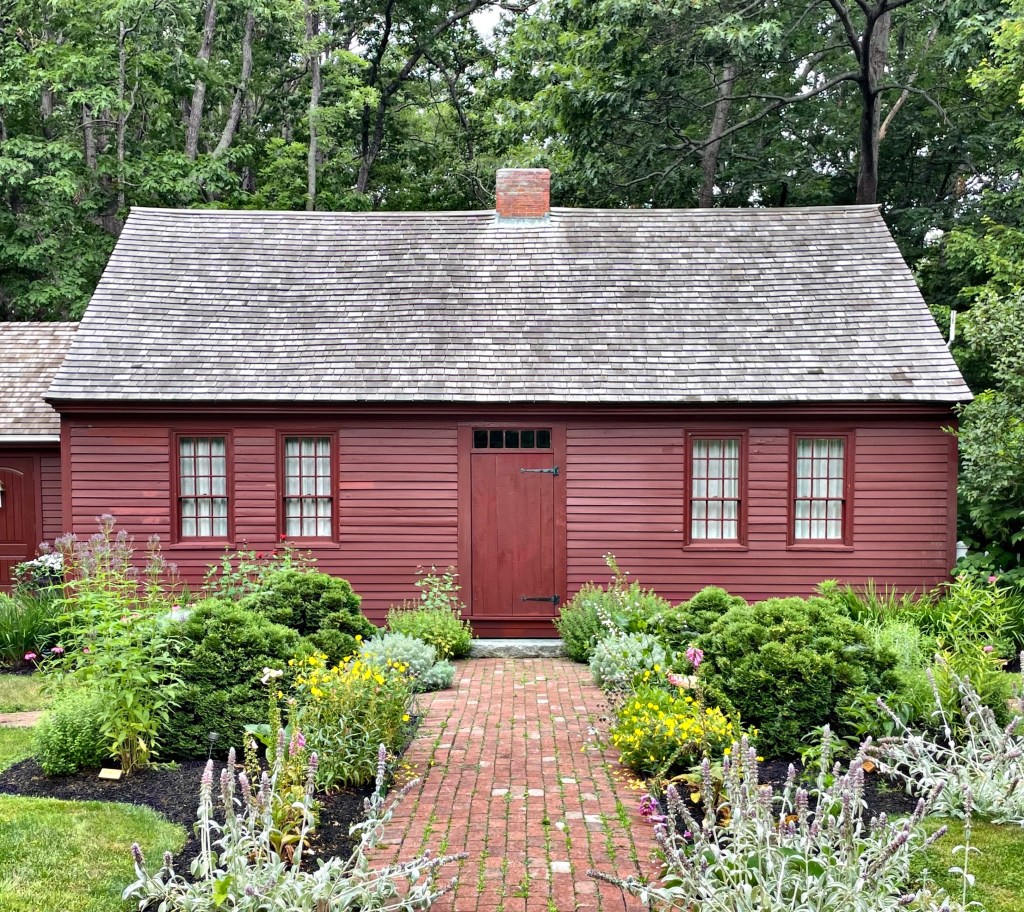
Winn House // c.1780

One of the oldest extant houses in the village of Ogunquit Maine is this charming Cape house thought to have been built in the 1780s. The house was later purchased by James Winn (1783-1861) and his wife Philadelphia Maxwell Winn (1785-1855), probably about the same time as the birth of their first child, James Winn Jr. in 1808. Both James Sr. and his son in 1846, launched a 161–ton brig out of Kennebunkport with Captain James at the helm. After several trips James Jr. succumbed to an illness that was aboard the vessel and died at the New York Marine Hospital. Over 150 years later, the house, largely untouched, was seemingly threatened by development pressure on the busy highway. In 1980, the home was donated to the town by then-owner, Phyllis Perkins, and moved nearby to a park on Obed’s Lane. It now houses the Ogunquit Heritage Museum.