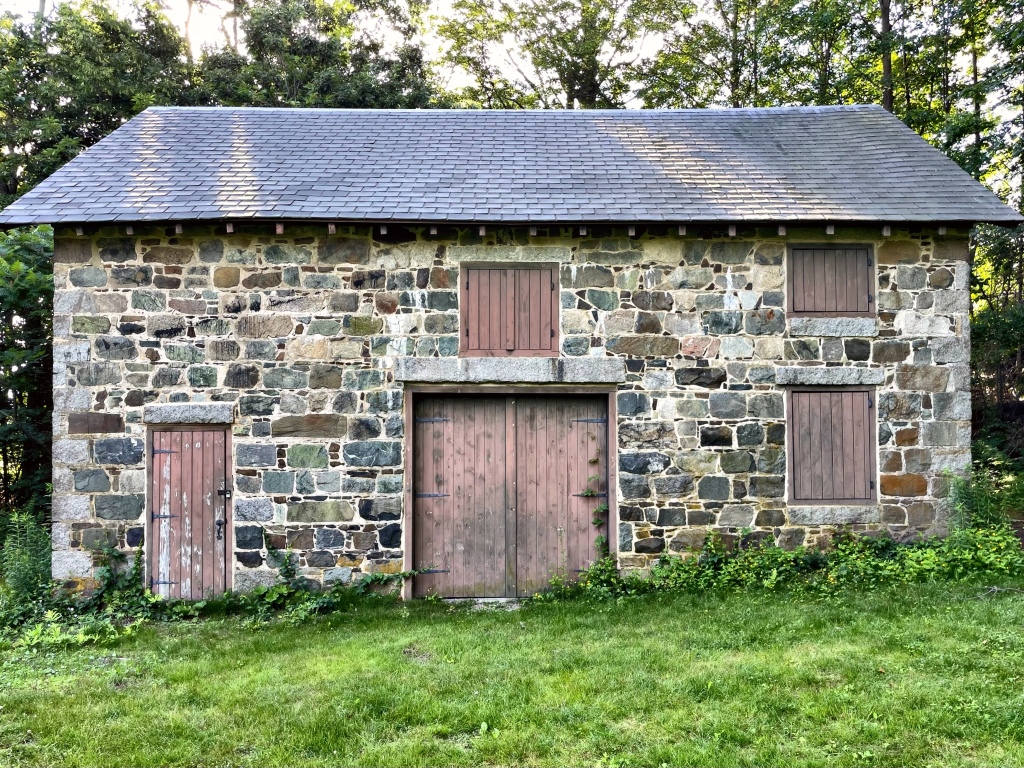
Greater Light // c.1790

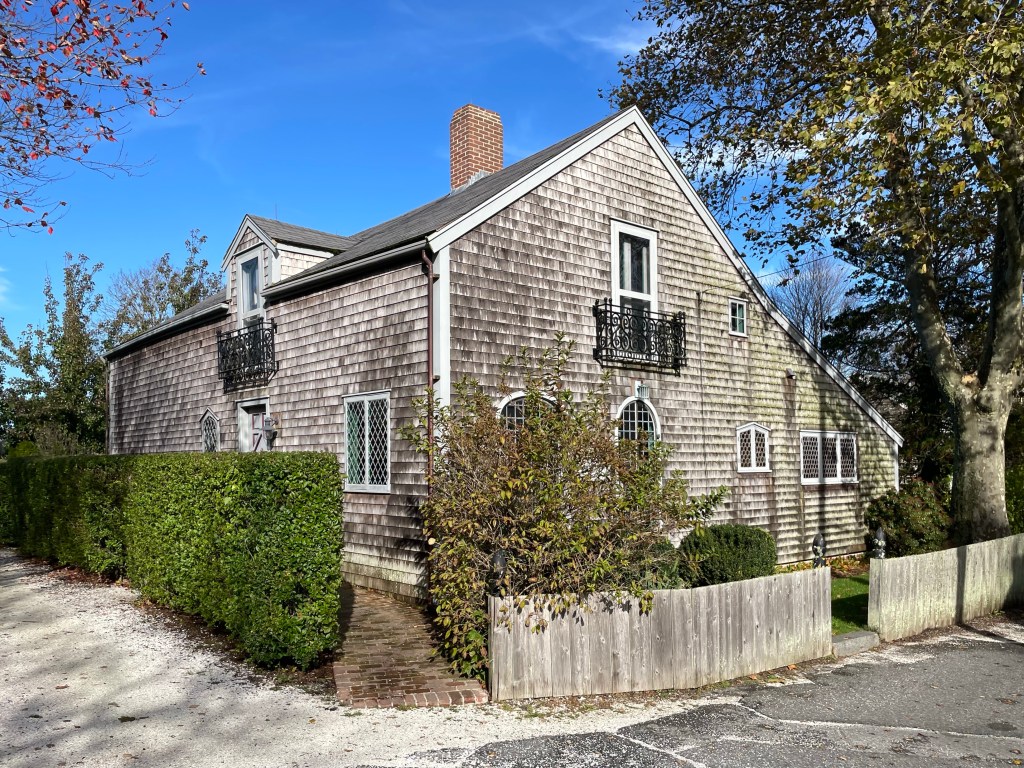
Located on the island of Nantucket, this barn, now known as Greater Light was built circa 1790. Although the exact date of construction is unknown, historic research indicates it was built sometime during the ownership of two early Macy family members who held the property between 1748 and 1814. The barn remained in the Macy family until 1866, when Zephaniah Macy (then in his eighties) sold the property with the barn to their neighbor David Folger. Folger most likely used the barn for his herd of milking cows. In the summer of 1929, Hanna and Gertrude Monaghan, two Quaker sisters, discovered the barn and saw it as a perfect structure to become their home and art studio when vacationing on the island. The sisters began working on the dilapidated building and set about transforming it into their own summer oasis, adorning it with cast-off architectural elements, decorative objects, and eclectic furniture. Hanna Monaghan, the surviving sister, bequeathed Greater Light and its contents to the Nantucket Historical Association in 1972. The building is open in the summers for visitors who can catch a glimpse at the spirit of Nantucket as an artist’s colony in the 1920s and beyond.

Scott Farm – Pig Barn // 1911

Cows, horses and pigs once dominated the 571-acre landscape of Scott Farm in Dummerston, VT. We have seen where the farmer, cows, and horses lived, so now it’s time to see where the pigs “pigged” out. This barn building was constructed around the time of the horse barn when the farm was owned by Frederick Holbrook II of Boston. The one-and-a-half-story pig barn, like the others, was built into the landscape which would allow for the animals to easily get into the structures. This building was used as the “Cider House” in the 1999 movie Cider House Rules.

Scott Farm – Horse Barn // c.1910

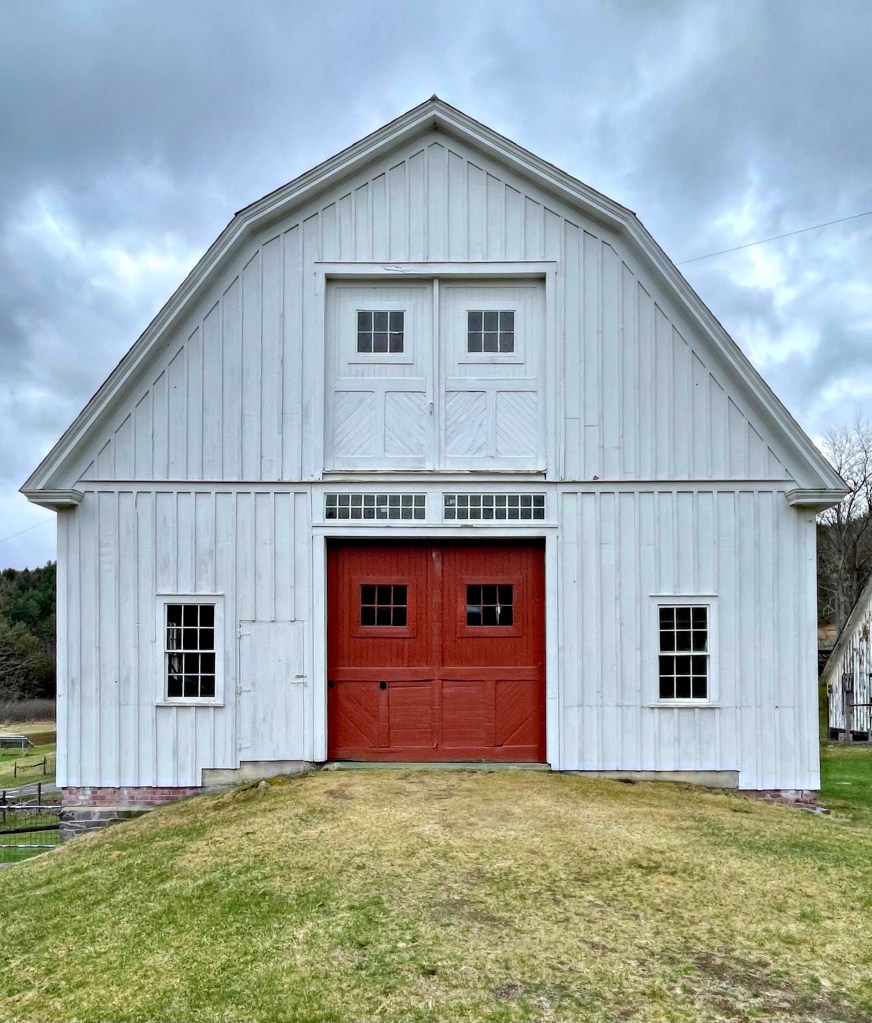
You saw the cow barn at Scott Farm, now you can see where the horses lived! The Horse Barn at Scott Farm in Dummerston, Vermont is a very photogenic building with its symmetrical facade and bright colors. The barn was built not long after Frederick Holbrook II of Boston acquired most of the farm to add to Naulakha, where he lived. Holbrook used the farm as a gentleman’s farm where he would have laborers managing the grounds and supplying him with the freshest produce and dairy products. Inside, there is a ramp down to the basement which still retains the horse stalls, it’s so charming!

Scott Farm – Cow Barn // 1862

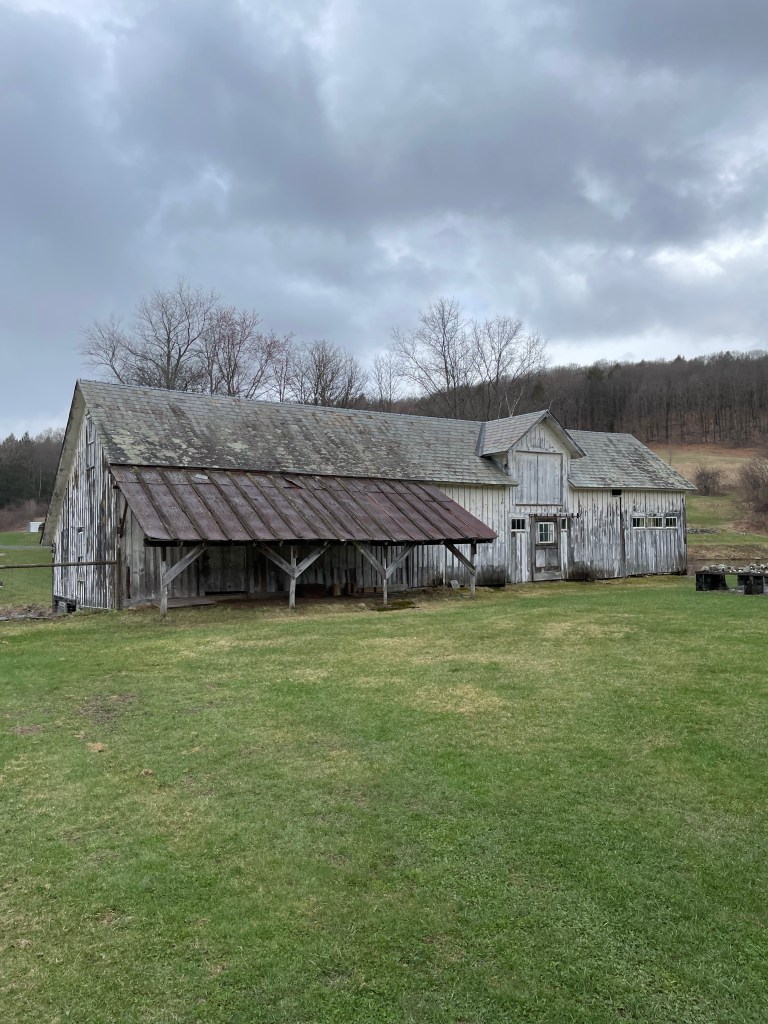
Historic barns really are the most charming buildings, and luckily, Vermont is home to soooo many great examples. The Cow Barn at Scott Farm in Dummerston, VT was built in 1862 and constructed into the slope of the land. The barn has a brick and stone foundation, barn board siding, and a roof sheathed with small dark slate. It is built into the slope of the land and has a single-story shed roof addition (c.1915) off the west facade to give the building a saltbox form, and a single story gable roof milk house addition off the east facade. The rear facade has a more rustic appearance and has a large entrance to the space inside which is occupied by The Stone Trust, with the mission to preserve and advance the art and craft of dry stone walling. The organization holds classes and trainings where people can learn how to build a traditional or modern stone wall and more! The barn (and the rest of the buildings on the Scott Farm property) is owned by the Landmark Trust USA.

Canterbury Shaker Horse Barn // 1819

This large, shingled horse barn at Canterbury Shaker Village in New Hampshire, was built in 1819 and measures 60 x 40 feet. The massive barn structure showcases the significance of horses and agriculture for the rural community, which lived off the land.

Colt Dairy Barn // 1917

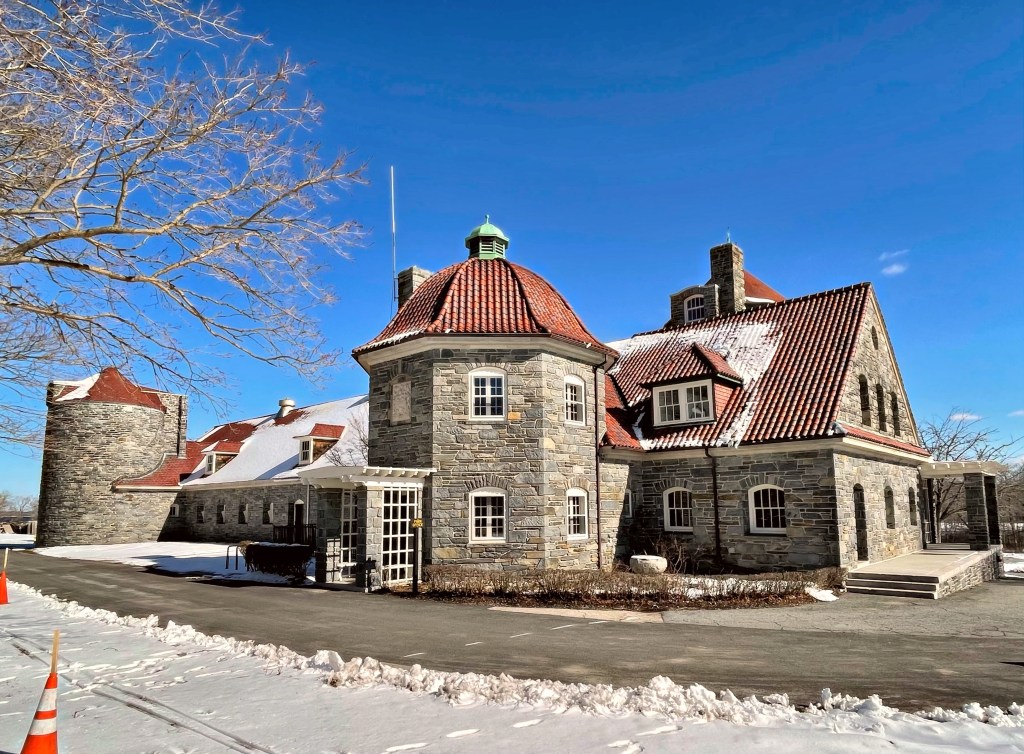
Samuel Pomeroy Colt (1855-1921), a Bristol industrialist, purchased three farms on Poppasquash Neck, in Bristol, Rhode Island in 1905. One of the farms he aquired, Coggeshall Farm, was featured in my last post. On the newly consolidated farmland, just outside the hustle-and-bustle of Bristol’s downtown core, Colt built a large summer dwelling called ‘The Casino’. He lived at his family estate in town a majority of the year, but used ‘The Casino’ as a gentleman’s farm and a space to raise his prize-winning Jersey cattle and Berkshire sows. Colt wished that the citizens of town share his enjoyment of the property and had an open invitation carved onto the marble piers at the estate entrance which reads, “Private Property, Public Welcome”; access was freely allowed at the farm and shoreline. The two marble piers at the entrance to the estate are topped with massive bronze bulls modeled after two of Colt’s bulls, and were cast in Paris by Val d’Onse Company. Colt died in 1921. His will specified that Colt Farm not be sold and that it remain accessible to the public. Though he left a sum to operate the farm, it ran a deficit. The Casino was demolished in the 1960s as it was consistently destroyed by vandals, and became a public safety concern. The lasting cow barn was built in 1917, from designs by architect Wallis E. Howe. The barn utilized field stone from existing stone walls on the property and is capped with a red tile roof. The barn is unlike anything I have ever seen, and now is park offices. In 1965, after approval by Bristol voters, the State of Rhode Island purchased 466 acres of the Colt estate and created the largest public park in the Bristol County, known as Colt State Park.