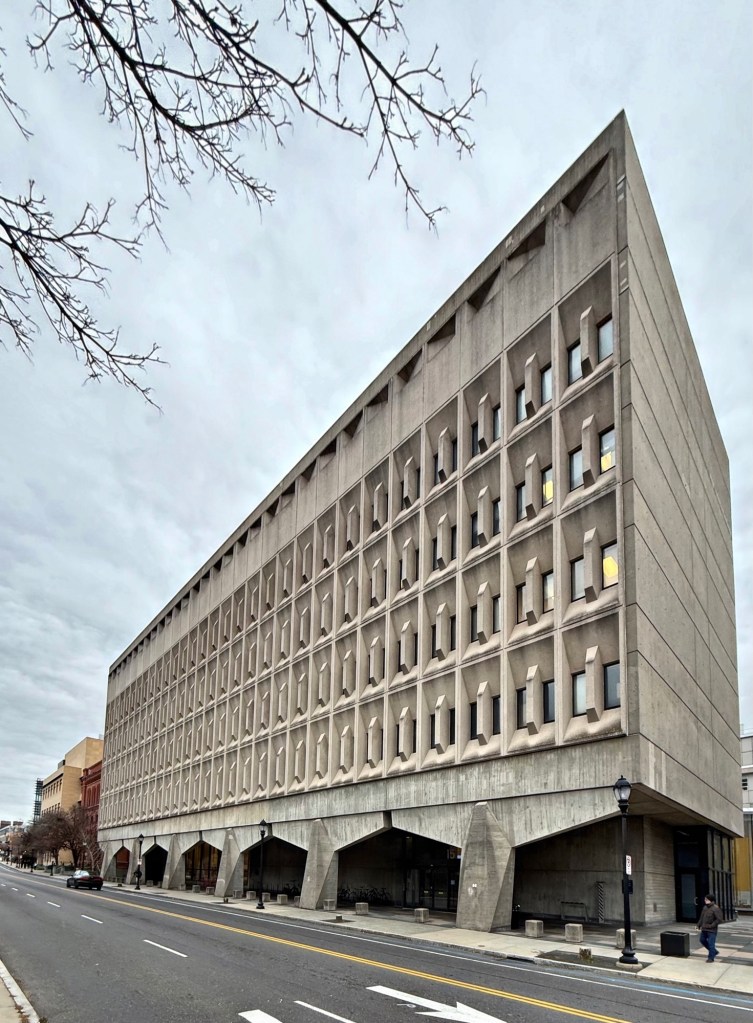
Becton Engineering and Science Center, Yale // 1968

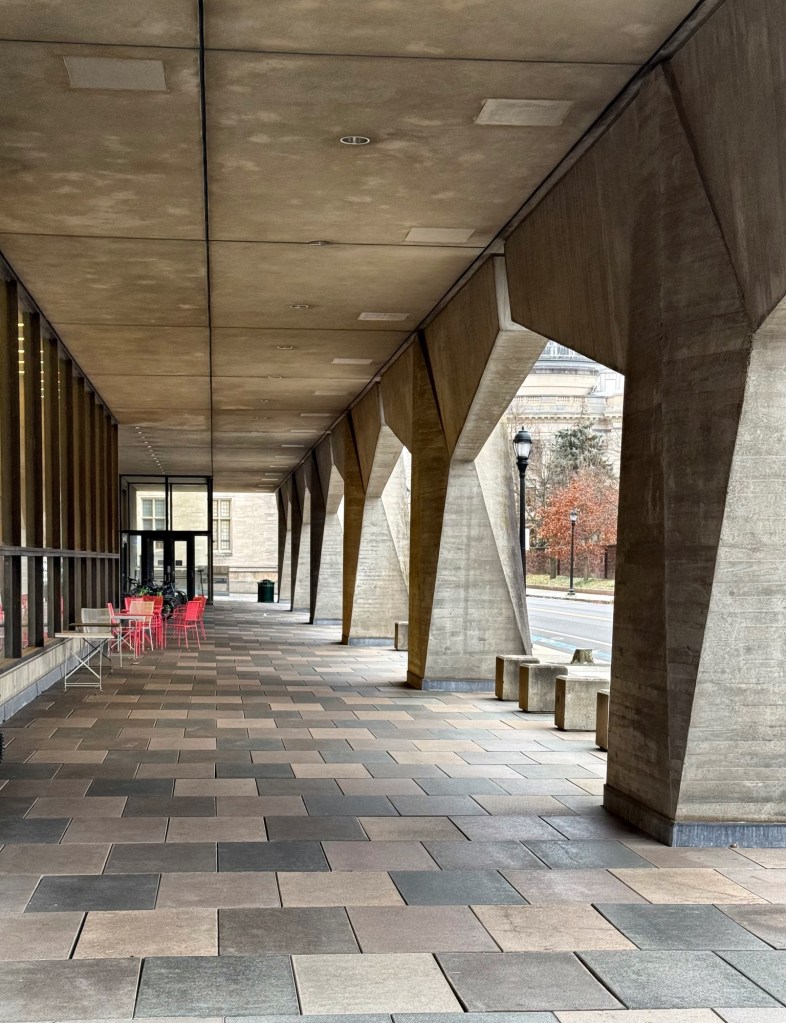
The Becton Engineering and Science Center at Yale is a behemoth academic building on Prospect Street containing offices, laboratories, a library, and an auditorium for the world-renowned institution. Discussions about a new engineering and science center began in 1965 after a generous donation by Yale alumni, Henry Prentiss Becton, and the University hired famous Modernist architect, Marcel Breuer to design the new building opposite the city’s Grove Street cemetery. For the design, Breuer used precast concrete panels and logical planning, to maximize interior space through the building which required less vertical columns in the floorplates. At the street, an elongated arcade provides views into the interior spaces and serves as a shelter from the weather. The arcade and facade above is supported by stunning buttress-like columns, a Modernist nod to the predominant Gothic buildings and character of Yale’s campus. A landmark example of the Brutalist style, the Becton Center serves as a great, and well-preserved example of an often maligned period of American architecture.

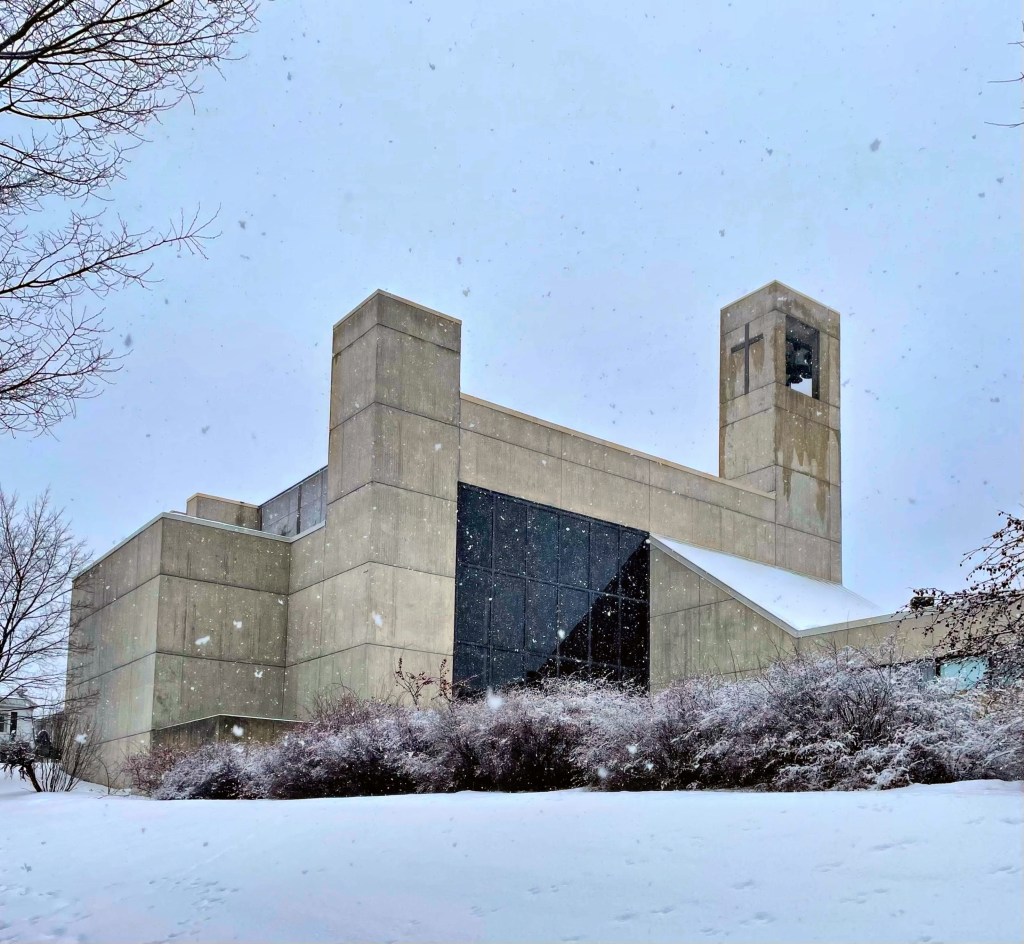
St. Paul’s Cathedral, Burlington // 1973

St. Paul’s Church in Burlington, Vermont, was organized in 1830, when Burlington’s population was about 3,500. About 55 Episcopalians met at a local hotel and laid the groundwork for the parish. In 1832, the fledgling parish dedicated its new building, a neo-Gothic limestone structure, which was enlarged multiple times as the congregation grew as the city did. In 1965, the Diocesan Convention voted that St. Paul’s Church be designated a Cathedral Church of the Diocese (one of two in the state). Just six years later, it was destroyed by fire, sparked by an electrical malfunction in the basement, leading to a new evolution of the church. At the time of the fire, the City of Burlington was engaged in massive urban renewal projects. As a part of this program, the City offered to swap the land on which Old St. Paul’s had stood for a spacious new tract overlooking Lake Champlain and the Adirondacks. Although the decision to change locations was a contentious one, the parish did accept the offer. When discussing designs for a new cathedral, there was a strong desire to make a new statement in architecture, diverging from the traditional Gothic or Colonial designs seen all over the country. An international competition was held to determine the architect of the new Cathedral. The winner was the local firm Burlington Associates, now Truex, Cullins & Partners. Completed in 1973, the Cathedral is made of stressed concrete. The structure stands strong and firm, yet is welcoming. Windows provide sweeping views of Lake Champlain and the distant Adirondacks.