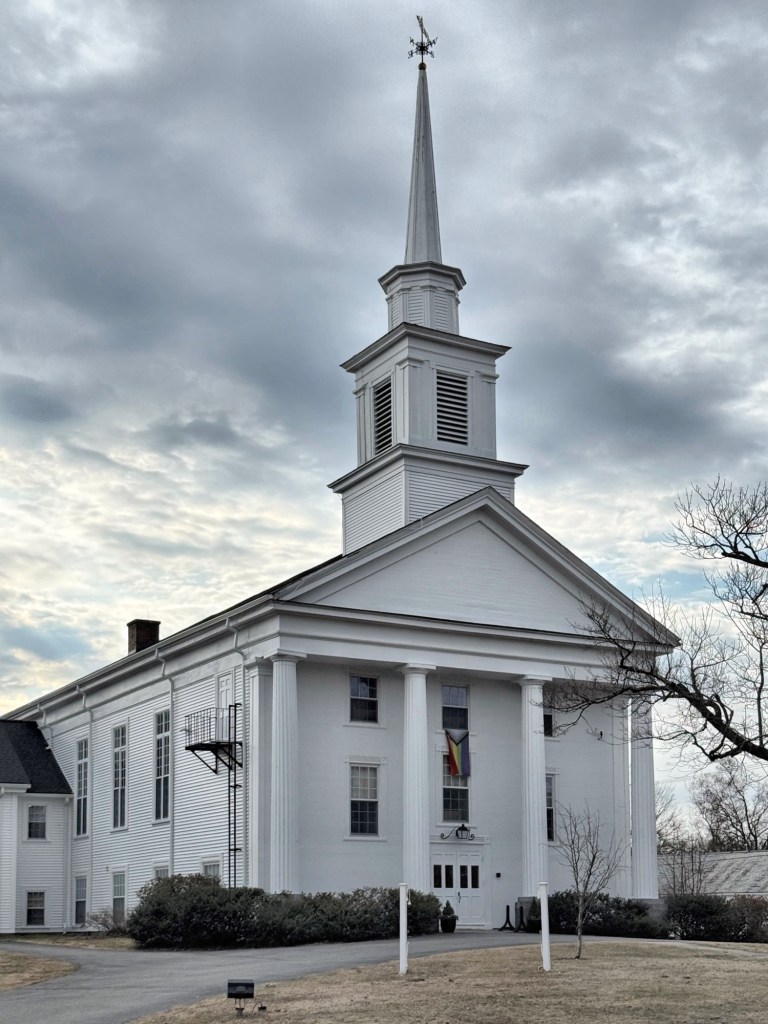
Sharon, Massachusetts, is a small suburban community south of Boston that is lesser known than its neighbors, but the community has some great old buildings! The Town of Sharon was originally part of a 1637 land grant given by the Dorchester Proprietors to encourage new settlement in areas southward. In 1726, the lands of the present towns of Sharon, Canton and Stoughton, were separated from Dorchester and called the Stoughton Territory. Settlers in present-day Sharon found it difficult to attend mandated church services centered around present-day Stoughton and petitioned the General Court in 1739 to set off as a separate precinct. The request was granted and the Second Precinct was established, and incorporated as Stoughtonham in 1765, changing its name in 1783 to Sharon, named after the Sharon Plain in Palestine. In 1813, the local congregationalists split due to theological differences and some formed a Unitarian church. The Congregationalists moved down the street and built a new church in 1822 which was destroyed by fire in 1838 and replaced a year later by this edifice. Built in 1839 the First Congregational Church of Sharon is a vernacular and well-preserved example of a Greek Revival church building in the Doric order with towering pilastered steeple, monumental portico supported by four fluted Doric columns, and flushboard siding. The Congregational Church retains an original bell cast by the The Revere Copper Company of nearby Canton.


 Buildings of New England