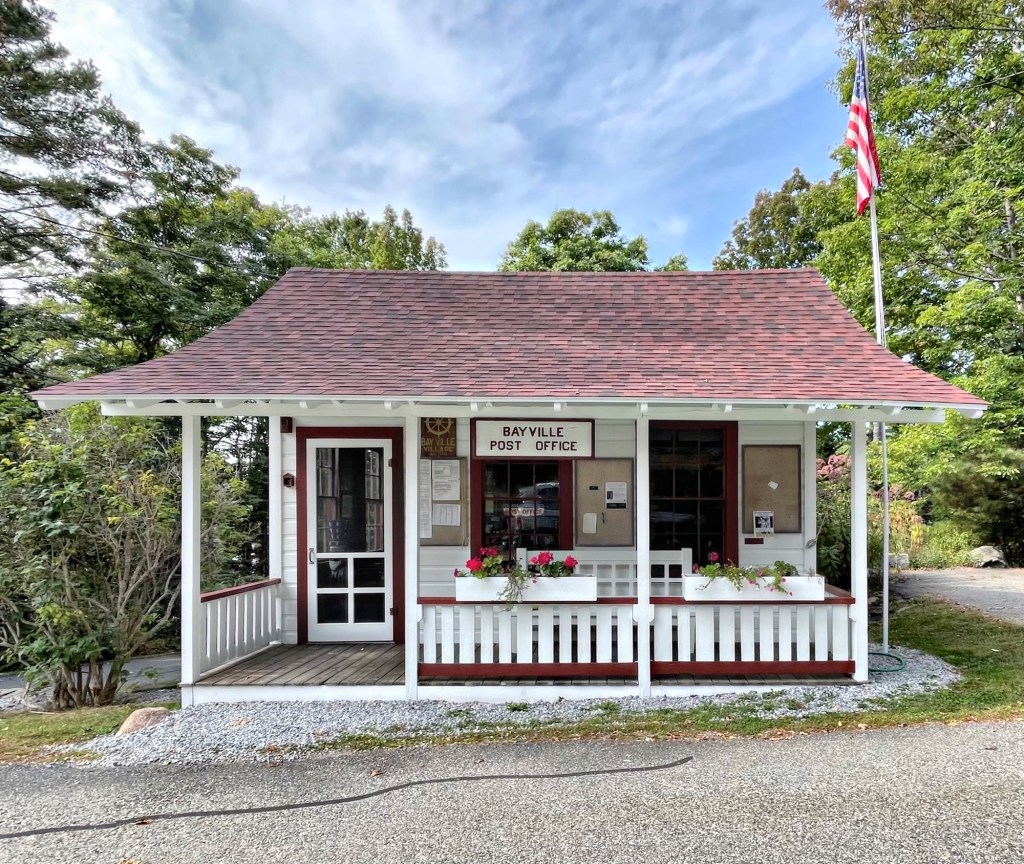
Bayville Post Office // c.1920

Bayville, is a quiet and picturesque coastal village on Linekin Bay, in the eastern part of Boothbay Harbor, Maine. The small village is comprised of roughly 40 cottages and a small post office. This post office was built around 1920 and has operated here seasonally every summer since. The rustic Craftsman style building features a broad roof with exposed rafter tails, extending to create a sheltered porch off the front.
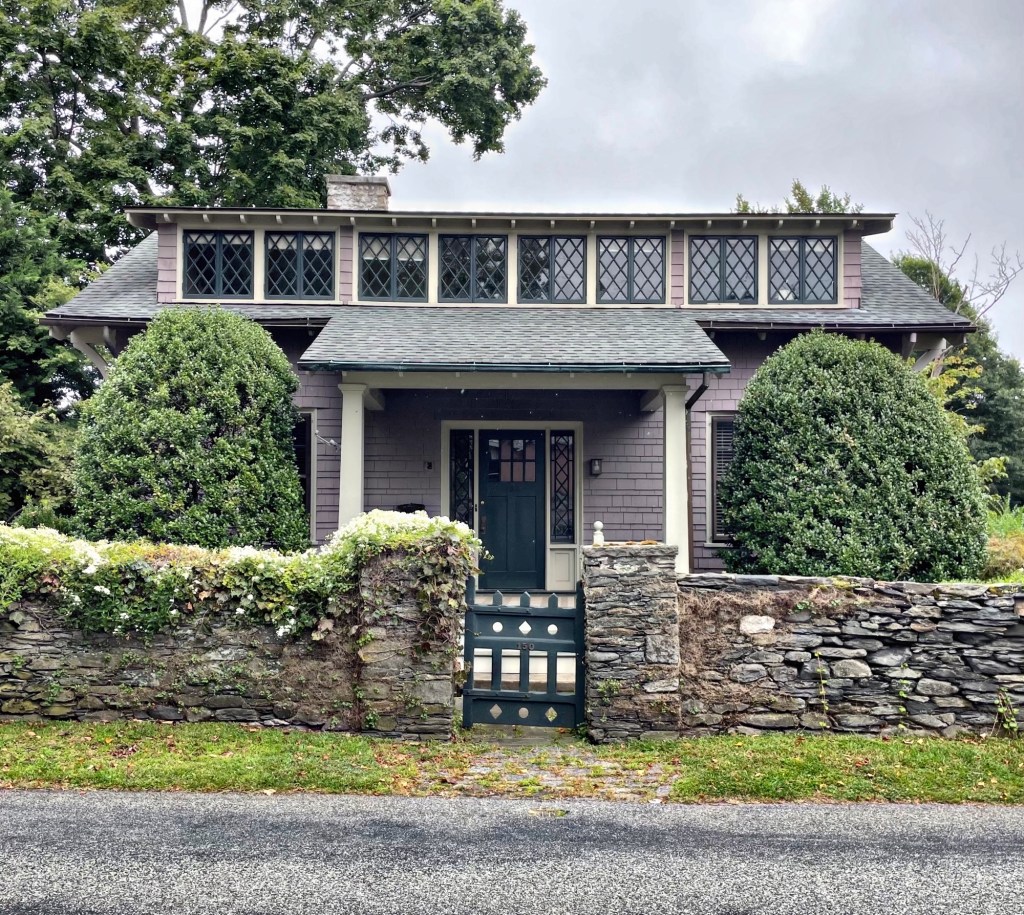
Maud Howe Elliott Bungalow // c.1912

This shingled Craftsman bungalow on Rhode Island Avenue in Newport was built in the 1910s for Maud Howe Elliott (1854-1948), a Pulitzer prize winning author and active member in Newport’s art scene and her artist husband, John Elliott. Maud Howe was born at the Perkins School for the Blind in Boston, founded by her father, Samuel Gridley Howe. Her mother was the author and abolitionist Julia Ward Howe. In 1887, she married English artist John Elliott. John is known for his epic Symbolist murals including working alongside his friend and colleague John Singer Sargent to provide murals for the Boston Public library, and a mural at the Smithsonian Museum of Natural History. In Newport, Maud became a founding member of the Newport Art Association, and served as its secretary from 1912 to 1942. She also took part in the suffrage movement as she was greatly influenced by her mother’s ideas and convictions about women’s role in society and particularly so in terms of women’s suffrage. She fought passionately for women to be liberated from the societal expectations and roles determined to them by male dominated society. This was her home in Newport until her death in 1948.

Mansfield DAR Lodge // c.1830

Tucked away on a side street in Mansfield, I was pleasantly surprised to stumble upon this charming example of a Craftsman bungalow, a style and form not too common in New England. The style, synonymous with the western United States’ population growth in the early 20th century, never took off the same way here as Yankee homeowners and builders often stayed true to the Colonial Revival style (even today). This building is said to date from the early 1800s and was built as a Federal style cape. It was owned by a Margaret Lane in the late 19th century. By the 1930s, the house was significantly altered with a full-length porch supported by tapered shingled columns atop fieldstone bases and new dormers at the roof with flared eaves. The building has been home to a local chapter of the Daughters of the American Revolution (DAR). What a charmer!

Charles Dexter House // c.1910

Craftsman bungalows are a rarity in New England. The Craftsman style surged in the early 1900s, which coincided with the ever-popular Colonial Revival styles reign as most commonly built house style. Many of the Craftsmans that were built are less “ornate” than the West Coast counterparts, lacking deep exposed rafters, sweeping porches, and low-pitched roofs, but they are out there. This bungalow in Rochester was built around 1910 and has some Colonial qualities, including the Tuscan columns, boxed eaves, and shingle siding. I do love that full-length porch and hipped roof with a cute centered dormer! Do you wish we had more Craftsmans in New England?