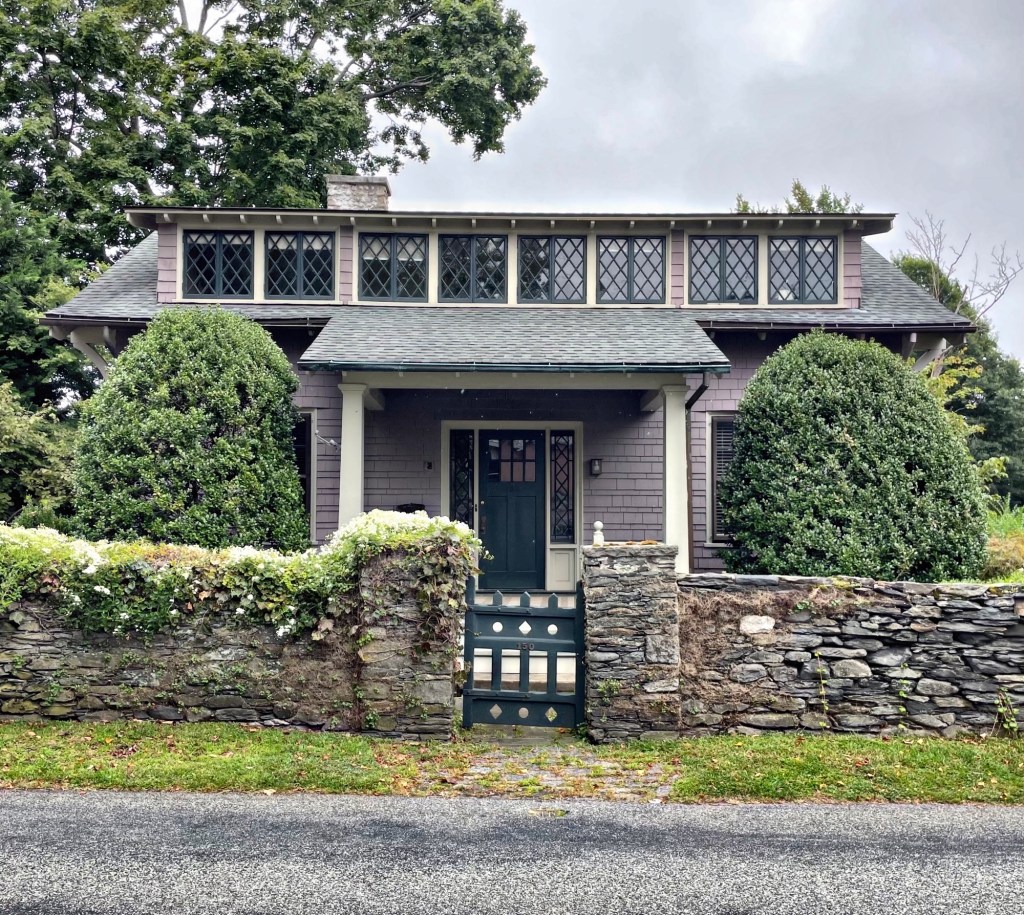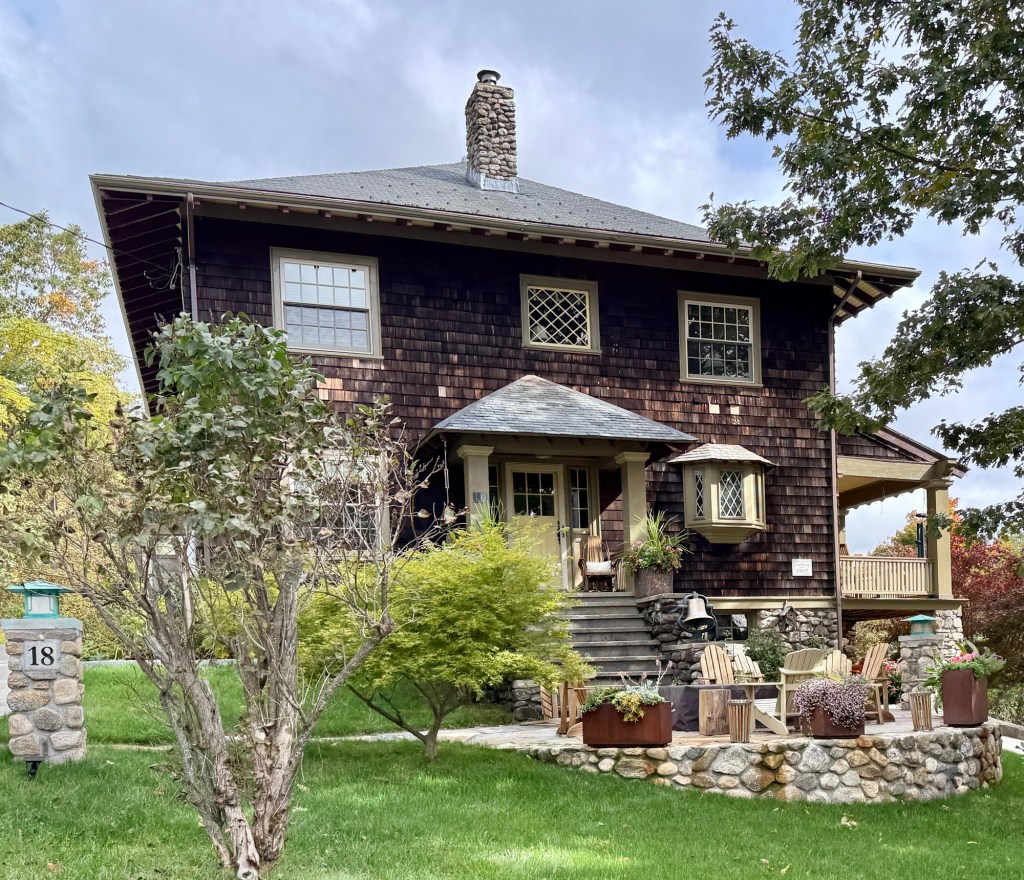
Built in 1914, this stunning Craftsman style residence sits on Mountain Road in the charming village of Princeton, Massachusetts. The rustic house was built for Dr. Elisha Sears Lewis (1874-1954), who lived in the home and built a sanatorium behind, where he would treat patients with respiratory illness. Due to its rural location and elevation with Wachusett Mountain nearby, Princeton became a popular tourist destination for city-dwellers in the 19th and 20th centuries, looking to escape the polluted and hot summer in the urban centers of Boston and Worcester. Dr. Lewis capitalized on this demand by building his home and sanatorium with appliances for hydrotherapeutic and electric treatments along with other treatments similar to a European spa. Elisha had a child with his first wife, Jane, and while he was in Europe during WWI, his daughter and wife treated local residents who contracted the Spanish Flu during the 1918 epidemic. When the flu epidemic was over there had been 69 cases in Princeton and not one death, thanks in part to these two women. The Lewis House remains a well-preserved example of its style and is characterized by its boxy form, pyramidal hip roof with broad eaves and exposed rafters, rubblestone chimney and foundation, and multi-pane windows.