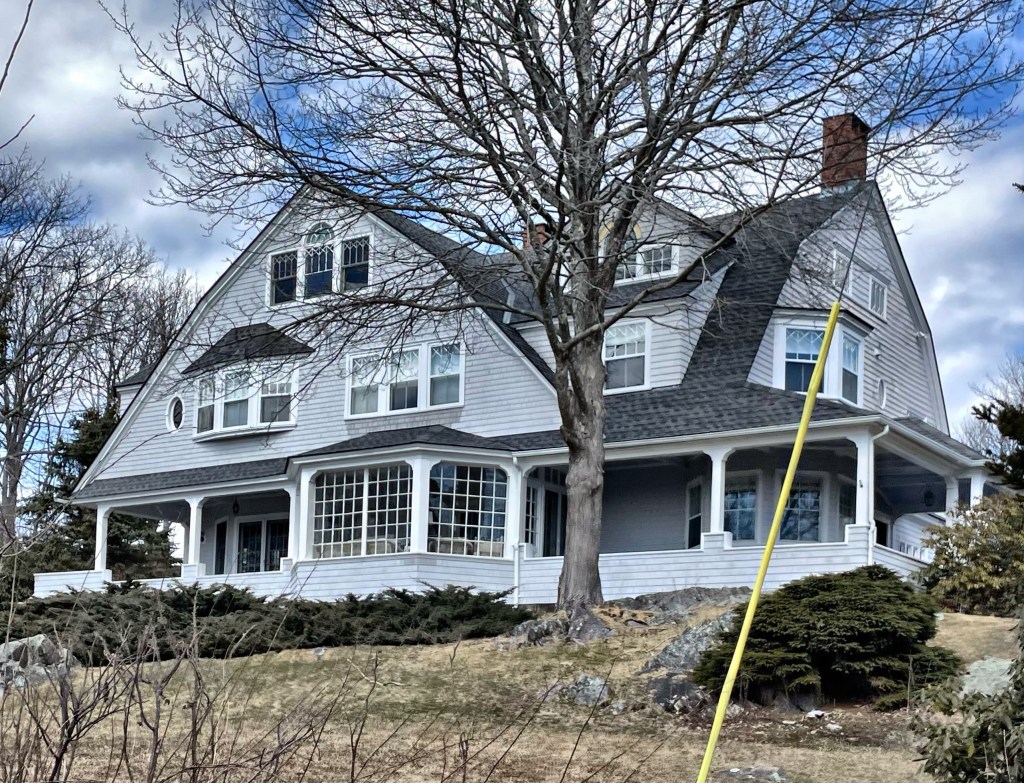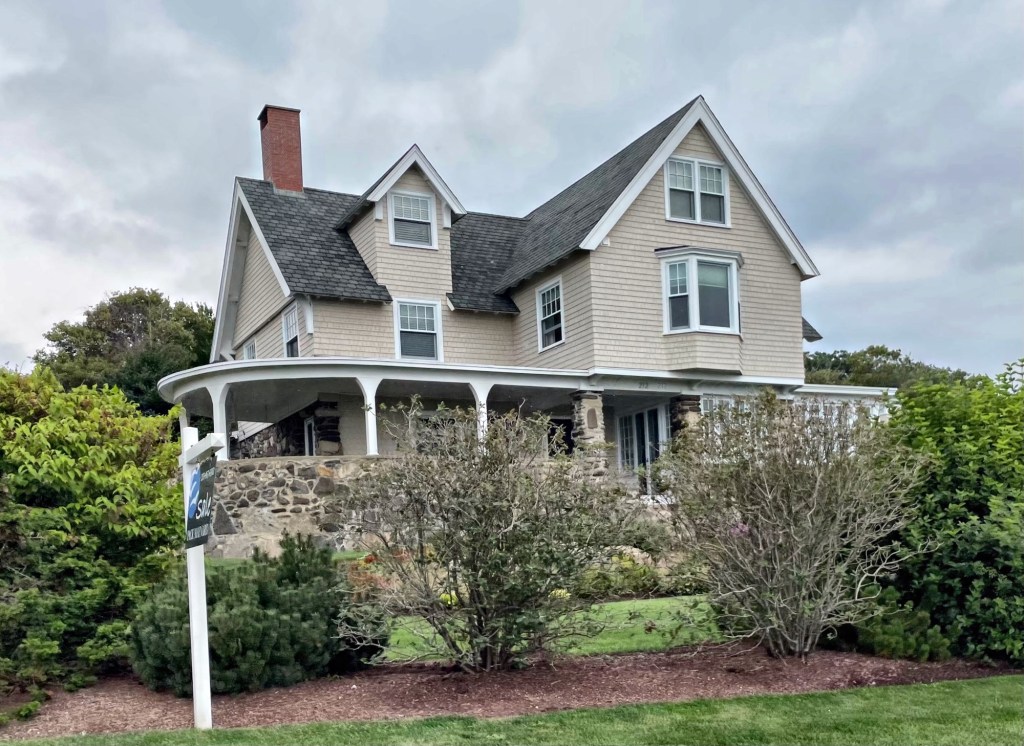
Point O’ View Cottage // 1892

The Point O’ View Cottage in Kennebunkport sits on a large lawn on the rugged Maine coast, with sweeping views of the Atlantic Ocean. Built in 1892 by Burleigh S. Thompson as a rental property (he rented it for $1,500 for the summer) the nine-bedroom “cottage” was designed in a Tudoresque version of the Queen Anne architectural style and originally named Fort Bradford. The cottage (like others built for Mr. Thompson) was designed by Henry Paston Clark, THE architect for the Cape Arundel Summer Colony in the 1890s, who also designed St. Ann’s Episcopal Church and other cottages nearby. The cottage was renovated more in keeping with the Shingle style and was entirely clad in cedar shingles, but it retains its perfect, rustic stone foundation and rounded porch. It is now known as Point O’ View Cottage. What a view it has!
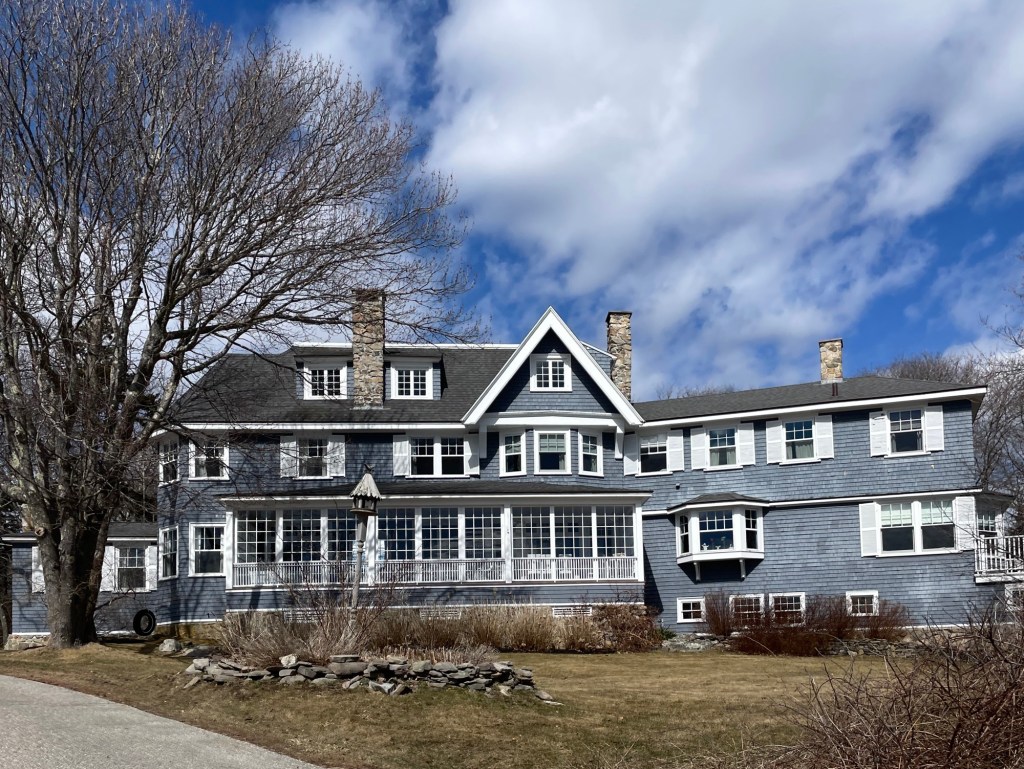
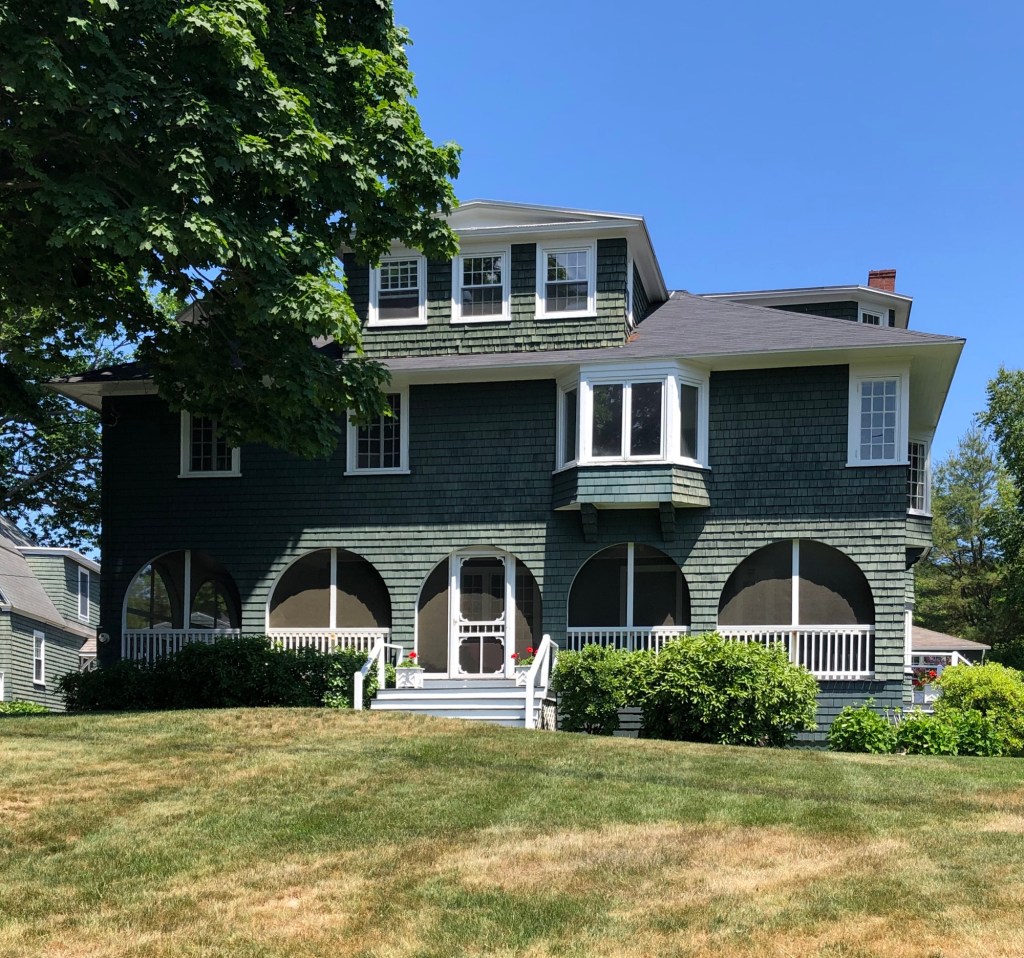
Pine Haven Cottage // 1902

Pine Haven Cottage sits on a rise overlooking the Atlantic Ocean in the Cape Arundel summer colony in Kennebunkport, Maine. Built in 1902 for Thomas Brodhead Van Buren, Jr., a silk importer in Manhattan as a summer home, the cottage was designed by Henry Paston Clark and his partner, John W. Russell in an eclectic example of the Shingle style with gable roofs, vergeboards, stone foundation, and a prominent porch that has since been enclosed.

Chester Guild Cottage // 1902

One of the many stunning summer “cottages” built in the Cape Arundel summer colony of Kennebunkport, Maine, is this turn-of-the-century Shingle style dwelling built for Chester Guild of Boston. Chester Guild III was born into the wealthy Guild Family of Roxbury with his father being a successful leather dealer. Chester Guild spent summers with his family in Kennebunkport beginning in the 1890s, eventually had this cottage built in 1902. The Shingle style dwelling remained in the family for five generations and is very well-preserved, showcasing the hallmark elements of the ubiquitous coastal Maine architectural style.

Edwin Packard Cottage // 1899

Yet another of the large summer “cottages” in the Cape Arundel Summer Colony of Kennebunkport is this stunning eclectic home, built in 1899 for Edwin Packard of New York. As a young man, Edwin married Julia Hutchinson and would soon amass an ample fortune. He became European buyer for A.T. Stewart & Co. In 1889 he came President of the Franklin Trust Company, resigning in 1892 to become President of the New York Guaranty and Indemnity Company. He was a Director of the Franklin Safe Deposit Company, the American Writing Paper Company, the Fajardo Sugar Company and the Brooklyn YMCA, and a member of the New York Chamber of Commerce. Busy man! From his wealth, he sought solitude and relaxation in Kennebunkport, hiring Maine architect John Calvin Stevens to design this cottage for his family to retreat to for summers away from the city. The Shingle style and Colonial Revival style house features a prominent gambrel roof, Palladian windows, and bay windows, all covering a sweeping front porch.

Juniper Ledge Cottage // 1889

Ellen Kemble (Bartol) Brazier was born in New York City in 1844, the eldest of four children of Barnabas and Emma Bartol. Her father had many business interests in sugar refining and the family was able to travel the world from his wealth and success. The family spent most of their time in Philadelphia, but like many of the city’s wealthy residents, they often summered elsewhere. Ellen Bartol married Joseph Harrison Brazier in 1866 and they had two children. When her father Barnabas died, Ellen inherited some of his remaining fortune and as a part of high society, she had a summer cottage in Kennebunkport built. Working with Maine architect John Calvin Stevens, she oversaw the designs of Juniper Ledge, this gorgeous, eclectic shingled residence in the Cape Arundel summer colony. Ellen would summer at the cottage until her death in 1925, but before she died, she joined her daughter in the 1910s and 1920s at Women’s Suffrage events and fundraisers, helping to pass the 19th Amendment, allowing women the right to vote in the United States. Ellen is buried in the West Laurel Hill Cemetery in Philadelphia next to her husband, not far from her parents.

Grayling Cottage // c.1900

John Bach McMaster (1852 –1932) was born in Brooklyn, New York to a rich plantation owning father and mother who ran operations in New Orleans until the outbreak of the Civil War. After this, John graduated from the College of the City of New York in 1872, worked as a civil engineer in 1873–1877. Falling in love with the field of American History, he switched careers and in 1883, became professor of American history in the University of Pennsylvania. McMaster is best known for his History of the People of the United States from the Revolution to the Civil War (1883), a valuable supplement to the more purely political writings of earlier years. The book was a huge success and John was able to purchase house lots in the newly established Cape Arundel Summer Colony in Kennebunkport, Maine, a colony populated by many wealthy Philadelphians for summer homes. He first appears to have built “The Kedge”, a chunky, but beautiful cottage on a cliff. McMaster would also have this larger cottage built by the turn of the 20th century, which in design, appears to be a more eclectic Shingle style dwelling. Just a stone’s throw from the Atlantic, the house features continuous cedar shingle siding, sweeping porches to provide views of the ocean, a prominent chimney, and Colonial-inspired fanlight motifs.

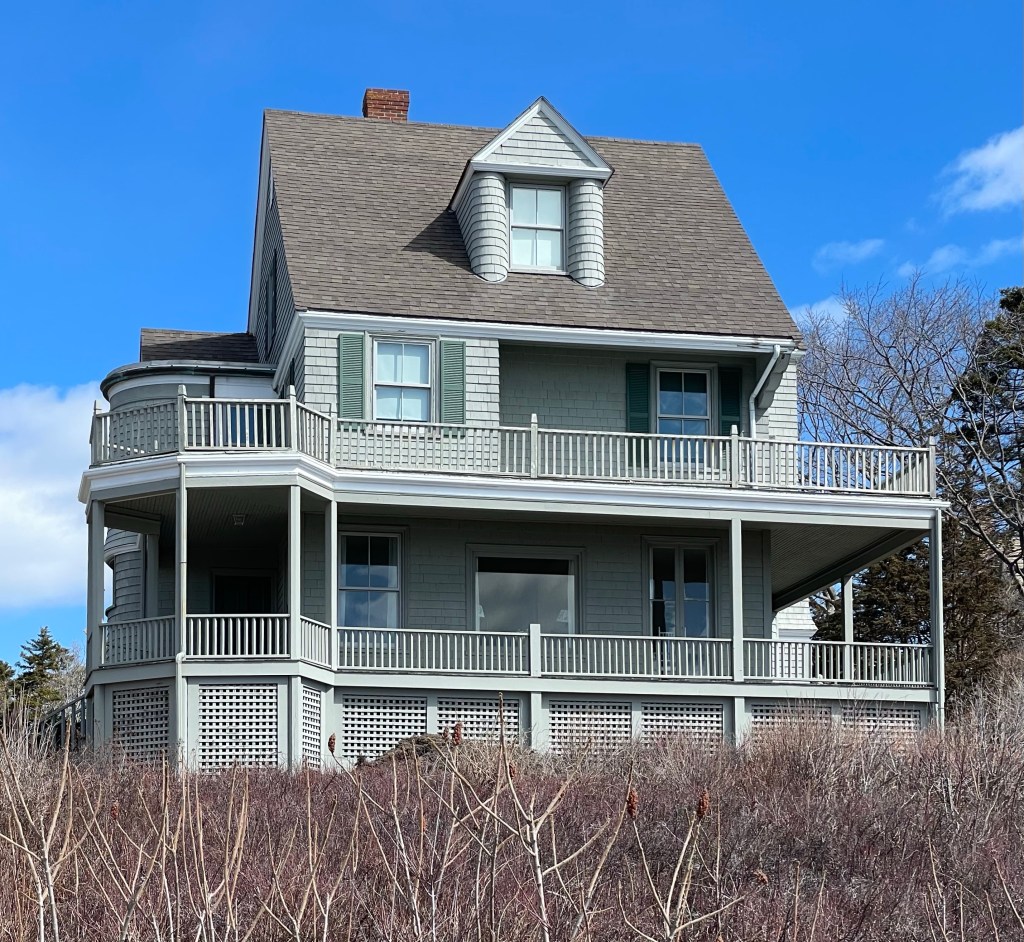
Spouting Rock Cottage // 1887

Another of the earlier summer cottages built in Kennebunkport’s Cape Arundel summer colony is this charming dwelling perched on a stone outcropping overlooking the rocky coast of Maine. Spouting Rock Cottage was built in 1887 as a transitional Shingle style and Queen Anne summer home for author John Townsend Trowbridge of Arlington, Massachusetts. Trowbridge spent many summers in Kennebunkport and was engaged in local cultural affairs, he even named Spouting Rock and Blowing Cave, natural features in the town. For his summer cottage, Trowbridge hired Arlington-based architect J. Merrill Brown, who provided a rustic, timeless design without all the unnecessary frills and details for the rugged coastline. That is to say that the cottage is anything but boring, with its sweeping porches, complex form with rounded stair-tower, and dormer with curved shingle returns. Perfection.

Gable and Tower Cottages // 1889

These two similar houses in the Cape Arundel Summer Colony in Kennebunkport, Maine, were built in 1889 for Prosper Louis Senat (1852–1925) and his wife Clementine. Prosper was a well-known artist from Philadelphia, who would summer in Kennebunkport and traveled the world with Clementine, painting landscapes and seascapes. Senat and his wife lived in one cottage and likely rented the other to family and friends when visiting town. His studio was built on a nearby street and is extant. Tower cottage (greenish-grey) was renamed Shady Oak Cottage in the 20th century. Both cottages were built by George Gooch, a local contractor from plans by an unknown architect and feature bay windows, short towers, smaller windows, and continuous shingle siding.

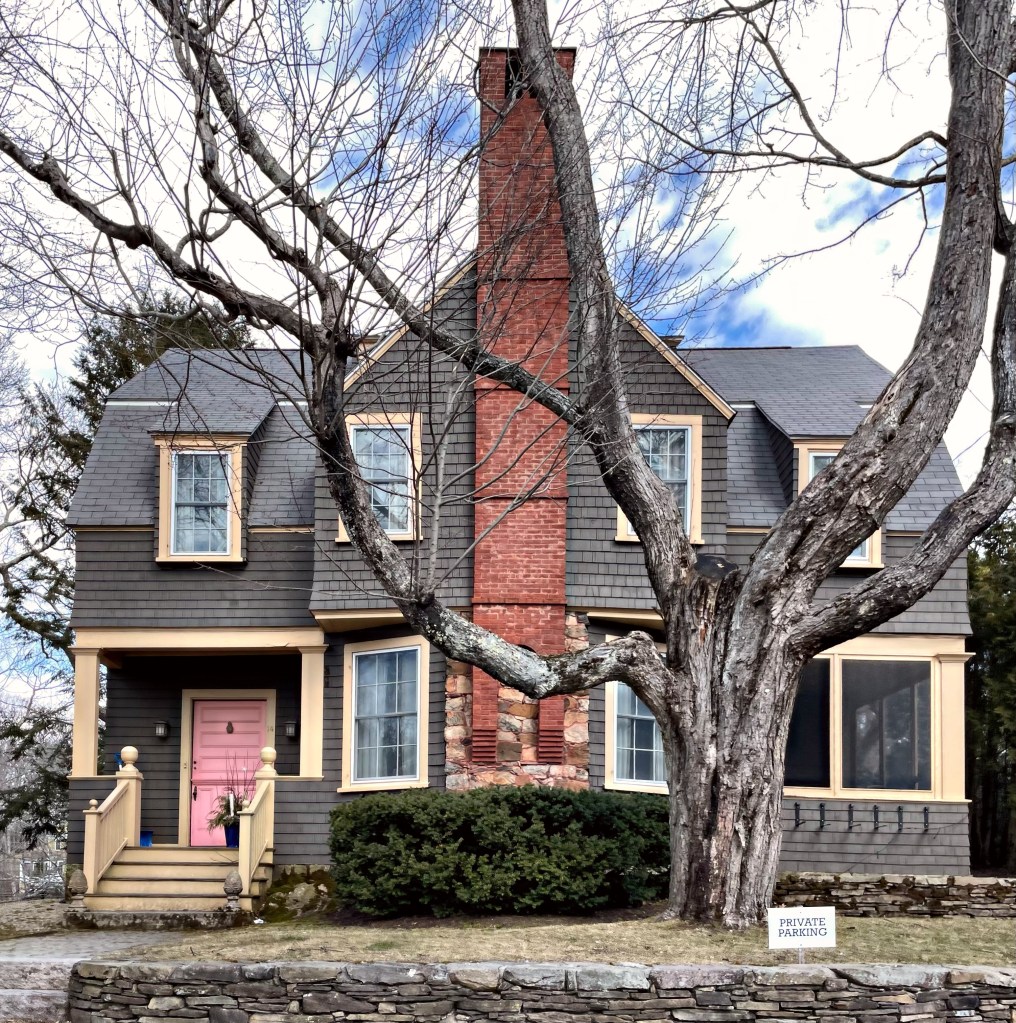
“The Dory” Cottage // 1888

Before Miss Gerrard purchased the Glen Cottage (last post) in 1900 in Kennebunkport, Maine, she had already summered in her own summer cottage nextdoor for over a decade. In 1888, she hired an architect from New Jersey to furnish plans for this charming shingle and stone cottage as her summer retreat. The cottage features a prominent brick and rubble stone chimney facing the street with a gambrel roof. The entrance is tucked away under a recessed porch and looks to be the original dutch-door. I can’t imagine how amazing summers in this house would be!

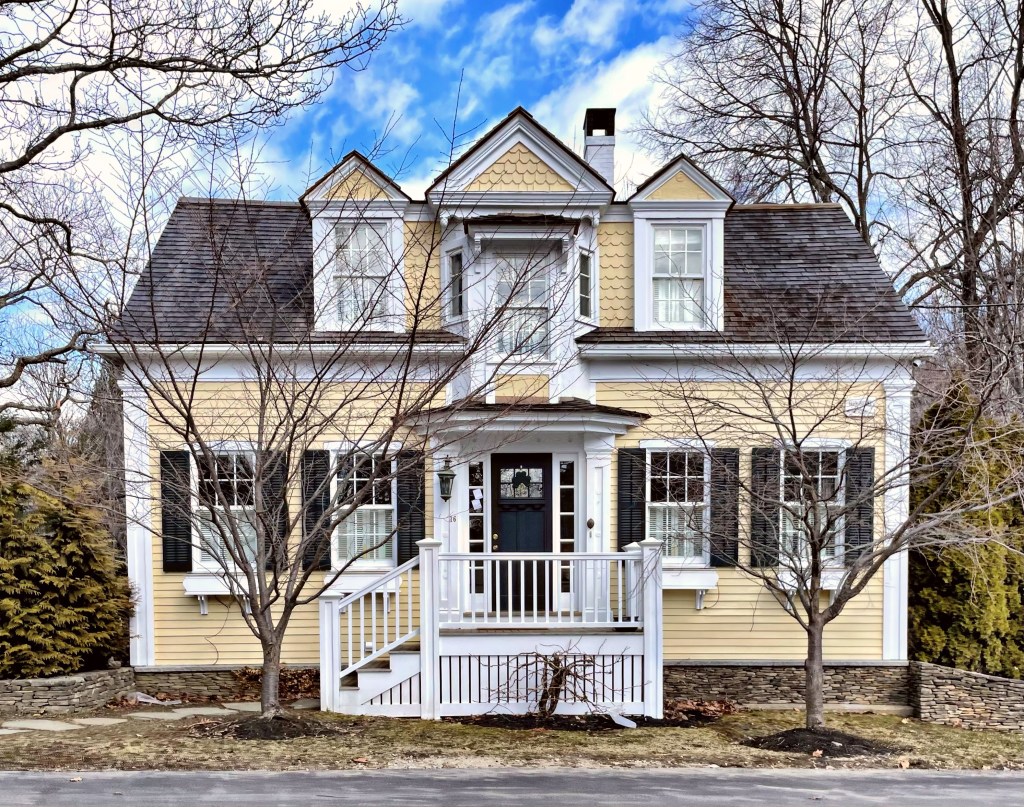
Glen Cottage // c.1850

Not all of Kennebunkport’s summer “cottages” are grand, Shingle style mansions… Glen Cottage was originally built in c.1850 as a Greek Revival style cape house. As the town developed into a desirable summer colony for wealthy residents of Boston, New York and Philadelphia, the small cottage caught the eye of a Ms. Garrard. Margaret Garrard purchased Glen Cottage in 1900 and hired Maine architect William Barry to transform the old cape, adding the dormers, octagonal bay, and door hood. Here, she ran the Bonnie Brig Tearoom for twenty years. Tea houses were important social centers for wealthy summer residents Later owners renamed the tea house, “The Old Tree Tea Tavern” and “Periwinkle” but in 1926, the name reverted to The Bonnie Brig Tearoom. Today, the cottage has reverted back to residential use with the owners lovingly maintaining the old cape.