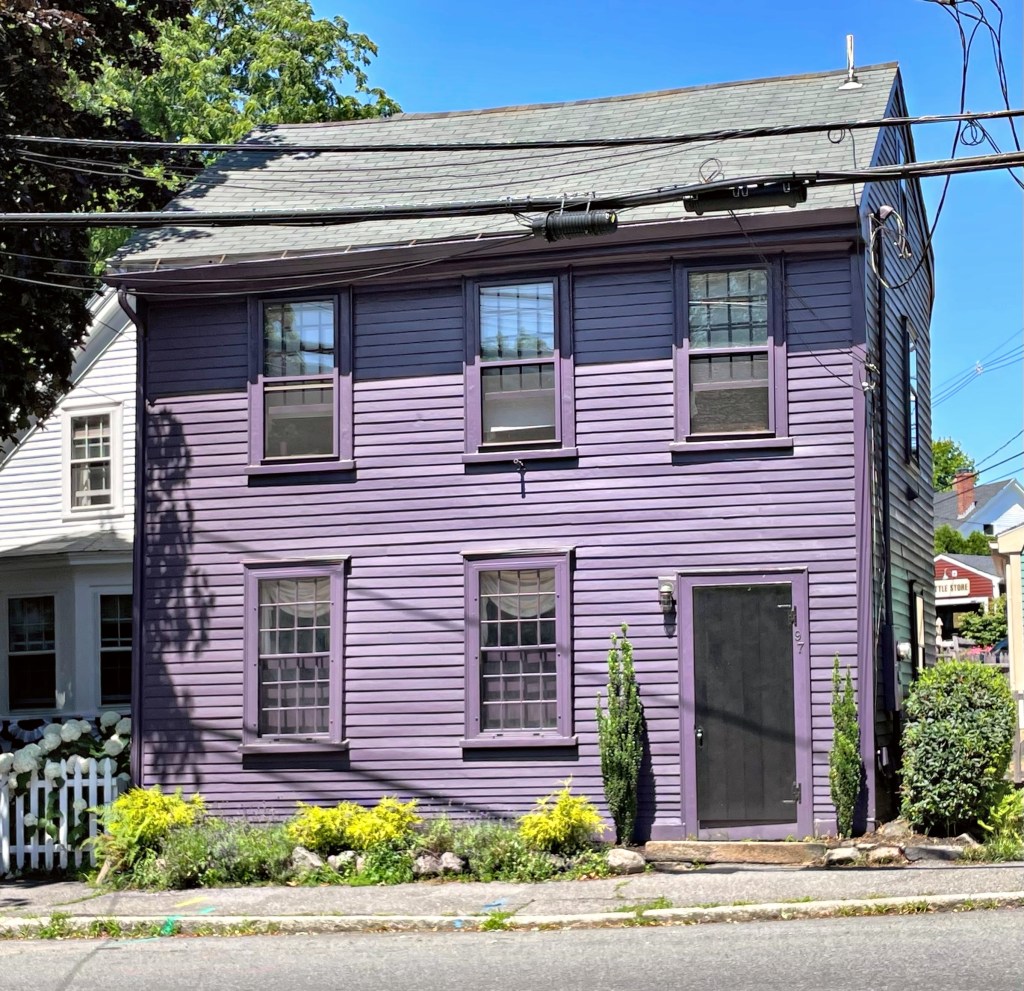
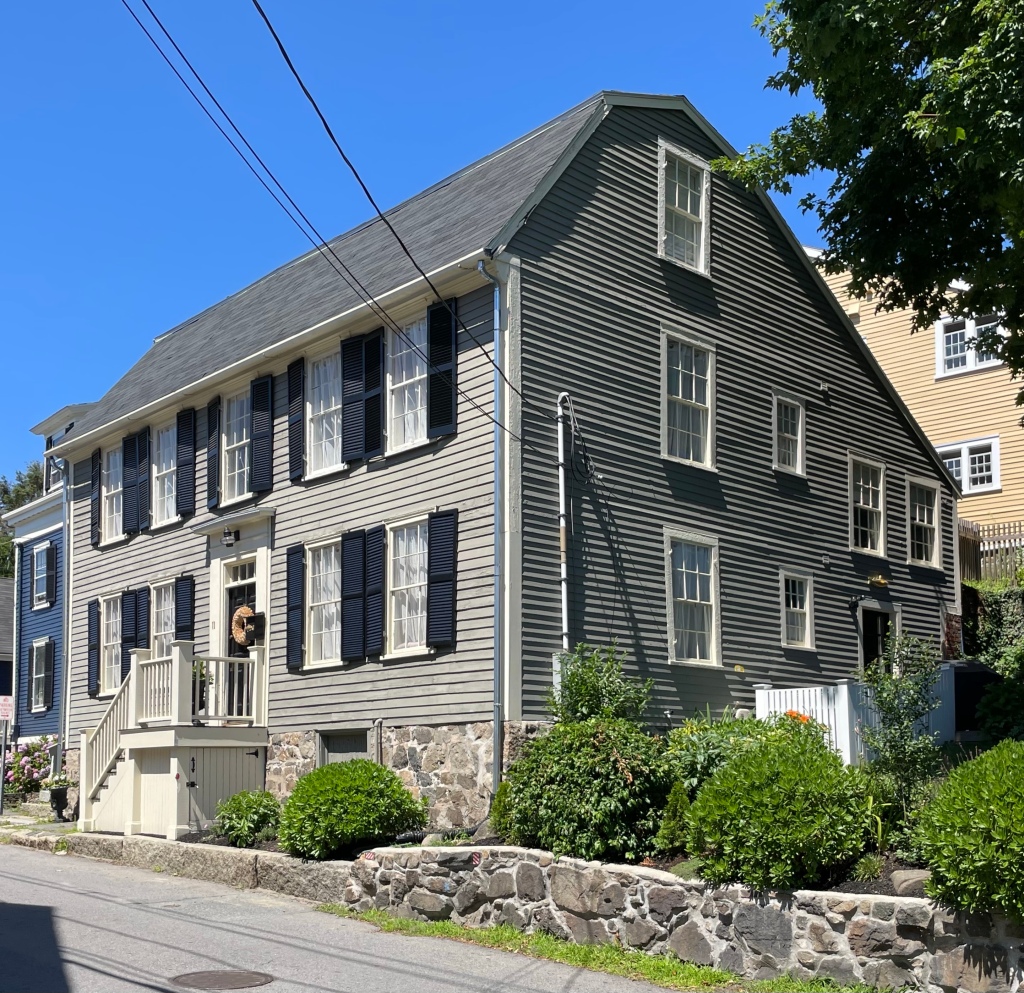
Coleman House // c.1750

In 1802, a young sea captain, Laban Coleman purchased this house on Orange Street on Nantucket within a year of his marriage to Jane Carman. Historians estimate the date of construction of the house to be from sometime between 1729 and 1750, but it could date closer to the time that Coleman purchased the house from a joiner, Elisha Raymond, who possibly built the house. I particularly love the simple door with transom above and the narrow, second-story stairhall window. What do you like the most about this Nantucket home?

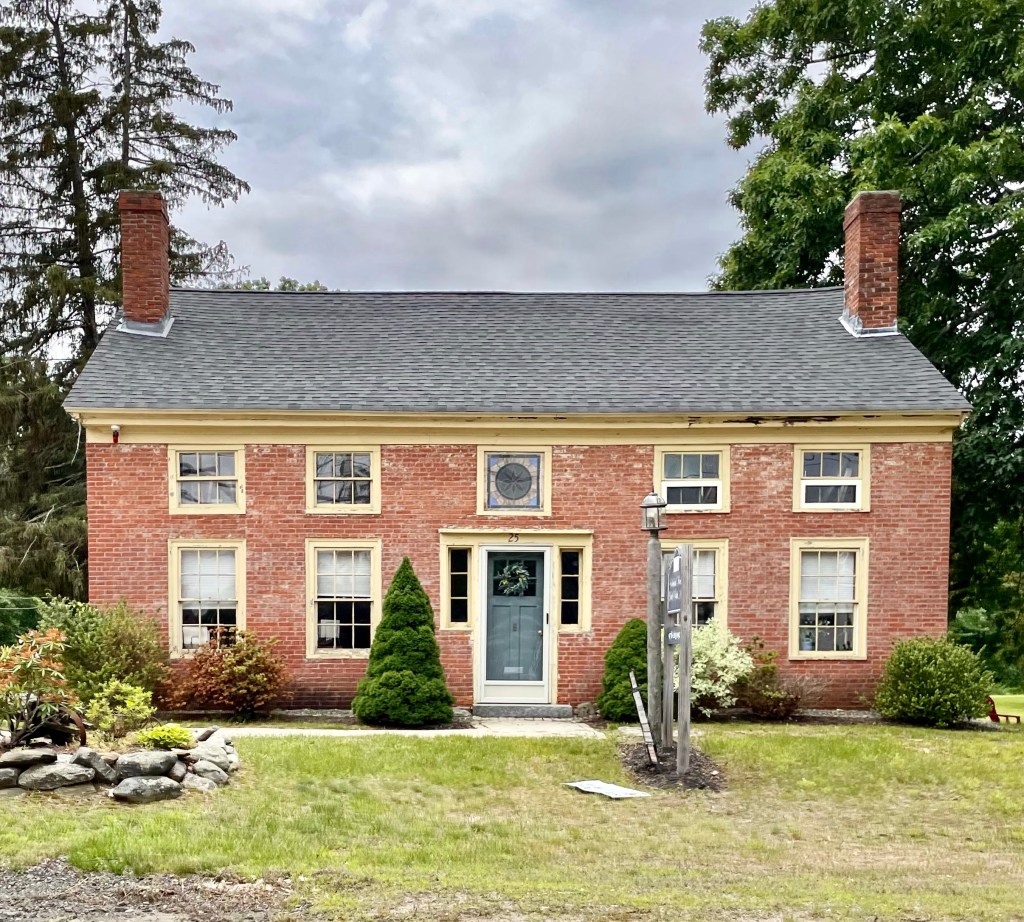
Thunder Castle // c.1830

This charming Federal period dwelling in Mansfield, Massachusetts, was built around 1830 by Solomon Pratt and his brother-in-law, Elkanah Bates as a boarding house for the workers at their nearby cotton mill. The duplex was historically split down the middle with a unit on each side, accessed by the shared center stairhall. Local lore states that the Irish immigrant families who lived in this property reported that there were “supernatural” noises in the house, which frightened the occupants, they would tell friends it was “thundering in the castle”, giving the property the nickname, Thunder Castle.

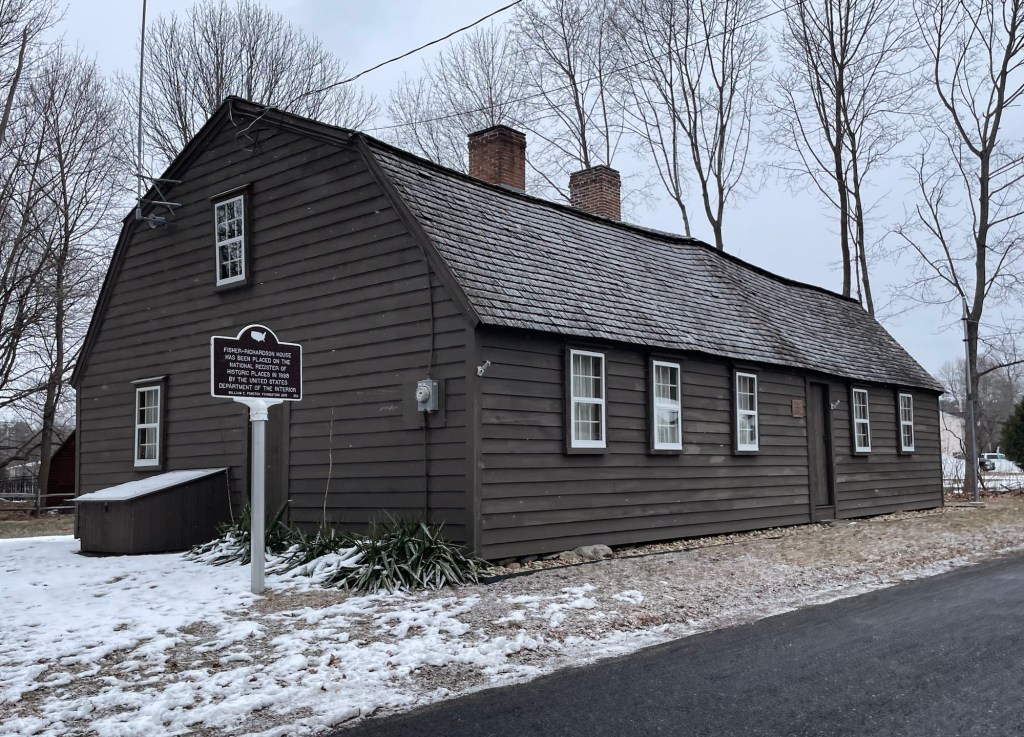
Wellman-Fisher-Richardson House // c.1745

The Fisher-Richardson House in Mansfield, Massachusetts is considered to be one of the oldest buildings in the suburban town. The home dates to sometime between 1743 and 1751 and was built for its original owner Ebenezer Wellman (1720-1776). The property was eventually owned by Lemuel Fisher, who in about 1800, doubled the size of the house adding its western half. When Lemuel died in 1820, the property was inherited by his youngest son, Daniel, a farmer and blacksmith who also built a gristmill nearby. The home was later inherited by Daniel’s daughter, Evelina and her husband, Captain Ira Richardson. By 1930, the gambrel-roofed Georgian house was in disrepair, and the owner at the time contacted SPNEA (now Historic New England) who drafted an agreement to acquire and restore the house. However, as local interest in the property increased, the owner deeded the property to the town, and the town took on the costs of restoration. The property is now managed by the Mansfield Historical Society.

Langley-King House // c.1710

Built c. 1710 this amazing Georgian Colonial house would have originally been a smaller, central chimney structure built by Nathaniel Langley. Major remodeling to effect the Georgian style seen today was done by a subsequent owner of the property. That owner was likely John Brown (1694-1764) a wealthy merchant that may have gifted or sold this home to his daughter, Ann Brown and her new husband, Charles Handy. Handy was a merchant and operated a spermaceti factory just to its west. Later owner, David King and his heirs owned the house for much of the 19th century. The house is on its original site and was purchased by the Newport Restoration Foundation (NRF) in 1969 and restored in 1970-71.

Cahoone-Yates Double House // c.1763

James Cahoone (1727-1814) and Stephen Yates built this stunning double-house on Green Street in Newport around 1763. Both James and Stephen worked as painters in town, and built this house together, each living in one half (Cahoone must have paid a little more because his “half” was a little larger). The Georgian style double-house eventually suffered from neglect and like several other Colonial-era buildings in Newport, its future was uncertain. Luckily, the Newport Restoration Foundation stepped in and purchased the property in 1968, restoring the houses in 1974, complete with a paint color even Cahoone and Yates would love!

Merritt House // c.1725

In 1725, Samuel Merritt, a fisherman, inherited some of his father’s land in Marblehead and built this house. After Samuel Merritt died in 1743, his second wife Mary, her daughters Mary and Elizabeth and her son-in-law James Dennis, lived in the house. They added the one-story lean-to, giving the house a saltbox roof in 1762. This house, and many others in Marblehead are the reason why human-scaled historic neighborhoods built before the automobile, are some of the best places to explore. Historic preservation equals tourism, which results in tax revenue and property values, stabilizing neighborhoods and cities from the ebbs and flows of the economy. Gotta love it!

Pearson-Bessom House // c.1720

In 1720, James Pearson acquired a house lot on Windmill Hill in Marblehead, and he soon after built a house in the bustling harbor town. He lived in the house until 1734, when it was sold to a Giles Irwin. After Mr. Irwin’s death, it was conveyed to John Patton and John Bailey, both mariners, who likely split up the home inside. From this, fireplaces were punched into the central chimney inside, totaling 10 fireplaces in the home! John Bailey also worked as the Captain of Fort Sewall during the War of 1812. His wife Mary, served as temporary commander of Ft. Sewell after his death until a successor was appointed. The house eventually came under the ownership of siblings Carrie Florence Bessom (1867-1944) and her brother Frank Lewis Bessom (1870-1952). Florence operated an antiques store in town and Frank worked as a welfare commissioner. The home is a great example of a Georgian, Colonial-era home with a gambrel roof and even has the two (what I believe to be) separate coal doors in the raised stone foundation when the home was occupied by two families.

Peter Wheeler House // 1832

This cute brick house in Boxborough, MA, was built c. 1832 by the Revolutionary War veteran Peter Wheeler where he lived until his death in 1847. The home sits on a heavily trafficked street, yet retains much of its architecture and even historic windows, despite its conversion to commercial use! The brick house features e 6/6 double-hung units on the first story and 3/3 in the second, with the central window featuring stunning stained glass.