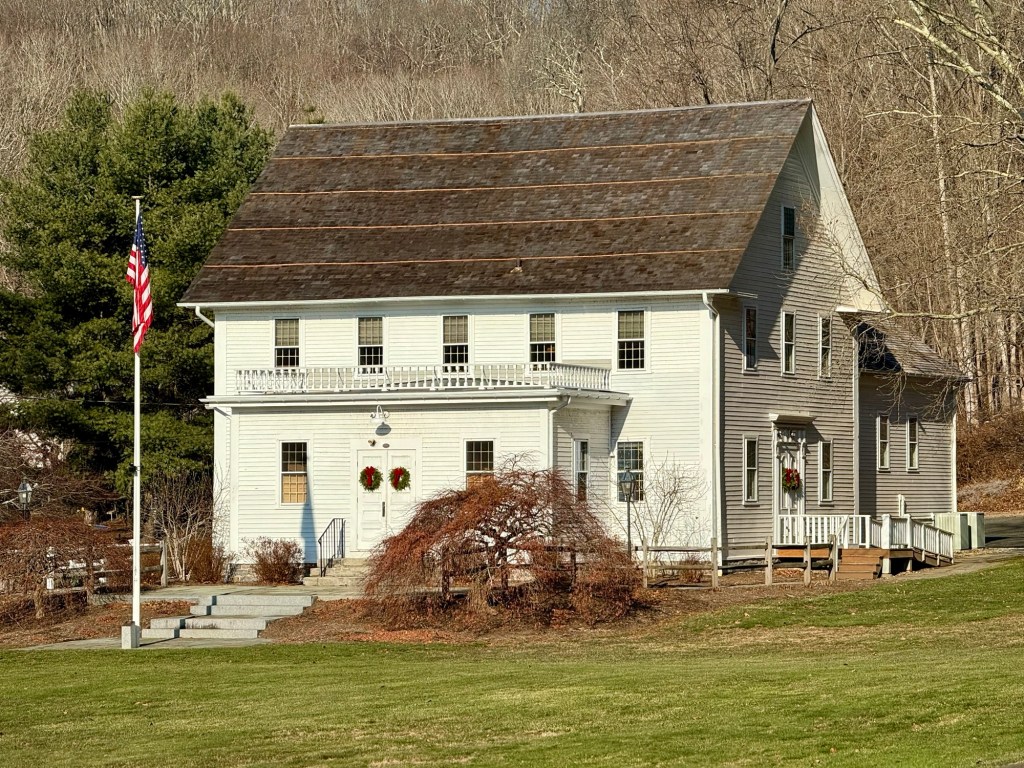
Chester Meetinghouse // 1793

The Saybrook Colony was established in 1635 and covered a large geographic area near the mouth of the Connecticut River in Connecticut.  This area was later subdivided into different towns after colonial era villages were established, each with their own church congregations. As was common in the colonial era, these divisions were centered on the establishment of separate church congregations. The Fourth Ecclesiastical Society of Saybrook in what is now the town of Chester, Connecticut, was established in 1742. As the town grew, this building was constructed in 1793 as Chester’s second meeting house and served as a church until 1846, when the third Meeting House was built. In 1847, the Town of Chester acquired this old meetinghouse and from that date until 1960, it was used as the Town Hall. In 1876, the old meetinghouse was renovated with a new, projecting main entrance added to the south side of the building when the Old Town Hall enjoyed its heyday as a theater and concert hall. The Old Town Hall witnessed many events under its roof, including hosting P.T. Barnum’s Tom Thumb, who performed here, as did musical events, high school proms, and school graduations. The building had become threatened following the construction of the new Chester Elementary School, which better-hosted events, in the 1960s. Luckily, in 1970, the newly formed Chester Historical Society acquired the building and restored it as a significant piece of the town’s rich history.
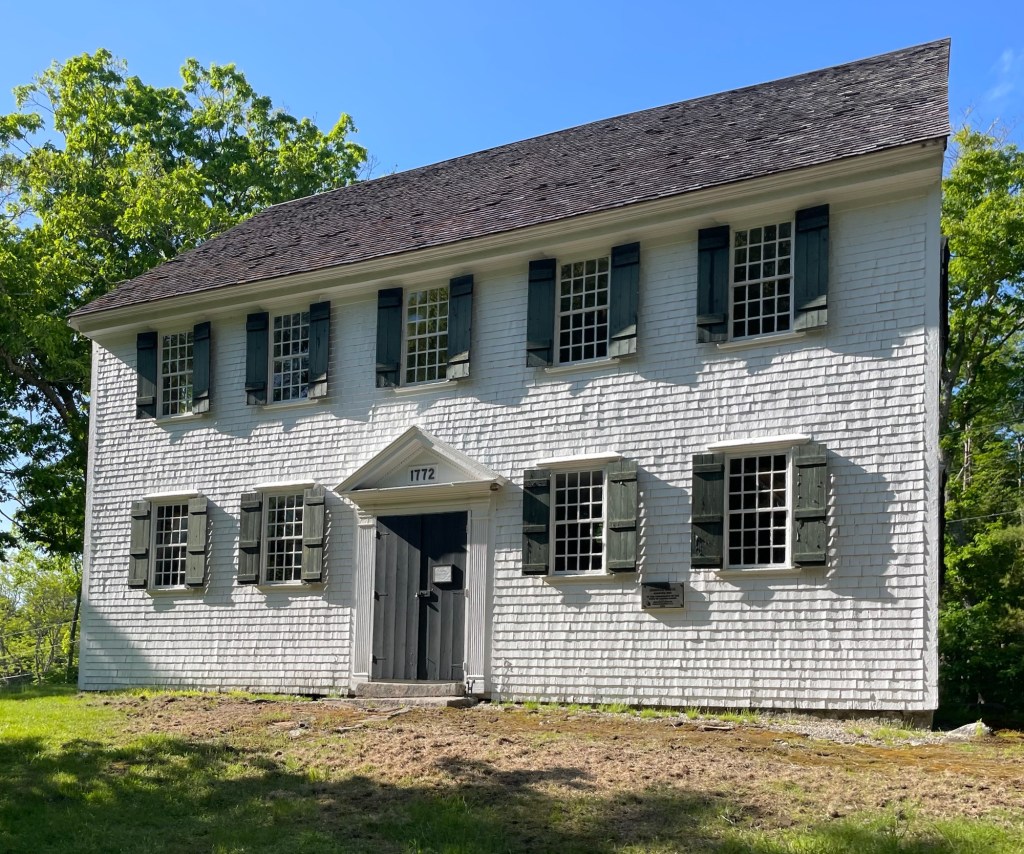
Walpole Meetinghouse // 1772

The Old Walpole Meetinghouse is a rare extant example of a Colonial meetinghouse in New England. The building is located in South Bristol, Maine, in the village of Walpole, and was constructed in 1772. The Walpole Meetinghouse is a little-altered example of a late colonial church in Maine (and one of the oldest actively used churches in the state.) The building originally housed a predominantly Presbyterian congregation of Scottish immigrants, but as the presbytery was based far away in Boston (Maine at this point was still a part of the Commonwealth of Massachusetts) the congregation eventually became Congregationalist. The Georgian-style building is clad in wood shingles, originally stained painted a brownish yellow to blend in with the birch leaves as to camouflage it among the trees. The building was painted white in the 20th century. It is one of a few extant meetinghouses in New England that utilized shingle siding instead of the quintessential New England clapboards. It is said that these are still the original shingles. Inside, the doors all enter the single main chamber, where the ground floor is dominated by a series of box pews and the elevated pulpit is sited at the north wall. It is maintained by the South Bristol Historical Society, and is still used occasionally for summer services.

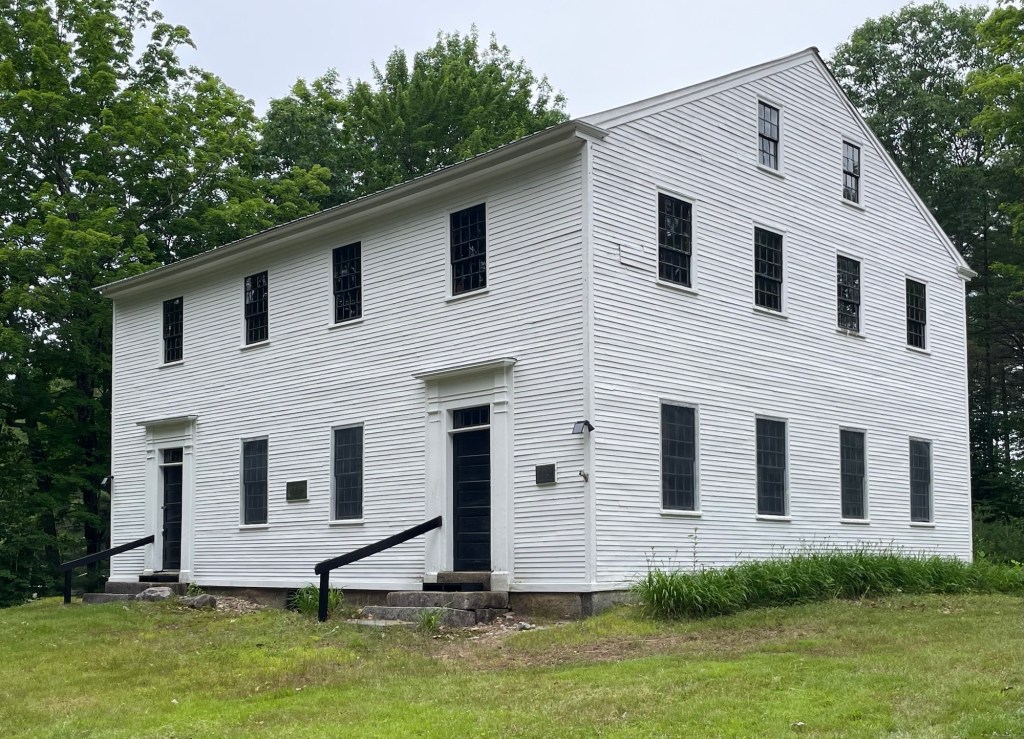
Old Porter Meetinghouse // 1818

Welcome to Porter, Maine! The town is located on the Maine/New Hampshire border and was first called Portersfield Plantation. Porter was incorporated in 1807 and named after its first proprietor, Dr. Aaron Porter (1752-1837). The Porter Meetinghouse was built beginning in 1818 and it is said that it was not completely finished until 1824. The original congregation was a Freewill Baptist organization led by Reverend Jeremiah Bullock, and were known locally as “Bullockites“. The structure housed the Baptists and town meetings as needed. The plain vernacular, meetinghouse is typical of many early meetinghouses of the period in rural New England. The inside retains its original character with its space as a single large chamber with a gallery above on three sides. The walls are plaster, much of it original, with trowel marks visible. The main floor is populated with original box pews and a replica pulpit. The structure is a rare survivor!