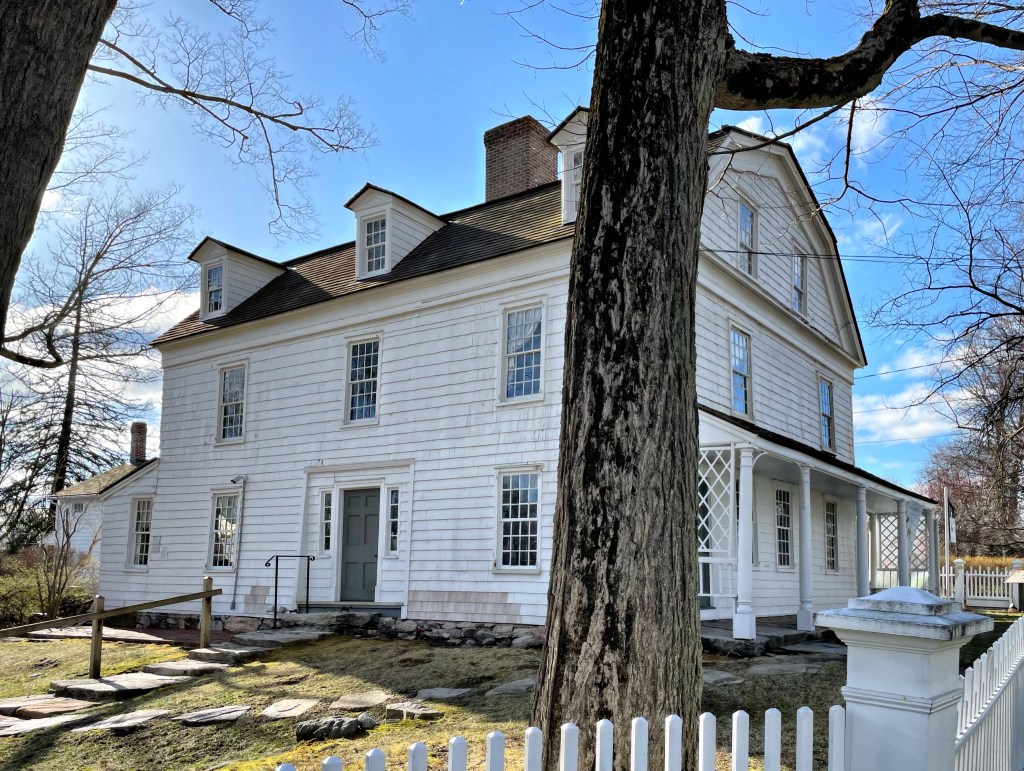
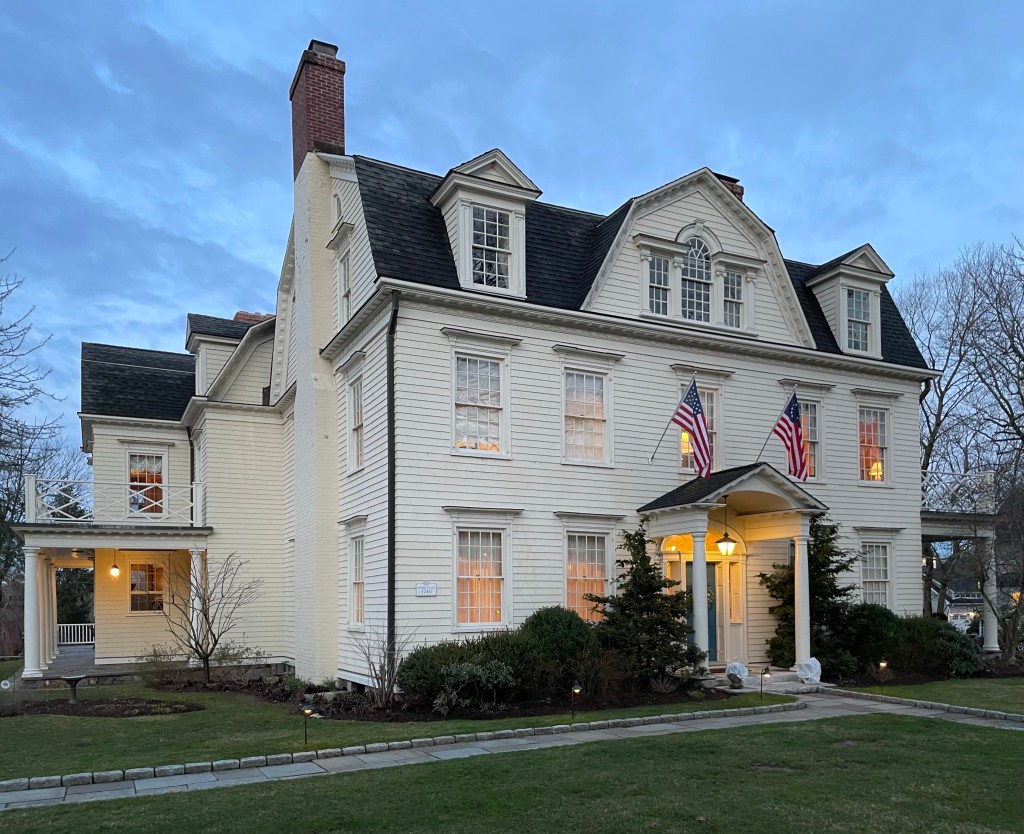
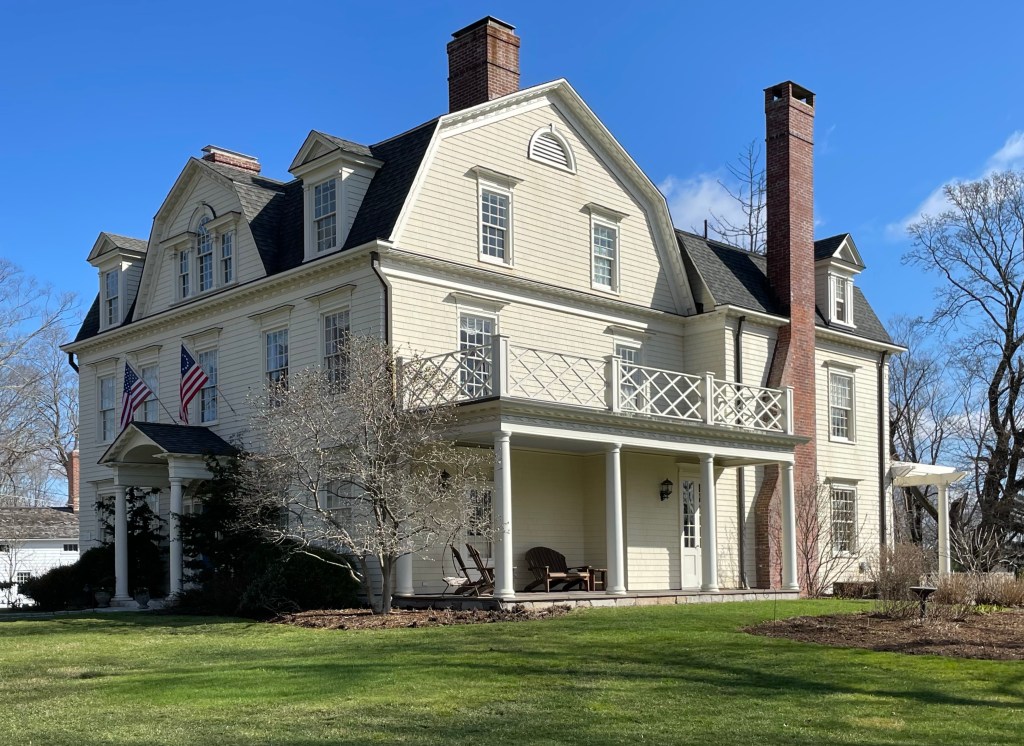
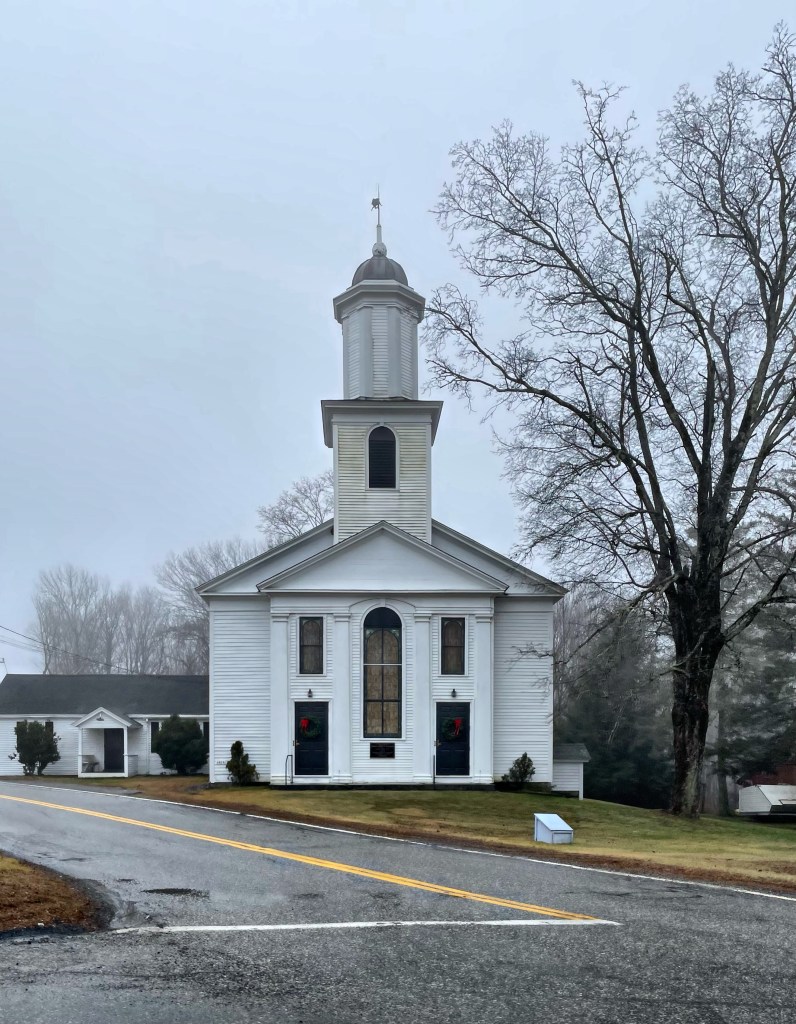
Deacon Turner House // 1849

The Deacon Turner House, built in 1849, is an impressive Greek Revival house located at the Town Common in Willington, Connecticut. The Greek Revival portion was constructed onto an earlier house or store that was built 50 years prior. The one-story structure was likely moved and incorporated into the current house as a rear ell. The present house was designed by architect Augustus Treusdel of Coventry and built for Deacon John Turner by Emery Williams a well known local builder. John Turner was Deacon of the Willington Congregational Church, nearby.

Hiram Rider House // c.1820

Located on the southern edge of Willington Connecticut’s town common, this vernacular example of the Federal style with later alterations is really appealing, mostly for its simplicity and proportions. The house was built around 1820 for Hiran Rider, who served as a judge, county sheriff, and town selectman. The Rider Family were hit by tragedy in 1851 when dysentery hit the household, killing Hiram, his wife Sarah, and their daughter. The home was altered by a later owner with 2-over-2 windows, an Italianate style door, and a door hood.

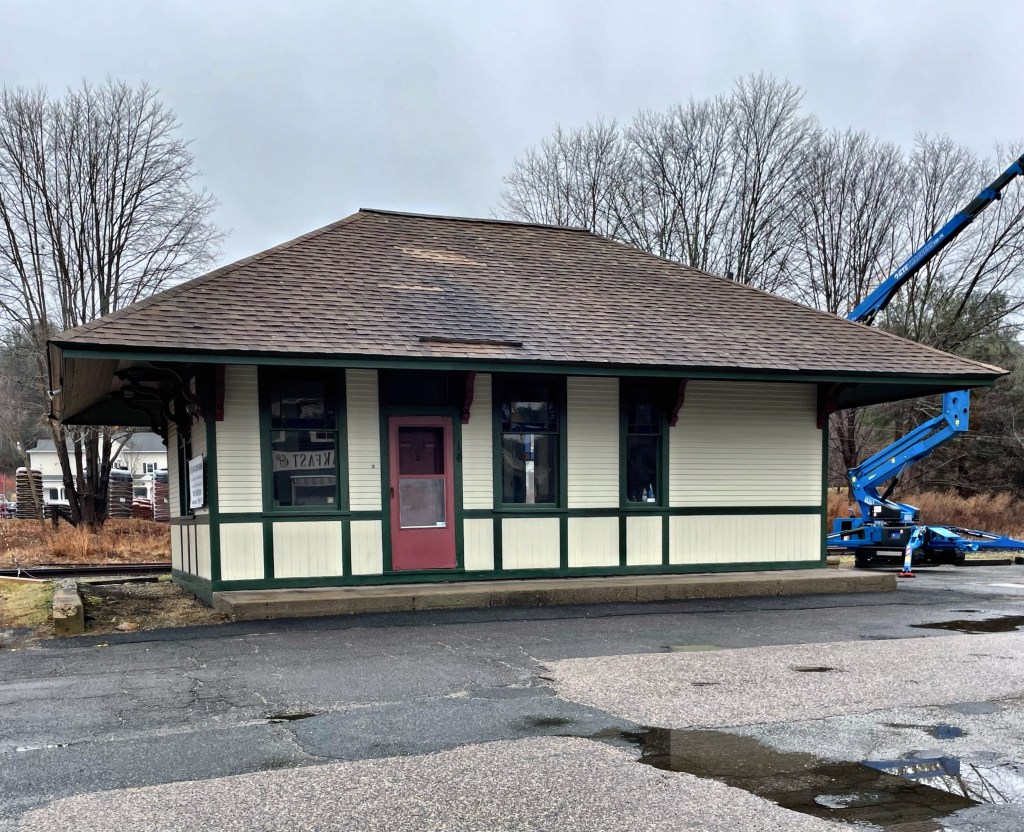
Willington Train Depot // 1895

TOOT TOOT! Next stop, Willington, Connecticut. Historically, all of central Connecticut was occupied by various Algonquin tribes which for thousands of years inhabited the region, the larger Pequot and Mohegan, and the smaller Nipmuck, Podunk, Shenipset and Skunkamaug all sharing a common-lineage, and language. In 1720, a party of eight men, originally from England, bought 16,000 acres of the region and called it Wellington after the town in England. Willington was incorporated in 1727. Like many early towns, Willington began as a farming community with modest industry until the 19th century, when the American Industrial Revolution saw mills and factories sprouting up all along the river towns in the region. Villages spouted up in town, mostly following their geographic location in relation to the town center (South Willington, West Willington, etc.) and each had their own industry and character. By the 20th century with industry in decline, many of the former mills and villages closed up and residents moved to “greener pastures”. The town is today mostly rural and serves as a suburb to larger towns nearby.

This train depot is located in West Willington just over the town line of Tolland. Due to this, the depot was originally named Tolland Station. Rail service began here in 1850, when the New London, Willimantic and Palmer Railroad Company built a freight and passenger station near this location. The rail line was later absorbed into the larger Central Vermont Railway in 1871. The original depot burned down in 1894, and was replaced that same year by this structure. The line, and this station, were in use for passenger service until 1947, when it closed. The depot has luckily been occupied by businesses ever-since, preserving this building typology in America that we are losing every year.

Soudant House // c.1850

This eclectic house in Collinsville was likely built in the mid-19th century in the Greek Revival style, with its gable roof serving as a pediment. By the end of the 19th century, the prominent corner tower with mansard roof and porch were added to create the oddly pleasing composition we see here today. The home was likely altered by Walter Soudant, who ran a grocery store in the village out of the Valley House (last post). Walter’s daughter, Belle Julie Soudant, was an established singer, who toured Europe before accepting a position as a singing teacher at the Institute of Musical Art in New York, known today as the Juilliard School.

Riverbend Cottage // c.1860

No, this is not Martha’s Vineyard, it is Collinsville, Connecticut! Perched on a hill near the banks of the Farmington River, this quaint little Victorian cottage is one of the better-preserved examples of worker’s cottages in the former industrial village. I could not locate much on the house’s history, beyond that it may have once been part of a larger home, and moved to this site in the 20th century.

Collinsville Congregational Church // 1858

Shortly after Collins and Company was founded in 1826, religious services were held in various homes in the South Canton Village which came to be known as Collinsville. In 1830, the Collins Company erected its first office building on Front Street, and religious services were held there on the second floor. The first church building was erected on land bought by Collins and Company in 1826. By the mid-1850’s, the church membership was outgrowing the building. Although there may have been plans to enlarge the building, tragedy struck and in January 1857, and the church was consumed by fire, which started in the chimney, during a winter storm. The current building was erected almost immediately and dedicated on February 25, 1858. The present church is a grand Greek Revival style building, with a full pediment and large entablature supported by four monumental fluted columns. The two-tiered, square belfry has engaged columns as well. What a great example of a New England church!

Collinsville Savings Bank // 1892

Historically, banks would construct architecturally grand buildings with ornate interiors to showcase their wealth and stability. The aim for these institutions would be to express longevity and security for those looking for a place to store their wealth. The Collinsville Savings Bank grew out of the Collinsville Company and was incorporated to provide a bank for the ever-growing community in the village, from executives to recent immigrants. The bank was incorporated in 1853, and later relocated into the company’s office building. By the end of the 19th century, company offices expanded into other spaces in the building, and the bank was forced to build this new Romanesque Revival style building on Main Street. The rusticated blocks in the brick facades add a lot of depth and detail to the building, and those ARCHES!

Collins Company Offices // 1868

When the Collins Company built its mill buildings in South Canton Village (later renamed Collinsville), workers housing, schools, businesses, and churches popped up to service the growing immigrant community here. The Company also built an office building for the executives, where they could oversee the business’ growth and balance the books. The original office building from 1830 was eventually outgrown, and after the Civil War, this larger building was constructed. The new building held offices, a post office, library, a third-floor meeting hall for local groups. The masonry building has decorative cornice and a gorgeous raised entry.

Polk-Haury House // c.1865

Collinsville, a village in Canton, Connecticut, sits along the Farmington River and is one of the most charming New England villages I’ve been to. The village sprung up around the Collins Axe Company, a manufacturer of edge tools, such as axes, machetes, picks and knives. With the company’s growth (more history on the company in a later post), immigrants moved to the town, and lived in workers cottages built by the factory owners. Churches, stores, schools, and parks came soon after, creating the dynamic village we see today. Nathan L. Polk moved to the village and built this charming Second Empire style cottage, walking distance to his apothecary shop. By 1872, Nathan died and the house was sold to Ulrich Haury. Haury was born and raised in Germany and settled in Collinsville by 1862, working at the Collins Axe Company. From his earnings, he opened up a grocery in the village, spending his earnings bringing his family for vacations to his homeland in Germany. The home remains in excellent condition.

South Canton Center School // 1848

Located across the street from the Canton Congregational Church (last post) you can find the cutest one room schoolhouse in central Connecticut. The schoolhouse, built in 1848, was one of nine one-room schoolhouses in Canton at the time. The perfectly proportioned classically designed school features two front doors, one on each side of the recessed entry, with the right door for girls and the left for boys. There were also two outhouses behind the building for students and the teacher. This building served the community as a school until 1942. In the years following, the building was used as a meeting place for women from the congregational church, a community library, and a small public space for members of town. It is owned by the Congregational Church, who maintain it to this day.