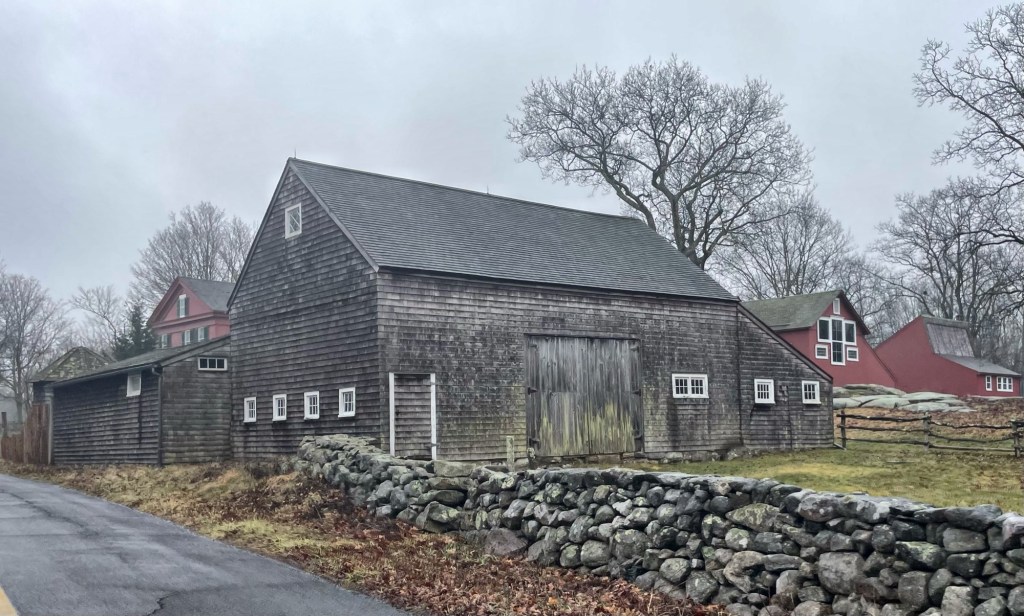
Weir Farm Barn // c.1820

Weir Farm, later an artists retreat and studios, was once a fully operating farm, with horses, cows, oxen, chickens, vegetables, and numerous gardens. To artist Julian Alden Weir, farming was more of a hobby than an economic necessity, undertaken for aesthetic reasons. Weir’s romantic vision of the landscape extended to his use of oxen, carts, and hand tools instead of modern machinery available at the time. Over its long history the barn complex has housed a milking room, a carriage house/wagon shed, a garage, a tack room, an equipment and tool room, hay lofts, a corn crib, and stalls for donkeys, ponies and horses. The rustic barn is a typical “English-barn” built between 1815 and 1835 by The Beers’ family, who owned the property until 1880. Weir used the barn as a prominent feature in many of his paintings like “New England Barnyard” and “After the Ride.” It remains an important piece of agricultural and artistic significance to the now nationally recognized Historic Site.

Ashton Croft Mansion and Carriage House // c.1892

Tucked behind the Jesse Lee Memorial Church on Main Street in Ridgefield, you will find this stately Queen Anne/Tudor Revival estate. The ‘Ashton Croft’ Manor House, now called Wesley Hall, is part of the Jesse Lee Memorial United Methodist Church complex and it has been modified several times blending two distinct styles into a single, pleasing composition. This house was originally constructed by Henry and Elizabeth Hawley circa 1892 in the Queen Anne style. The house was later sold to Electa Matilda Ziegler, a wealthy New York City widow in 1912, who reconfigured the structure to include half-timbering on the gables and upper story walls in the Tudor Revival style. She spent summers at a mansion in Darien, Connecticut, and would sell her Ridgefield property to Sanford H.E. Freund, a New York City attorney. The local order of Odd Fellows bought the estate from the Freund family in 1956. Three years later, the organization sold most of the property — retaining the carriage house for its lodge — to Jesse Lee Methodist Church, which planned to eventually build a new church there to replace the old one at Main and Catoonah Streets. Today, the entire former Ashton Croft estate is owned by the local Methodist Church and is known as Wesley Hall.

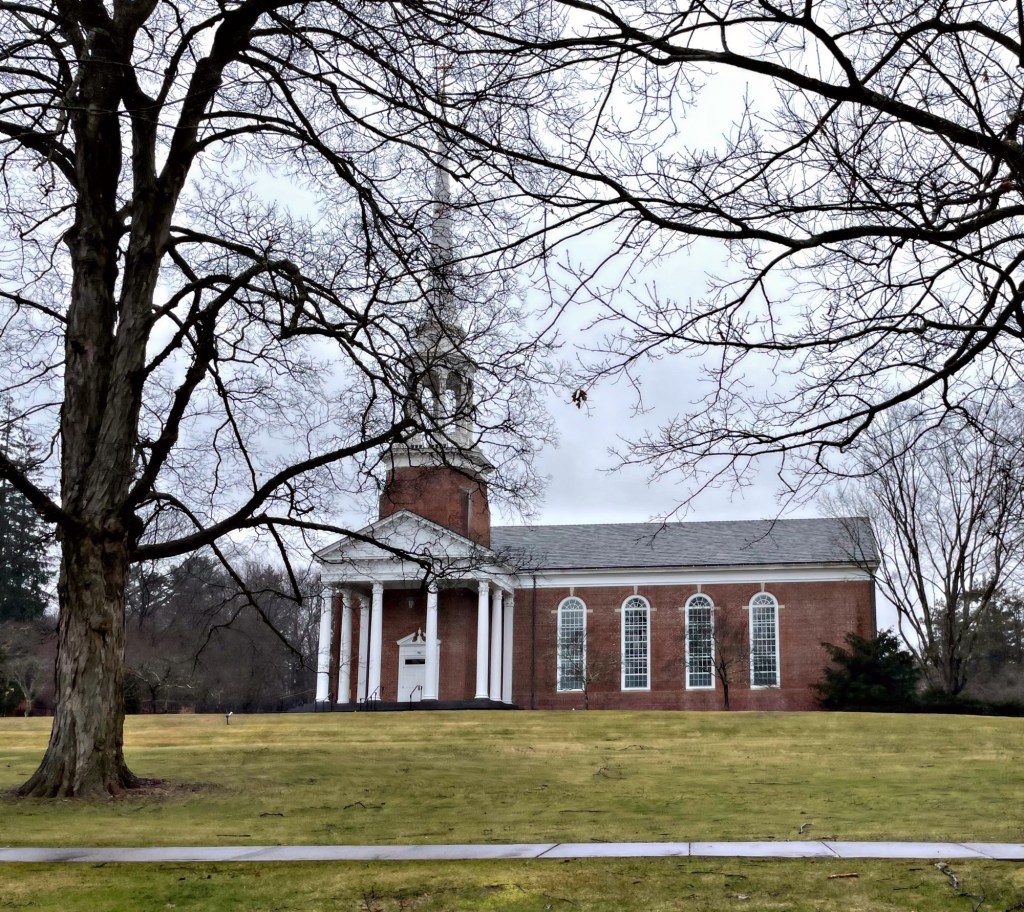
Jesse Lee Memorial Church // 1965

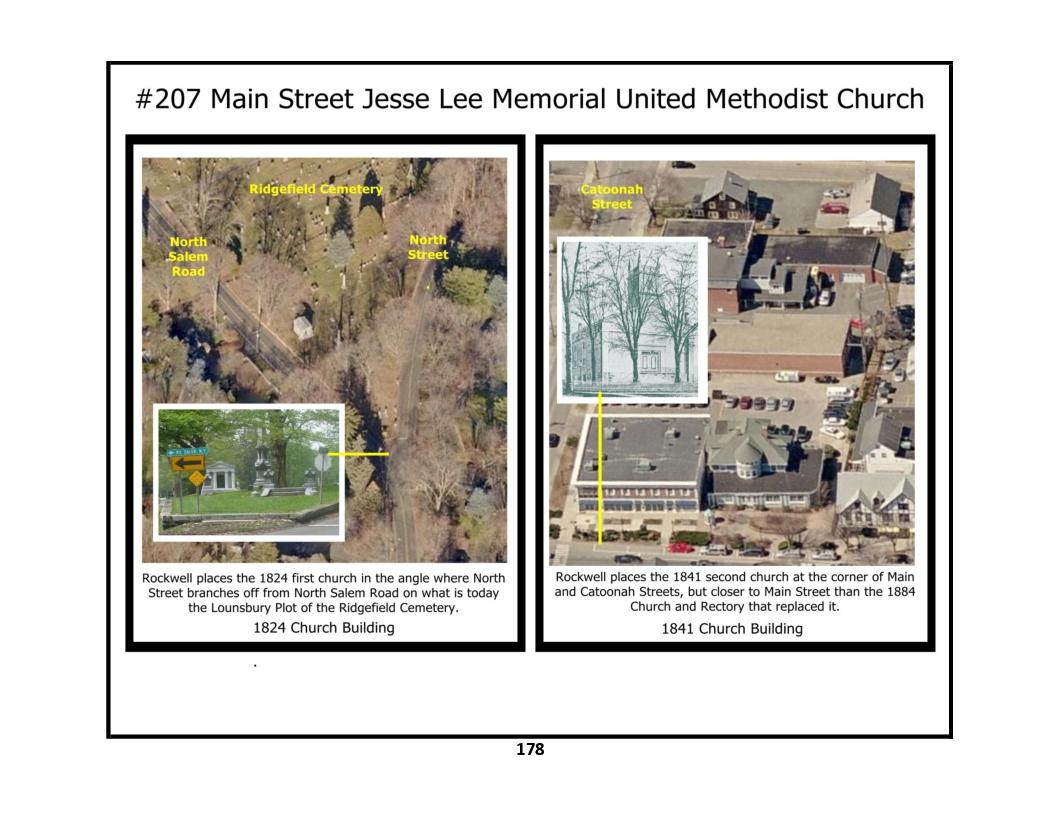
Believe it or not, this church in Ridgefield Center was built in 1965! To know its full history, we have to go back to 1787, when the Methodist Episcopal Church had its beginnings in Ridgefield, the third in New England. Its first meeting was held – just 21 years after Methodism had been introduced into the U.S. from England. In 1789 Jesse Lee, a native of Virginia, was sent north as a circuit rider. His third sermon in Connecticut was preached at the Independent Schoolhouse on Main Street in Ridgefield. In the 1840s, a second meetinghouse in town was built, and the congregation grew. A third church and rectory were built on Main Street in 1884. When a large Main Street estate was available for a new, stately building, the congregation jumped at the opportunity, and hired ecclesiastical architect Harold Wagoner to design a refined, Colonial Revival style church, which was built in 1965. Executed in brick, the church has great verticality, created by the colossal columns supporting its pedimented portico and the spire that rises over an open belfry to a height of 149 feet. Set back from the street, the church still has a commanding presence.

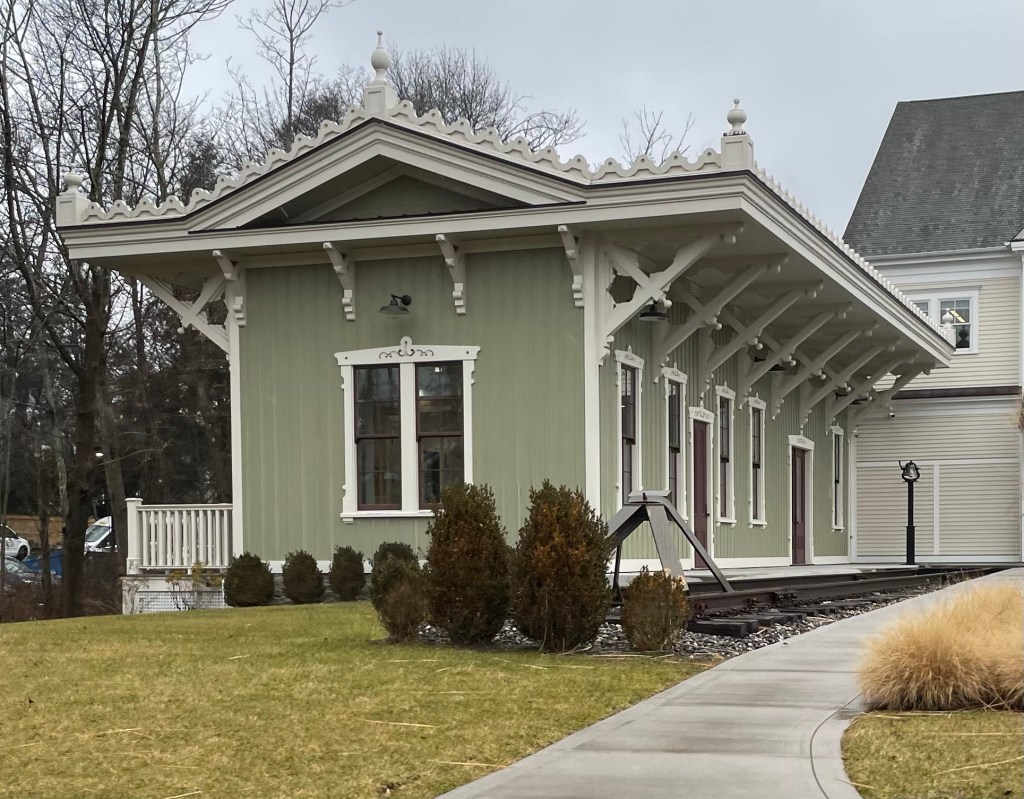
Ridgefield Train Depot // 1870

In 1870, the Ridgefield Branch branch line of the Danbury and Norwalk Railroad and later the New York, New Haven and Hartford Railroad was built connecting the sleepy village of Ridgefield to Branchville train station via the main line. The line was an early risk, built to offer service to the wealthy New Yorkers who began arriving to spend their summers in Ridgefield. Many of these “summer people” had their own private railroad cars, with chauffeurs meeting them as they arrived, driving horse and buggies to bring them and their luggage to their estates located throughout the town. As travel shifted to personal automobile, ridership dropped in the early 20th century, and the branch was replaced by bus service in 1925. Freight service was scarce, and lasted longer, to 1964. The depot was sold to the Ridgefield Supply Company, who used the 1870 building as storage for decades until it was disassembled, moved and rebuilt by the Ridgefield Supply Company in 2015, as part of their expansion. The historic station today provides an important link to Ridgefield’s past.

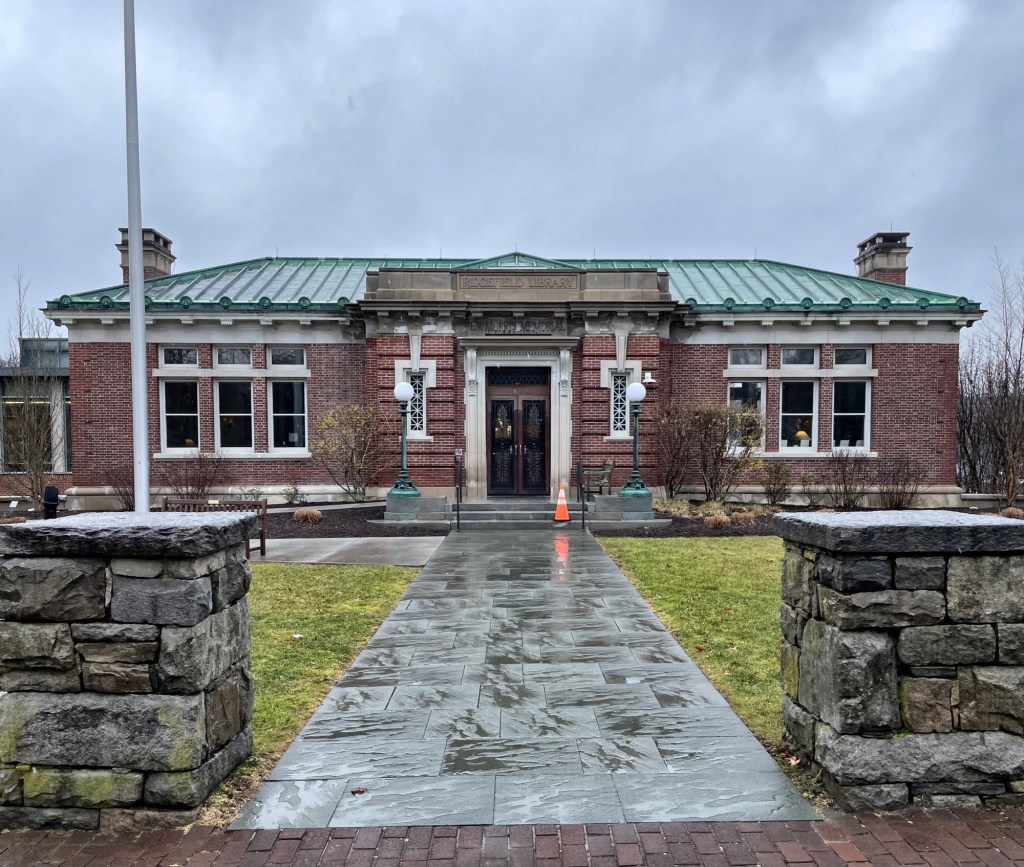
Ridgefield Public Library // 1901

The Ridgefield Public Library is an intriguing Beaux Arts style building from the turn of the 20th century. Built in 1901, the brick structure replaced the Smith Tavern, a 1798 frame structure built by Amos Smith right on Main Street. In 1900 the Smith Family sold the property to James N. Morris who had this library built in memory of his wife, Elizabeth, donating it to the town. Architect Raleigh G. Gildersleeve is credited with the design which is comprised of a one-story building constructed of brick with cast stone trim details and ironwork at the door. The library was given later additions, which are recessive in location and detailing to let the original building shine, as it should!

Yale University – Warner House // 1887

Originally known as Cloister Hall, this ornate building on Hillhouse Avenue in New Haven, Connecticut is one of the most interesting I have seen. The building was constructed in 1887-8 as a residence hall for members of the Book and Snake, a secret society at Yale University. Architect H. Edwards Ficken designed the ornate brownstone Cloister which was completed in 1888. At the time, it was considered “one of the most picturesque buildings on the Yale campus.” The society added a matching rear addition in 1915, which is a heavier mass, but compliments the original structure. Yale University would eventually acquire the building after the society no longer needed a separate lodging house for members. Today, the building is called Warner House, and Yale does a great job at maintaining this beauty.

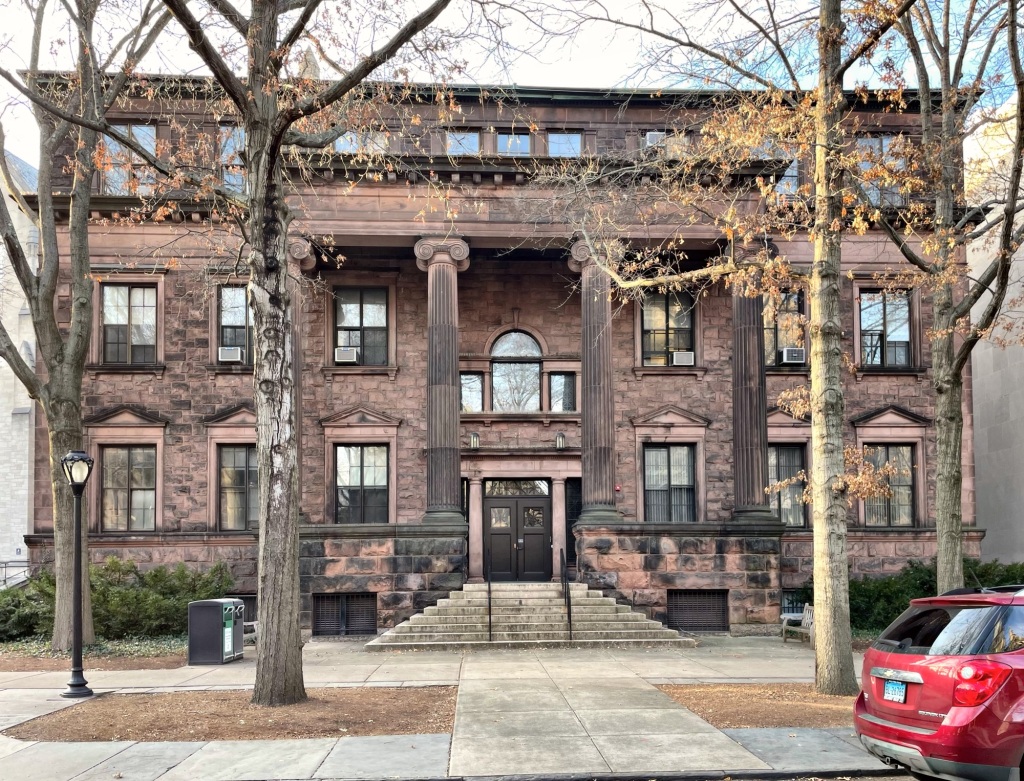
Yale University – Kirtland Hall // 1902

Yale has such great architecture. Walking around the campus, you can find examples of buildings of every time period and architectural style, it is like a living museum of architecture in that sense. Located on Hillhouse Avenue, Kirtland Hall is arguably Yale’s best example of Beaux Arts/Neo-Classical architecture, but it stands out for its use of local East Haven and Longmeadow sandstone. The building was the first laboratory to be built at Yale in the 20th century and was named after Jared Potter Kirtland (1793-1877), the first medical student enrolled at Yale. After graduation, Dr. Kirtland practiced medicine throughout Connecticut until 1823, when his wife died and he moved to Ohio. During his life, Dr. Kirtland also developed an interest in natural history and assisted in the first geographical survey of Ohio. In the early 20th century, Lucy Hall Boardman, a philanthropist and niece of Dr. Kirtland, not only donated funds for scholarships at Yale, but also donated a building, Kirtland Hall. As part of her gift, Ms. Boardman stipulated that her nephew, architect Kirtland Cutter, would be commissioned to design the building, and of course, Yale obliged. The building originally housed the Geology Department and became an integral part of the Sheffield Scientific School.

Berzelius Tomb // 1910

Yale, like other Ivy League colleges, has a long and complex history of secret societies. The secret societies all are headquartered at their own buildings, called “tombs”. These are massive, very impressive structures without windows or signage and all share an unmistakable message with their architecture: “Private; keep out.” One of the lesser-known tombs at Yale is the Berzelius Tomb, completed by 1910 from plans by architect Donn Barber. The Berzelius was established in 1848 as a secret society and formerly was located in Berzelius Hall, a Romanesque style building. The tomb is sited on an difficult lot at the convergence of three main roads but holds its own architecturally as a highly ornamented box. This austere tomb is built of limestone, with a balustrade and detailed cornice at the roof, but the main attraction is the entrance, which is a double brass door with floral panels, all surrounded by a Classical surround. Above the entrance, a limestone panel showcases the Society’s insignia with fruit and flower swags.

New Haven Museum // 1929

New Haven, Connecticut is known for its Gothic and Modernist architecture, but as it is located in New England, some good Colonial Revival architecture is not hard to find! The New Haven Museum building on Whitney Avenue was built for the New Haven Colony Historical Society, which was established in 1862 to collect, preserve, and publish historical matter related to the history of the greater New Haven community. The Society was housed in various locations around the city throughout the 19th century until 1929 when it relocated to its present building designed by J. Frederick Kelly, a noted colonial revival architect. The symmetrical building with its eleven-bay facade is notable for its arched recessed portico and rooftop cupola. The building remains occupied by the New Haven Museum to this day.

Yale University Art Gallery // 1953

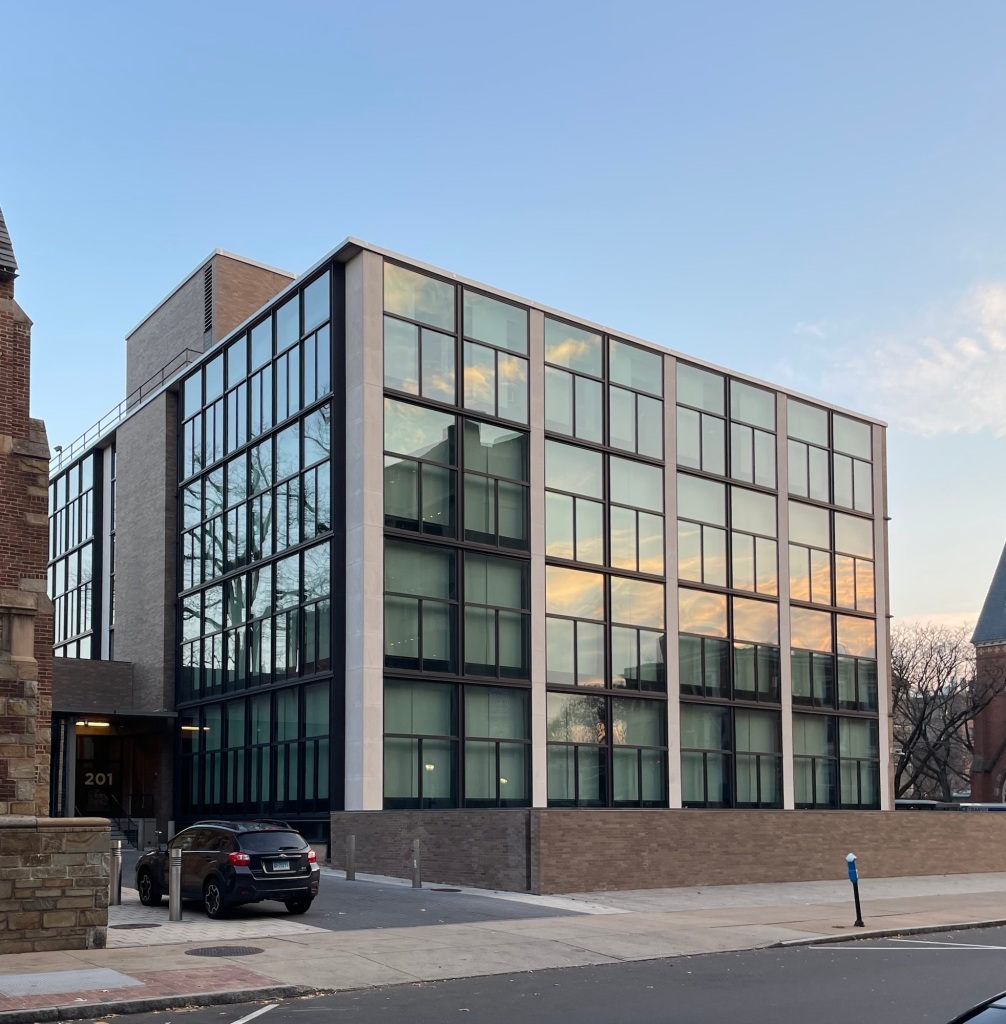
Yale University’s School of Architecture was in the midst transition when Louis Kahn joined the faculty in 1947. The post-war years at Yale trended away from the school’s Beaux-Arts lineage towards the avant-garde, and Modernist principles brought over from European architects. When the University called for a new wing for its existing Venetian Gothic style Art Gallery Building (1928), they obviously had no choice but to make a statement for the future of the school. Architecture professor Louis Kahn worked with Anne Tyng, who was both a professional partner and his “muse”, who heavily influenced his works, including here where she designed the concrete tetrahedral slab ceiling at the interior galleries. As a professor and practicing architect, Kahn hoped for students and visitors would engage with the building, even interior spaces often overlooked design-wise, such as the stairwells. While the facades are fairly minimal in design details, because the attention was paid to the interiors, which provide protection from natural light while also allowing for large floor plates for customizable exhibitions. The structure is Yale’s first true Modernist building on a campus which soon after was dominated by some of the country’s most iconic examples of the style.