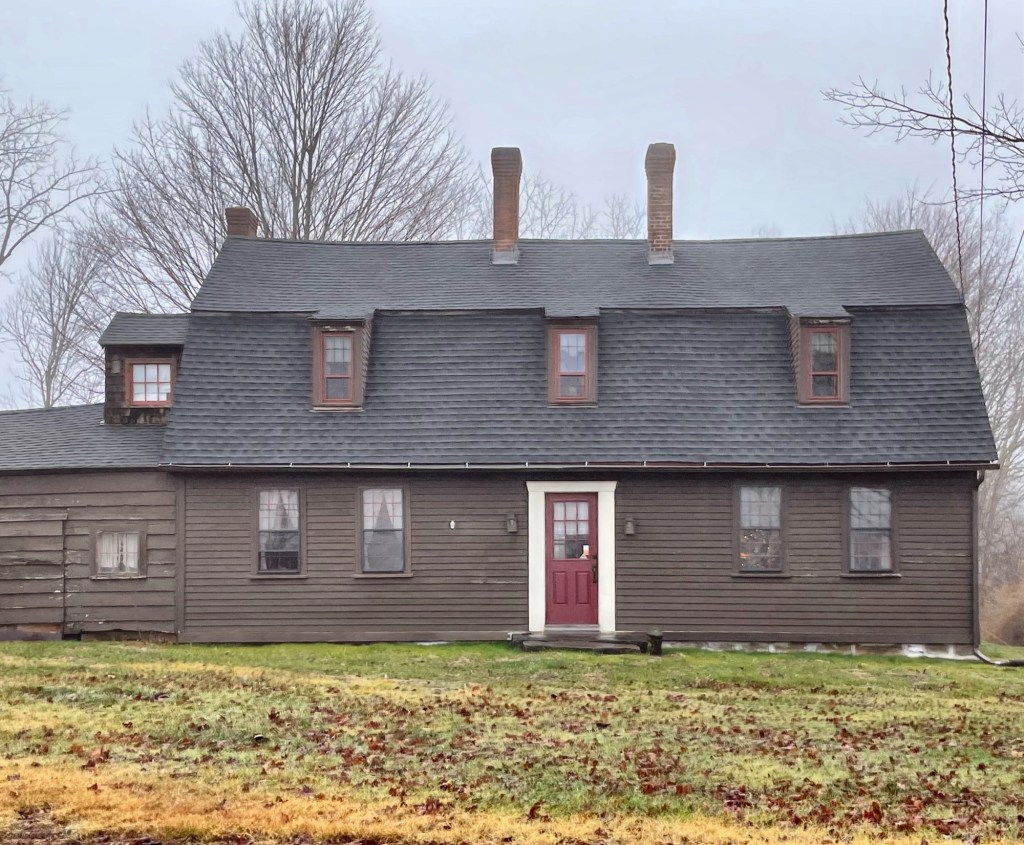
Known locally as the ‘Ye Olde Manse‘, this stunning Georgian cape house is located at the eastern edge of the town green in Willington, Connecticut. Thought to be the oldest extant house in the small, rural community, the gambrel-roofed homestead was possibly built by John Watson of Hartford, who was thought to have been an original proprietor of Willington, but was instead an assignee of George Clark who was. In the 19th century, the homestead operated as the congregational church parsonage. Today, the Georgian cape house with gambrel and saltbox roof is a single family home and has been lovingly preserved by centuries of stewards of this old manse.
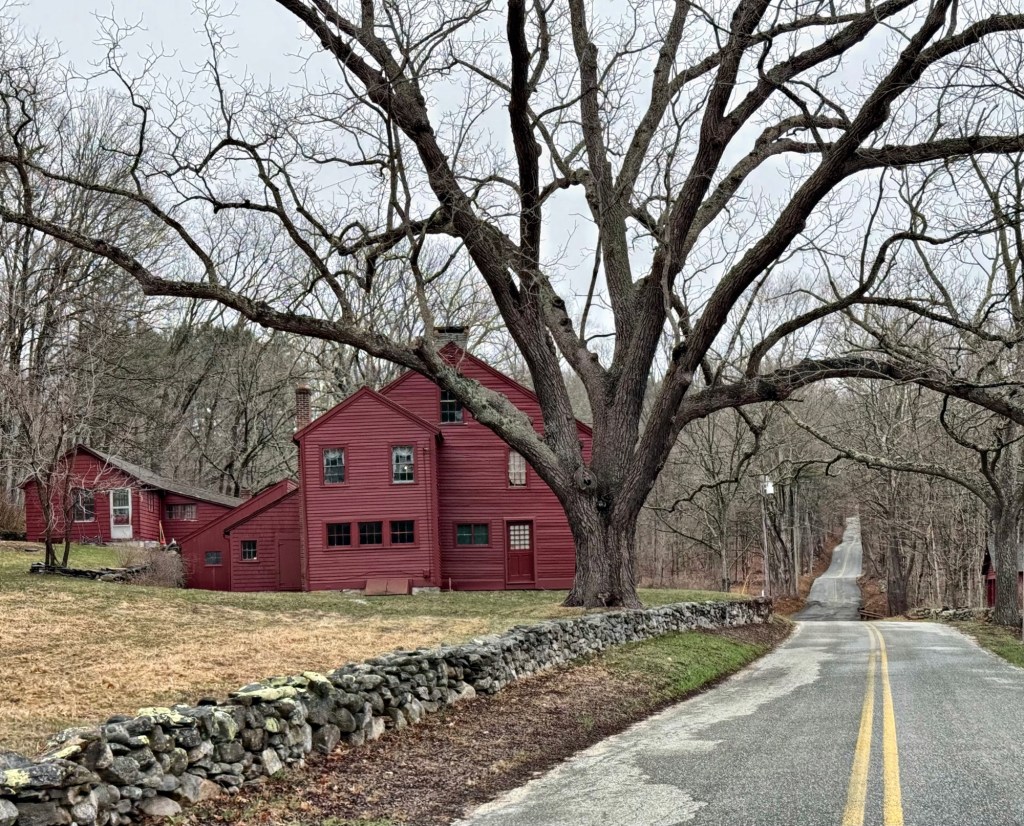
Located in northern Willington, CT, this farmhouse on a quiet, country road, dates to before the Revolutionary War! David Lillibridge (1744-1831) of Exeter, Rhode Island, served from 15 to 17 in the French and Indian War, and manned Fort Stanwix. In 1767, when he was a lieutenant in his local militia, he converted, and entered the Baptist ministry. In 1777, he purchased a farm from Moses Holmes, but it is unclear if this residence was existing or if he built this large farmhouse. In Willington, David Lillibridge became a farmer-preacher, establishing a Baptist ministry here. The home remained in the Lillibridge family at least until the 1870s, when it was owned by Burnham Lillibridge. The Georgian saltbox residence is set back from the street and sits upon the bucolic rolling fields of the property.
The Jonathan Warner House in Chester, Connecticut, is one of the finest Federal style houses in the state and has been meticulously preserved for over two centuries. The house was built in 1798 by Jonathan Warner (1756-1828), a wealthy farmer who invested in merchant shipping ventures and also operated the nearby Chester–Hadlyme ferry transporting people across the Connecticut River for a fee. When he built his house Jonathan Warner used local workmen and timber, importing glass and paint from New York, wallpaper from Hartford, and stone and hardware were brought from Connecticut and New York. The farmhouse remained in the Warner family until 1922 when it was purchased by Malcolm Brooks, who retained all of the receipts and correspondence on the house’s construction and maintenance. Architecturally, the house stands out for its proportions and detailing, specifically at the front door with fanlight and sidelights, which are framed by fluted pilasters, pediment and dentil molding. There is a Palladian-esque window above the entry which is framed by two free standing Ionic columns on brownstone pedestals. What is your favorite detail of this house?
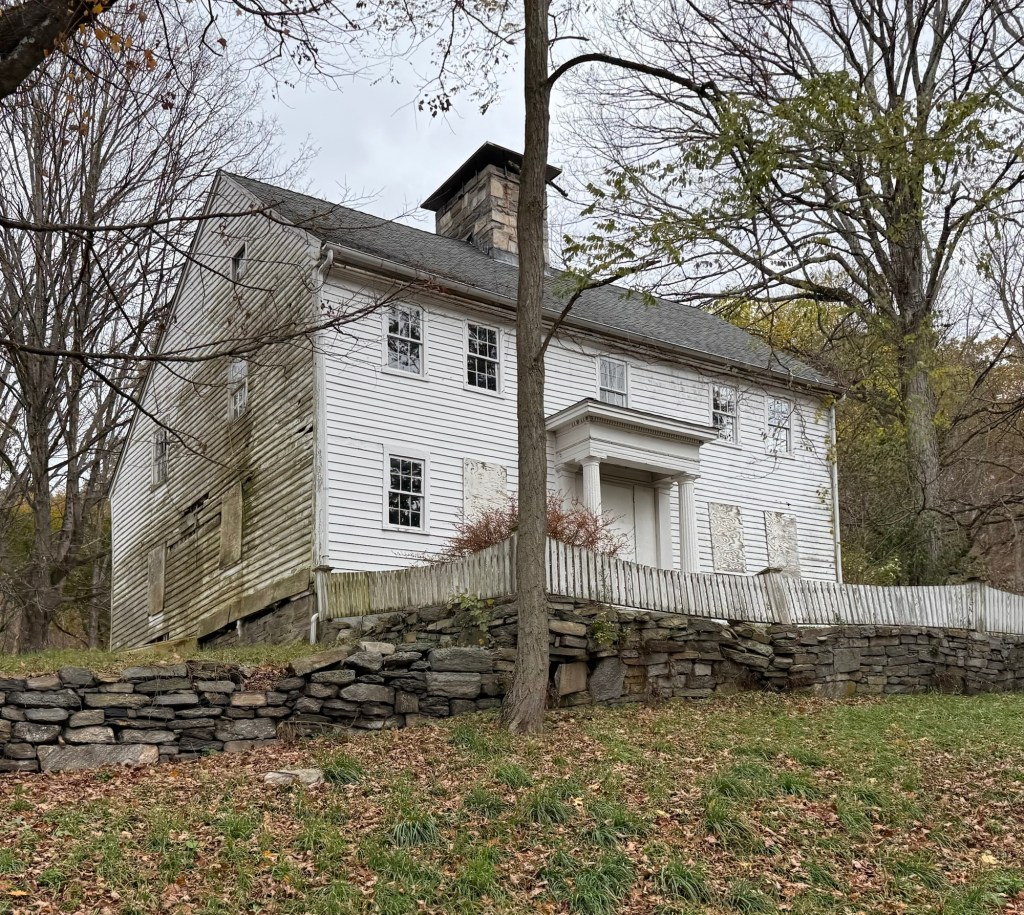
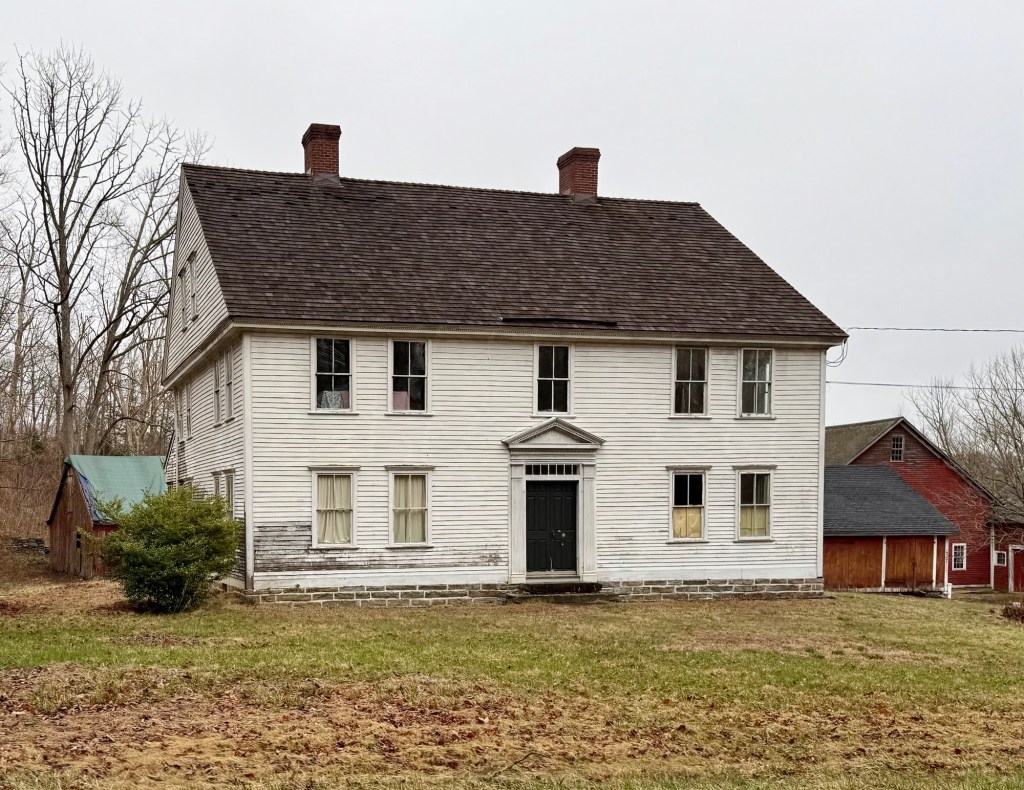
The Smith-Curtiss House, which is possibly the oldest extant building in Derby, Connecticut, has sat vacant and decaying for years and is owned by the State of Connecticut. Believed to have been built sometime between 1714 and 1740, this historic saltbox farmhouse at 411 Hawthorne Avenue is slowly decaying due to lack of maintenance and funding. Early ownership is difficult to determine, but by the 19th century, the property was owned by Ms. Alice E. Curtiss. The old estate was sold by Ms. Curtiss in 1913 to Frances Osborne Kellogg, a businesswoman, philanthropist and environmentalist, as part of her 350-acre dairy farm and land-conservation holdings. The Smith-Curtiss House was used as a residence for the herdsmen who ran the farm nearby. Before her death in 1956, Frances deeded the property to the state as a public park, and allowed her head herdsman life-occupancy of this house for the remainder of his life. The State of Connecticut assumed possession of this house in 1981. The building has suffered from deferred maintenance since this period, with the State attempting to lease the building to tenants. I hope that local and statewide preservation groups can mobilize to secure grants and funding to restore this important property.
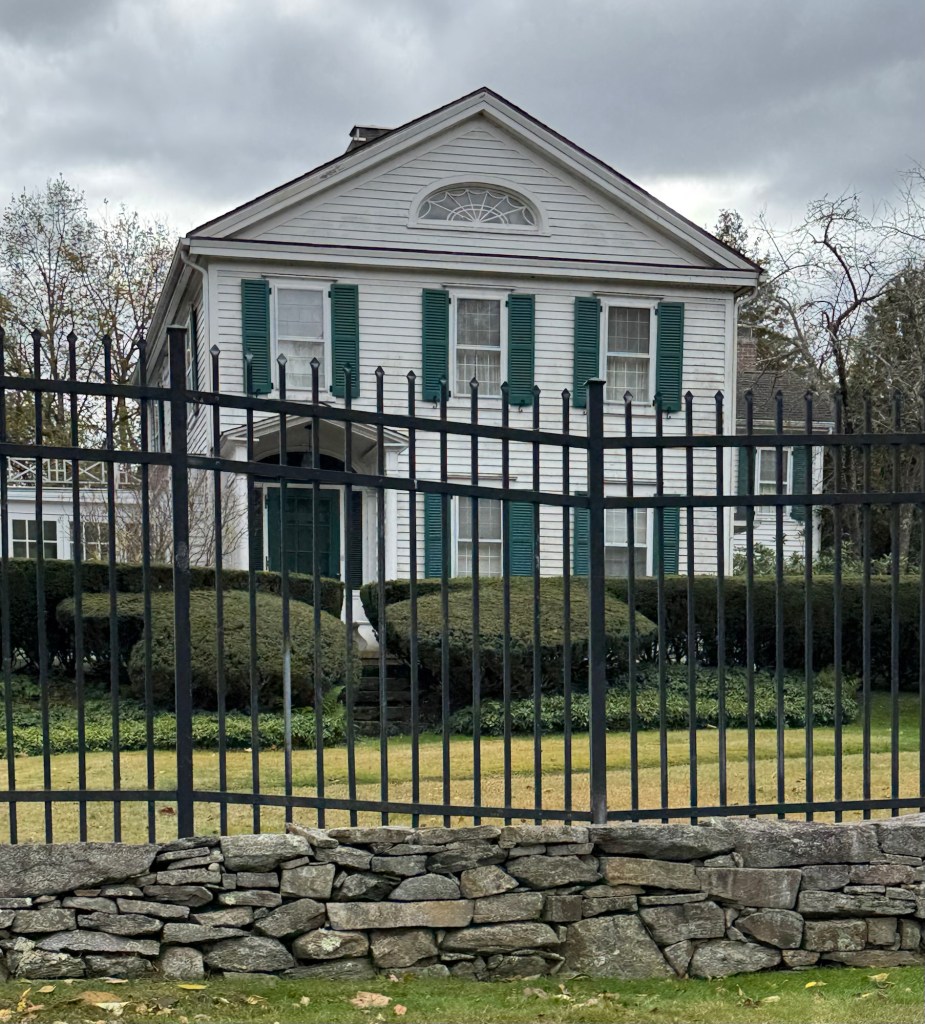
This Greek Revival style farmhouse in Derby, Connecticut, was originally built around 1840, though little is known about its first occupants. In 1867, Wilbur Osborne (1841-1907), who owned and ran several industries in Derby, Ansonia and Bridgeport, and his wife, Ellen Lucy Davis, moved to the house, who together, also ran a dairy farm on their farmland. Their only daughter to survive to adulthood, Frances E. Osborne (1876-1956) took over the farm after her father’s death and became a prominent businesswoman. At age 16, Frances lost the vision in one eye due to an accident, and, as a result, never completed her public school education. Frances Osborne, in an era when women were denied leadership opportunities in the business world, succeeded through pure determination and an excellent business sense. Her achievements included becoming president of Union Fabric Company, vice president of Connecticut Clasp, and treasurer of the F. Kelly Company. She was also a founding partner of Steels and Busks of Leicester, England. She married Waldo Stewart Kellogg in 1919, and he took charge of the dairy, using selective breeding to make the herd “famous throughout New England for quality milk production.” Waldo and Frances Kellogg enlarged and remodeled the house to its current form between 1919 and 1925 adding wings and renovating the interiors in the Colonial Revival style. Waldo Kellogg died in 1928, but Frances stayed in the house until her death in 1956. Just before she died, she deeded her entire 350-acre (140 ha) estate, including Osbornedale, to the State of Connecticut. The state now operates the house and grounds as the Osborne Homestead Museum; the surrounding land comprises Osbournedale State Park.
This handsome New England farmhouse is located in rural Canterbury, Connecticut, and showcases the type of farmhouses available to local wealthy residents in the late 18th and early 19th centuries. The construction dates to about 1785, just after James Adams, a Lieutenant in the American Revolution, purchased land here. The property remained in the Adams Family until 1859. The structure rests on a fieldstone foundation and is sheathed with clapboards. The Georgian farmhouse incorporates a five-bay facade with central entry with five-light transom and a large stone central chimney and jettied gable ends on the sides.
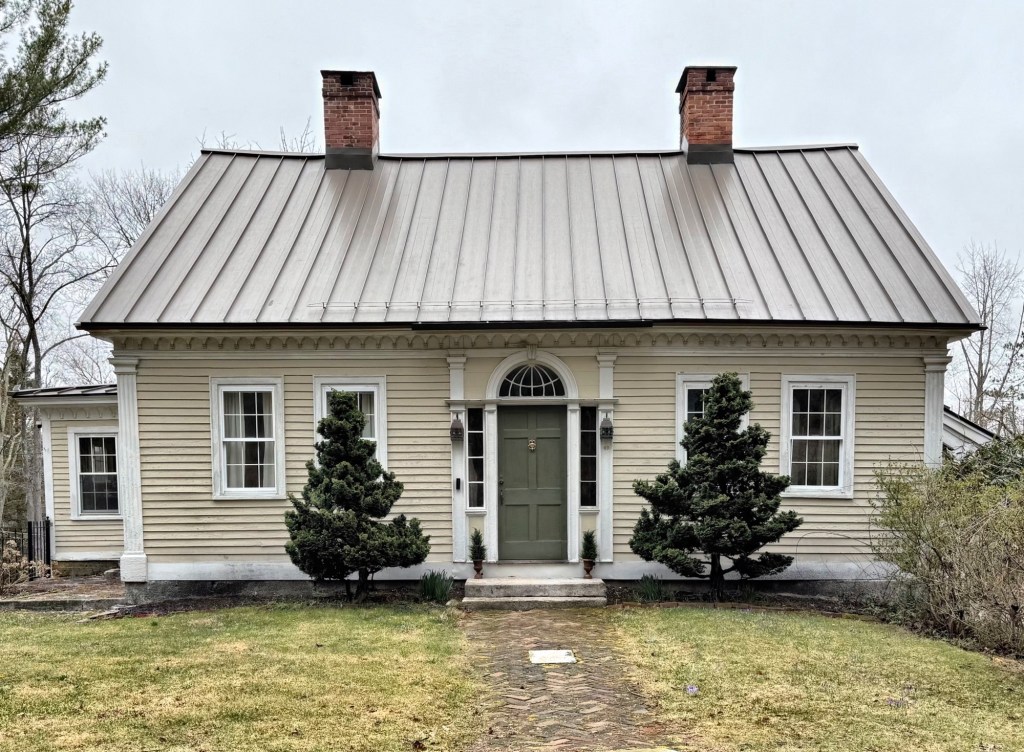
This attractive Federal-style Cape house is located in Canterbury, Connecticut, and is one of the very finest such houses of its type in the state. The house was built by William Levally, a successful millowner in town who married Patience Horton just prior. William died unexpectedly in 1841, and the property was inherited by Patience, who then married Hezekiah Crandall, also a millowner, who was also the brother of Prudence Crandall, the teacher who operated the famous African American girls boarding school in Canterbury Center in the 1830s. Hezekiah and his sister later migrated to Kansas, after essentially being pushed out of town. The Levally-Crandall House stands out for its proportions, exterior moldings, and ornate entry with pilasters, sidelights, and a molded, keyed arched transom. The house has been lovingly preserved by the successive owners, who clearly take pride in owning such a piece of history.
Located in northern Canterbury, Connecticut, this rural farmhouse was built following the American Revolution, showcasing the emergence of the Federal style from the Colonial Georgian type farmhouses before. The house dates to 1783 and was built by Captain Asa Bacon (1735-1819), a wealthy farmer and captain in the Revolutionary War. The home was also occupied by his son, Asa Bacon Jr. (1771-1857) a Yale educated lawyer who practiced law in town before moving to Litchfield. Asa Jr. was a turnpike promoter, advocating for turnpikes through the formerly sleepy agricultural town, opening it up to trade and commerce. The early Federal-period home features a five-bay facade and central entry with triangular pediment and fluted pilasters. The house appears much like it would have when originally built besides the Victorian-era two-over-two window sashes installed in the late 19th century. The farm even retains a few 19th century barns, likely built when the windows were replaced by later owners.
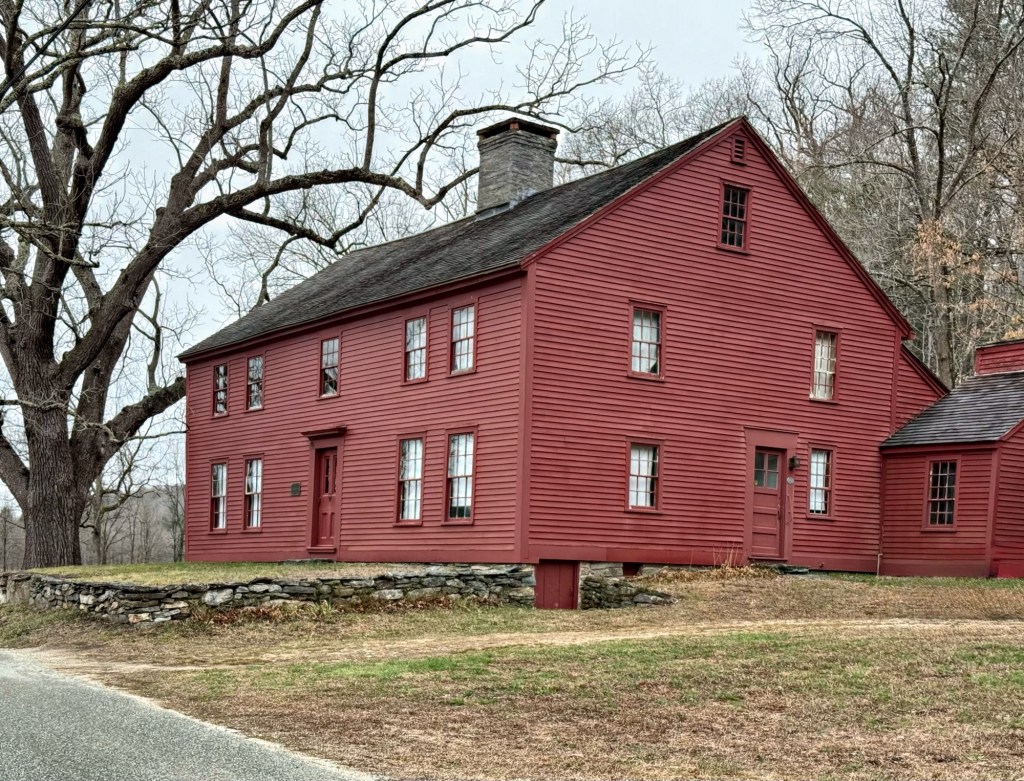
The Edward Waldo House in Scotland, Connecticut, is a vernacular Georgian house with saltbox roof and wings which from its erection about 1715 until 1971 was owned by members of the Waldo family. Edward Waldo (1684-1767) purchased land here along the Shetucket River in 1702 and by 1715, erected this house. The saltbox house which Edward Waldo built was one of the first houses in the town of Scotland and would remain in successive generations of the family for centuries. The house was the birthplace of Samuel Lovett Waldo (1783-1861), a portraitist who was a founder of the National Academy of Design as well as Daniel Waldo, chaplain of Congress, 1856-1858, and was one of seven Revolutionary War veterans who, having survived into the age of photography, were featured in the 1864 book The Last Men of the Revolution. The last Waldo owner, Miss Ruth Waldo died in1975. She insured the preservation of her family homestead by bequeathing the house, its contents, and about 15 acres of land to the Antiquarian & Landmarks Society of Connecticut Inc. and the surrounding acreage to the Connecticut Forest and Park Association, creating an enduring legacy for centuries to come. The house, set amongst a quiet country road, is evocative of early days in Scotland, Connecticut, and is one of the finest-preserved Colonial homes in this part of the state.
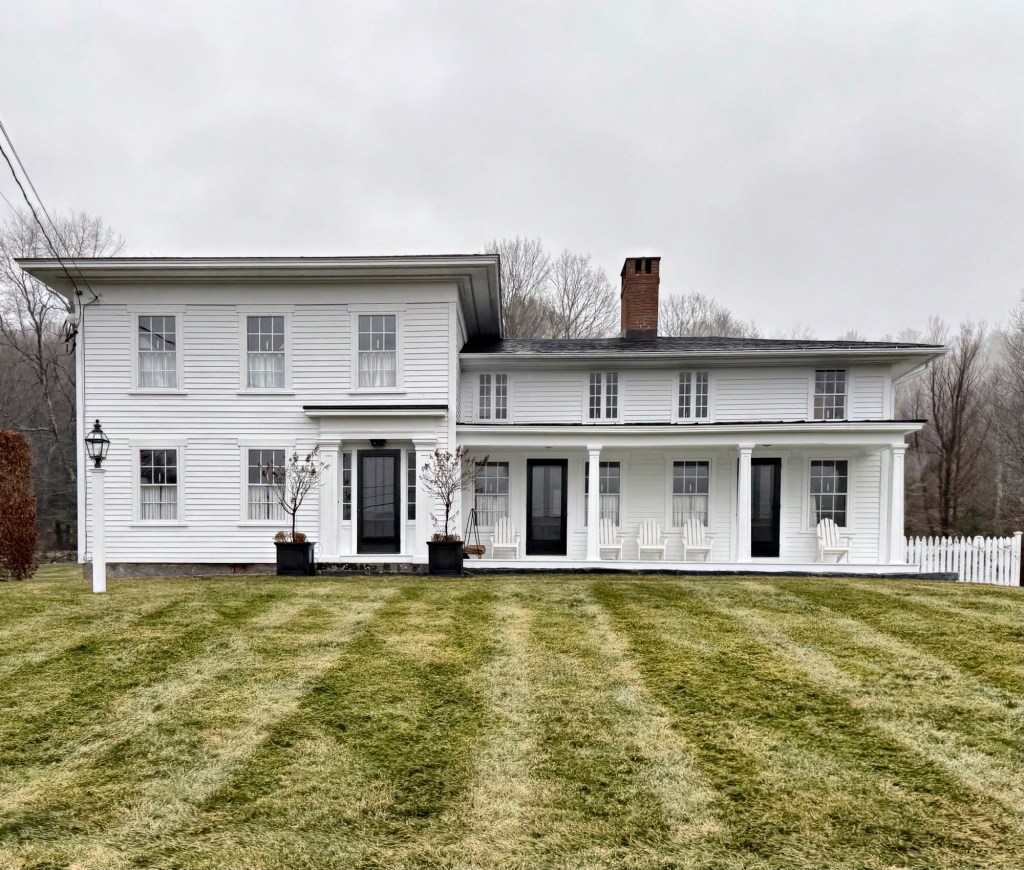
In about 1850, William Hopkins Harrison (1813-1878) purchased farmland from the Pierce Family of Cornwall, Connecticut, and built this stately Greek Revival style home upon it. The house was built around the same time as its neighbor, the Dwight W. Pierce House (last post), also an example of the Greek Revival style, but in a very different finish. The seven-bay residence has its main block at the end with a shallow hip roof and overhanging eaves, showcasing the emergence of the Italianate style form to come into popularity. The solidly Classical pilaster and entablature surround at the entry firmly places the house in the Greek Revival style.



 Buildings of New England