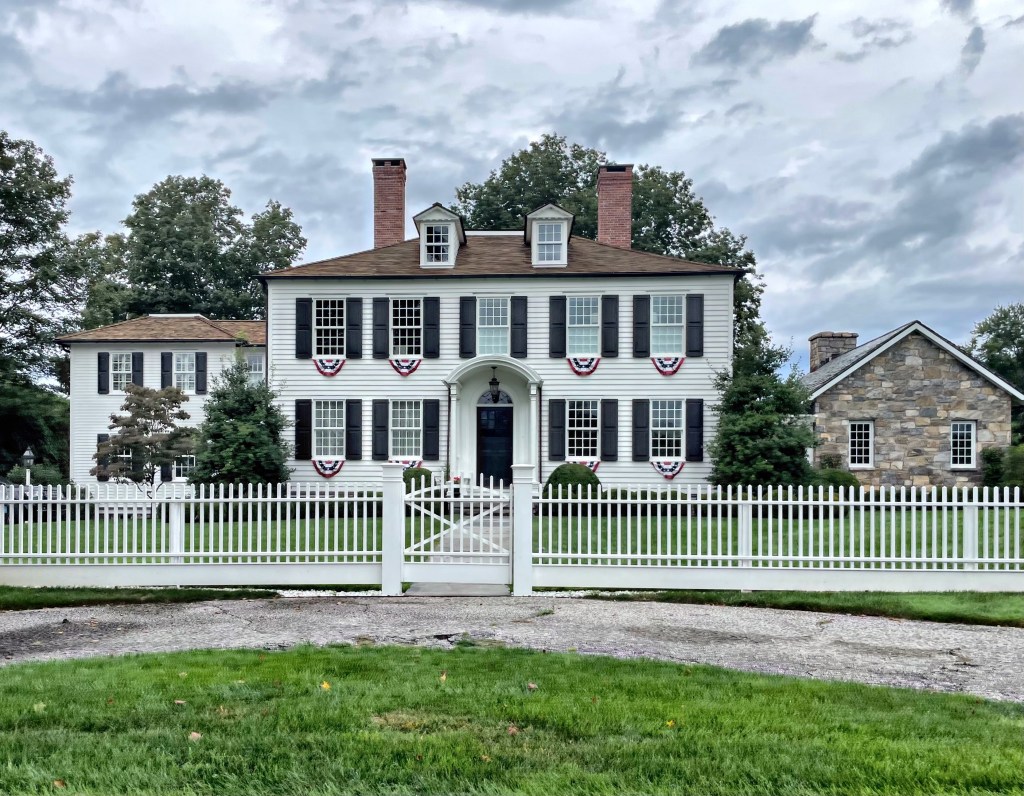
“Good Cheer Estate” // c.1820

Originally built as a Federal period farmhouse, this gorgeous estate is the epitome of what happened to Ridgefield… city money! By the end of the 19th century, wealthy New Yorkers were flocking to small towns every summer for clean air, rest, and relaxation. Ridgefield, Connecticut became an obvious option for its close proximity to New York and bucolic setting of farmlands bounded by old stone and rolling hills. As a result, wealthy summer residents purchased older estates and either demolished or renovated the homes there. Aaron Lockwood Northrop was raised in Ridgefield and was educated in its private schools before moving to New York as a young man, being awarded an apprenticeship as a dentist. Dr. Northrop went on to establish a prominent dental practice and would serve as President of the American Dental Association. As a wealthy adult, he acquired a circa 1820 house on this lot and renovated it, doubling its size and giving the residence its current Victorian flair. The summer house was affectionately named “Good Cheer”. Aaron died unexpectedly in 1908 while overseas in Paris, France. His widow, Caroline, resided at Good Cheer until her own death in 1927.

Cheesman Mansion // 1887

Timothy Matlack Cheesman was born in New York City in 1824, a son of physician, John Cummins Cheesman. Following in the footsteps of his father, he graduated in 1859 from the College of Physicians and Surgeons, now known as Columbia University Vagelos College of Physicians and Surgeons. Timothy served as Surgeon in the 7th Regiment NY National Guard in 1853 and upon the start of the Civil War, he mustered into US service April of 1861 as a Surgeon. In the late 1880s, like many other wealthy New Yorkers, Dr. Cheesman and his wife, Maria, decided to build a country home in Ridgefield, Connecticut. They chose nearly 30 acres on the east side of East Ridge, an area that was being touted as “Prospect Ridge” for its view. Dr. Cheesman was ill with Bright’s disease and and may have been seeking the clean air of the country climate to help his health or at least as a place to rest. Sadly, he died one year later in 1888, and did not get to fully enjoy his country retreat. He was 63 years old. His widow Maria continued to use Matlack (the house’s name) until her death in 1903. In 1922, the estate was acquired by the Holy Ghost Fathers, who set up a school for new members of the order who would get their initial training to be priests or brothers there. Declining membership and costs required them to sell the campus, which was acquired by the Town of Ridgefield in 1971. Matlack is now the centerpiece of a large housing complex for the elderly in town and is managed by the local housing authority.

David Scott House // 1714

One of the oldest extant houses in Ridgefield, Connecticut is this charmer, which was moved not once, but twice! The house was built for David Scott (1678-1760), an Irish-born resident of the town, who purchased one of the town’s original Main Street house lots which sat undeveloped. Scott had abandoned his wife, Mary in Ireland, and settled in Ridgefield, entering into a new relationship with Elizabeth St. John. A woman scorned, Mary unexpectedly arrived in America and filed suit against her husband, citing Elizabeth as the “pretended wife of David Scott.” A judge awarded Mary three acres of her husband’s land. David Scott and his second wife lived at this 1714 house until they moved in 1740. His property (which included two enslaved Africans) was sold to Vivus Dauchy, a Frenchman. In the 1920s, as the Scott House section of Main Street commercialized, the owners relocated this house to Catoonah Street, building a commercial block in the former location. After numerous other owners, the most recent owner, The Ridgefield Preservation Trust (now the Ridgefield Historical Society) put it to use as a new historical society headquarters, after saving the Colonial-era home from demolition for stores and a parking lot! It was relocated to its current site and has been meticulously restored.

David Bradley House // c.1803

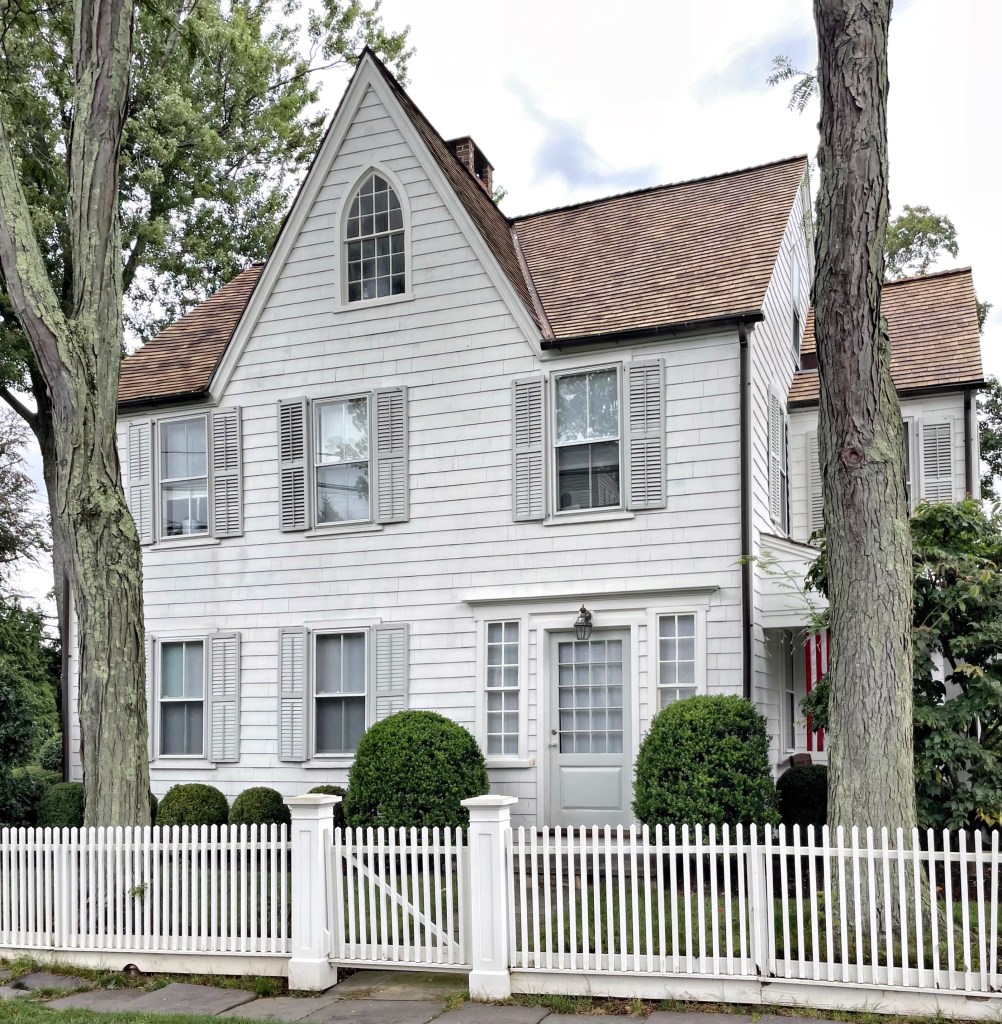
According to a dated board in the attic, this house was built c.1803! The David Bradley House on Old South Road in Southport, Connecticut is a great example of a traditionally designed house that does not need all the bells and whistles to stand out! The house was owned for a number of years by David Bradley, who worked as the village’s postmaster. It was David who likely added the Gothic Revival gable with lancet window and a (since removed) front porch.

William W. Wakeman Mansion // c.1833

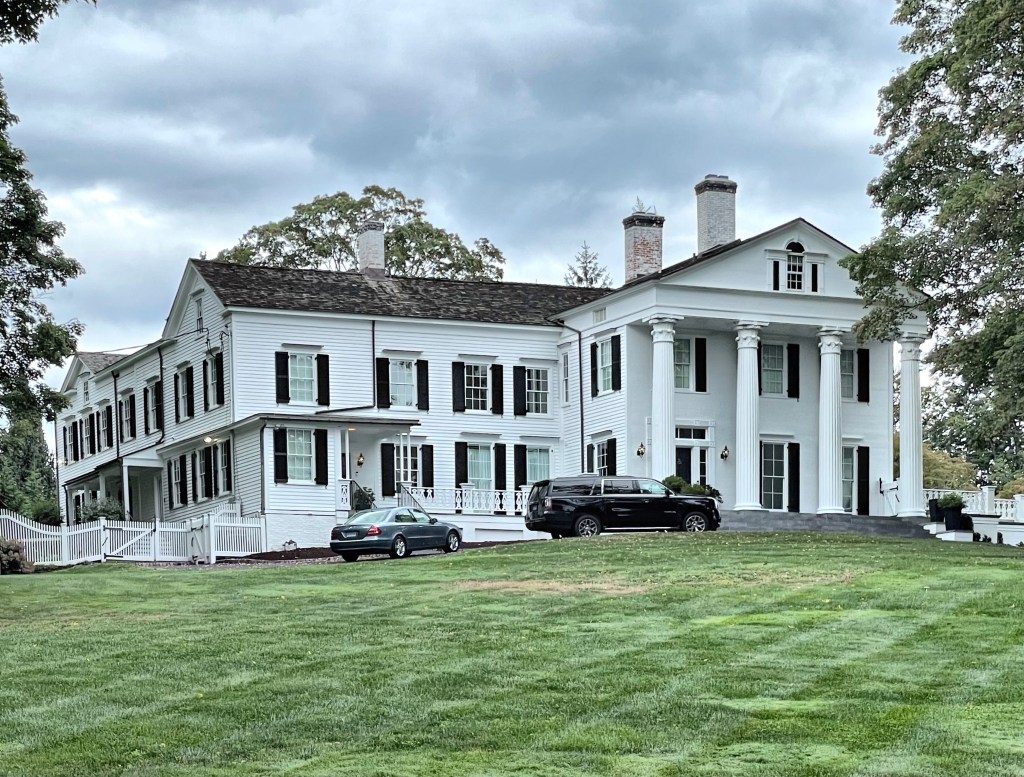
William Webb Wakeman was born in Southport, Connecticut on June 19, 1799, the son of Jesup Wakeman, an eminent citizen of the community. As a young man, William worked with his father in his commercial and trade enterprises. He acquired his own vessel early in his career, and gradually accumulated a line of trade vessels, sailing to New York, Savannah, Georgia and Galveston, Texas. By mid-century he was involved in the East Indian and China trade under the firm name of Wakeman, Dimon & Co. He built and owned a line of steamships during the late 50s, and was commissioned by the Federal government during the Civil War to transport troops and equipment. His massive Greek Revival mansion was built around 1833 on one of the largest house lots in the village, perched high on a hill overlooking the harbor. The three-bayed facade is framed by a two-story portico. Supported by four fluted columns, the capitals and entablature are similar to the “composed” order of Minard Lafever and the “composite” order of Asher Benjamin, popularized in the 1830s and 40s in their pattern books for architects and builders. After William died in 1869, it was likely his widow, Mary Catherine (who lived to be 99 years old, outliving all of her six children) who enlarged the home with massive two-story ells.

Ms. Sarah Wakeman House // 1871

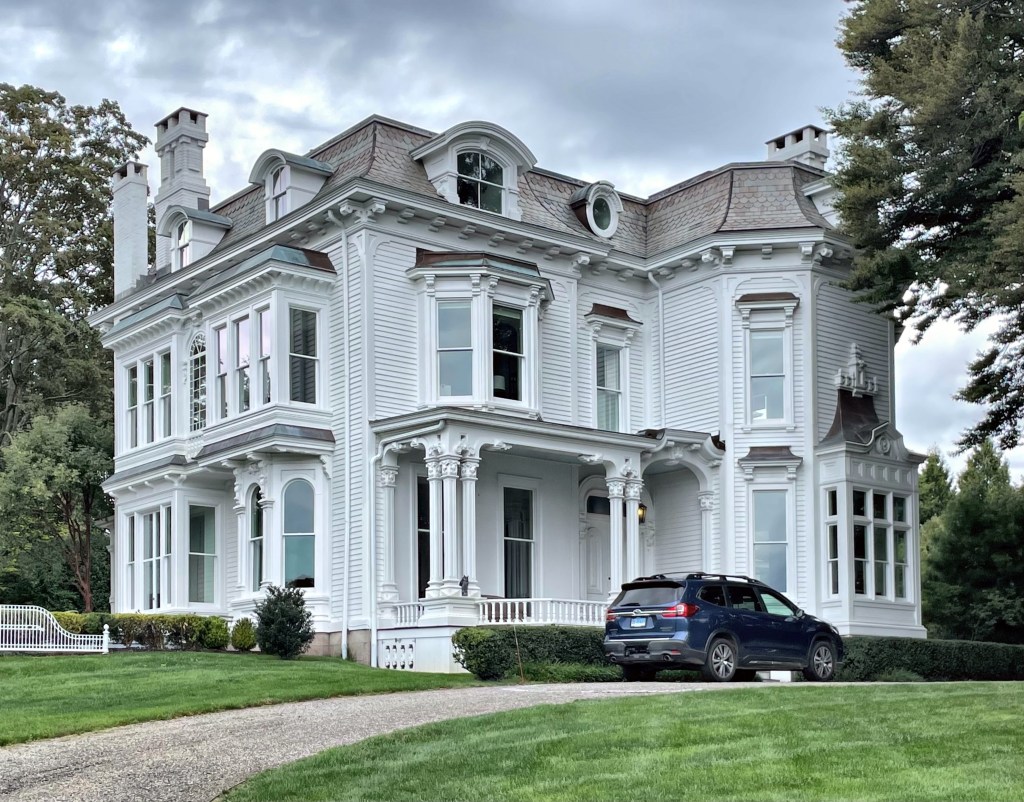
The Southport Chronicle reported on March 1, 1871 that “W. W. Wakeman, is about to erect, on the Hill, a very handsome residence”. The house would be built on Harbor Road in Southport, and was for his sister-in-law, a widow, Sarah Ann Fowler Wakeman and her two daughters, Mary and Frances. The Bridgeport-based architectural firm of Lambert & Bunnell (made up of Henry A. Lambert and Rufus W. Bunnell) teamed up to furnish the plans for this stately Second Empire style mansion. Sarah died in 1872, and the house was occupied by her daughters until 1913.

Chidsey-Dimon House // c.1850

Located on Harbor Road in Southport, CT, this stunning Italianate residence is properly sited on a small bluff overlooking the village’s harbor. According to historic maps, the house was owned by an “I. Chidsey” who appears to be Isaac Chidsey (1793-1865). The large Italianate style home is boxy in form and stands three full stories with two original one-story side wings. Sleeping porches were added in the early 20th century; those along with the rooftop belvedere, would allow for sweeping views of ships entering and exiting the harbor here. The house was recently restored by the architectural firm of Fairfax & Sammons and it looks amazing!

Charles Gilman House // 1871

Southport, the coastal village in Fairfield, Connecticut is an old house lover’s dream! Case-in-point, the Charles Gilman House. Charles Gilman, a Bridgeport lawyer, constructed this house on the ridge parallel to Main Street in Southport between 1871-1874. The building is a fine example of the Stick style of architecture, in which the decoration on facades and gable ends reflects the building’s internal structure. Gilman used the services of two New York architects, J. Cleaveland Cady and William H. Beers, to design the house and the later (1900) library addition, respectively. In the 20th century, the house was owned by Richard Joyce Smith, an attorney who was hired to guide the New Haven Railroad through a long and tricky bankruptcy reorganization ending it it being acquired by the Penn Central in 1975.

Bradley-Wakeman House // c.1815

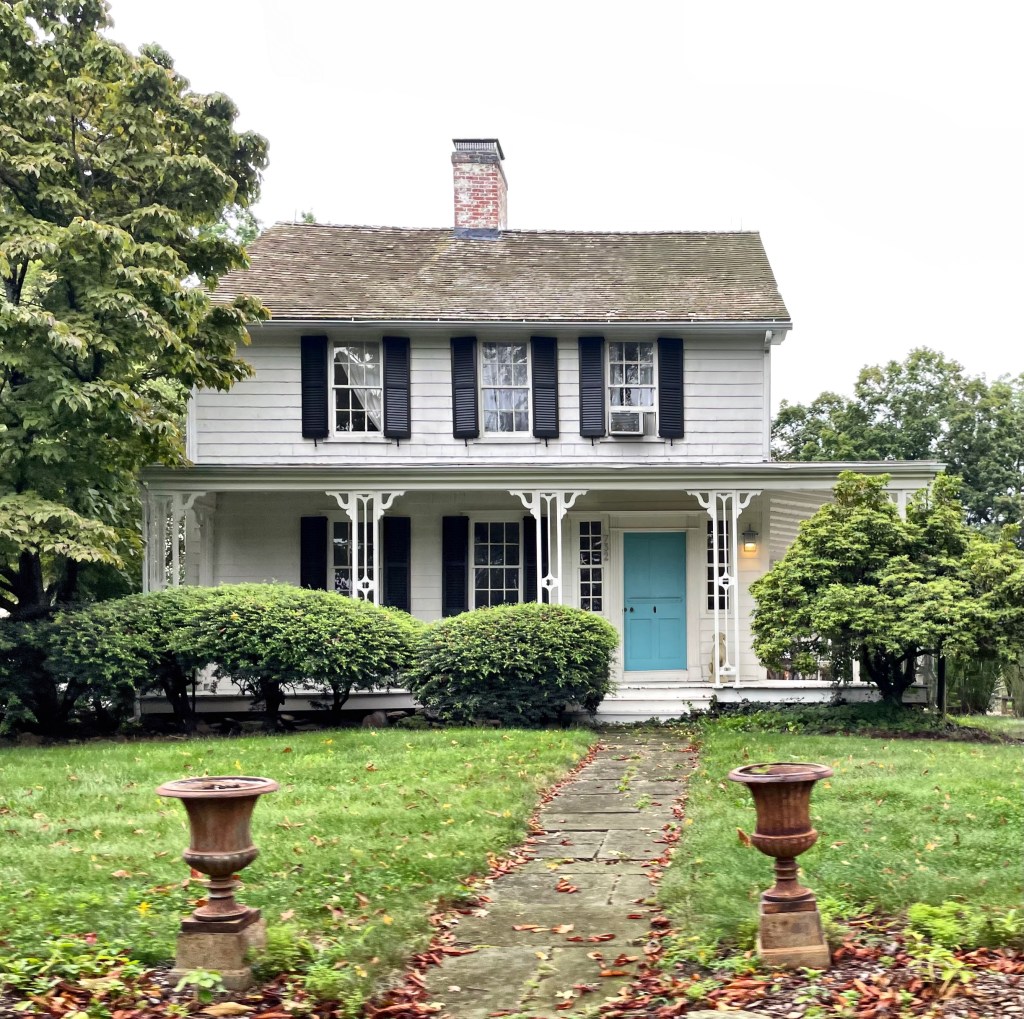
While the Greenfield Hill section of Fairfield, Connecticut has some of the grandest houses (old and new) in the state, there are some more average size homes that just ooze charm and curb appeal. This example on Hillside Road, dates to the 1810s and was seemingly built by Alban Bradley (1767-1832) on land inherited by him from his late father, Seth Bradley. The family farmed on the land from this Federal period farmhouse until it sold out of the family by Alban’s only son, Burritt in 1825. Burritt sold the farm to Zalmon Wakeman who farmed on the many acres of valuable land there. Sometime before his death before the Civil War, the house was “modernized” with Italianate-style porch, which is supported by delicate cut trelliswork. This is a great illustration as to how modest renovations which apply up-to-date decorative details can be done to historic properties without compromising the original structure or its architectural integrity.

Bradley-Baldwin House // pre-1750

WOW this is an absolute dream home! Tucked away on Meetinghouse Lane in the Greenfield Hill section of Fairfield, CT, you will find the Zalmon Bradley House. It was originally built around 1750 as a modest saltbox and later owned by Zalmon Bradley. The property was inherited by Zalmon’s sister, Sarah, who recently married Dudley Baldwin, an “ardent patriot”. The property was likely updated in appearance by Sarah and Dudley Baldwin giving the house its current four-sided hip roof, chimneys and an exquisite doorway. Dudley and Sarah died young in 1794 and 1795 (at ages 40 and 37 respectively), and the property was inherited by their only child, Abraham Dudley Baldwin. Abraham was watched for years by family, including his namesake, Abraham Baldwin (1754-1807), a senator, congressman, and key figure of the drafting and signing the U.S. Constitution. Abraham stayed in this house often during his time in Connecticut, watching after his nephew along with his sister, Ruth Baldwin Barlow. Abraham Dudley Baldwin as an adult resided in this house with his own family, and was largely engaged in local and state politics and agricultural pursuits. The Bradley-Baldwin House was restored a few years back, and looks amazing!