William W. Wells House // c.1845

One of the most stately and classic homes in central Vermont is this Greek Revival beauty constructed of brick, right on Main Street in Waterbury. The home was built for William Wellington Wells, who was born in Waterbury, Vermont in 1837. He soon became one of Waterbury’s most prosperous merchants of the mid-nineteenth century, starting as a lawyer with business interests including a tannery and grist mill in nearby “Mill Village” and a mop and chair stock business. He served in the Civil War and contributed much to the town’s growth. After successive ownership, the town’s appeal during the winter months shifted the demand towards short-term stays tied to the ski industry. The Wells House was added onto at the rear and converted to a motor hotel called the “Gateway Motel” in the mid-20th century. The use remained for decades until a fire destroyed much of the motel, leaving the 1840s Greek Revival home’s future in limbo. Thankfully, new owners restored the home and built much-needed residential housing at the rear, largely in the same form as the old motel. Love to see preservation at work!

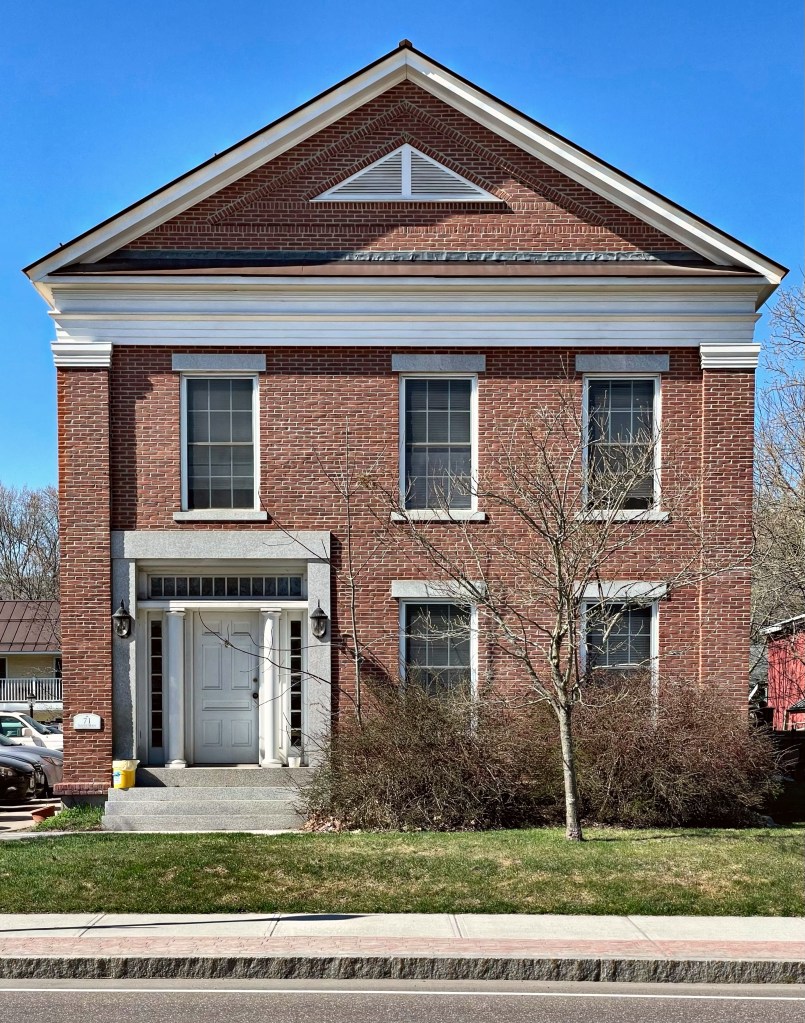
Litchfield Old Town Hall // 1851

The town of Litchfield, New Hampshire is located at the southern section of the state across the Merrimack River from the town that carries its name. Land which is now known as Litchfield, was once populated by the Abenaki people. The New Hampshire Archaeological Society has located over 30 Native American sites along the shore of the Merrimack River in Litchfield, with artifacts several thousands of years old being uncovered. European influences started in the 1650’s with early records showing that Litchfield was then a part of Dunstable, Massachusetts. Both sides of the Merrimack River were granted in 1656, to William Brenton, colonial governor of Rhode Island. The name was changed to “Brenton’s Farm” in 1729. Chief Passaconaway of the Penacook lived in a Litchfield settlement at least part of the year around this era. In 1728, sixteen proprietors divided up the Brenton Farm Land. In 1749, the land was granted to another group of settlers and named “Litchfield” after George Henry Lee, Earl of Lichfield. The town has historically been comprised of farmland without a true town common or center. A small enclave of buildings did center in town, where the town hall was built. This building, the Old Town Hall of Litchfield, was built in 1851 from parts of an older meetinghouse, which was built across the road from where the building now stands. A shift in the course of the Merrimack River during the early 1800s forced the dismantling of the original Meeting House and a new structure to be built. It is a modest Greek Revival structure with corner pilasters, entablature, and gable end facing the street which reads as a pediment. It is very well maintained to this day as the home to the Litchfield Historical Society.

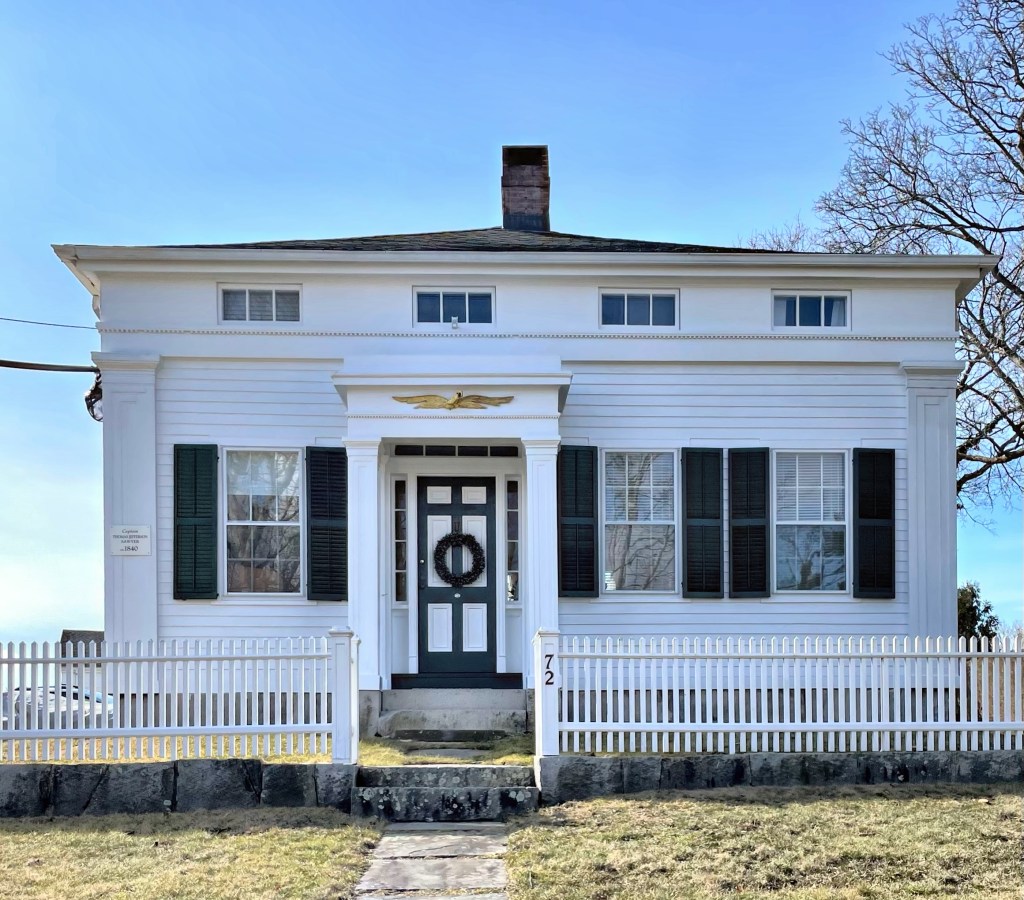
Thomas Jefferson Sawyer House // 1840

Thomas Jefferson Sawyer was born in 1807 in Groton, Connecticut as the tenth of 13 children of William and Prudence Sawyer. It appears that his parents were running out of names by the time they had ten children, so they named number ten after the then President of the United States, Thomas Jefferson. Thomas Jefferson Sawyer moved to Noank’s coastal village in 1840 and built this interesting Greek Revival house with an atypical hipped roof. Sawyer was a sea-captain who remained in Noank until his death and he was a very active member of the local Baptist church. The Sawyer House remains as a unique example of the Greek Revival style captains house, which the village is known for.

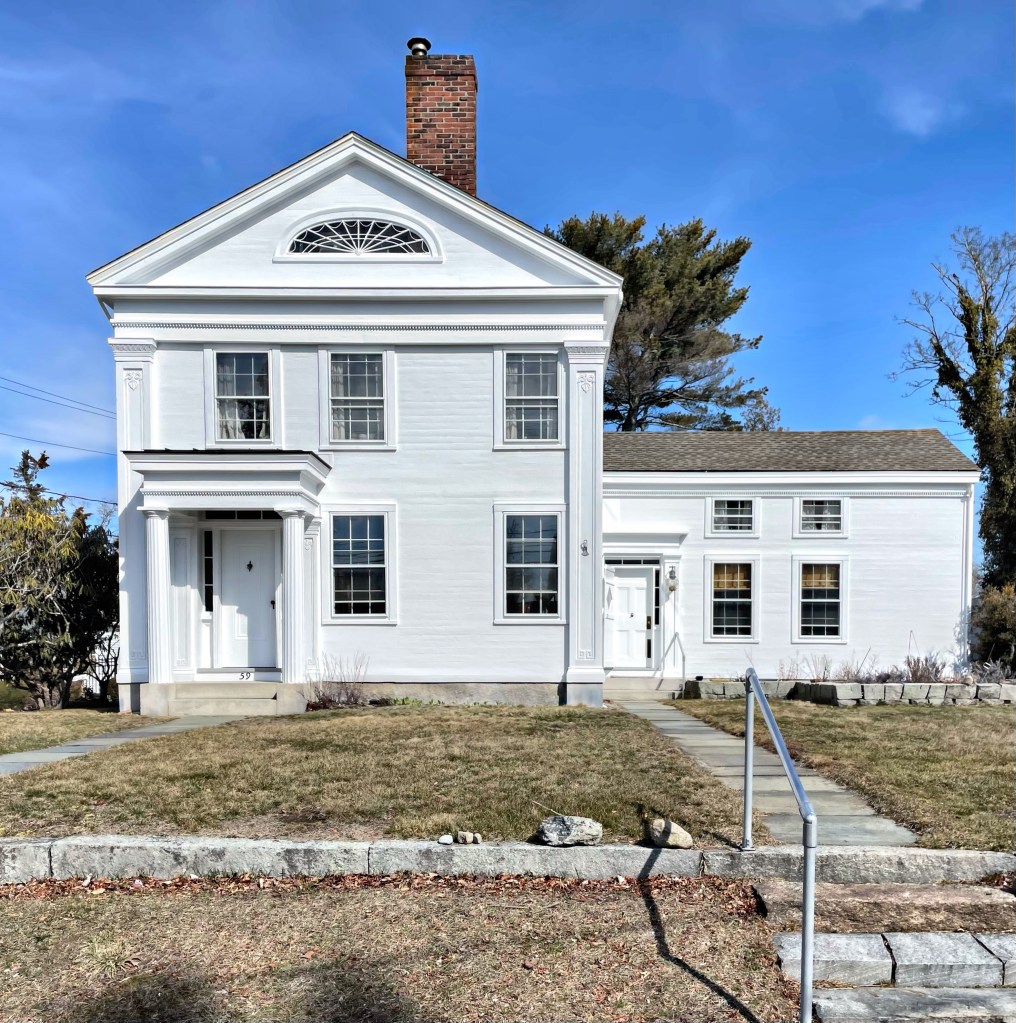
Moses Latham House // c.1845

Noank is a charming seaside village within the town of Groton that is centered on a peninsula at the mouth of the Mystic River where it spills out into the Long Island Sound. Historically, the area was known as Nauyang (meaning “point of land”) and was a summer camping ground of the Pequot people, but they were driven out in 1655 following the Pequot War. White settlement was slow here until the mid-19th century, when the shipbuilding and fishing economy took off here. As a result, houses, stores, churches and industries were built, and an entire village was formed. Most extant homes here were constructed starting in the 1840s as the village (and nearby Mystic) saw economic growth from the maritime trades. This house, the Moses Latham House, was constructed for Mr. Latham in about 1845. The house is Greek Revival in style with flush-board siding, a fan light in the gable which reads as a pediment, and a simple portico supported by fluted Doric columns.

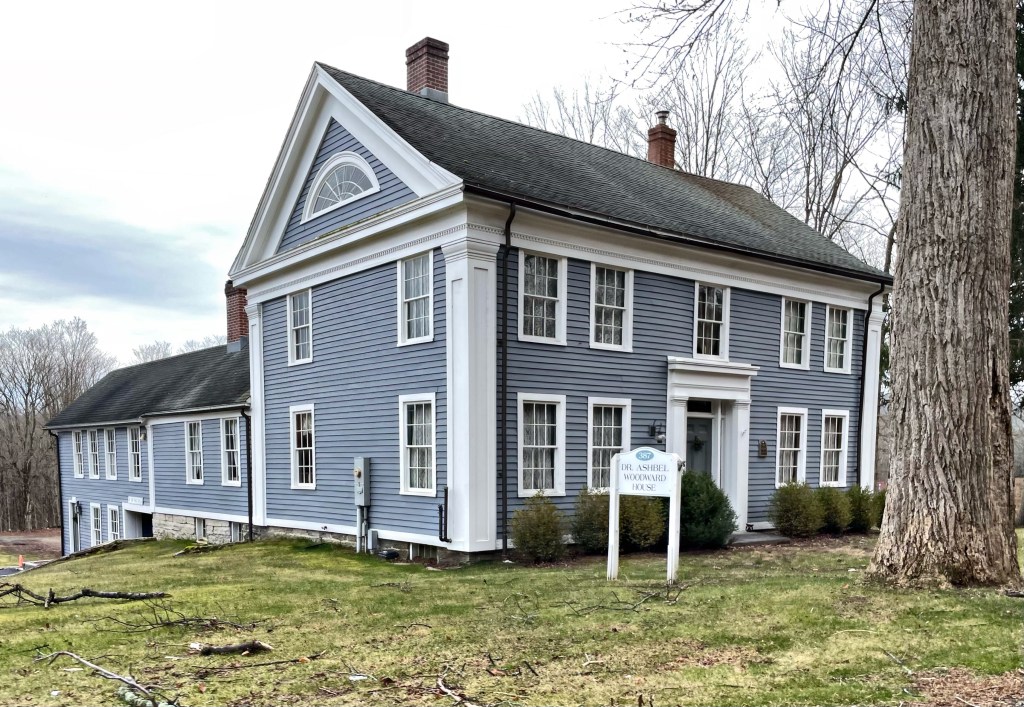
Dr. Ashbel Woodward House // 1835

The Ashbel Woodward House in Franklin, Connecticut was built in 1835, on land purchased by Doctor Ashbel Woodward, a prominent local physician, a year prior. Woodward, was a graduate of Bowdoin College, and he began practice in Franklin in 1829, serving as the town’s primary medical practitioner until his death in 1885. Though in his 60s at the outbreak of the Civil War, Woodward perhaps lent his greatest service to his country when he served as a battlefield surgeon and medical facilities inspector for the Union army. Besides his work in medicine, Woodward collected literature and numerous artifacts pertaining to Franklin’s past and eventually wrote a book detailing the town’s history. The Ashbel Woodward House is an excellent example of the Greek Revival architectural style in a five-bay form. Interestingly, there are semi-elliptical windows in the pediment gable ends on the side elevations, seemingly a nod to the Federal style that was waning out of style at the time. The property is in use today as a museum, documenting the life of Dr. Woodward and the people of Franklin, Connecticut.

Dr. Stephen Sweet House // c.1845

Connecticut has some of the most stately early 19th century homes in New England, from the larger cities to rural towns like this beauty in little Franklin, Connecticut. This dwelling was built in the 1840s for Dr. Stephen Sweet (1798-1874) a physician near the town green. It was built after his second marriage, after his first wife’s death. His second wife, Matilda, died in the home during childbirth at age 44, along with their son just days later. The house is an excellent example of the Greek Revival style, with a gable roof running parallel to the main street, central entrance and corners framed with pilasters and frieze band at the cornice. At the side of the house, which also fronts a street, the stately home commands the corner with a second entry (maybe for in-patients), and a pair of quarter-round windows in the pediment.

Tew Brothers House // 1845

This Greek Revival house in Newport was built in 1845 for the Tew Brothers. The home was likely a double-house with two doors for each family, as the current entry looks to be of a more recent vintage. The house features a full-length columned porch which has small brackets in the eave, an early nod to the emerging Italianate style. The property was recently renovated and sold for just over $1 Million. Talk about a steal!

George C. Gardner House // c.1834

On Nantucket, even the little houses can pack an architectural punch! This is the George C. Gardner House. The house on Main Street was built in 1834 for sea captain George Gardner, a descendant of Richard Gardner, an early white settler on the island (who’s house stands nextdoor). The house exhibits a five bay facade with Ionic columned portico and balustrade at the roof and widow’s walk. By the end of the 20th century, the house was sitting, decaying after years of deferred maintenance caused by a bitter divorce dispute between the owners. From this, locals told stories about the house being haunted, including stories of a Chinese servant of the Gardner family who was hanged after becoming infatuated with one of George Gardner’s daughters. The body is rumored to have been buried on the grounds of the house. There is not much to substantiate these stories of local lore, but they are always interesting to hear. A truth is that the home was purchased in the early 2000s for millions and restored faithfully before being sold for shy of $10 Million. Now that is really scary!

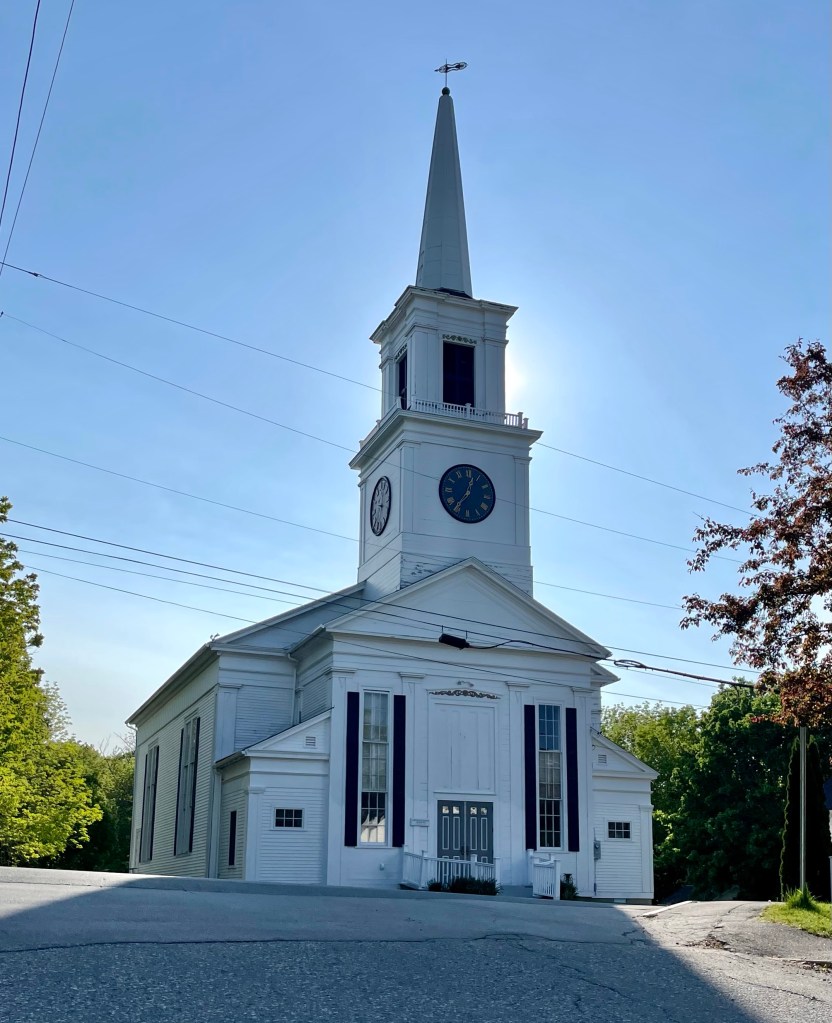
Ware Center Meeting House // 1799

Ware was settled in the 1717 and incorporated in 1775. Its town center was laid out in 1760, on land belonging to one of its early large landowners. The first colonial meeting house was built in that year, near the geographic center of the town, and the road network developed around access to this area from the corners of the town. The Ware Center Meeting House was built in 1799 to replace a previous structure. The Meeting House has served as the first town meeting hall, the parish home of the First Church of Ware and the first school. As the town’s population boomed in the eastern part of town when factories and mills were built along the Ware River. To compete with the growing industrial village, the Ware Center residents sought to “keep up with the Jones'” and renovated the meeting house in 1843 in the Greek Revival style. However the growth of Ware had by passed the old Ware Center and population and in 1847, a new Town Hall was completed on the Main St. closer to industry and the new population center. The building remained as a church, but in 1928, the church ceased having winter services due to the reduced membership, and from that time on services have been held sporadically. The building remains a significant piece of Ware’s history from a sleepy rural town to industrial powerhouse.

The Cheese Factory // c.1850

This absolutely charming vernacular Greek Revival home was built in the mid-19th century in East Dorset Village. By the end of the 19th century, it was converted to a cheese factory a model in adaptive reuse and historic preservation. In the late 1930s, as Dorset became a popular summer colony for artists and upper-middle class residents of New York and the Mid-Atlantic, the cheese factory was purchased by artists Norman and Silvia Wright. The artists relocated the small building to the Kent Hill neighborhood of town, restoring the home and adding wings onto it. I also love the chocolate color paint!