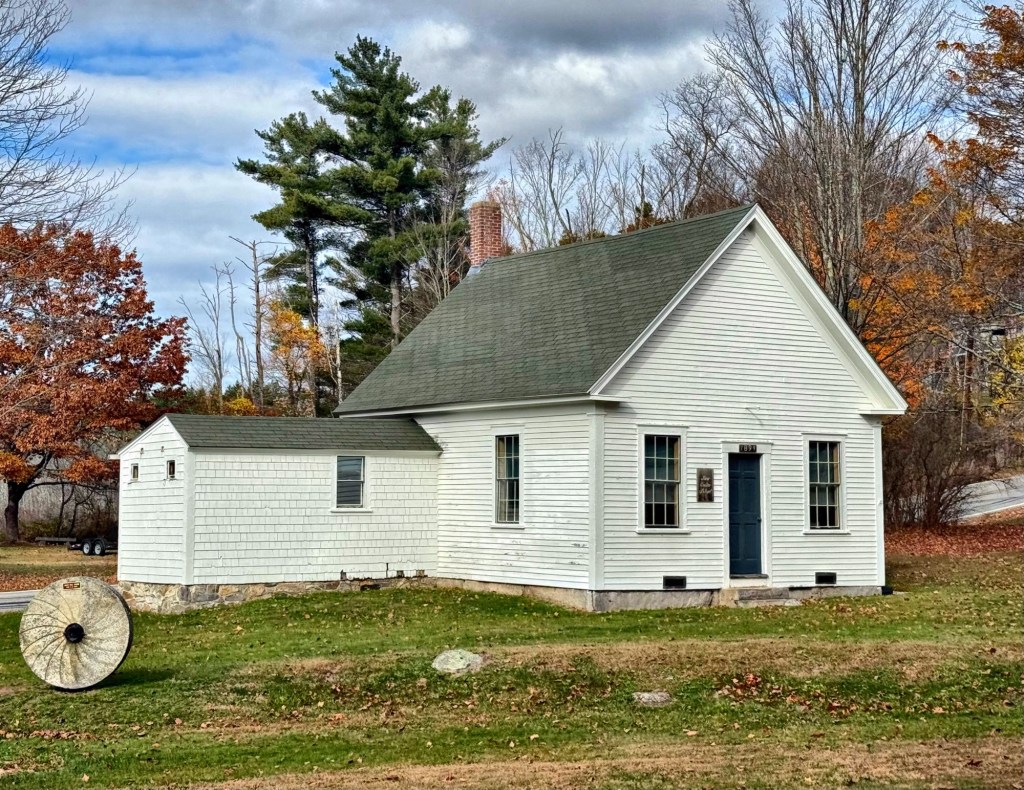
Bow Center Schoolhouse // 1894

One of the many one-room schoolhouses of rural New England, this late-19th century example can be found in the town center of Bow, New Hampshire. The vernacular schoolhouse served hundreds of pupils in the northern part of town, from its construction in 1894 until 1924 when it was moved to its present location near the old Town Hall, where it was in use until 1945. In 1948, the School District sold the school to the nearby Baptist Church for Sunday school classes. The Town bought the building from the Church in 1968 and restored it as an historic site. Today, the rebuilt Snow Roller used in the early 1900s to pack snow down for passage of horse-drawn sleighs and wagons, and a mill stone, sit nearby the old schoolhouse as sort of an open-air museum.
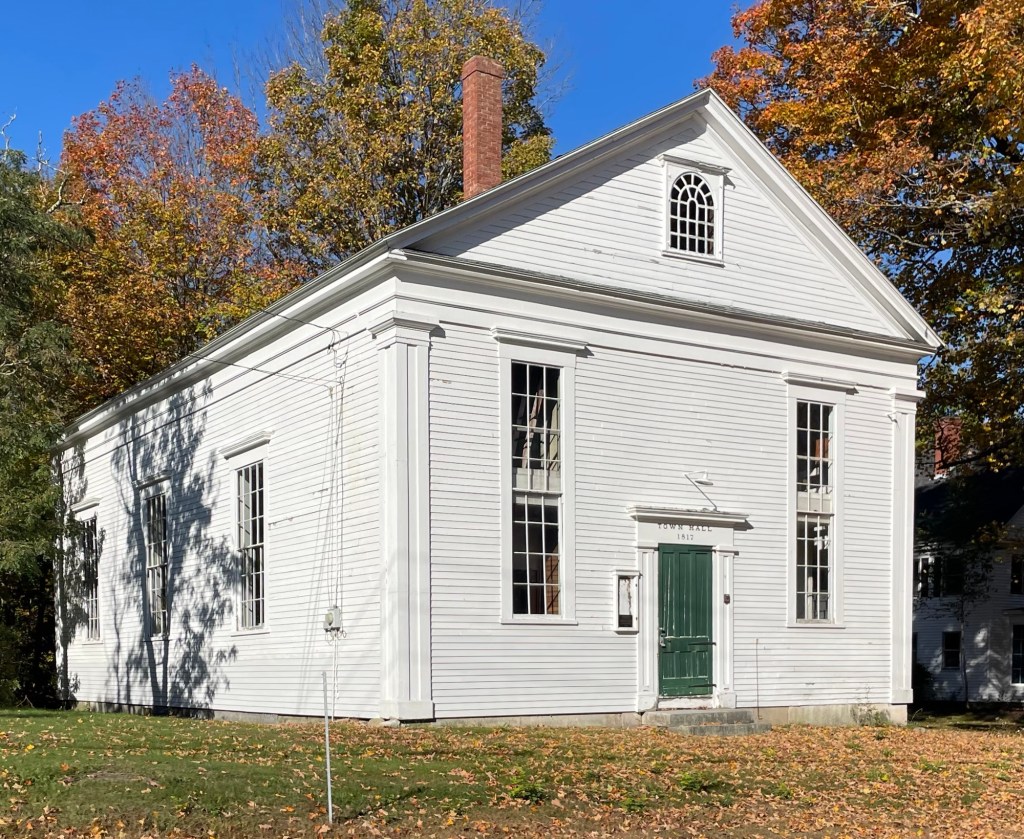
Old New Ipswich Town Hall // 1817

New Ipswich, New Hampshire, is a town that oozes New England charm! Winding back roads are lined with Colonial-era homes and buildings, lovingly maintained by stewards and neighbors to create the quintessential small town feeling. New Ipswich was granted in 1735 to 60 inhabitants of Ipswich, Massachusetts, where the name is derived, by colonial Governor Jonathan Belcher and the General Court of Massachusetts. European settlement began here in 1738, when Abijah Foster arrived to the area with his wife and infant daughter. At the center of town, a new Town Hall was built in 1817 as a combination town hall and private academy with funds provided by the town government and by the trustees of New Ipswich Academy. The building was constructed under the direction of Deacon Nathaniel Gould, using materials salvaged from a disused meetinghouse of 1770. The arched gable window is reputed to have been taken from the meeting house, as are twisted balusters on the gallery stairway inside. As completed in 1817, the building had a full second floor which provided the academy with a lecture room, a small library, and a laboratory, but that was taken over by 1869 when the Town renovated the building, removing a tower and belfry, and occupied the second floor spaces. The building is still owned by the town, and is used occasionally for civic functions, with town offices in a mundane, newer building a short distance away.

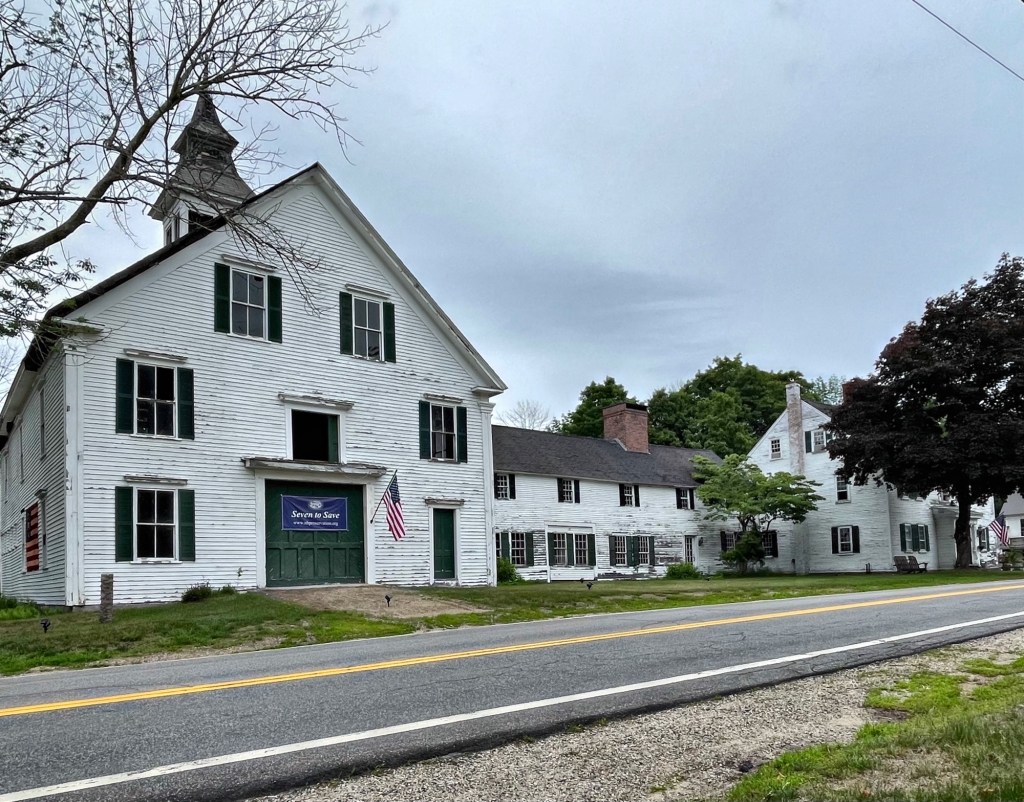
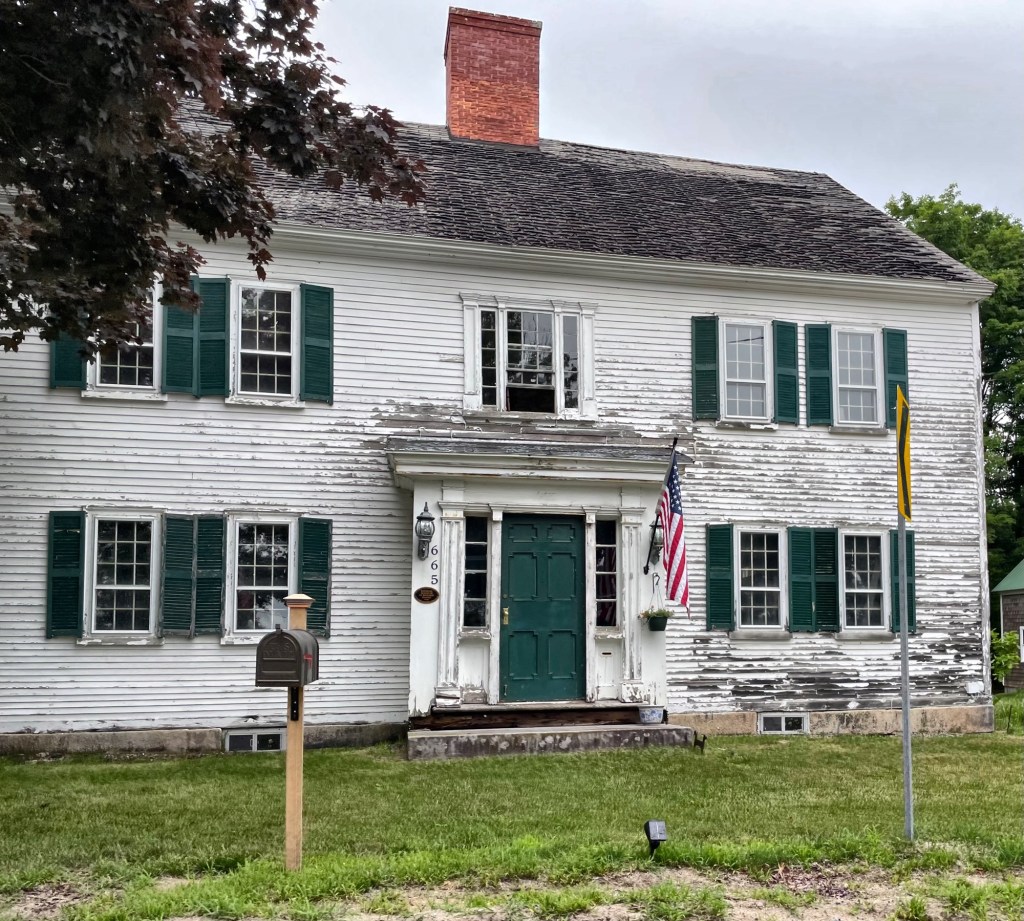
Lord’s Tavern // c.1792

Isaac Lord (1772-1838), the namesake of Lord’s Hill, came to Effingham, New Hampshire by 1791. An enterprising man, he was the most important figure in the village’s early history and in its architectural development. By 1792, Lord opened Effingham’s first store on the Hill, and soon thereafter began building a house that also served as the local tavern, this Federal style structure. As Lord prospered as a merchant and innkeeper, he enlarged the Tavern with a large ell connecting the main block to the 3-story barn. The fine Federal tavern was embellished with a vestibule and a triple window. The high quality of the Tavern foretold the character and scale of Isaac Lord’s later buildings nearby. The Tavern stayed in the extended family until 1903. Throughout the 20th century, the property was used as an inn and restaurant, including a stint as a dance hall. By the 21st century, though, deferred maintenance and successive attempts to fix the building ended in mortgage sales, foreclosure, and most recently, a tax deed, the the Town of Effingham recently acquired the property with the aim to restore the significant building. It was sold to a private owner in May 2024 and awaits its future. The Lord’s Tavern was listed in the New Hampshire Preservation Alliance’s ‘Seven to Save’, to advocate for its preservation and funding.