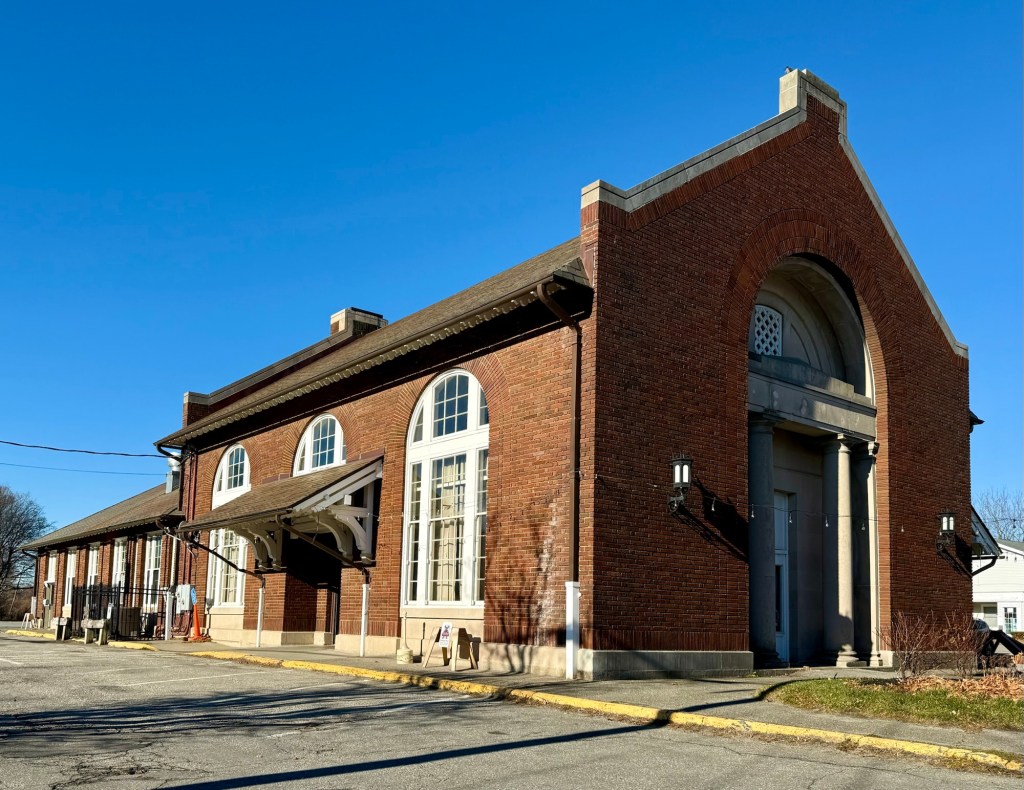
Rockland Railroad Station // 1917

Welcome to Rockland, Maine! Originally called Catawamteak by the Abenaki, meaning “great landing place”, Rockland was first settled by European settlers in In 1769 as a camp to produce oak staves and pine lumber. In 1777, when Thomaston was incorporated, present-day Rockland became a district called Shore village. In 1848, it was set off as the town of East Thomaston and renamed Rockland in 1850. The coastal community grew quickly as a shipbuilding and lime production center, with upwards of 300 vessels to transport the mineral to various ports in the country for the building of communities all down the coast. The opening of the Knox and Lincoln Railroad in 1871 brought an influx of tourists and businesses, creating a development boom for the community. The line was leased to the Maine Central Railroad in 1891, which took over ownership in 1901. The Rockland Railroad Station, seen here, was built in 1917, just before the government took over the railroads during World War I. Architects Coolidge and Shattuck designed the station in the Romanesque Revival style with the oversized arched openings at the windows and main entrance. The rise of the automobile industry would further harm rail service and usage, and the Rockland Branch officially closed in 1959. The old Rockland branch station operated as the Rockland Town Hall for decades and is now occupied by a local restaurant, Trackside Station.
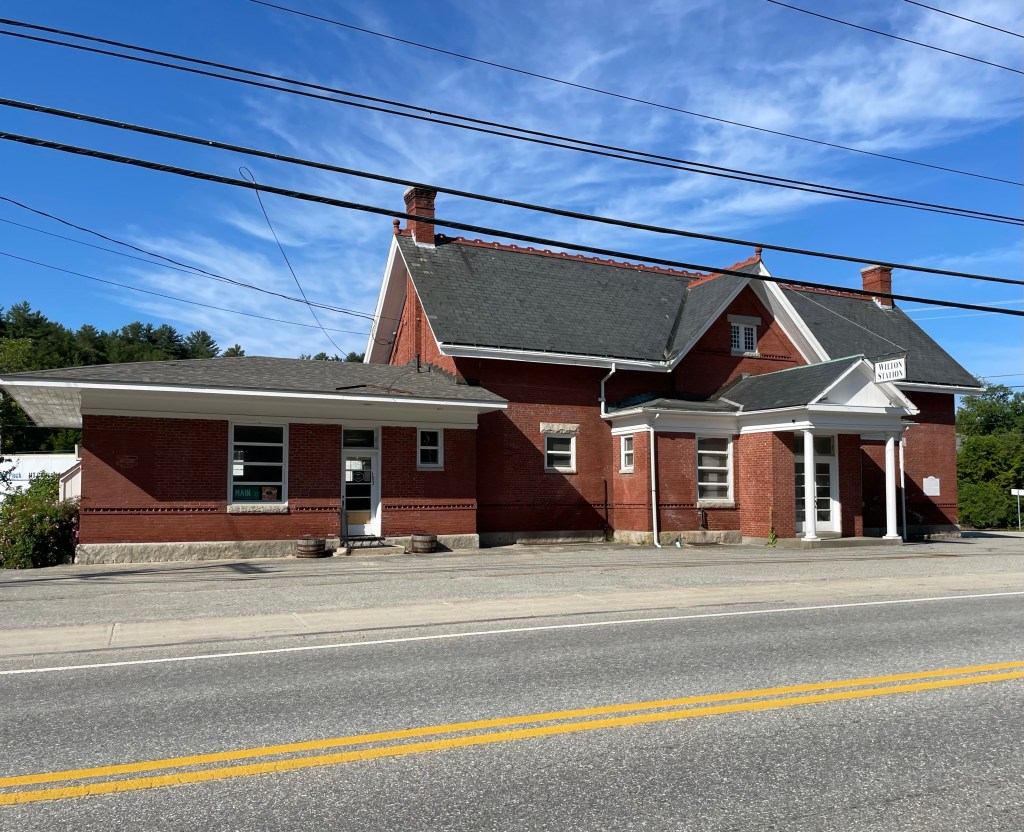
Wilton Train Depot // 1892

The coming of the railroad to Wilton, New Hampshire was largely due to the rapid increase in the number of mills and factories built in and around the East Village along the river beginning in the early 19th century. This increase was the impetus to Wilton business leaders of the time to petition the state for a charter to form the Wilton Railroad Company which was granted in 1844. The first official run of a wood-burning steam engine from Nashua City Station to the newly constructed Wilton Station occurred on Dec. 1, 1851. The small, wood-frame station was deemed obsolete, and replaced by 1860 with a more substantial structure. In this time, the town prospered, and the local mills cranked out everything from worsted yarn to wooden boxes and furniture. After thirty years of use, however, this second station began to show its age; the tin roof was rusting and it leaked. In 1888, a derrick on a wrecker train caught the side of the building and heavily damaged it, requiring the demolition of the station. By 1892, it was replaced by this new brick station. Between the World Wars, automobile use dominated the American transportation landscape, shifting demands from rail to road. In the late 40’s, a restaurant opened in part of the building, operating until the early-to-mid 50’s. The station was closed when passenger service finally ended and the building, undergoing “adaptive re-use”, into a medical center. It operated for some time as a scenic, heritage railroad stop from 2003-2006.

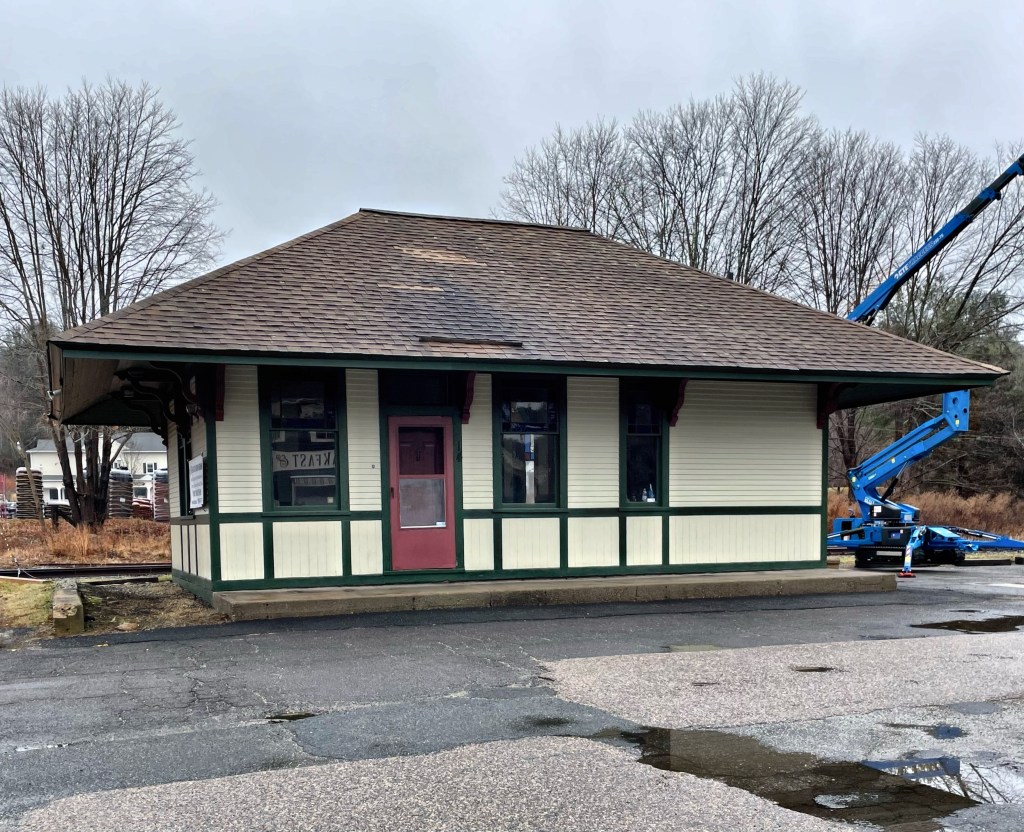
Willington Train Depot // 1895

TOOT TOOT! Next stop, Willington, Connecticut. Historically, all of central Connecticut was occupied by various Algonquin tribes which for thousands of years inhabited the region, the larger Pequot and Mohegan, and the smaller Nipmuck, Podunk, Shenipset and Skunkamaug all sharing a common-lineage, and language. In 1720, a party of eight men, originally from England, bought 16,000 acres of the region and called it Wellington after the town in England. Willington was incorporated in 1727. Like many early towns, Willington began as a farming community with modest industry until the 19th century, when the American Industrial Revolution saw mills and factories sprouting up all along the river towns in the region. Villages spouted up in town, mostly following their geographic location in relation to the town center (South Willington, West Willington, etc.) and each had their own industry and character. By the 20th century with industry in decline, many of the former mills and villages closed up and residents moved to “greener pastures”. The town is today mostly rural and serves as a suburb to larger towns nearby.

This train depot is located in West Willington just over the town line of Tolland. Due to this, the depot was originally named Tolland Station. Rail service began here in 1850, when the New London, Willimantic and Palmer Railroad Company built a freight and passenger station near this location. The rail line was later absorbed into the larger Central Vermont Railway in 1871. The original depot burned down in 1894, and was replaced that same year by this structure. The line, and this station, were in use for passenger service until 1947, when it closed. The depot has luckily been occupied by businesses ever-since, preserving this building typology in America that we are losing every year.