
Set back from tree-lined Main Street in Suffield, the Phelps-Hatheway House is but one of many handsome eighteenth and nineteenth century homes in the town. The house began construction sometime between 1732-1762 as a modest gable-roof Georgian home built by Abraham Burbank. In 1788, the home was purchased by Oliver Phelps. at the beginning of the Revolutionary War, Phelps joined the Continental Army and fought in the Battle of Lexington. He left service in 1777 and, relying on his experience as a merchant, became Massachusetts Superintendent of Purchases of Army Supplies, a Deputy Commissary of the Continental Army. He was introduced to Robert Morris, the great financier of Revolutionary times. He supplied troops and received commendation from George Washington for his efforts. After the war ended, he became a prominent businessman and was elected to the Massachusetts Senate in 1785 and served on the Governor’s council in 1786 (Suffield was still a part of Massachusetts at this point).
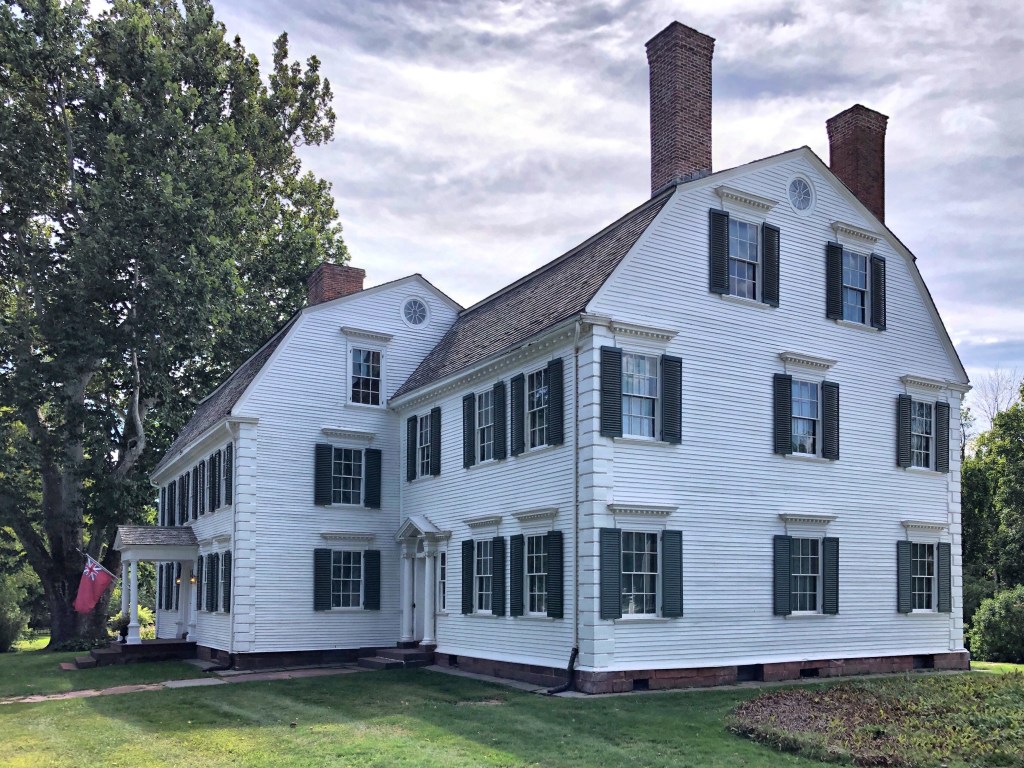
Upon returning, Phelps hired architect Asher Benjamin (when he was in his early 20s!) to redesign the home into a gambrel roof mansion and construct numerous additions to make the house a suitable home for a wealthy, sophisticated man such as himself. Phelps was a principal in the Phelps and Gorham Purchase of six million acres of land in upstate New York, making him one of the nation’s largest landowners. Phelps lived here until 1802, when he moved to Canandaigua, New York, to more closely oversee the development and sale of his holdings. Phelps or his heirs sold the house, which was purchased by Asahel Hatheway and it remained in the Hatheway family for a century. It is now owned by Connecticut Landmarks and operates as a house museum.


 Buildings of New England