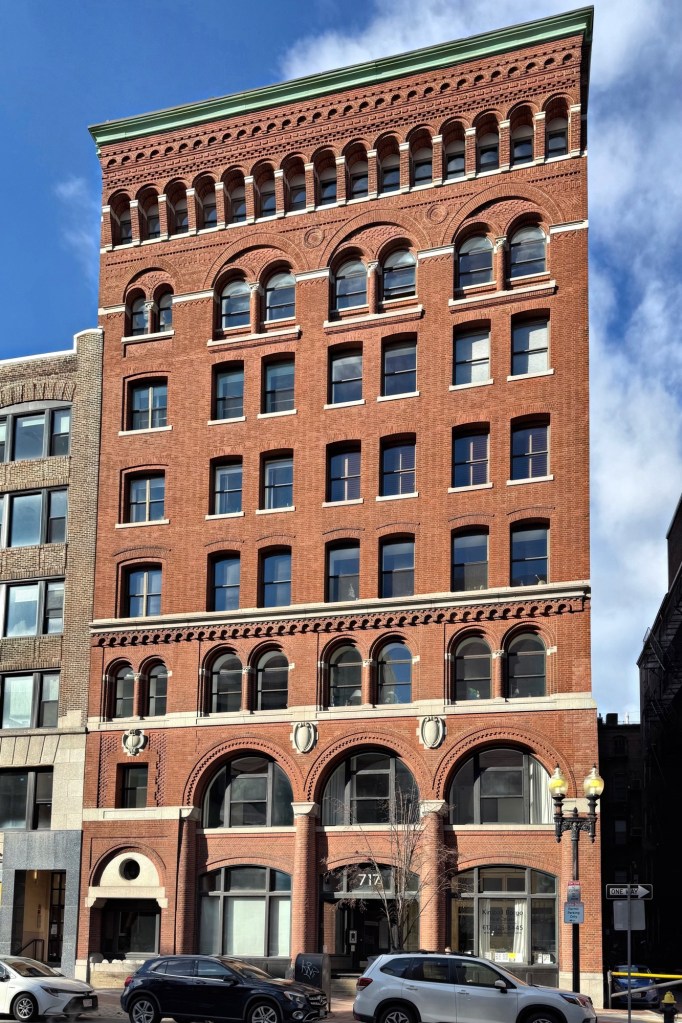
As far back as Colonial days, the boot and shoe industry was one of the State’s leading industries. Buyers came suburban towns to purchase supplies, and in the early 1800s, the larger manufacturers began to open offices and stores in Boston. Soon, most of the leading merchants had established places of business in Boston, by the late 19th century, many were located in the South Cove area, which became known as the Leather District. The Leather District is characterized today by large, brick structures with flat roofs and feature continuous floor levels, band courses, and cornice lines. This handsome brick building on Atlantic Avenue was built in 1901 for Charles G. Rice and the Heirs of Nehemiah W. Rice as a warehouse for the U.S. Leather Company. The building was designed by William Gibbons Rantoul, who studied architecture at Harvard, and apprenticed with Henry Hobson Richardson as a draftsman in the 1880’s before opening his own practice. In 1946, the subject property was purchased by Frank Einis, and the new tenants, Fur Merchants Cold Storage, Inc., used the building for the storage of skins and furs for manufacturing into soft goods. Architecturally, the building showcases the lasting influence of Richardson on architects and industrial buildings in Boston from the late 19th century into the early 20th century. The building can be classified as Romanesque Revival in style with its use of arches in the façade both structural and decorative, the Venetian arches at the 7th floor, as well as its arcaded corbelling over the 3rd level and at the cornice. I especially love the tall, engaged brick columns at the storefront, they are very unique!
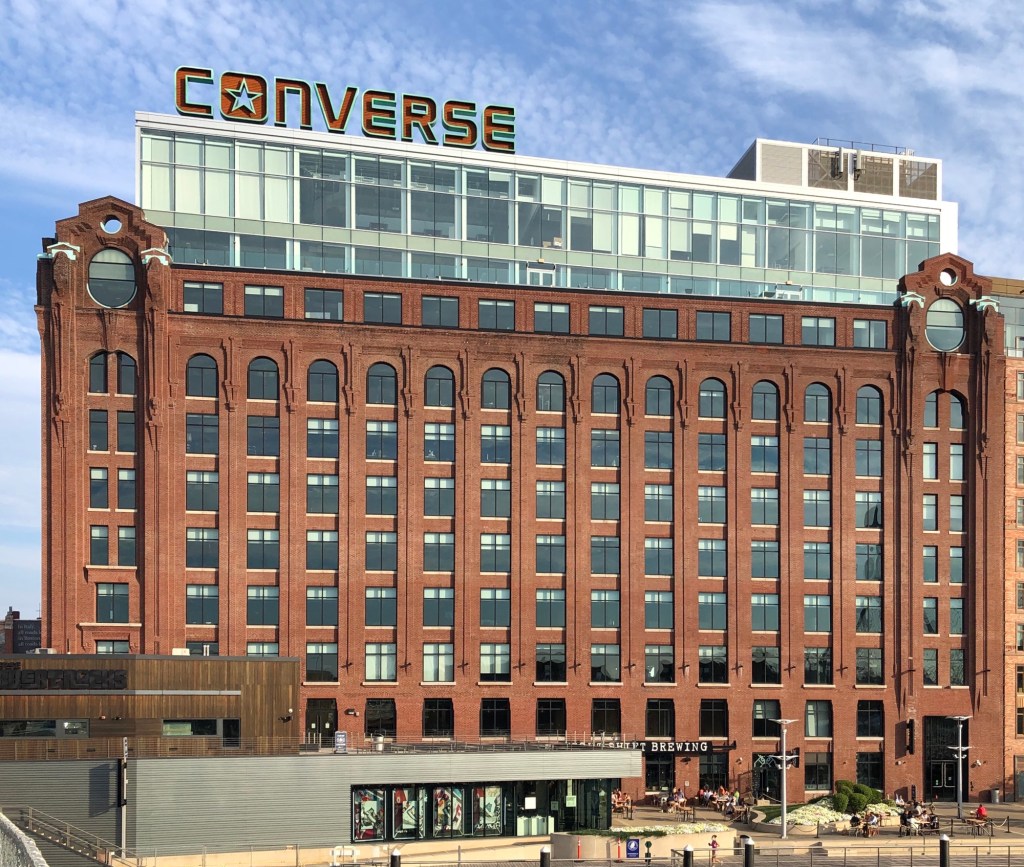
Possibly my favorite building in the Bulfinch Triangle/North Station area of Boston is this brick behemoth. Known as the Schrafft’s Candy Factory, Hoffman Building, Lovejoy Wharf, Submarine Signal Building, etc., the building was constructed in 1907 from plans by Codman & Despradelle and first-occupied by the Schrafft’s Candy Company. It held the candy makers until 1928, when Schrafft’s moved to Charlestown, building their massive factory in Sullivan Square. A landmark in the Panel Brick style of architecture, prevalent in industrial and multi-family structures in the late 19th and early 20th centuries, the old factory saw many later uses from cold storage, to a Submarine Signal Co. before it was largely vacant by the end of the 20th century. Through Preservation Tax Credits and grants, developer Related Beal was able to reimagine the building, restoring it to its former glory. The Architectural Team (TAT) oversaw the renovations and expansion of the building with a glass crown with the project accommodating the corporate headquarters for world-renowned sneaker manufacturer, Converse.
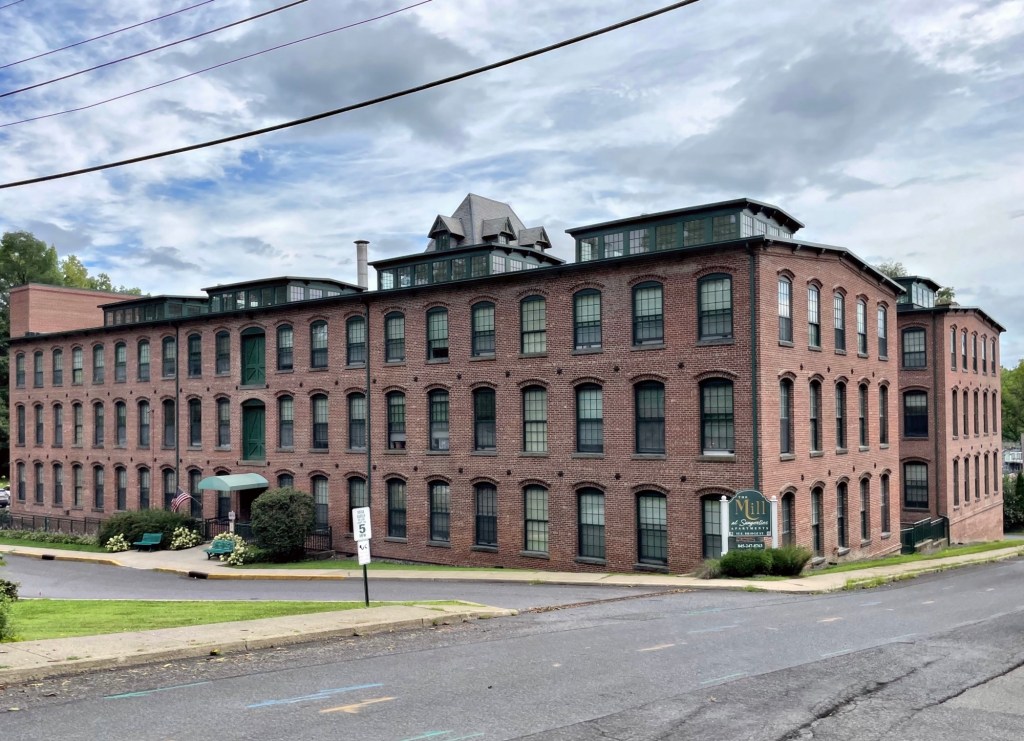
The former Sheffield Mill is historically and architecturally significant as one of the last remaining large-scale manufacturing complex to survive in the village of Saugerties, New York. The building was constructed in 1887 as the J. B. Sheffield Paper Company and was used for the manufacturing of envelopes and bank bookbinding. In the 1930s, the building was purchased by the Knaust Brothers, who grew and harvested mushrooms in nearby towns, making mushroom beds or trays in this building. The Knaust Brothers were at one time, one of the largest firms growing and canning mushrooms in the world. The former mill was vacant by the late 20th century and its future was uncertain until it was renovated at the turn of the present century into senior housing. What a great rebirth of a great old mill!
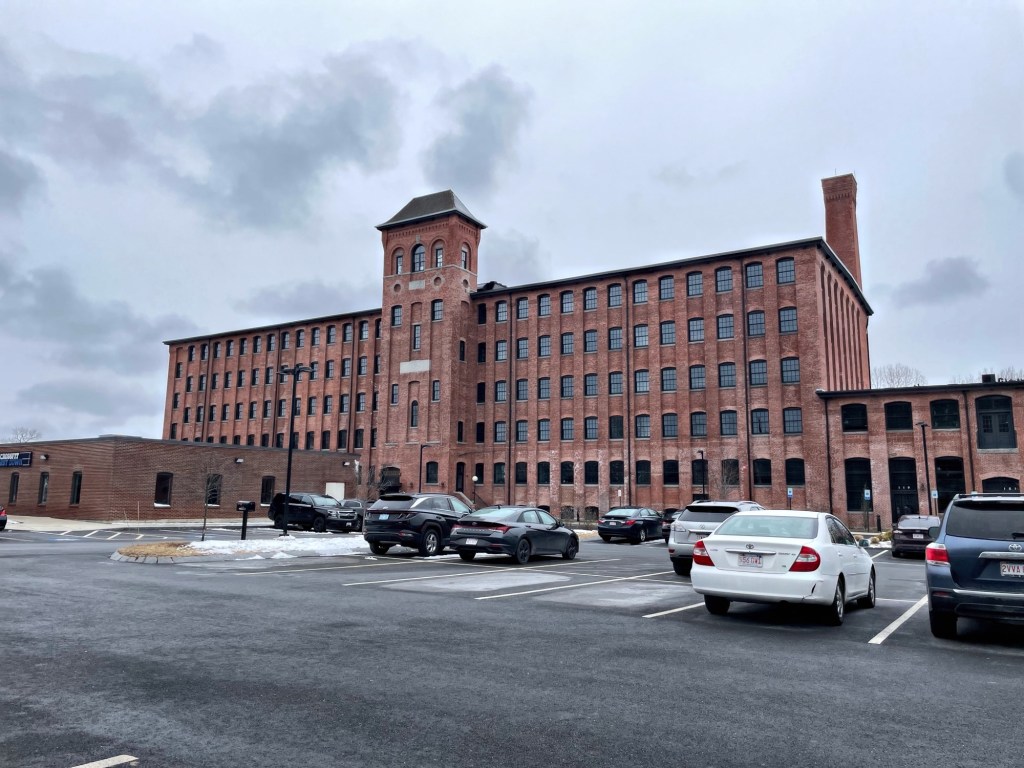
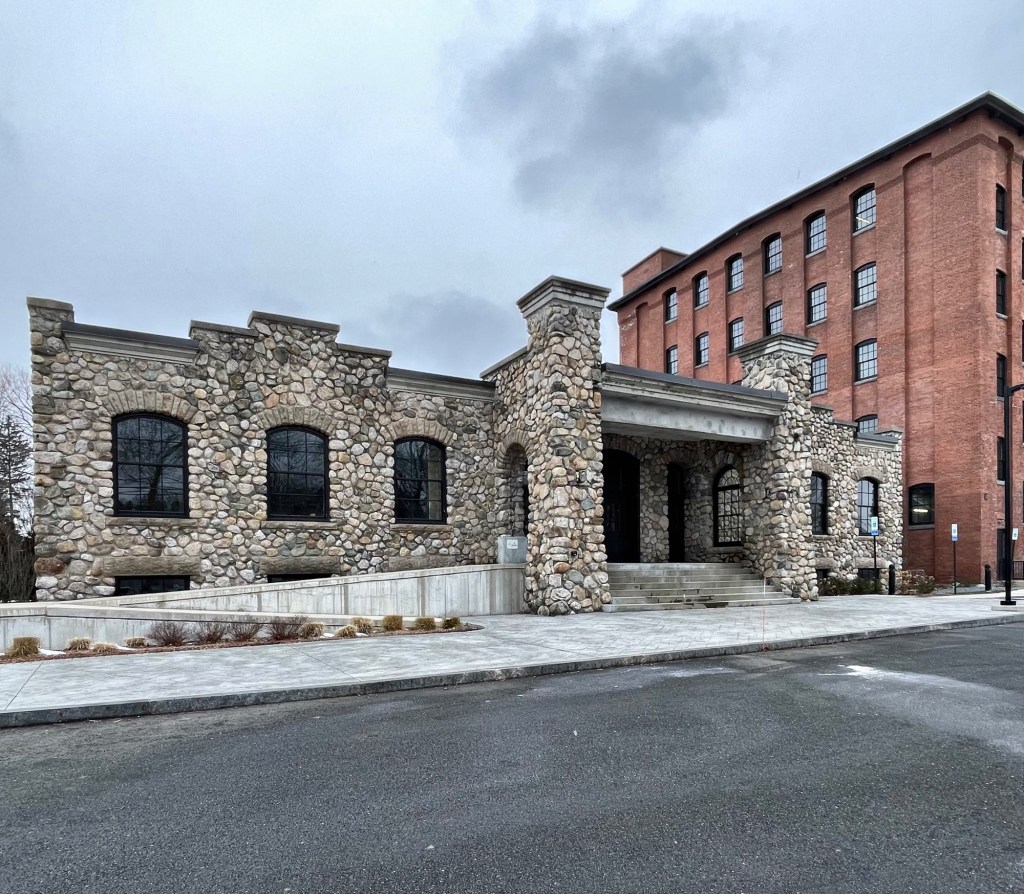
The Lowney Chocolate Factory is a historic industrial complex in Mansfield, Massachusetts and was established there after town officials took advantage of rail access provided by the Boston and Providence Railroad and enticed businesses to establish themselves in Mansfield. The Walter M. Lowney Company was a chocolate and candy business founded in Boston in the early 1880s by Walter M. Lowney, who started his business by manufacturing chocolate bonbons. The company built offices and factories in Boston, Montreal and here in Mansfield, where they would ship out boxed sweets to stores all over the country. The Mansfield factory was designed by the architectural and engineering firm of Dean & Main in 1903. The firm was comprised of partners Francis W. Dean and Charles T. Main, who had offices in Boston and specialized in mill design and engineering from 1893 to 1907, originally designing Lowney’s Boston factory in the North End. A later fieldstone addition was added in 1910 and housed the company’s office and shipping facilities. After Walter Lowney died in 1921, the Walter M. Lowney Company continued to operate under the ownership of Lowney’s wife. In the 1930s the factory property was wholly purchased by the Rexall Drug Company, who renamed the Lowney company, United Chocolate Refiners. The Mansfield factory was later owned by Nabisco to make chocolate for oreo cookies for a number of years until it again changed hands. The factory had been largely empty since 2010 until it was recently converted to mixed-income housing (the best kind of redevelopment)! Who doesn’t love a happy ending?
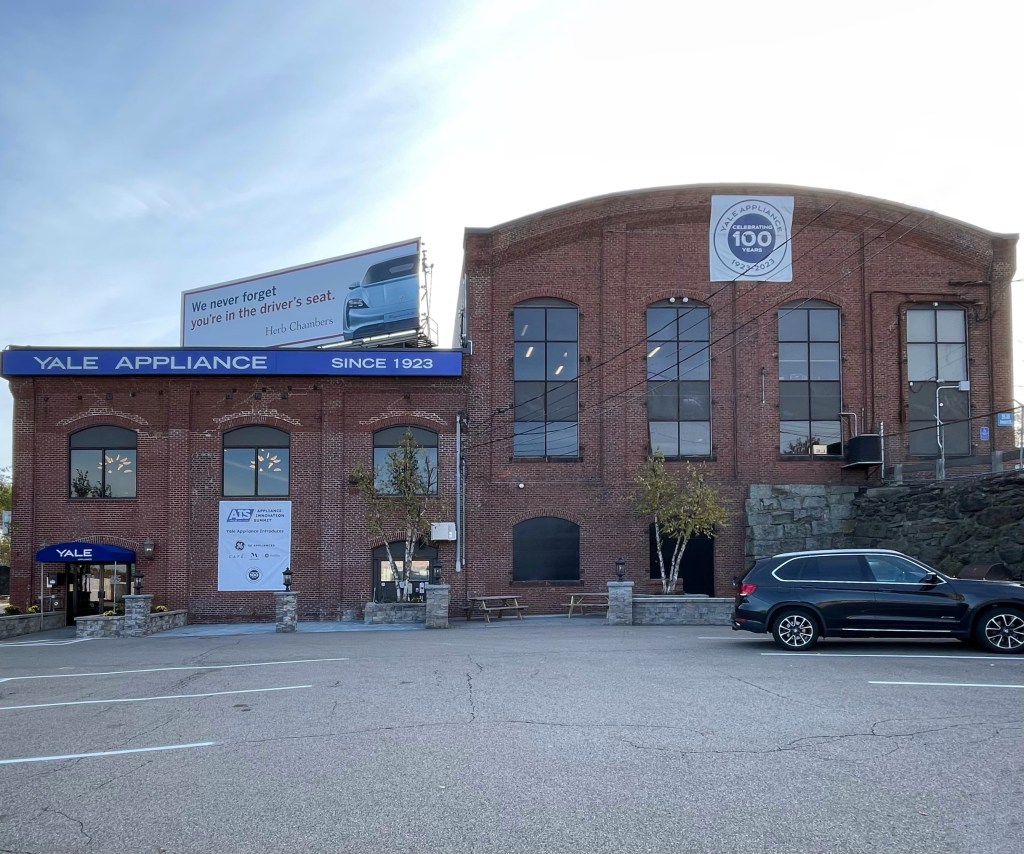
The West End Street Railway was established in 1887 originally as an offshoot of a land development venture, but it rose to prominence when it merged several independent streetcar companies into a single organization. Over the next decade, it became the primary operator of public street transit within the Boston area! During this time, the company maintained one of the largest street railway systems in the world, the first unified streetcar system in the United States, and first electrified system in a major US city. Now, it’s the infamous MBTA. How far they fall… Power plants were needed all over the city to provide electrical power for the company’s street cars, this was the fourth (and final) power station built, and it powered the Dorchester, Neponset, Ashmont and Milton lines. The station was constructed in 1896 on the shores of Dorchester Bay, which allowed for coal to be delivered in barges to the plant. Old stone walls formerly lining the shore can be seen to this day. Landfilling in the second half of the 20th century and the construction of I-93 have since cut off the building from the shore. Eventually the building was sold off and today is home to Yale Appliance, good thing none of their products are coal powered!
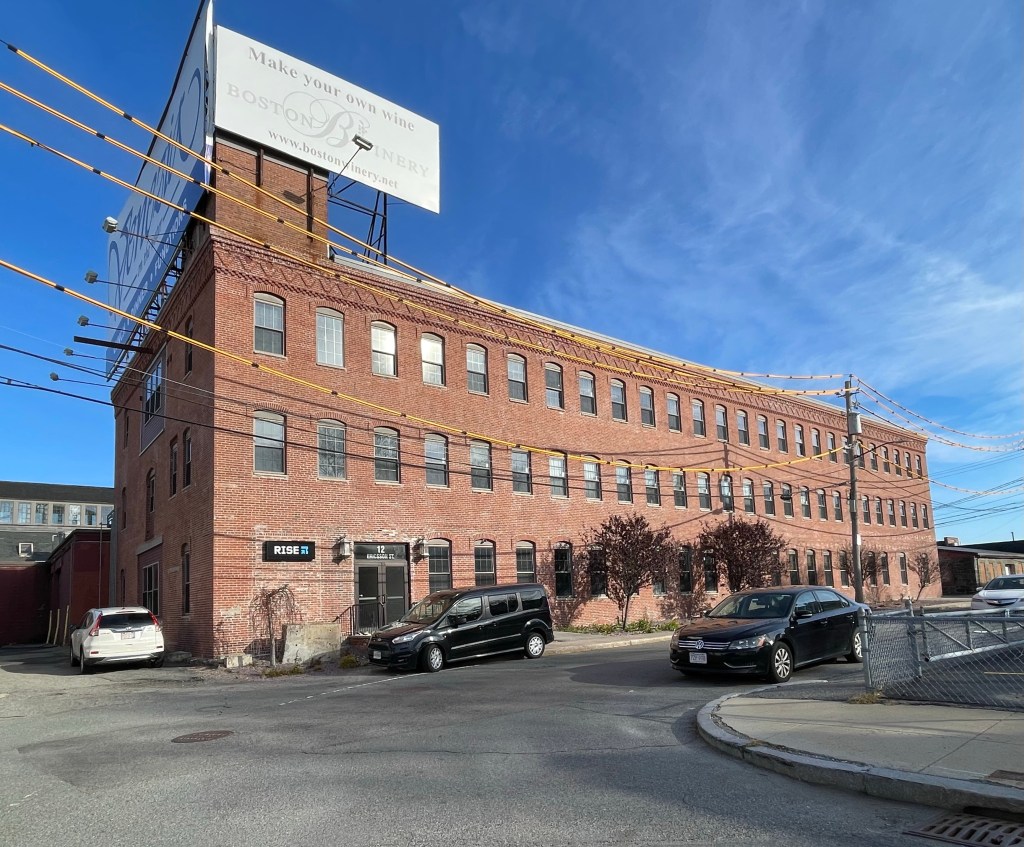
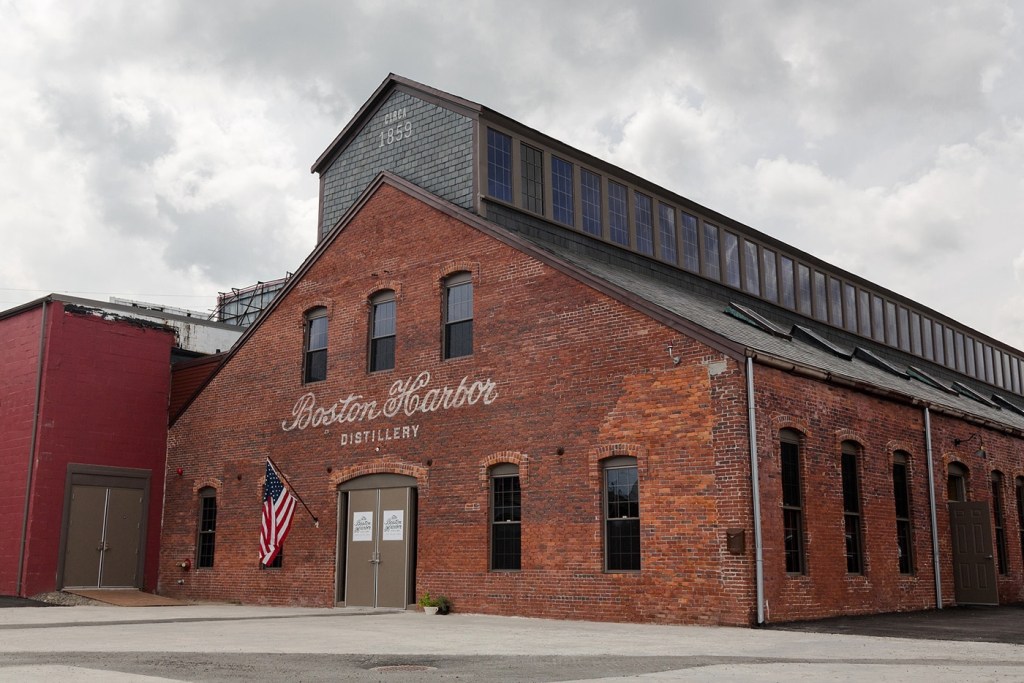
The Putnam Nail Company was founded in 1860 and located at the northern tip of the Port Norfolk neighborhood of Dorchester, Boston, Massachusetts. The company was founded by Silas Safford Putnam (1822-1895), who was the seventh of nine children by Israel Smith Putnam and Charlotte Safford of Hartford, NY. He moved to Boston and found work as Boston’s industrial growth took-off. He owned a curtain factory before patenting a process to manufacture wrought nails in the 1850s. After some time in Abington and Roxbury, he moved to Dorchester, purchasing large pieces of land and began building a manufacturing complex for his new Putnam Nail Company. The company made world-class horseshoe nails until it closed in the early 1900s. The property here was acquired by the George Lawley & Son Shipyard, who moved from their cramped City Point, South Boston shipyard to this newer yard. Already an established and respected New England manufacturer, the Lawley company had been building wooden ships in Massachusetts since 1866. The site was later the home to Seymour’s Ice Cream and was abandoned in the late 20th century. The large 1890s brick factory is now occupied by RISE, a development/construction management firm, with other buildings occupied by the Boston Winery and Boston Harbor Distillery.
The Stearns Lumber Company, which eventually covered forty acres, was opened by Albert Thomas Stearns in 1849 at Port Norfolk, in Dorchester, Massachusetts. The location was ideal for transportation as wood could arrive by ship via the harbor or by rail. Stearns made everything from greenhouses, to water tanks, to millwork, but they specialized in wooden gutters, a necessary component in housing construction, and even invented a machine just for this purpose. Stearns’ machine removed the core of the gutter in one piece with a cylinder saw, which allowed the leftover product to be reduced into moulding, trim, ect. Stearns specialized in Cypress lumber and erected a saw mill in Florida, having it shipped up to his lumberyard in Port Norfolk. He became known as the Apostle of Cypress. The company eventually closed in 1968, after decades in losses of national lumber production and an increase in the use of cement and steel in building. The former Stearns Lumber Company yards were redeveloped and is now the site of Joseph Finnegan Park. The brick company office building is the last extant building from the historic A. T. Stearns Lumber Company, and its future is uncertain. The building is currently owned by the Massachusetts Department of Conservation and Recreation (DCR), who asked for the building to be demolished, causing the local neighborhood to speak out for its preservation. This is one to watch out for!
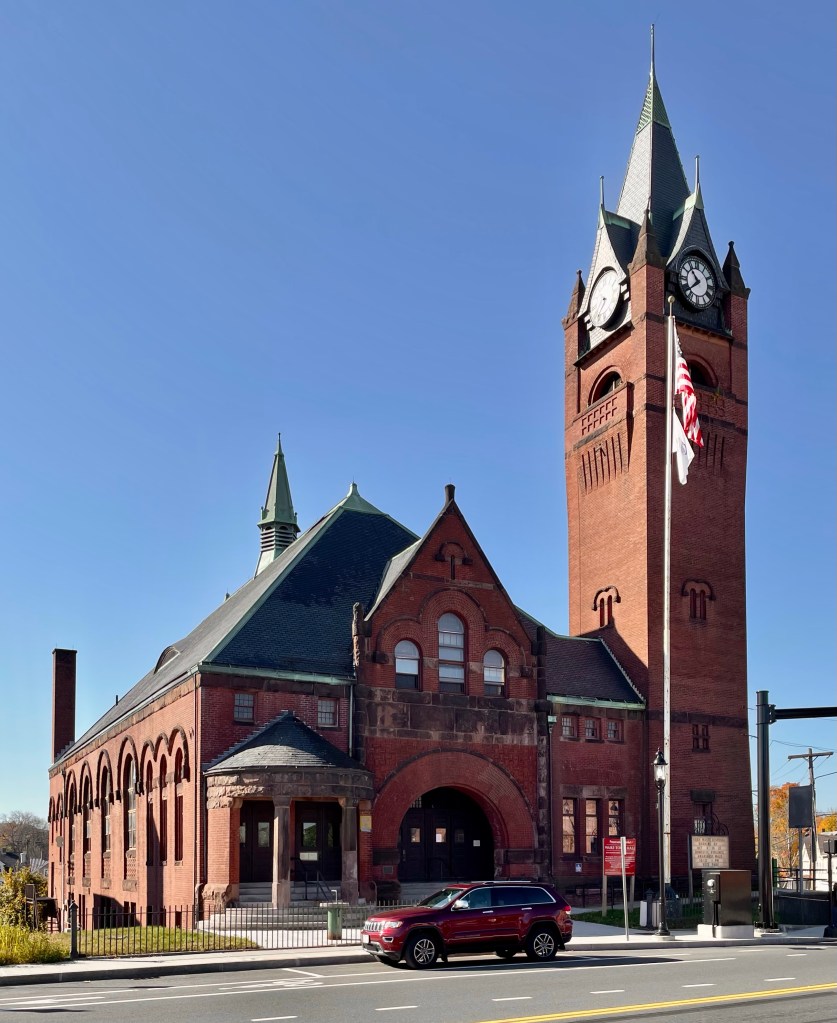
After learning a little about some of the buildings in Dorset, Vermont, which were saved and relocated to the town from land flooded for the Quabbin Reservoir, I wanted to visit one of the surviving towns there to see it for myself. I found myself in Ware, Massachusetts, a town with a history that parallels many in central and northern Massachusetts. The town was first settled by white European colonists by 1717, and incorporated in 1775. The town was named after the English town of Ware in Hertfordshire. The Town of Ware began as a sleepy farming town with inns and taverns dotting the landscape until industrial sites were developed on the banks of the Weir River. The post Civil War era (1860s–1900s) brought a new prosperity to the now established textile mill town. “Ware Factory Village” sprang up overnight and formed the basis for new growth and development, to the east of the former town center. From this, a new Town Hall was needed, and where better to locate it, than the economic and population center of town?! The Ware Town Hall was built in 1885-1886 from plans by the prominent Boston firm of Hartwell & Richardson. Sadly, a fire gutted much of the building in 1935, but the shell remains (though needing much repair). The town, like many former industrial centers, has struggled to re-invent itself, but a growing population is a great indicator of good things to come!
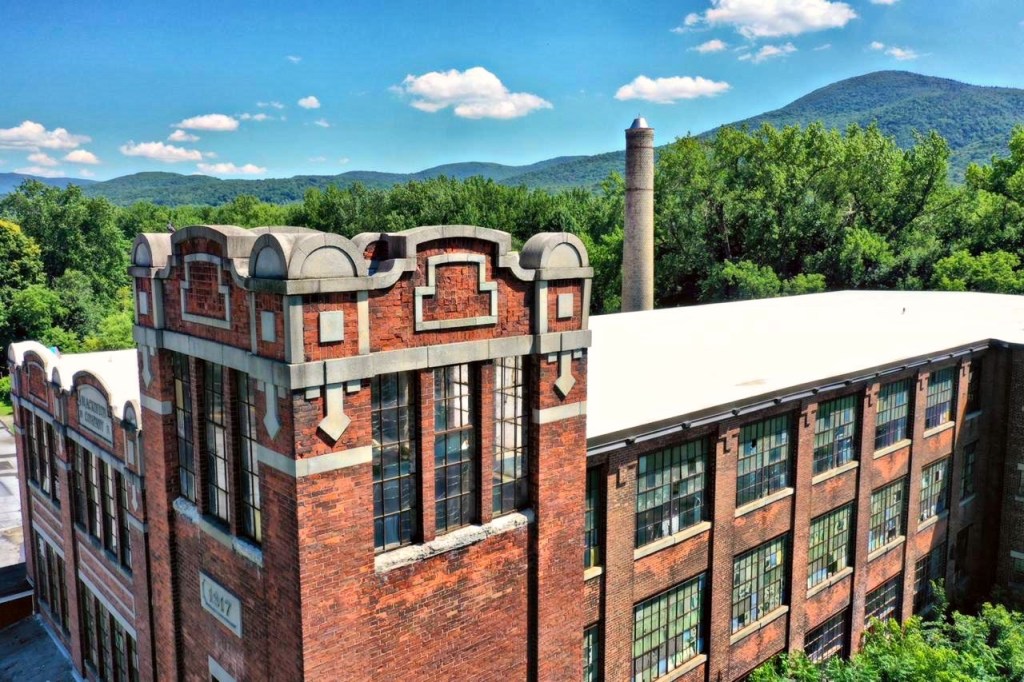
On the outskirts of North Adams, in the village of Blackinton, you will find this massive decaying mill complex slowly being overtaken by Mother Nature and time. The complex is the Blackinton Woolen Mill, which was founded by Sanford Blackinton, who started his woolen mill on the banks of the Hoosic River in 1821 (later building his mansion closer to town). The mill increased production yearly and produced cloth during the Civil War for the Union cause. After, the mill increased production and ran 24 hours a day with the only time the mill would close down would be for mill fires, machinery repairs, or low water supply. In 1869, 162 men, 105 women, and 35 children worked in the mill with the length of the working day being eleven hours! After Blackinton’s death, the mill was succeeded by William Pomeroy, his son-in-law, who had marketed the Blackinton product through his own woolen goods store in New York. In 1917, the present main mill building was built; it is three stories high, with large windows in recessed bays between vertical brick members, resembling pilasters, which rise from the ground to the flat roof. The tower and parapet on the end facing the street are decorated with ornate castellation giving the complex a high-style design. The mill was constructed behind the weave shed (1908) which is a long one-story structure fronting the main street, decreasing the mill’s presence. As is the history of industry in New England, the mill struggled after WWII with a national shift to a service economy away from production. The building has been vacant since the late 1980s and has been eyed for redevelopment into loft and artist studios since.
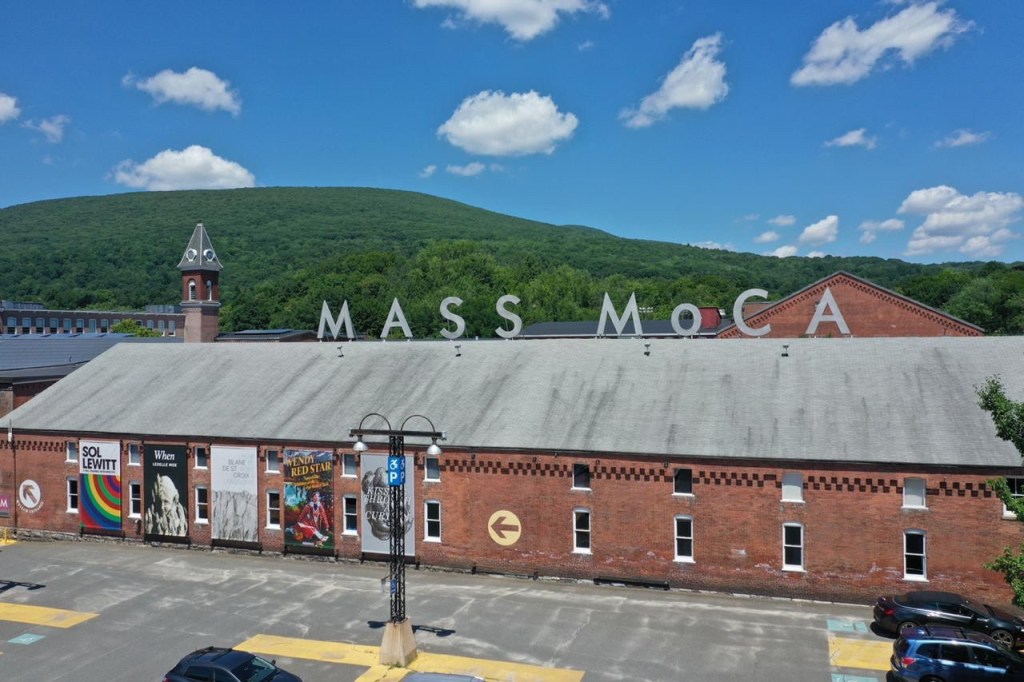
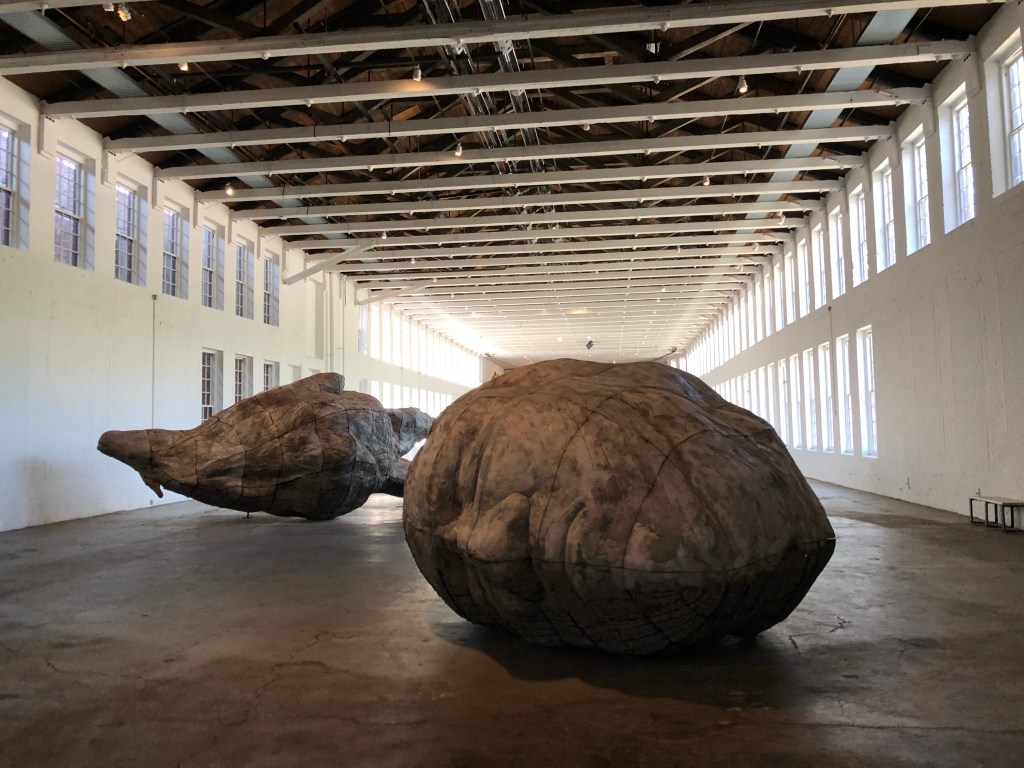
On a last-minute trip to the Berkshires, I couldn’t help but stop at the recently re-opened Massachusetts Museum of Contemporary Art (Mass MoCA) in North Adams. Being a huge nerd for industrial history and repurposed mills and factories, it was an absolute treat to walk through the large brick and steel buildings and wings lined with steel casement windows providing the perfect scenery for some amazing artworks. What is now known as Mass MoCA, – one of the premier art museums in New England – was once Arnold Print Works, a one time world leader in textile manufacturing with offices in New York City and Paris.
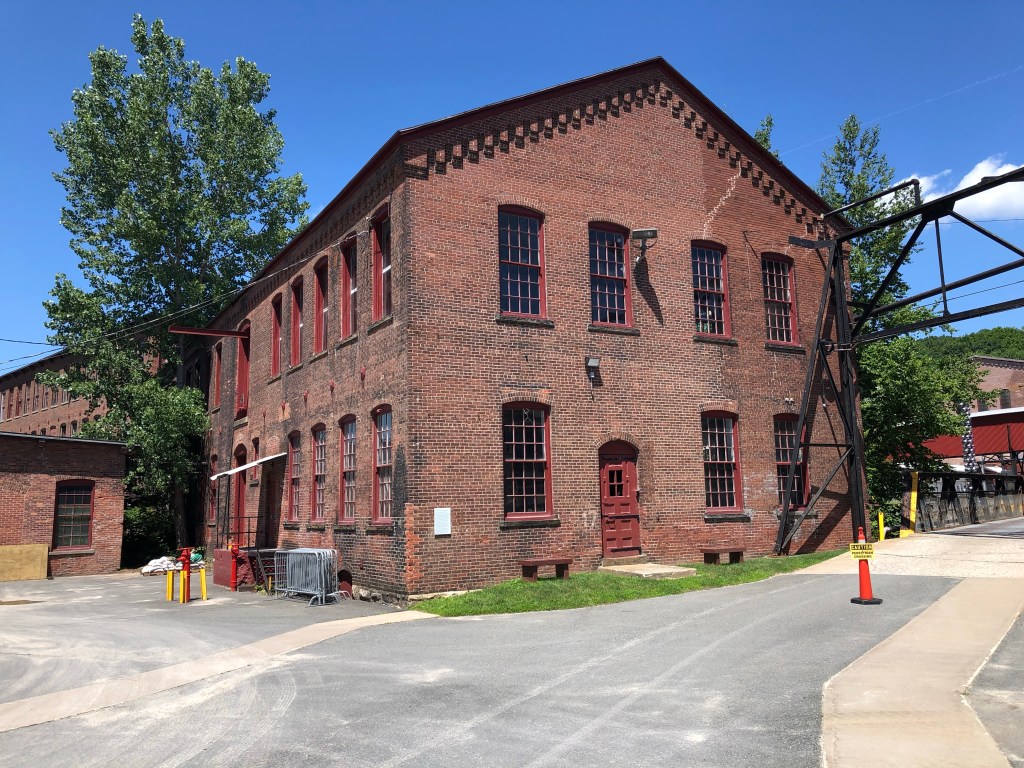
The Arnold Print Works were built on the Hoosac River near the center of North Adams. The company was the town’s largest industry during the city’s economic heyday from the Civil War until the early 20th century. The company was founded in 1861 by the John, Oliver, and Harvey Arnold, who began production of printed cloth at an existing cotton mill. At the dawn of the American Civil War, the newly formed company became flush with money due to government contracts for manufacturing Union Army uniforms. The company expanded after the war until a fire destroyed nearly all of the wooden buildings on the site. After the fire, a majority share of the company was purchased by Albert Charles Houghton, who became the first mayor of North Adams, and he oversaw the expansion and prosperity of the company, starting with new buildings of fire-proof construction.
By the early 20th century, many textile and cotton manufacturing shifted to the American South severely crippling the mill’s profits. In 1929, Sprague Electric Company moved to North Adams from Quincy, Massachusetts, and began buying the Arnold Print Works buildings. The print works moved much of its operation to nearby Adams and concentrated on a few particular products in its North Adams plant. The print works was finally sold in 1942 for just $1.9 million dollars, a far departure from its once prosperous past. The plant was shortly thereafter acquired by Sprague Electric Company.
While largely leaving the building exteriors as they were, Sprague made extensive modifications to the interiors to convert the former textile mill into an electronics plant. Sprague physicists, chemists, electrical engineers, and skilled technicians were called upon by the U.S. government during World War II to design and manufacture crucial components of some of its most advanced high-tech weapons systems, including the atomic bomb.
[Outfitted with state-of-the-art equipment, Sprague was a major research and development center, conducting studies on the nature of electricity and semi-conducting materials. After the war, Sprague’s products were used in the launch systems for Gemini moon missions, and by 1966 Sprague employed 4,137 workers in a community of 18,000, existing almost as a city within a city. From the post-war years to the mid-1980s Sprague produced electrical components for the booming consumer electronics market, but competition from lower-priced components produced abroad led to declining sales and, in 1985, the company closed its operations on Marshall Street.] (Mass MoCA History)
The complex sat vacant briefly before the Williams College Museum of Art, led by its director, Thomas Krens—who would later become Director of the Solomon R. Guggenheim Museum—advocated for a museum space for contemporary art that would not fit in traditional art galleries. The nearby Arnold Mills seemed like a perfect, yet daunting task to repurpose. Bruner/Cott Architects of Cambridge were hired to repurpose the mills and oversee the massive adaptive reuse project which today totals nearly 300,000 square feet of galleries and art venues.


 Buildings of New England