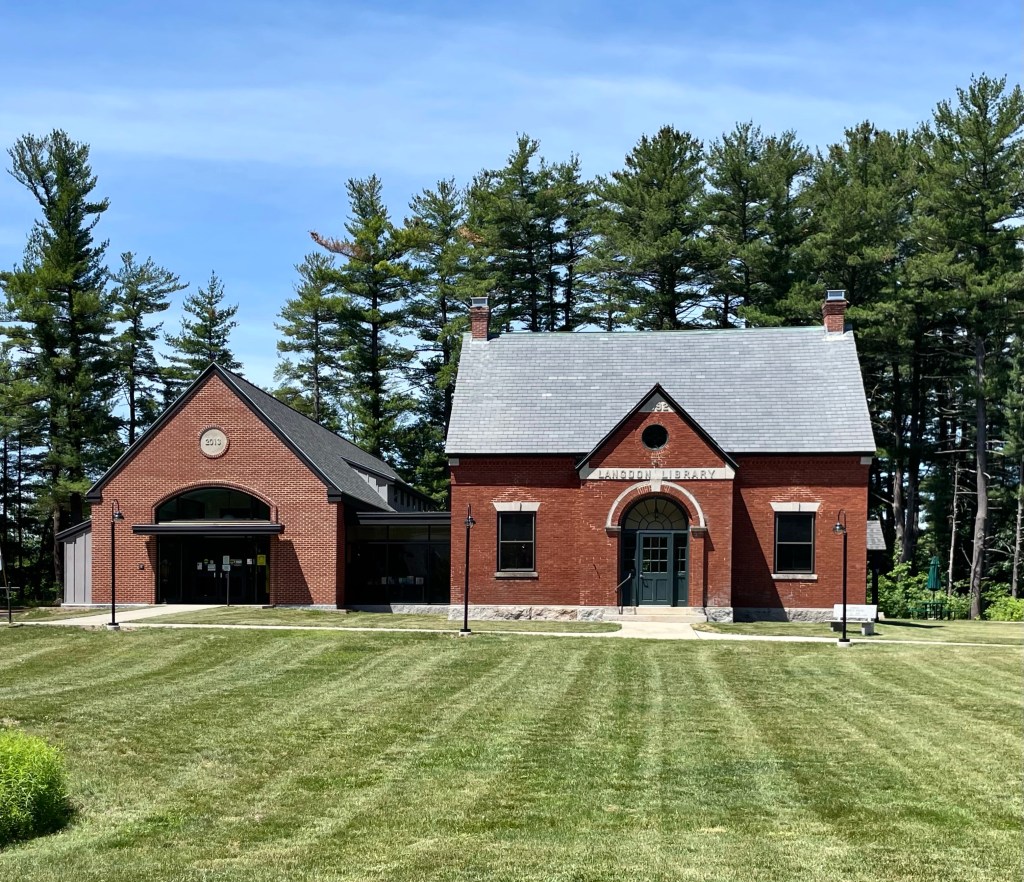
Langdon Library // 1892

Langdon Library in Newington, NH, was established through the generosity of Woodbury Langdon of New York City, a summer resident of Fox Point in town. In 1892 Langdon offered to donate 2,000 books to the Town of Newington, if suitable provisions could be made for their care and circulation. The Town voted to erect a library at town meeting in 1892 and accepted the offer. Portsmouth architect William Allyn Ashe furnished designs for the building which reads as a pleasing, symmetrical Romanesque Revival building. The structure was outgrown and needed repairs in 2013, and hired the firm of Lavallee Brensinger Architects to oversee the redesign, which restored the 1892 building. The resulting project tripled the usable square footage of the library, and the new wing allows the library to remain quaint and the main focus.

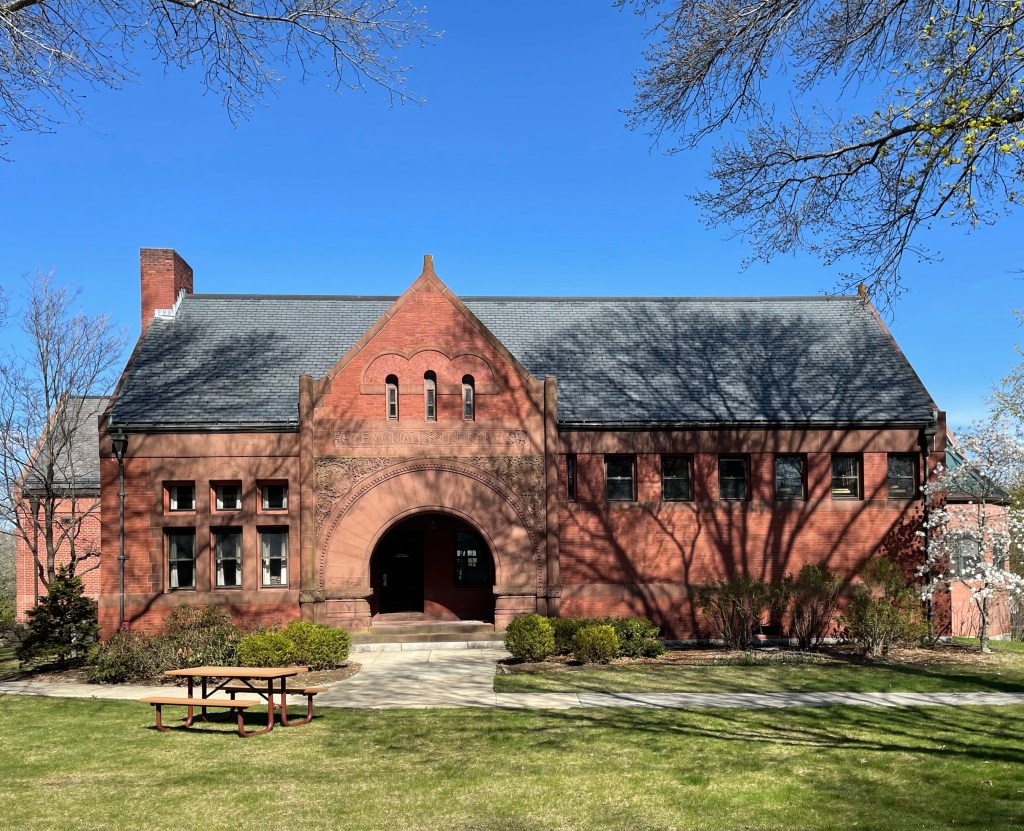
Acton Memorial Library // 1889

In 1888, William Allan Wilde, a Boston publisher who grew up in Acton, purchased land on Main Street to be used as the site for a new memorial library, in “memory of those brave and patriotic men of Acton who so freely gave Time, Strength and Health, and many of them their Lives in the war of the Rebellion, 1861-65.” The former Fletcher Homestead which was located here, was moved to a nearby street. The Richardsonian Romanesque building was designed by the Boston architectural firm of Hartwell and Richardson. The building displays traditional Romanesque materials with its brick wall surfaces, brownstone and terra cotta trim and detailing, and slate roof. The large Syrian arched entry is a hallmark in the Richardsonian Romanesque style, which works extremely well with this design.

Gilbert A. Davis Memorial Library // 1899

Reading Vermont’s public library building was built in 1899, by local resident Gilbert A. Davis (1835-1919). The building’s funds were furnished by Mr. Davis in his life, likely inspired by Andrew Carnegie’s fund which had libraries built in towns all over the United States. Gilbert Davis worked as a lawyer in Woodstock before moving back to Reading, Vermont to run his own practice. The library he funded is Neo-Classical in design in the form of a Greek Cross with intersecting gable roofs and with a monumental portico in the Ionic Order on the front facade. The charming library building is well-preseved and an excellent example of Vermonts beautiful small-town libraries.

Richards Free Library // 1899

Designed by Boston architect, James Templeton Kelley, the Richards Free Library (originally the Seth Richards House) is an outstanding example of the Colonial Revival style, in a region where such expressions of opulence are relatively rare. Located on Main Street in Newport, NH, the house was built during a period of great prosperity by one of Newport’s wealthiest citizens. Richards was one of the few in the area able to afford the services of a metropolitan architect for his own home. The family occupied the home until the 1960s when Louise Richards Rollins, offered the family home on Main Street for the to the town for use as a library in 1962. The first floor rooms were renovated and equipped as a library and Ms. Rollins continued to live on the second floor of the library until her death.

Pequot Library // 1894

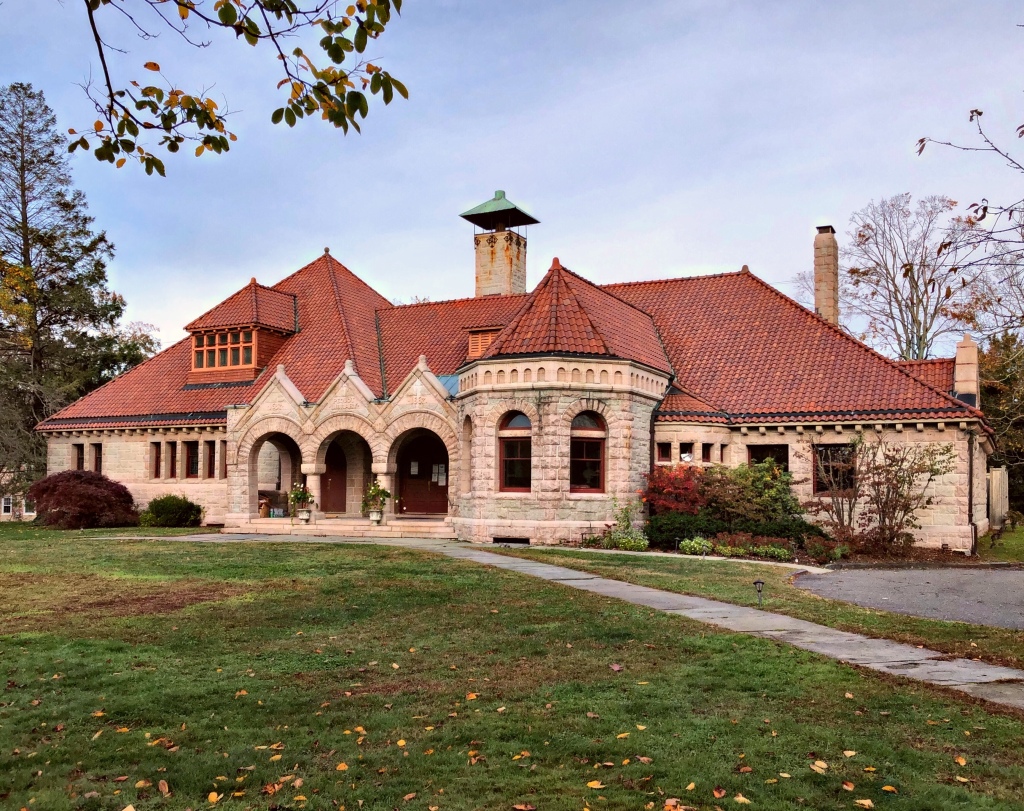
The Pequot Library in Southport, Connecticut was founded in 1889 by Virginia Marquand Monroe and her husband Elbert B. Monroe. The library, designed by noted New York City architect Robert H. Robertson, opened to the public in March 1894. The building is Romanesque Revival in style in a granite sandstone construction. There is an expansive roof area topped with red tile and hipped dormers; an arcaded entrance porch with three arched openings serves as the focal point of the front facade. It was Mrs. Monroe’s intention that Pequot be as “free as air to all”, which it remains as to this day.

Abbott Memorial Library // 1905

Gifted to the town of Pomfret by Ira Abbott, the Abbott Memorial Library is one of the most stunning little libraries in the State of Vermont. Given to his hometown as a memorial to his parents by Ira Abbott, who was at that time a State Supreme Court justice in the territory of New Mexico. Its architect, Henry M. Francis, used diverse materials — brick, granite, fieldstone, red birch, and pre-stressed concrete, to design the eclectic building. Capped with a red slate roof with terra cotta ridge tiles, the building stands out as one of the most unique buildings in the state and has been extremely well-maintained through its public-privately funded Commission.

Old Kent Memorial Library // 1899

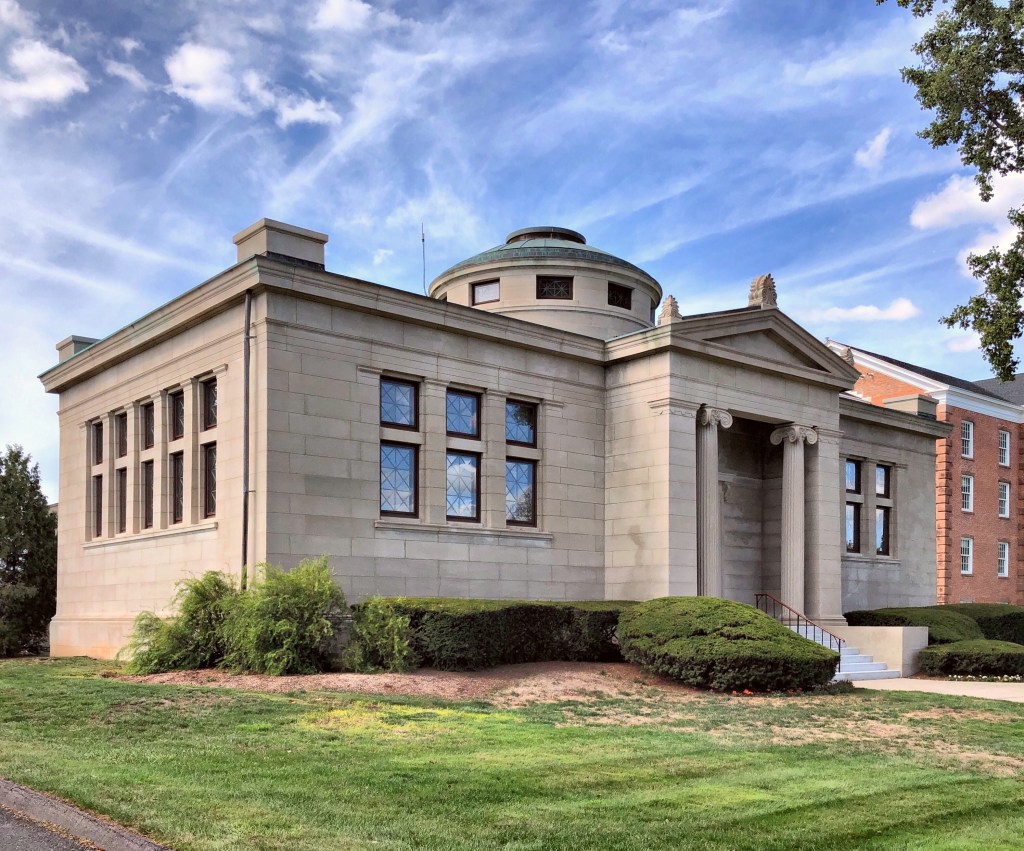
In 1897, Sidney A. Kent, a Suffield native, graduate of Suffield Academy and successful Chicago businessman sought to build a $35,000 library as a memorial to his parents in his home town. Land was purchased from the academy, demolishing a significant academic building, and the new Kent Memorial Library erected. Kent hired architectural giant Daniel Burnham (architect of the famous Flatiron Building in Manhattan) who also designed Kent’s home in Chicago. It sat on the site of land purchased by the first Kent ancestor in Suffield. Sidney Kent furnished nearly 7000 books and periodicals and left an endowment of $25,000. The building was dedicated on November l, 1899. It was eventually outgrown and a new building was constructed across the street.