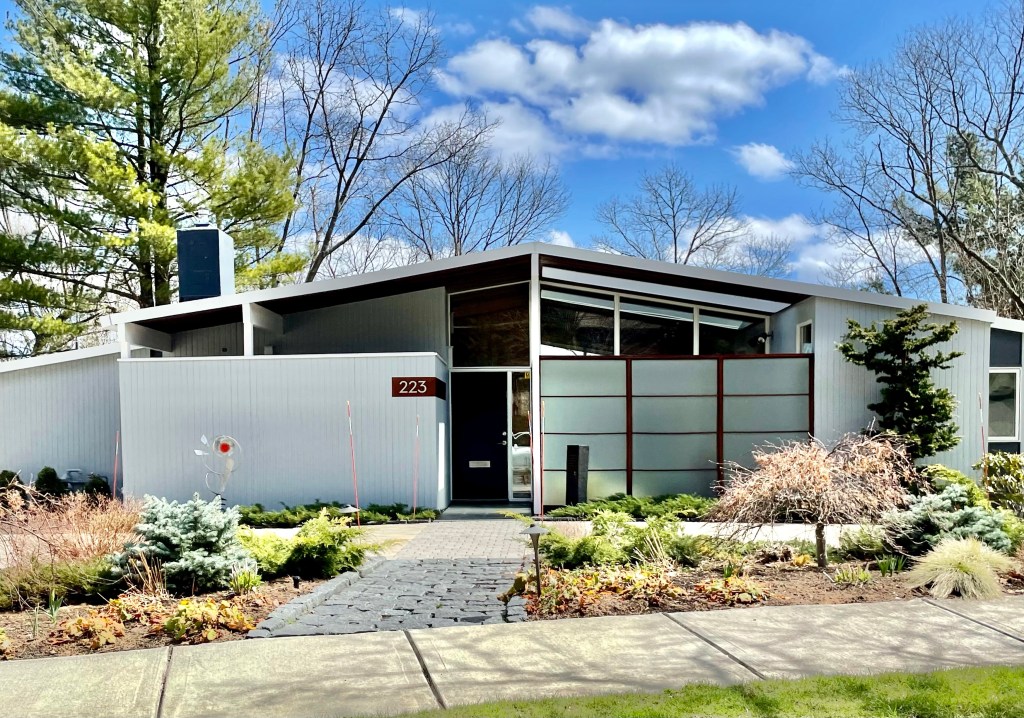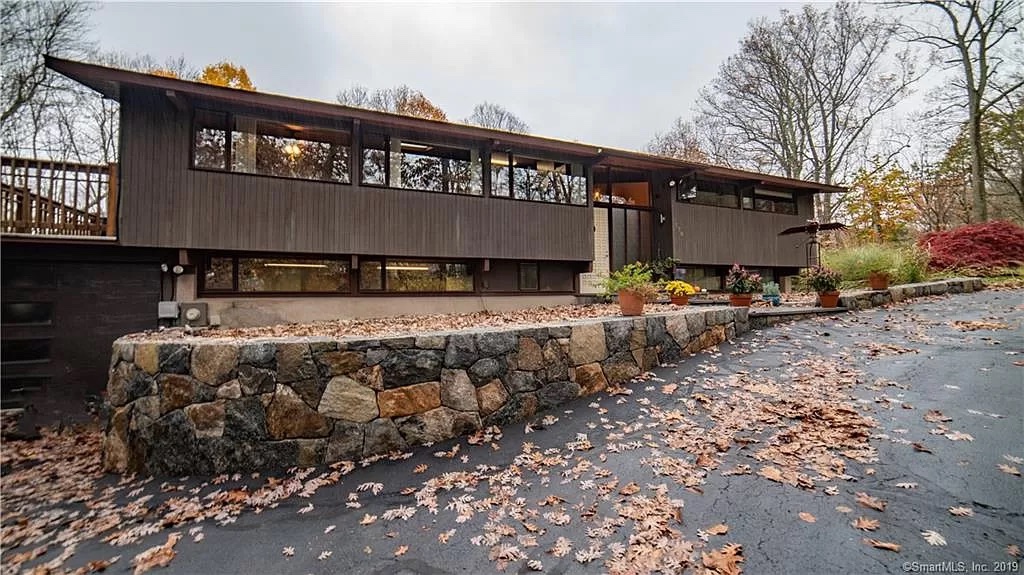
Dublin Hill Deck House // 1974

I don’t share Mid-Century buildings on here enough, mostly due to the fact that so many of the houses of the period are secluded down winding driveways and surrounded by trees! This stunning house is located in Southbury, Connecticut, and is a great example of a Deck House. The Deck House was a housing type developed by architect Carl Koch. According to At Home With Tomorrow, he began his lifelong mission to create “the good, the beautiful, and the inexpensive” in housing while at Harvard under the guidance of Walter Gropius, who is famous for the development of the Modernist Movement in architecture. After the war, he turned his focus on the housing shortage, a symptom of the Great Depression, WWII, and returning Veterans with growing families and VA mortgage loan offers. His solution was for an affordable house of pre-fabricated parts to cut costs and provide streamlined construction. In 1953, his Techbuilt house was launched, after a decade of research. William Berkes and Robert Brownell had worked with Koch at Techbuilt after graduate school, but wanted to create a design of their own. They left Techbuilt in 1959 and founded Deck House, using the same principles. The exposed Douglas fir beams, wood panel ceilings and mahogany trim and window casements are what give the deck house a lot of its signature aesthetic. A wall of glazing, open floor plan with sloping roof rafters extending beyond the walls and a low placement in seemingly untouched nature are further elements that have endeared these houses to the modern homeowner.

Wolfers House // 1947

In 1947, world-famous German-born architect Walter Gropius and his architectural group, The Architects Collaborative (TAC) were commissioned to design a simple summer house for his friends Arnold Wolfers, a noted political scientist, and his wife, Doris, whose father was president of the Swiss Parliament. The site was a wild bluff on the end of Naskeag Point in Brooklin, Maine, with broad views of Blue Hill Bay and Mount Desert Island in the distance. The Wolfers’ wanted a house that was not a typical shingled house, provided sweeping views of the natural scenery, and also fit within its surroundings. Gropius nailed it with this house. As originally built, the house was comprised of a main block with large living room, kitchen, laundry room, service hall, and bathroom. A breezeway connected the house to a wing of three bedrooms along a long corridor. Walls of glass frame the waterfront side to take advantage of the views, while the street-facing facade has less glazing to provide additional privacy. After Doris Wolfers’s death in 1987, the house was purchased by an investment banker and his wife and it was listed for just the third time in over 75 years, and has maintained its architectural integrity the entire time.

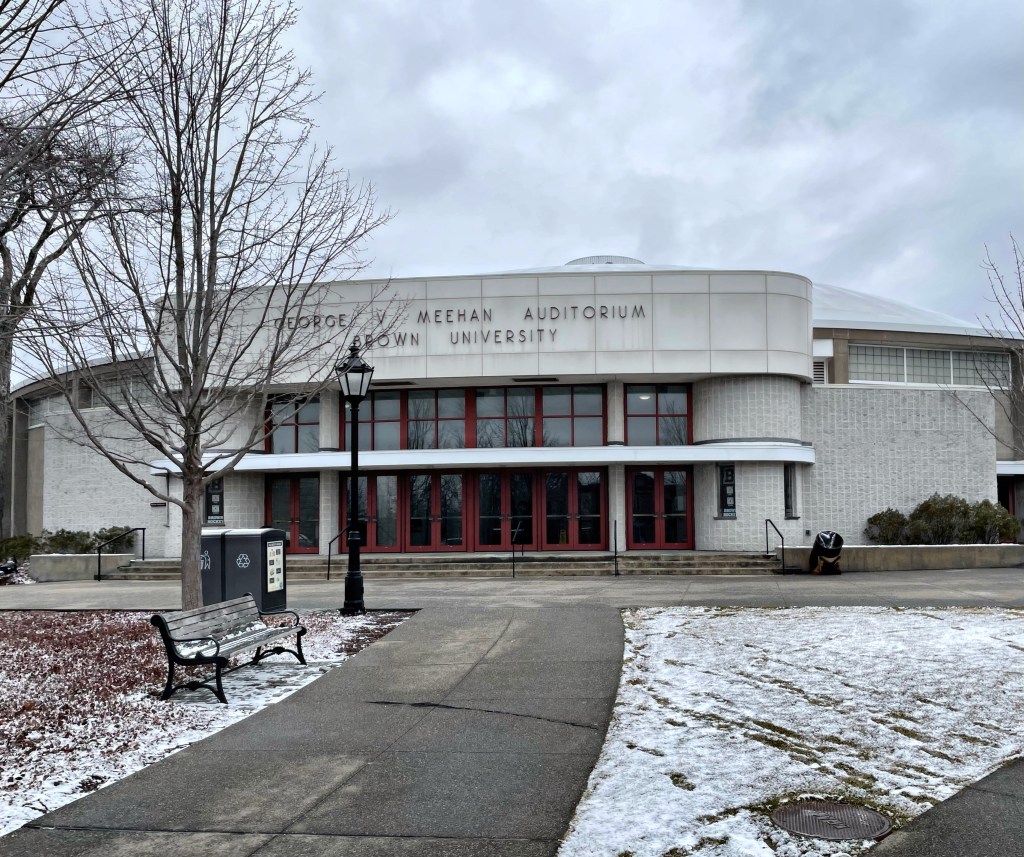
Meehan Auditorium – Brown University // 1962

Across from the new Nelson Fitness Center at Brown University in Providence, Rhode Island,Meehan Auditorium is an excellent example of a 1960s institutional athletic facility. The auditorium was dedicated at the Brown-Princeton hockey game on January 6, 1962 and was named after George V. Meehan, donor of half a million dollars for its construction. The new facility filled the need for a skating rink and large auditorium for indoor functions, specifically for ice skating and hockey and was the first building of the new athletic plant at Aldrich-Dexter Field east of the campus. The building was designed by Perry, Shaw, Hepburn & Dean, a prominent firm who designed many collegiate buildings in the 20th century, all over New England.

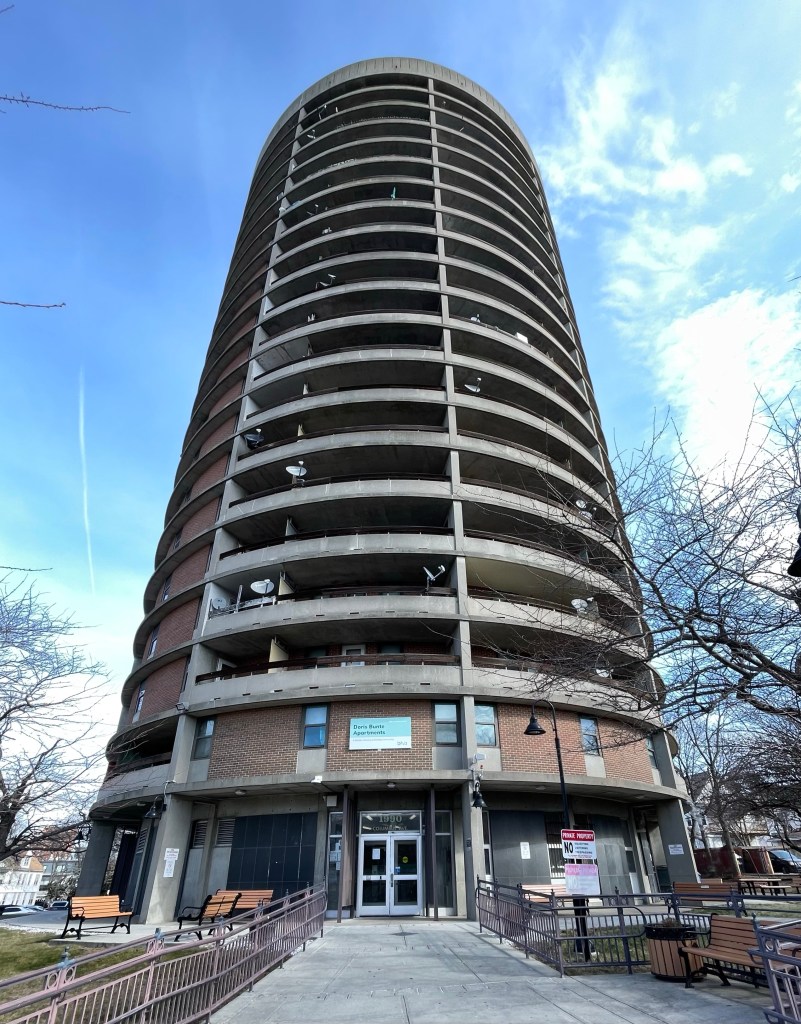
Doris Bunte Apartment Tower // 1967

In the second half of the 20th century, parts of Boston saw disinvestment by private property owners as well as local and state government. With people leaving Boston for the suburbs, the hemorrhaging of tax revenue led urban planners to go big and institute ‘Urban Renewal‘ policies and planning to demolish what they believed to be substandard housing and invest in Modern apartments and car-oriented developments. The triangular shaped new community was as comprehensive as any urban renewal district in the region; indeed of the ten General Neighborhood Renewal Plans created by the BRA in 1961, Washington Park was the most self contained Urban Renewal District in the city. It included new police and fire stations, a courthouse, two public libraries, a shopping mall, a health center, elementary school and five garden style housing developments totaling almost 2000 apartments or townhouses. At its completion in 1975, $70.4 million had been invested to build the new community of which $31. 3 million came from the federal government. Part of this massive undertaking was the construction of elderly housing, which resulted in this 20-story cylindrical tower at the southernmost edge of the Urban Renewal area. The tower was constructed between 1967 and 1970 and was designed by Boston-based architectural firm Richmond & Goldberg, led by Isidor Richmond and Carney Goldberg. Apartments were “integrated” with with 70% Black and 30% White residents, all with private balconies and an emergency pull-chain system in kitchens and bedrooms for the elderly residents. As far as mid-century apartment towers go, this one is pretty interesting and unique. The building was renovated a few years ago and renamed the Doris Bunte Apartments. In 1969, Buntè was nominated to the Boston Housing Authority board, making her the first female public housing tenant to serve. In 1972, she was elected to the Massachusetts House of Representatives, becoming the first woman of color to serve in the Massachusetts legislature, and the first female to serve in the House leadership in 68 years. While there, Buntè helped found the Black Legislative Caucus and the Caucus of Women Legislators.

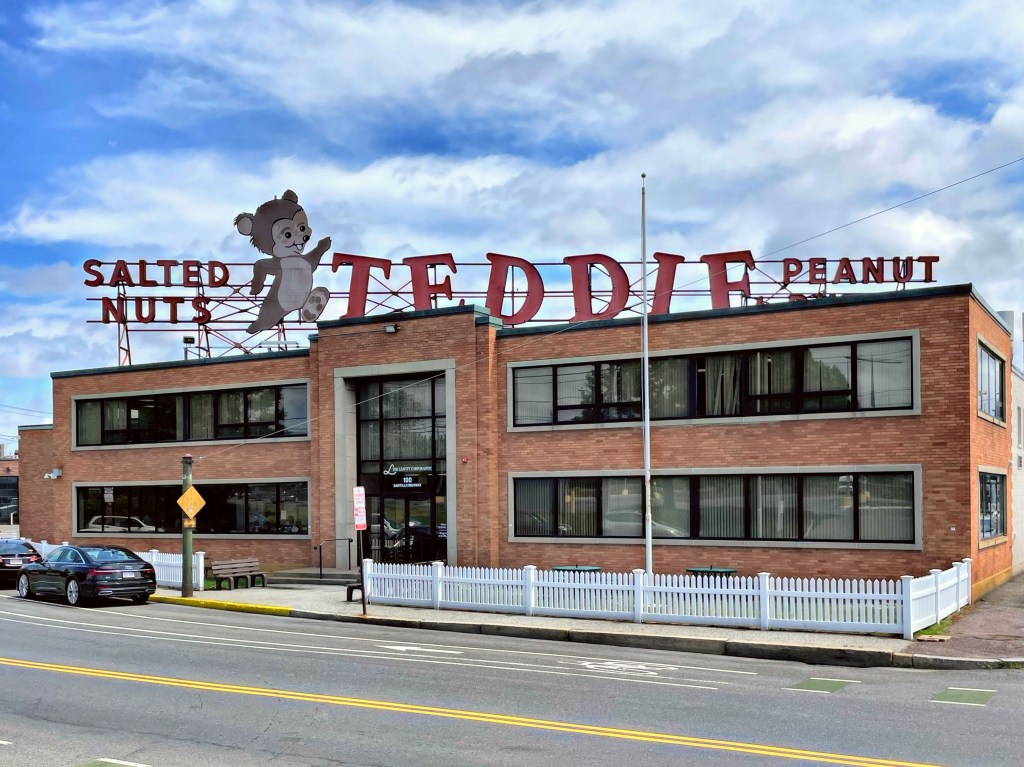
Leavitt Peanut Butter Company Factory // 1958

One of the most iconic buildings in Everett, Massachusetts is the “Teddie Peanut Butter” building, in the brewery/distillery district of the city (home to Night Shift Brewery, Bone Up Brewing Company, and Short Path Distillery). The building is best-defined for its massive Mid-Century rooftop sign with the cute teddy bear. The building was constructed by the Leavitt Peanut Butter Company in 1958, but the company had its beginnings nearly a half-century earlier. The Leavitt Corporation had its beginnings in 1897 when Sarkis Shaghalian, a European immigrant, started manufacturing candy and roasted nuts in Boston. In 1916, Michael Hintlian took over the company and in 1925, established a separate corporate entity specializing in peanut and nut products, the John W. Leavitt Company. The company did extremely well in its Boston location, eventually outgrowing their State Street buildings. In 1959, the company hired an industrial realtor, who found the Everett facility – a recently constructed building with Modern finishes and design. In 1959, Leavitt Corp. signed a lease and moved in by 1960, adding the rooftop sign at that time. The sign used to have neon strips, but was eventually removed.

Everett City Hall // 1960

Welcome to Everett, Massachusetts, a diverse, vibrant community of roughly 50,000 residents just north of Boston. Present-day Everett was originally part of Charlestown, which separated and became Malden. In 1870, the Town of Everett separated from Malden and was so-named after former Charlestown resident Edward Everett (1794-1865) who served as U.S. Representative, Senator, the 15th Governor of Massachusetts, U.S. Secretary of State and as President of Harvard University. From 1894, the Town (later City) Hall was located in the Hapgood Building, but was outgrown after WWII. In 1960, ground was broken for a new, Modern City Hall for Everett, with Harold Michael Turiello (1910-2001) of Revere, as architect. Everett City Hall (love it or hate it) is a testament to Mid-Century Modern/International style design with curtain wall construction originally included bright blue panels which were recently replaced with a bland white panel color.

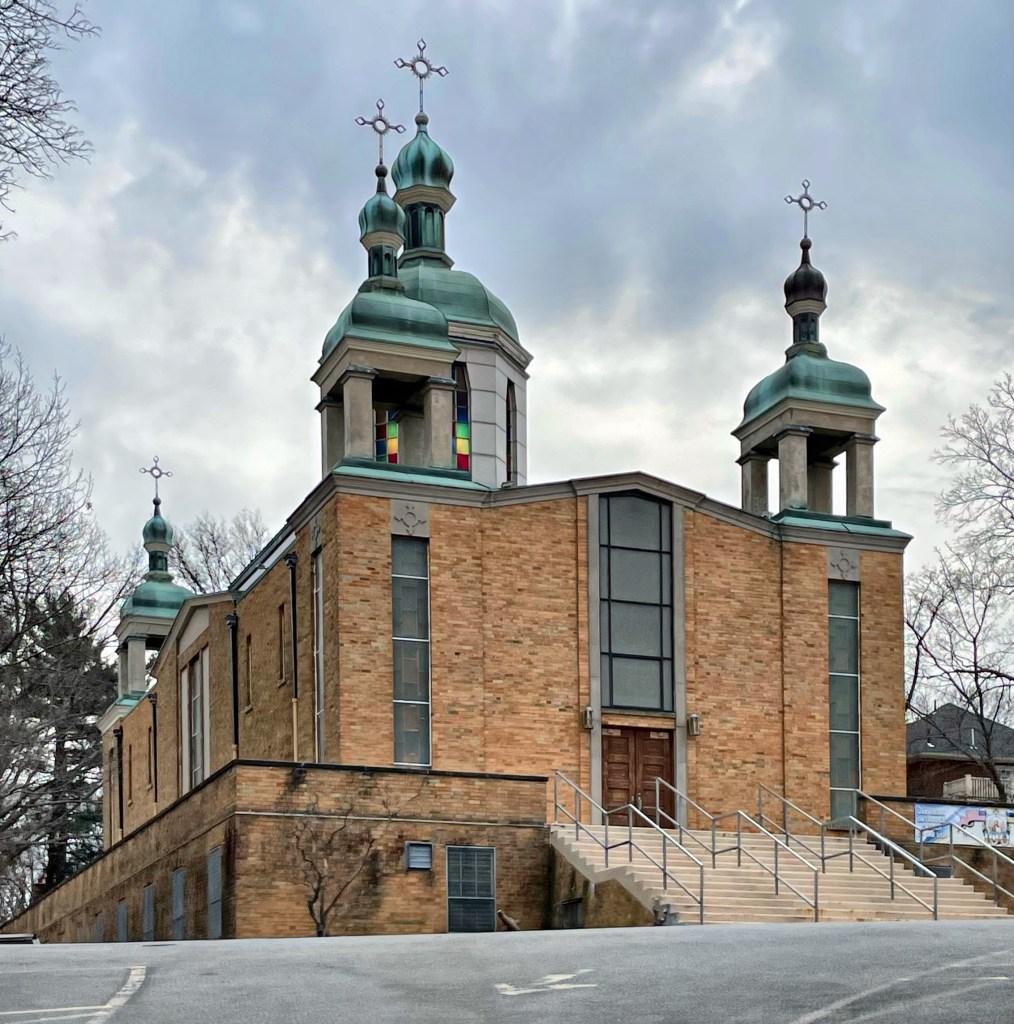
St. Andrew Ukrainian Orthodox Church // 1958

I typically do not connect my posts to current events, but I really wanted to take time to highlight the strength and fortitude of the Ukrainian people fighting to preserve their home and democracy around the globe. Closer to home, a growing Ukrainian community in Boston in 1956, decided to erect a new church in the Forest Hills section of Jamaica Plain. Land was acquired and a blessing ceremony was attended by members of the church, the architect, and Reverend John Theodorovich; the head of the Ukrainian Orthodox Church of America, who was born in Ukraine, and served at chaplain with the Army of the Ukraine National Republic in the war against Russia in 1919-20, before eventually moving to North America. The architect, John Kodak, was a Toronto-based architect of Ukrainian descent who ended up in Canada after fleeing from his home to escape communist rule from the USSR. This church is a Modernist interpretation of the iconic St. Andrew’s Church in Kiev, Ukraine, with its onion domes surmounted by crosses. The church, like many others, is holding prayers for Ukraine and is coordinating donations and aid to the Ukrainian people and related charities.

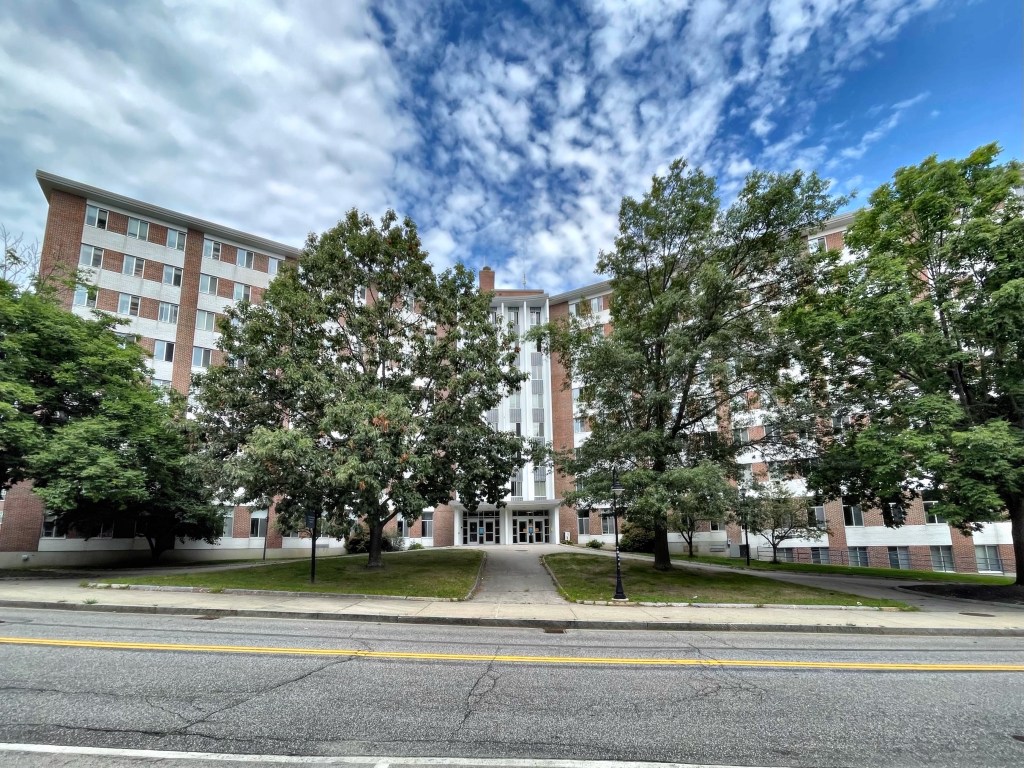
Stoke Hall – University of New Hampshire // 1965

One of the most recognizable buildings (largely due to height) on the University of New Hampshire campus in Durham is Stoke Hall, a large dormitory on the outskirts of campus. The building was designed by Leo Provost, a New Hampshire-based architect, who actually graduated from UNH in 1936. Stoke Hall is named for Dr. Harold Walter Stoke, President of the University of New Hampshire from 1944-1947 during an enrollment surge that more than tripled enrollment and the beginning of a massive building program that continued for decades. The surge began with the conclusion of WWII, and the increase in young men going to college thanks to the GI Bill. Mr. Stoke got around as a President, as after three years at New Hampshire, he became President of Louisiana State University (LSU) until 1951. He later served as President at Queens College, New York, for six years. The Y-shaped building was constructed in two phases, the two wings facing the street were built in 1965, with the rear wing added the summer later. The design blends mid-20th century styles from New Formalism to Mid-Century Modern in a graceful way, especially for a college dormitory, though, I cannot speak for the interiors.

George Kaplan House // 1946

The George Kaplan House, erected in 1946, is an excellent and exceptionally well preserved example of the International Style in the Boston area. The home is located on a suburban road in Oak Hill, Newton, and displays characteristics such as strong geometric forms, a flat roof, banded windows interspersed with expanses of blank walls and absence of ornament. The Kaplan House was designed by Walter Gropius‘ firm ‘The Architect’s Collaborative’ (TAC) of Cambridge, which was founded just one year prior, and this home was their first completed project. The home was built for George and Ethel Kaplan, a young couple who moved here from Brookline. Kaplan worked in design himself and manufactured shoe fabrics.

Baldpate Road House // 1959

Occupying the highest elevation (315 feet) in Newton, Massachusetts Baldpate Hill and its residential development encompasses perhaps the largest concentration of architect-designed custom homes from the 1940-1960 period
in the city. Newton realtor Arnold Hartmann purchased large land holdings in the minimally developed Oak Hill village, developed some land into the Newton Country Club and other areas for suburban neighborhoods. He laid out building lots on Baldpate Hill from 1926 to the late 1950s, and many of the homes were built after WWII. One of the later homes built is this house, built in 1959 from plans by the architectural firm of Hoover & Hill of Cambridge. The home features a low-slung roof with the home in a Ranch form, yet extends to two stories as the hill drops off at the rear of the home. A small garden is located in the front yard, and terraced yard is located at the rear.