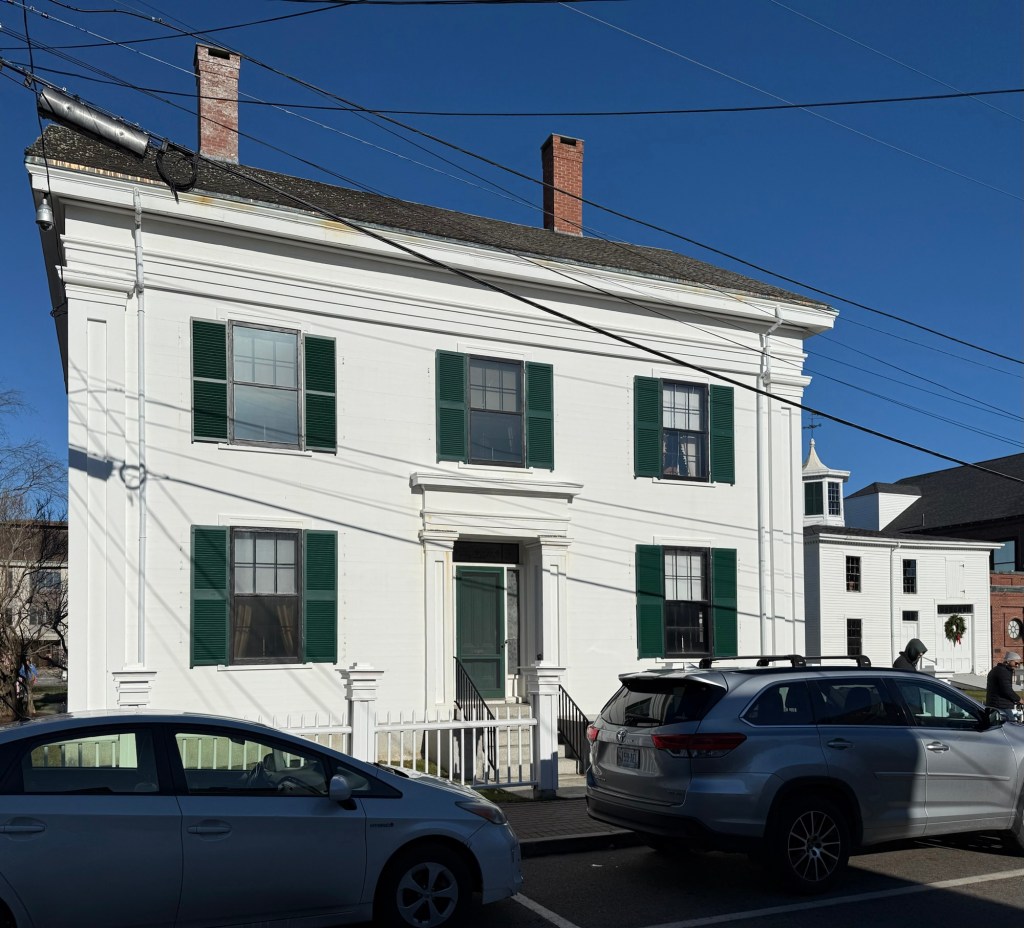
Farnsworth Homestead // 1850

The Farnsworth Homestead is located on Elm Street in Downtown Rockland, Maine, and is an excellent example of a mid-19th century residence in the Greek Revival style. The home was built in 1850 for Rockland businessman William Alden Farnsworth, who gained his income from lime-rock quarries and the Rockland Water Company. Mr. Farnsworth was a leading businessman who helped establish Rockland as the number four port in the United States, largely exporting lime for masonry construction all down the east coast. After William died in 1873, the property was inherited by his heirs, the last of which, Lucy Farnsworth, lived here until her own death in 1935. The 96-year-old Lucy Farnsworth died in the home and in her will, bequeathed the family property and ample funds to establish the Farnsworth Art Museum, and included preservation of the family homestead as a mid-19th century house museum, which it remains to this day. The Greek Revival style house with its flushboard siding and bold pilasters, was recently restored by the museum, along with the carriage house which stands to its east.
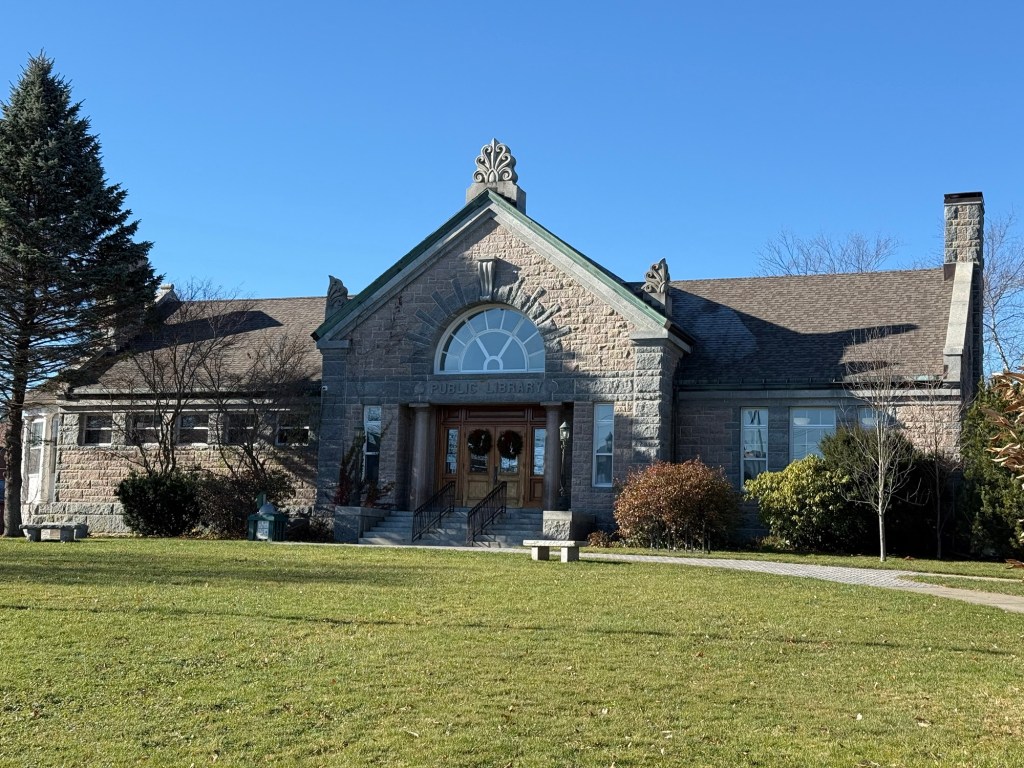
Rockland Public Library // 1903

The Rockland Public Library in Rockland, Maine, is an architecturally significant civic building that showcases the coastal town’s prosperity at the turn of the 20th century. The library was built in 1903–04, and was funded in part by a $20,000 grant from Andrew Carnegie. It is the city’s only major example of Beaux Arts architecture, a style that is also uncommon in the state. The library was designed by Maine native George Clough, who used granite quarried from nearby Vinalhaven in its construction. The building was later expanded by an addition at the rear, but from the street, the handsome Beaux Arts library looks near-identical as to when it was built over 120 years ago!

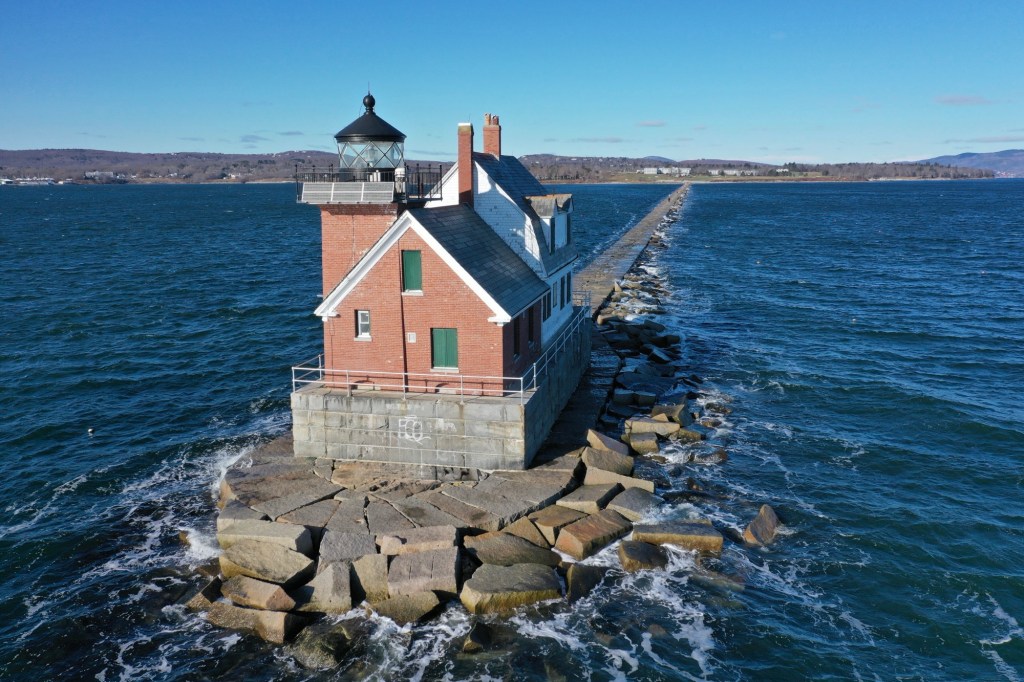
Rockland Harbor Breakwater Light // 1902

The Rockland Harbor Breakwater and Lighthouse is arguably the most iconic structure in the coastal town of Rockland, Maine. As Rockland was a major port and harbor, relying on the transportation of lime and shipbuilding for its economy, protecting the harbor was of paramount importance. Major storms in the 1850s highlighted the need for improved harbor protection, but federal appropriations for a breakwater were not approved until 1880. Between 1880 and 1900 the United States Army Corps of Engineers, under a series of Congressional appropriations, built the breakwater, a 4,364 foot long wall in the harbor built of locally quarried blocks of granite. It is truly a feat of engineering! The lighthouse standing at its end was added in 1902. The iconic breakwater is accessible by those who brave the crashing waves and distance to the end of the nearly mile-long walk out to the lighthouse. The structure is today maintained by volunteers and the City of Rockland.

Rockland Railroad Station // 1917

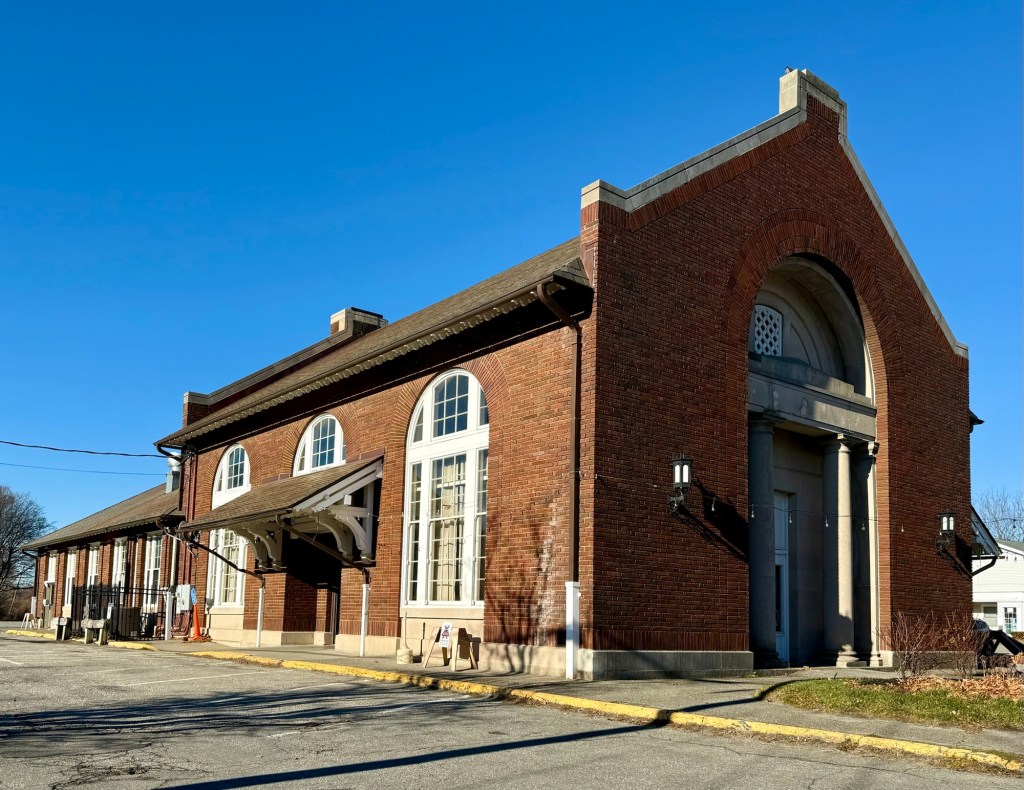
Welcome to Rockland, Maine! Originally called Catawamteak by the Abenaki, meaning “great landing place”, Rockland was first settled by European settlers in In 1769 as a camp to produce oak staves and pine lumber. In 1777, when Thomaston was incorporated, present-day Rockland became a district called Shore village. In 1848, it was set off as the town of East Thomaston and renamed Rockland in 1850. The coastal community grew quickly as a shipbuilding and lime production center, with upwards of 300 vessels to transport the mineral to various ports in the country for the building of communities all down the coast. The opening of the Knox and Lincoln Railroad in 1871 brought an influx of tourists and businesses, creating a development boom for the community. The line was leased to the Maine Central Railroad in 1891, which took over ownership in 1901. The Rockland Railroad Station, seen here, was built in 1917, just before the government took over the railroads during World War IArchitects Coolidge and Shattuck designed the station in the Romanesque Revival style with the oversized arched openings at the windows and main entrance. The rise of the automobile industry would further harm rail service and usage, and the Rockland Branch officially closed in 1959. The old Rockland branch station operated as the Rockland Town Hall for decades and is now occupied by a local restaurant, Trackside Station.

Boothbay Harbor Bridge House // 1902

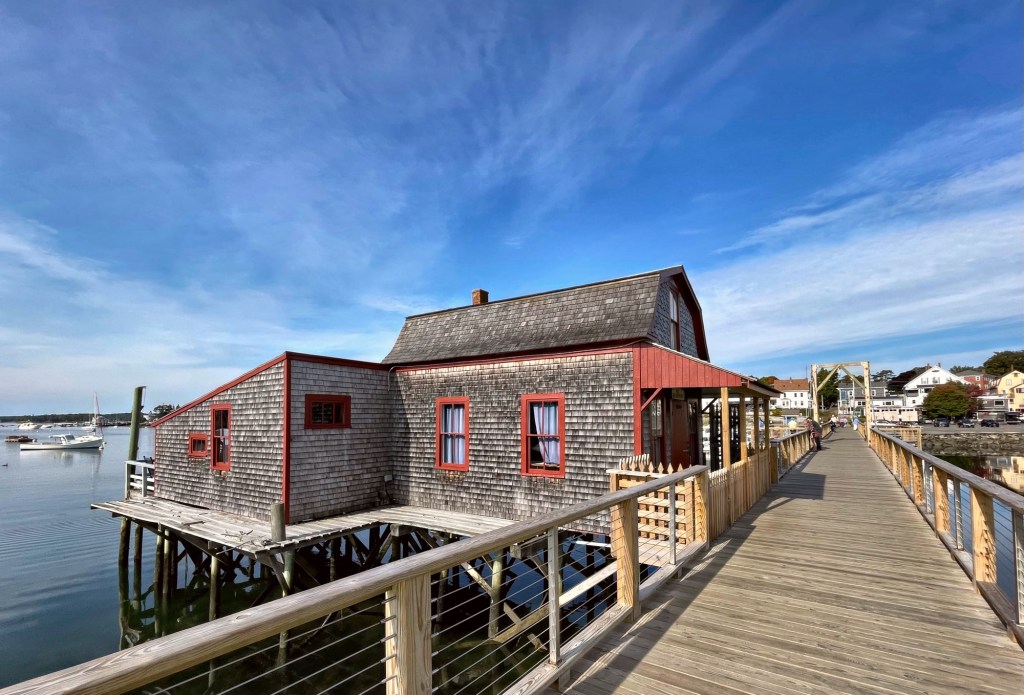
In 1901, a footbridge was built in Boothbay Harbor, Maine, connecting the downtown area with the Mt. Pisgah and Spruce Point areas, which both developed as summer colonies. Within a year, this bridge house was built and occupied by William Foster, the bridge-tender who likely operated some sort of swing to allow vessels to pass by until the footbridge was largely replaced after the Great Freeze of 1918, without a swing or draw. When Mr. Foster operated the footbridge, others in town suspected some wrongdoing. A local selectman began investigating and as the story goes, Mr. Foster had been smuggling liquor into town via ships to this bridge house through a trap-door in the floor of the building. Maine was a dry state, and William would have been able to bring in illegal alcohol to the town. Later uses of the building included a candy shop, gift shop, and the bridge house is now a private residence, with thousands passing by every summer.

Vesper Hill Children’s Chapel // 1960

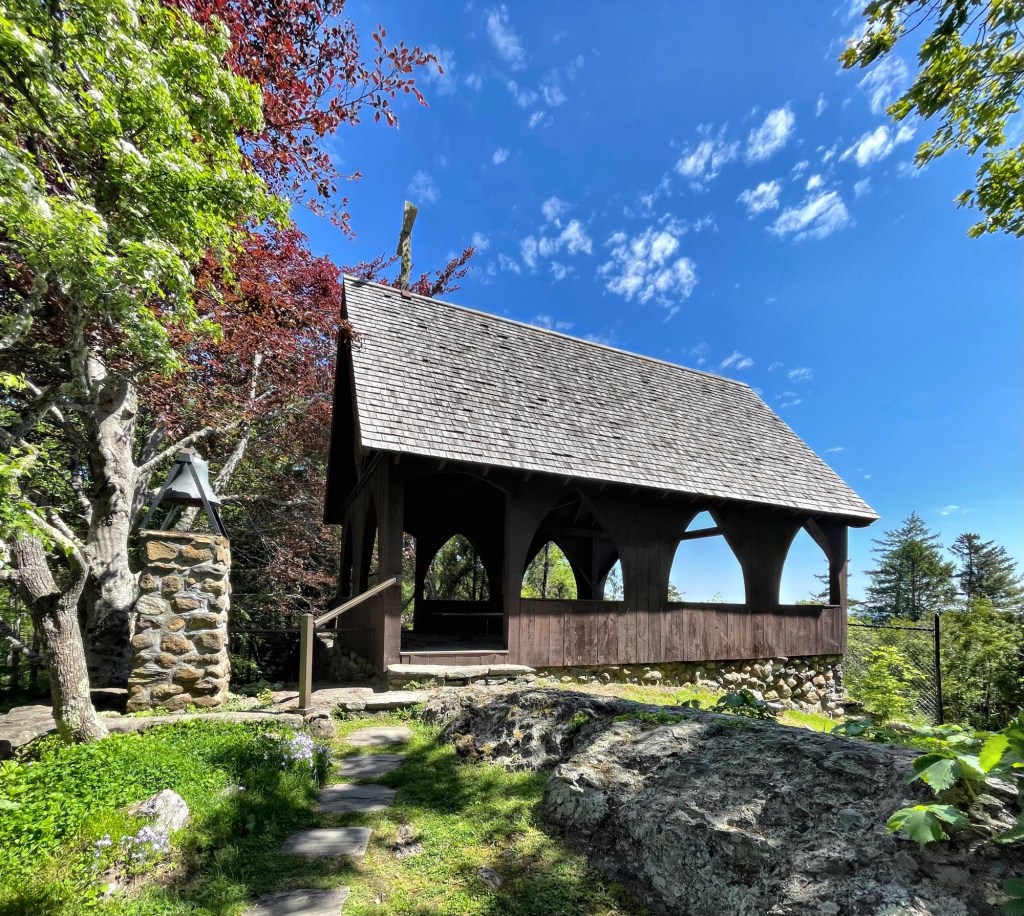
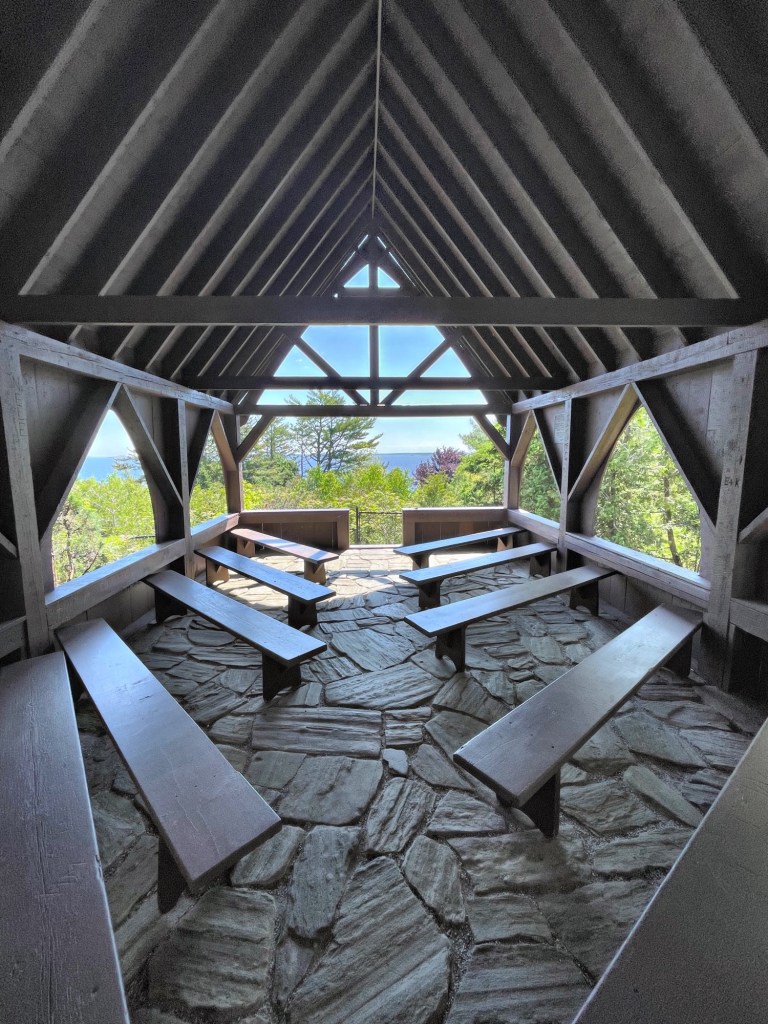
After the Tamarack Lodge hotel of Rockport, Maine, burned down in 1954, nearby resident Helene Bok began to envision what would be the best use of the charred landscape. Her project became the Vesper Hill Children’s Chapel, an absolutely stunning outdoor chapel that is open to the public. Her dream was to build a refuge that would be open for all people and “speak in and of itself of the beauty, goodness and truth of nature, life and God.” It is not clear to me who the designers were, but the structure and grounds are elegantly sited on the hill, overlooking the harbor in the distance. Helene planned the chapel to partially sit atop the rustic stone foundation of the former hotel on the site, with an open post-and-beam wooden structure above. After Helene’s death, Elmer Crockett, a designer for years on the Olmsted staff in Maine, oversaw the grounds and maintained a biblical herb garden. The chapel is today approached by a roofed stairway and surrounded by mature trees and locally harvested stones. It is truly a hidden gem in Mid-Coast Maine.