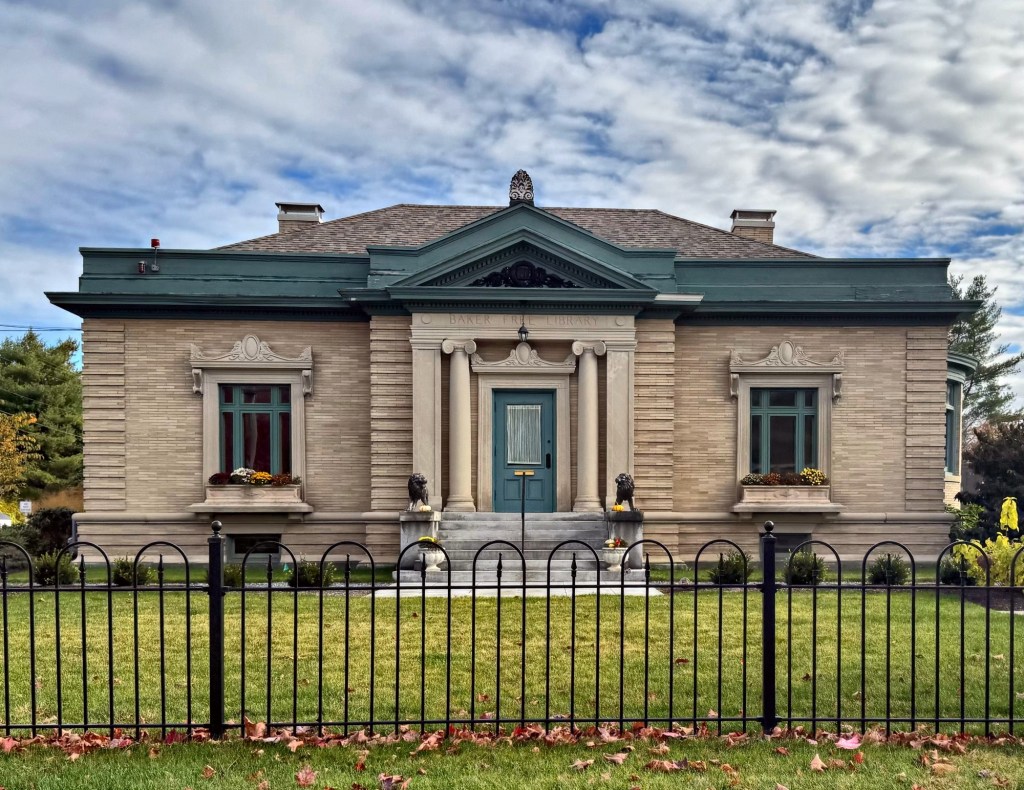
In 1912, Congressman Henry M. Baker, cousin of Mary Baker Eddy, the founder of the Church of Christ, Scientist, left in his will, $10,000 and the land next to his family home to the Town of Bow for the creation of a public library for his hometown. Architect, William McLean formerly of the firm, McLean and Wright, who specialized in library designs of the early 20th century, was selected to furnish plans for Bow’s new library, which employs a sort of Classical Revival/Beaux Arts design, similar to many Carnegie libraries of the time. As the town grew, the library has been expanded.
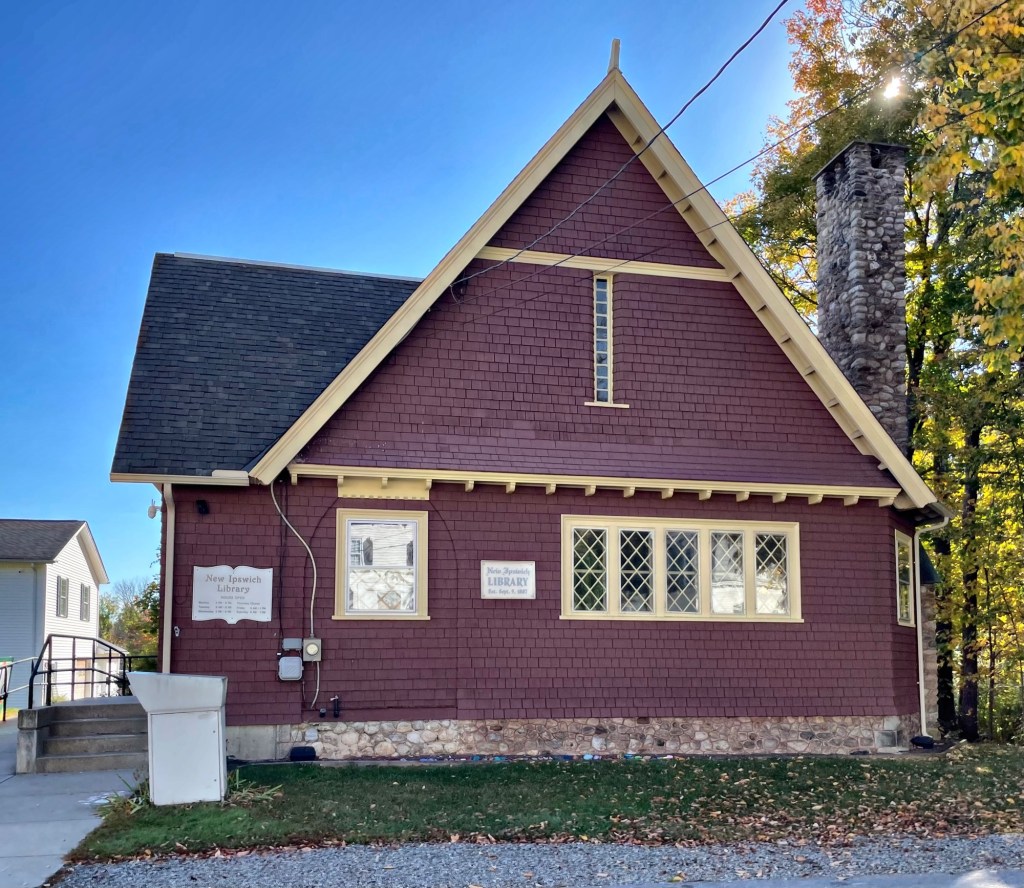
The New Ipswich Public Library is a one-story Shingle style building on Main Street in the charming village of New Ipswich, New Hampshire. The library building was likely designed by Ernest M. A. Machado, one of the best, and relatively unknown architects of the late 19th and early 20th century in Salem. The entrance which faces the side, is flanked by two diamond-pane windows, which can also be found on the primary facade. A special ten-light vertical window is recessed within a shingled depression in the gable, which adds some complexity to the design.
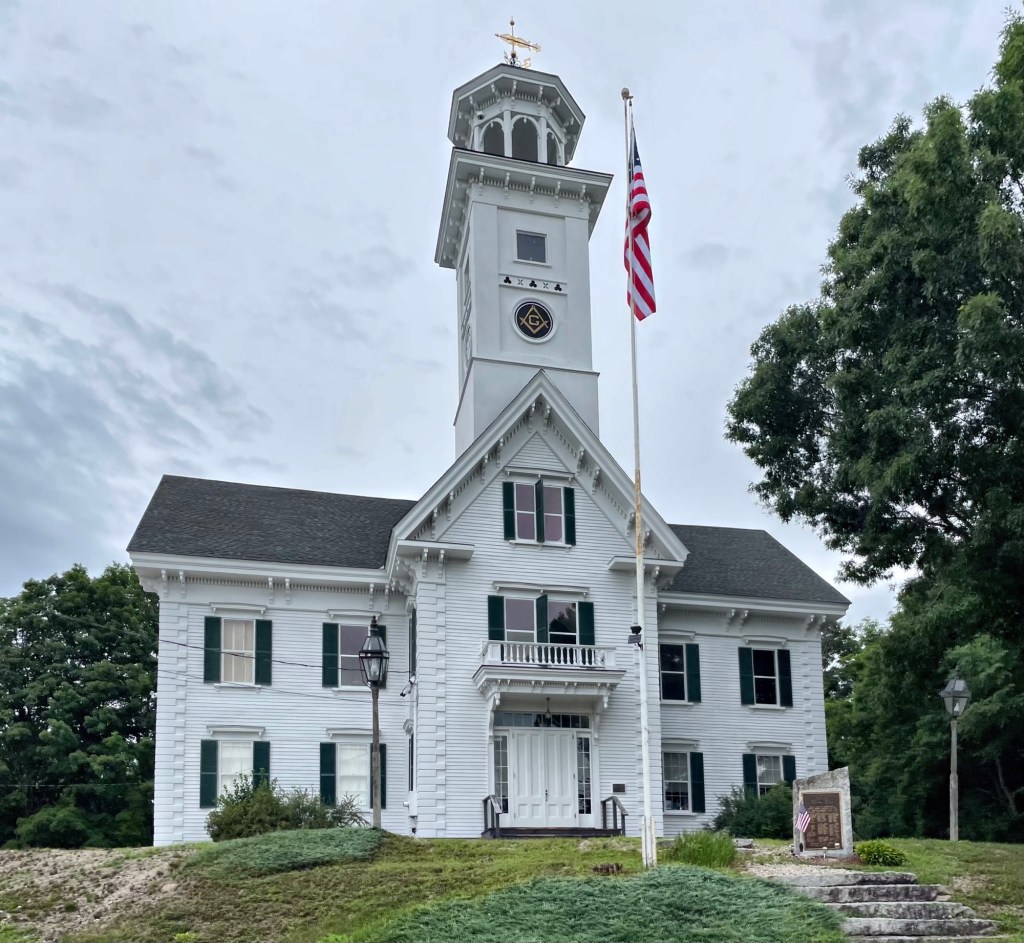
The New England Masonic Charitable Institute building is located in Center Effingham, New Hampshire, and is among the rural town’s most impressive structures. The structure was built in 1858 by the Charter Oak Lodge No. 58 of Free and Accepted Masons as a school to educate orphans of Masonic members, but they also admitted local students. It is the only known school building purposely constructed by Masons in the United States. Classes were conducted from 1861 to roughly 1882 with students boarding with local families. The impressive Italianate style building is dominated by a six-story bell tower supporting an octagonal cupola, and exhibits many architectural details including the corner quoins, paired eave brackets, and dentilled cornice. Charter Oak Lodge No. 58 sold the building to the Town of Effingham in 1891 for one dollar but retained rights to the second floor temple room in perpetuity. The walls and ceilings of the Lodge’s temple space are covered with trompe l’oeil murals attributed to Massachusetts painter Philip A. Butler. Images of classic sculptures, architectural details and Masonic symbols, including the All-Seeing Eye, are incorporated into the paintings. Heavily water-damaged in the late 1980s, they have since been restored. The building remains occupied by the Effingham Public Library, what a library building for a town of just 1,700 residents!
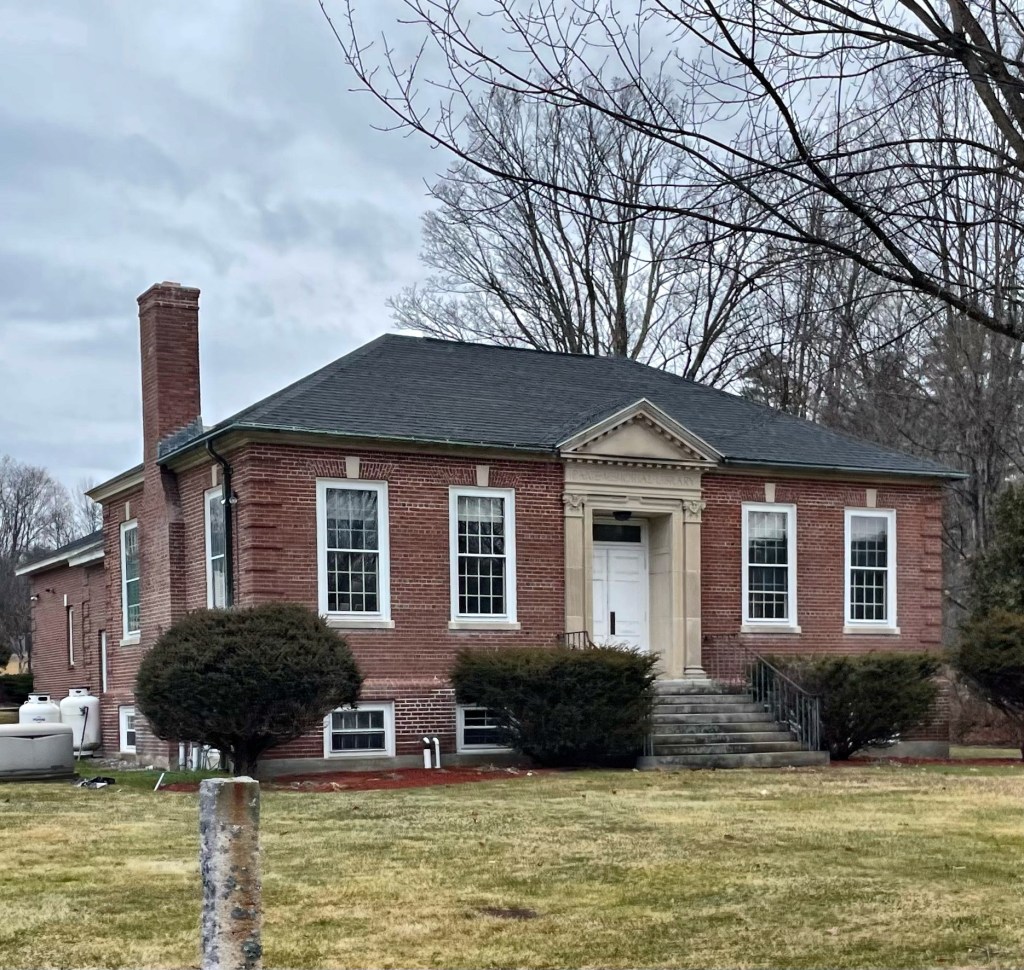
The Colonial Revival style Weare Public Library was built in 1926, being the second purpose-built library building for the town of Weare, New Hampshire. After the Neo-Classical style Stone Memorial Building was taken over as town offices following a fire of the old town hall, local resident Eben Paige saw the need for a new designated library building. Upon his death in 1923, he left his entire estate, over $30,000, to the town to build a new free library. The Boston architectural firm of Kreider and Peterson were selected to design the building, which is still in use today.
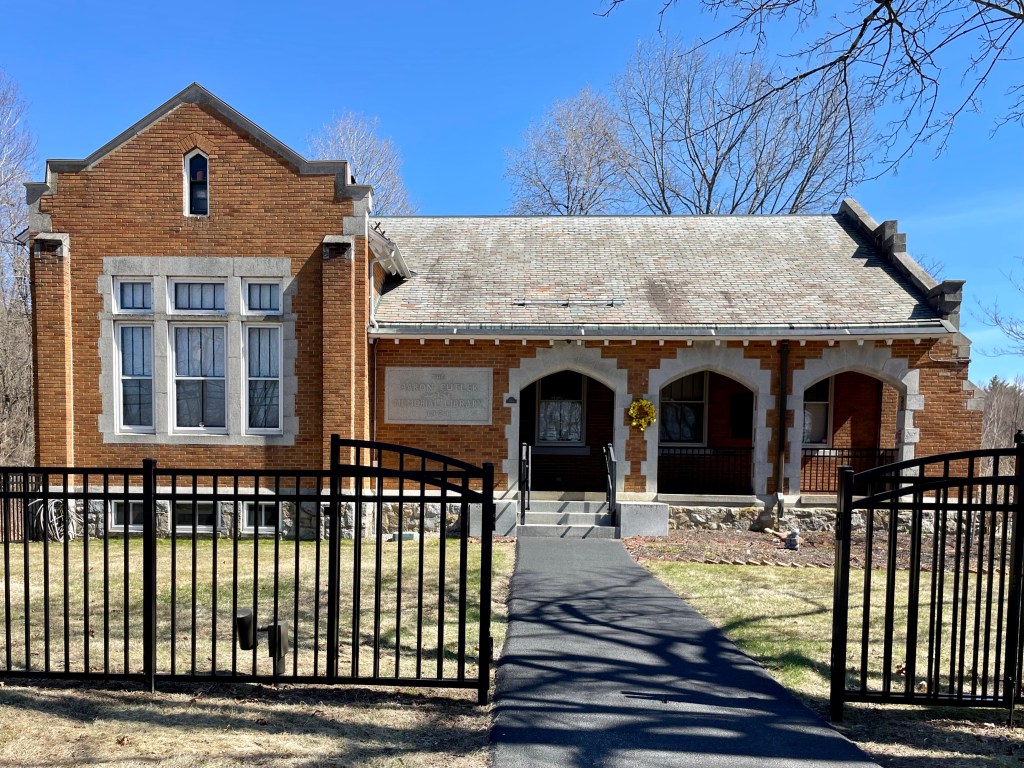
In his 1917 will, Aaron Cutler of Hudson, N.H. left his estate to family and friends with his remaining estate to be bequeathed “for the purpose of the erection, furnishing and maintenance of a Public Library, upon the express condition that the citizens of said town give land upon which to erect the same. Said land to be located within one-quarter of a mile of the town hall. Said Library to be of brick and slate. And to be known as “The Aaron Cutler Memorial Library.” His town of Hudson recently erected a memorial library, so he sought to fund a library in an adjacent municipality. Land was donated in Litchfield for a new library there and architect William M. Butterfield furnished plans for the building. The library was completed in 1924 and exhibits Tudor/English Revival design, unique for the town.
 Buildings of New England