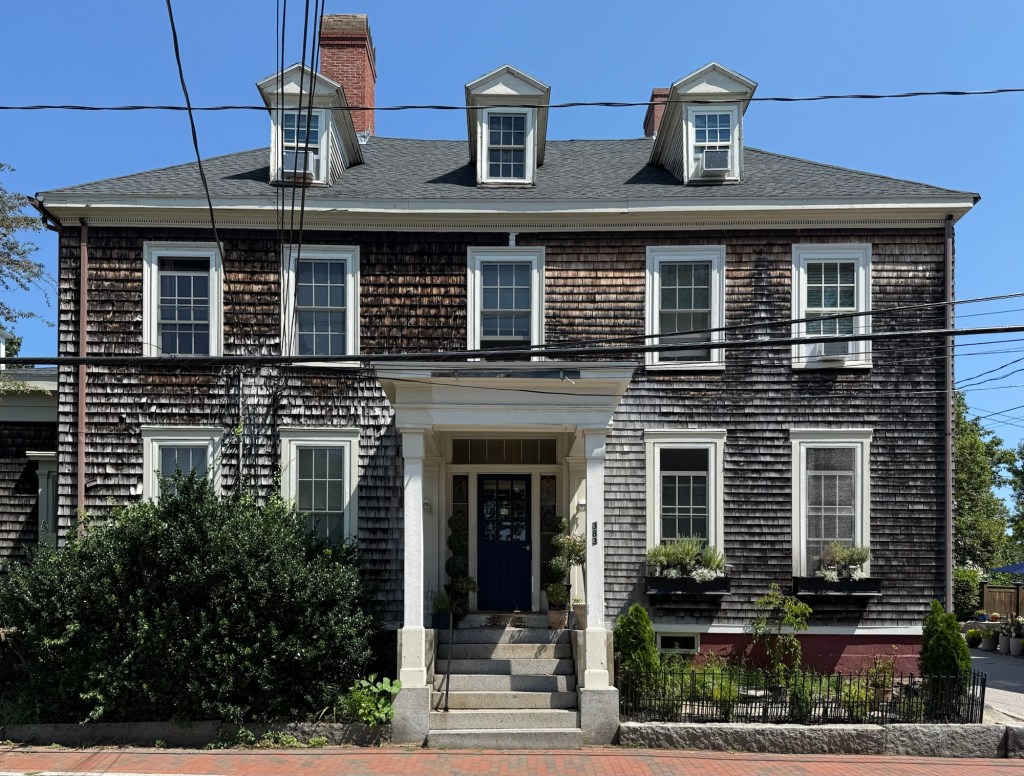
Capt. Charles Blunt House // c.1795

Master mariner Charles E. Blunt Sr. (1768-1823) built this large Federal period home on Pleasant Street in Portsmouth, New Hampshire near the turn of the 19th century for his bride, Abigail Laighton, and their new family. Charles Blunt was a wealthy sea captain who would be out at sea for months at a time, trading in the west indies. On a voyage near Havana Cuba in March, 1823, his vessel was boarded in the night by two piratical boats, with six men each, and Captain Charles Blunt was brutally murdered and thrown overboard. The ship’s cook was stabbed, and fed to the hogs on the brig, with the remainder of the crew maltreated and the goods plundered. The Captain Blunt House follows a symmetrical, five-bay, center entrance form, with cedar shake shingles, three pedimented dormers and large portico over the door.
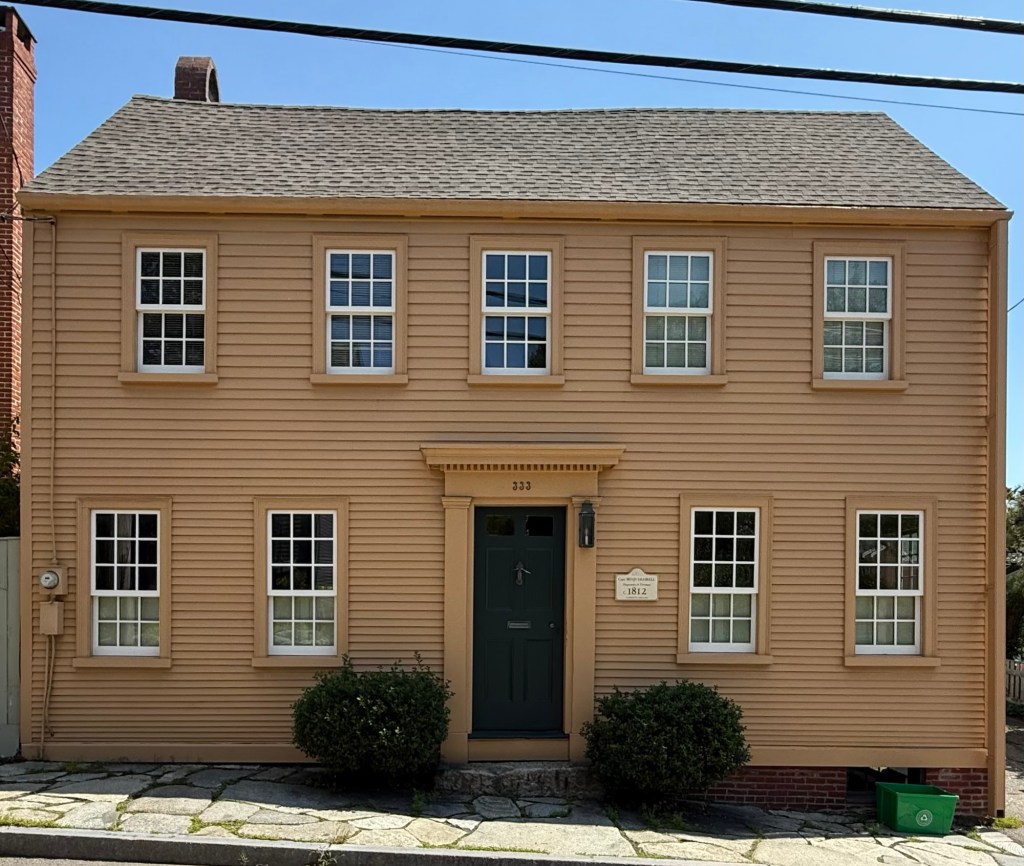
Captain Benjamin Damrell House // c.1812

The people and buildings of Portsmouth, New Hampshire, have always been closely tied to the sea. Many old houses and commercial buildings here were built for merchants, ship builders, sea captains, and fishermen, who made their living from the charming port town. This historic house at 333 Marcy Street in the Downtown area of Portsmouth, was built around 1812 for Benjamin Damrell (1781-1821) a sea captain, privateer during the War of 1812, and member of the Portsmouth Marine Society and Alert Fire Society of Portsmouth, a volunteer fire fighting group. Captain Damrell died in 1821 while at sea and his property was inherited by his widow, Lucy, who appears to have remained here for some time, raising their daughter.

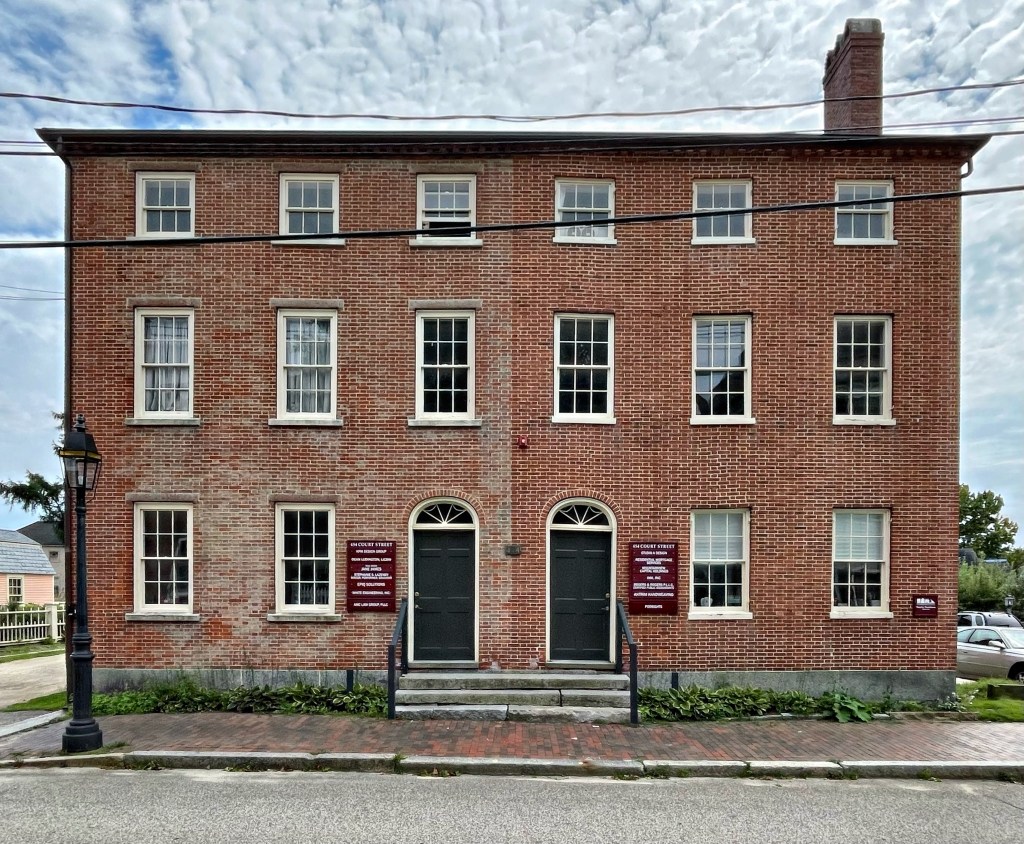
Shapley Townhouses // 1815

The Shapley Townhouses in Portsmouth, New Hampshire sit on Court Street and were built around 1814-15, after the Great Portsmouth Fire of 1813 had destroyed the center of town. It was constructed to conform with the new Brick Law that required all new buildings in downtown Portsmouth to be built of “fireproof” brick. The paired townhouses are unusual in the city as a particularly well-preserved example of a Federal period double-house. The house was built by Captain Reuben Shapley, a ship’s captain and merchant. In about 1973, this building was remodeled into a temporary home and counseling center for troubled youth. Suffering from deferred maintenance and the direct proximity to the Strawberry Banke Museum, the Strawberry Banke Foundation purchased the double-house who rent out spaces inside to offices, providing a revenue stream to maintain and further showcase the history of the port town.