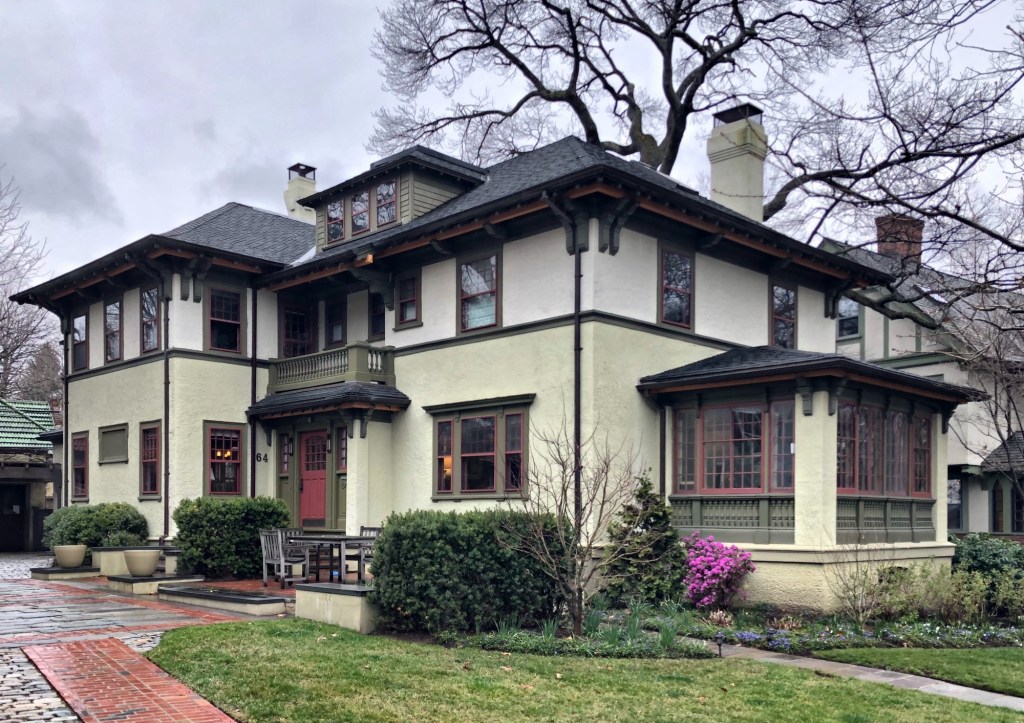
Located on Amory Street in Brookline, this handsome Arts and Crafts style residence dates to about 1908 and while clearly Craftsman in style, does appear to follow the horizontality and form of the Prairie School of architecture, popularized by famed architect, Frank Lloyd Wright. While the architect of this house is unclear, we do know that the first owners were Mr. Frank T. Partridge and his wife, Edith Stevens Partridge. The stucco house features a horizontal belt course, shallow hip roof with broad eaves supported by brackets, and elaborate entry and porches. The colors enhance the architecture of the home perfectly.
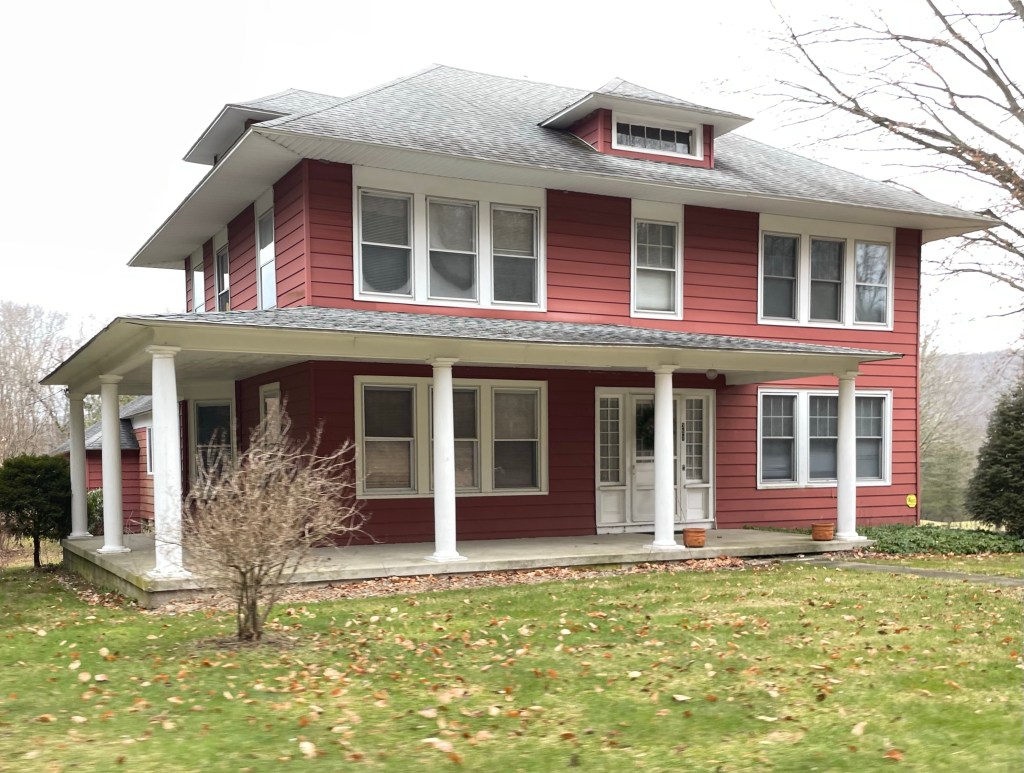
Prairie style architecture is not nearly as common in New England as it is in the Mid-western United States. The style was almost always seen in early 20th century residential designs and is characterized by horizontality, low slope roofs, overhanging eaves, and open interior floor plans. This New England vernacular version of the Prairie style employs some Arts and Crafts influence with Tuscan columned porch and wood frame construction, rather than the more bulky and bold use of brick and stone. This residence sits on a busy state route in the sleepy town of Franklin, Connecticut. This house appears to have been built for Oliver Johnson who was about seventy by the time the house was built. Do you know of any other Prairie Style houses in New England?
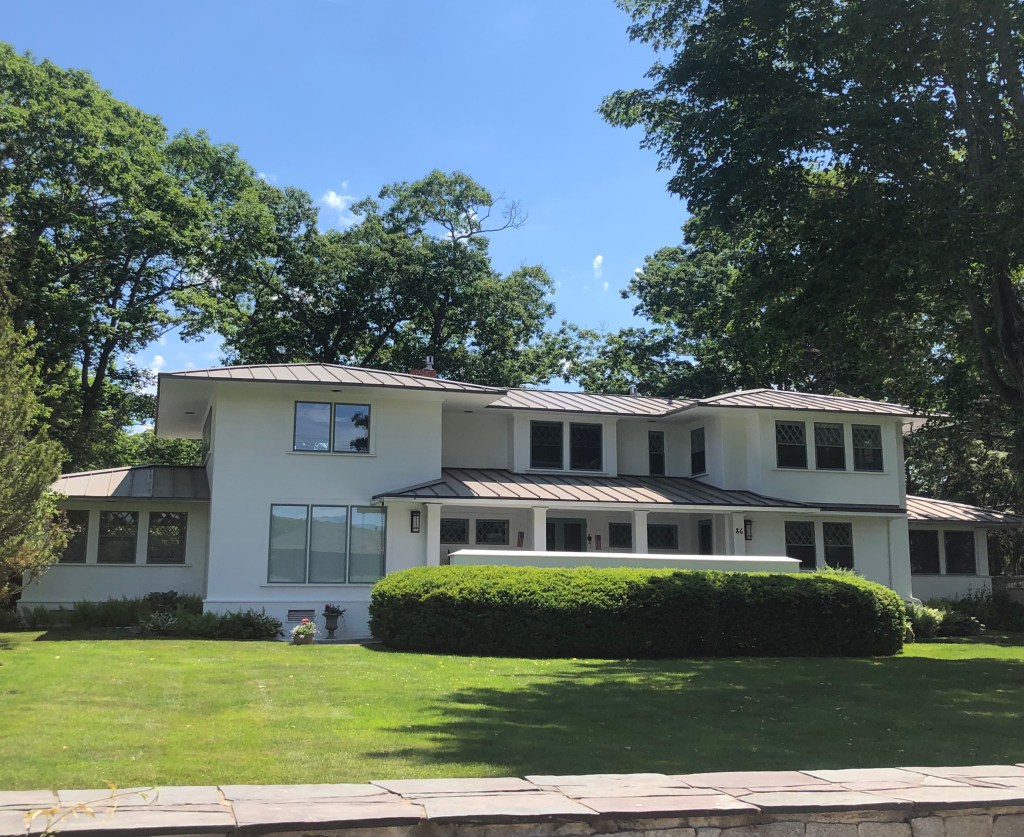
One of a handful of Prairie style homes in Maine, the Abbott Graves House – named ‘Westlook‘ – of Kennebunkport, was designed by Graves himself and built in 1905. The two-story residence is of frame construction with a low-hipped metal roof (originally red tile) and three internal brick chimneys. The exterior is covered with a simulated stucco finish.
Born in Weymouth, Massachusetts in 1859, Graves began architectural studies at the Massachusetts Institute of Technology in 1867 but was forced to leave due to financial problems before completing the program. For a few years he supported himself by working in a florist’s establishment where he earned a reputation as an arranger of flowers for interior decoration. An amateur painter since early youth, he began in earnest to develop this talent, concentrating on floral still life. He was eventually able to support himself in a small Boston studio and in 1884 to 1887 studied in Paris. His work was exhibited in the Paris Salon in 1887 and received the first of five medals he was to be awarded by that illustrious institution. Returning to Boston in 1889, he opened his own school and established himself as a distinguished painter of floral scenes and genre works. He brought his family and some students to Kennebunkport for the first time in the summer of 1891 staying at one of the first hotels in that newly emerging resort community. Graves fell in love with the community spending more and more time there each year until eventually he became a year round resident. In 1905 he designed Westlook, as he named it, and resided there until his death in 1936.
 Buildings of New England

