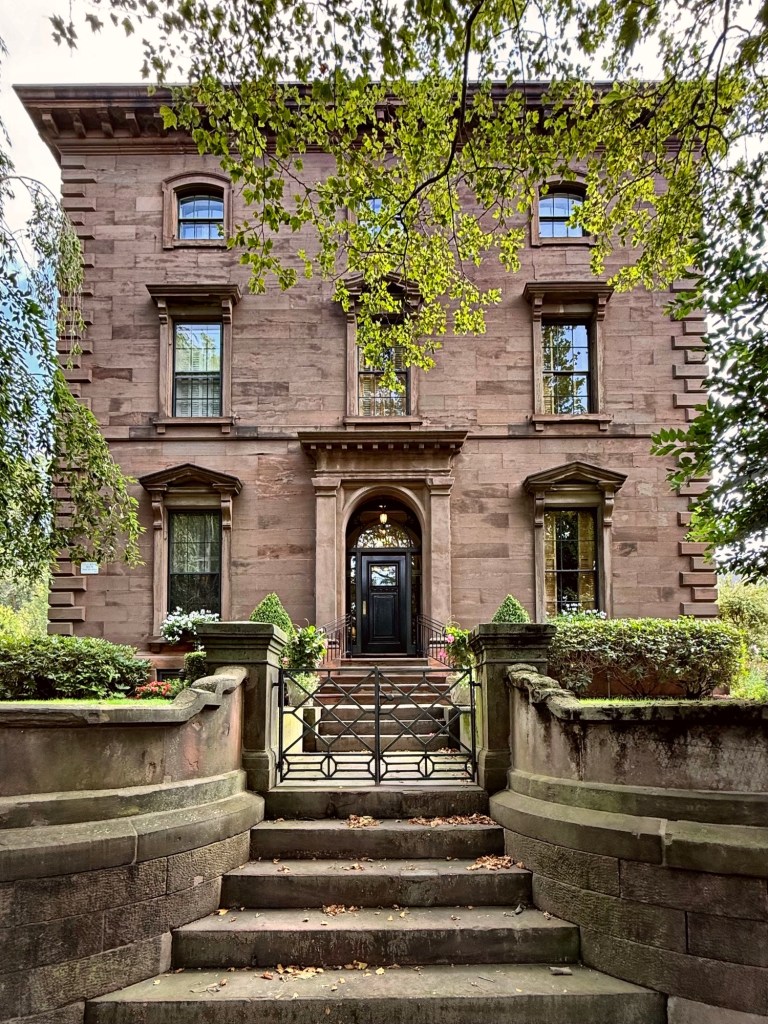
Tully Bowen House // 1853

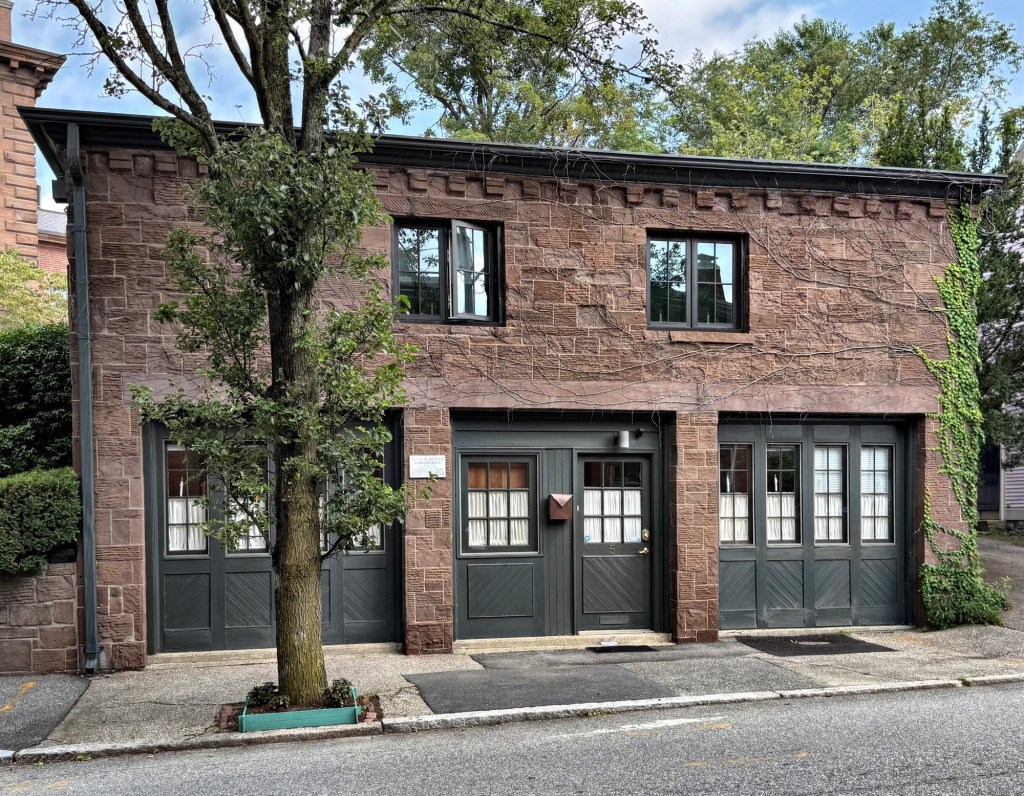
Designed by great architect, Thomas Tefft, this three-bay, three-story brownstone house located at 389 Benefit Street in Providence, was built for Tully D. Bowen, a cotton manufacturer. The house, one of the finest Italianate style mansions in the state, is constructed of brownstone and features a recessed arched entrance surrounded by a flat-headed Doric-pilastered frame, pedimented first-floor windows resting on brackets with the alternation of flat and pedimented heads at the second story, and quoining at the corners. The property also retains its original Tefft-designed brick and brownstone carriage house. Thomas Tefft, who was just 27 at the time of designing this house and corresponding brownstone and iron gate, would become one of America’s finest architects before he died in Florence with a fever in 1859 at just 33 years old. The residence was converted to 12 apartments in 1941 and the carriage house was converted to residential use as well. Even with the subdividing the interior spaces of the residence and carriage house, the Bowen property remains in a great state of preservation and is one of the finest homes in Providence.
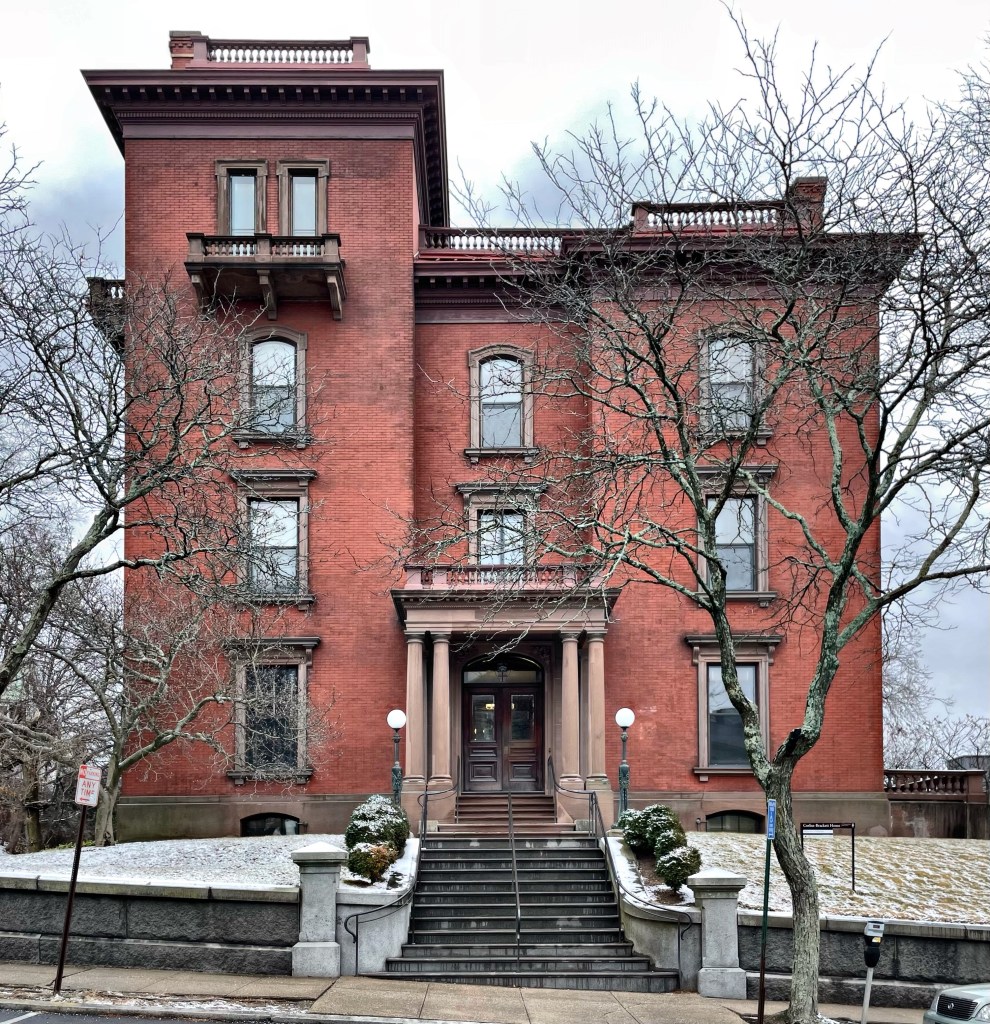
George Corliss – Charles Brackett House // 1878

This mansion, one of the finest in Providence, was built in the late 1870s by George H. Corliss for his second wife. Corliss (1817-1888) was the inventor of the most widely used industrial steam engine of the nineteenth century. Corliss’ first wife Phebe died in 1859. Seeking companionship, George remarried in 1866 to Emily Shaw who was eighteen years younger than he. Ms. Shaw suffered from poor health and she with the assistance of her doctor, convinced Mr. Corliss that she escape the cold winters of Rhode Island for Bermuda. It does not appear that they relocated to Bermuda, but Corliss stated, “I will build Bermuda for Mrs. Corliss.” He did, and this is it. Corliss used his engineering skills to build a state-of-the-art, climate-controlled building, cool in the summer, warm in the winter. The Italianate Villa is one of the largest in town but employed a style that was dated upon completion. In 1929, Corliss’s great-nephew, screen-writer and movie producer for Paramount Studios Charles Brackett inherited the house. He in turn eventually transferred the house over to Brown in 1955, who have maintained the old mansion to this day!

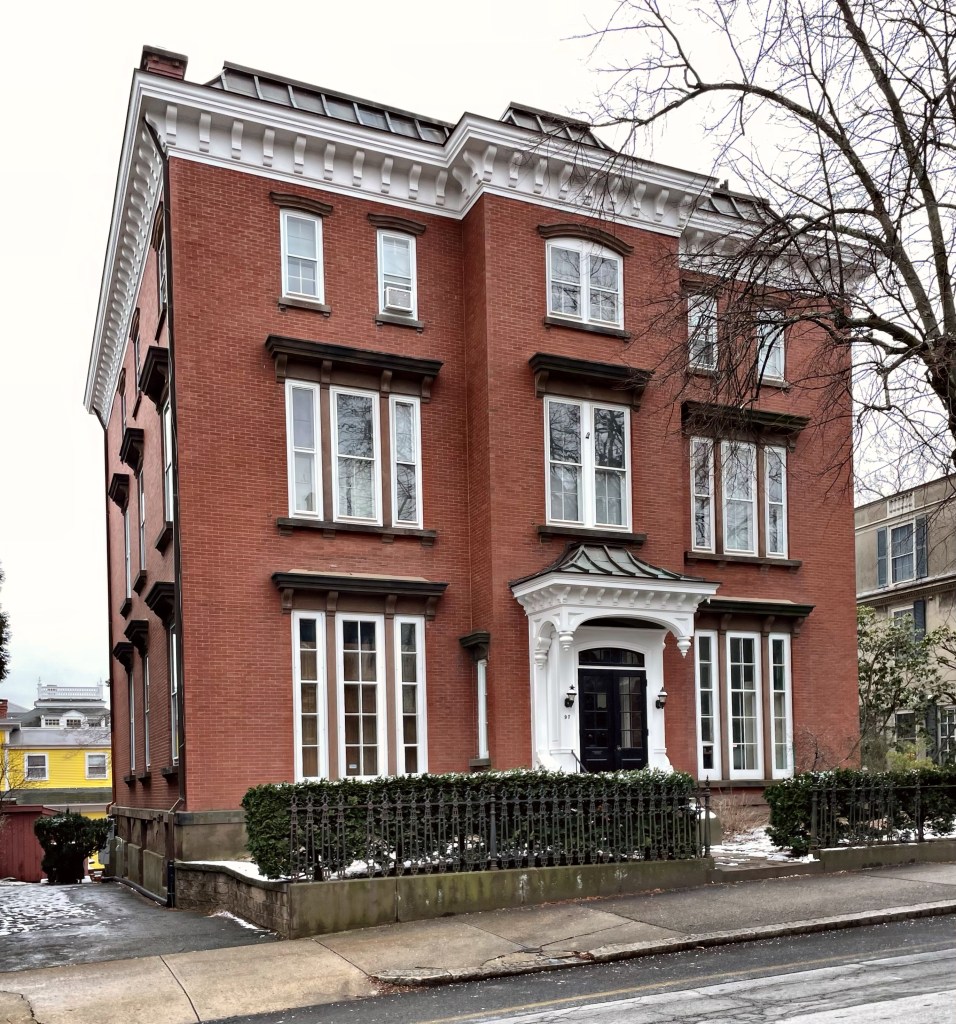
Watson-Knight Mansion // 1854

No town does Italianate architecture quite like Providence! Case in point, the Watson-Knight Mansion, a relatively overlooked example of the style found on Angell Street in College Hill. In 1854, a house lot here was purchased by an elderly Matthew Watson (1786-1857), who possibly lived in half of the house for a few years until his death. Directories also list his son Robert as living in the home in 1854. The three-story brick mansion has a boxy form with symmetrical facade. Brownstone hoods and sills are located at the windows and add depth to the otherwise blank facade. A projecting wooden door hood with hanging pendants covers the large entry. The home remained in the Watson Family until it came under the possession of Robert Brayton Knight (1826-1912) a businessman and mill owner who became the largest individual owner of cotton mills in the world, with upwards of twenty distinct establishments under his personal control. He co-founded what became the Fruit-of-the-Loom brand with his brother in the 1850s. The building has since been divided into apartment/condominiums.