Throope Place // 1760

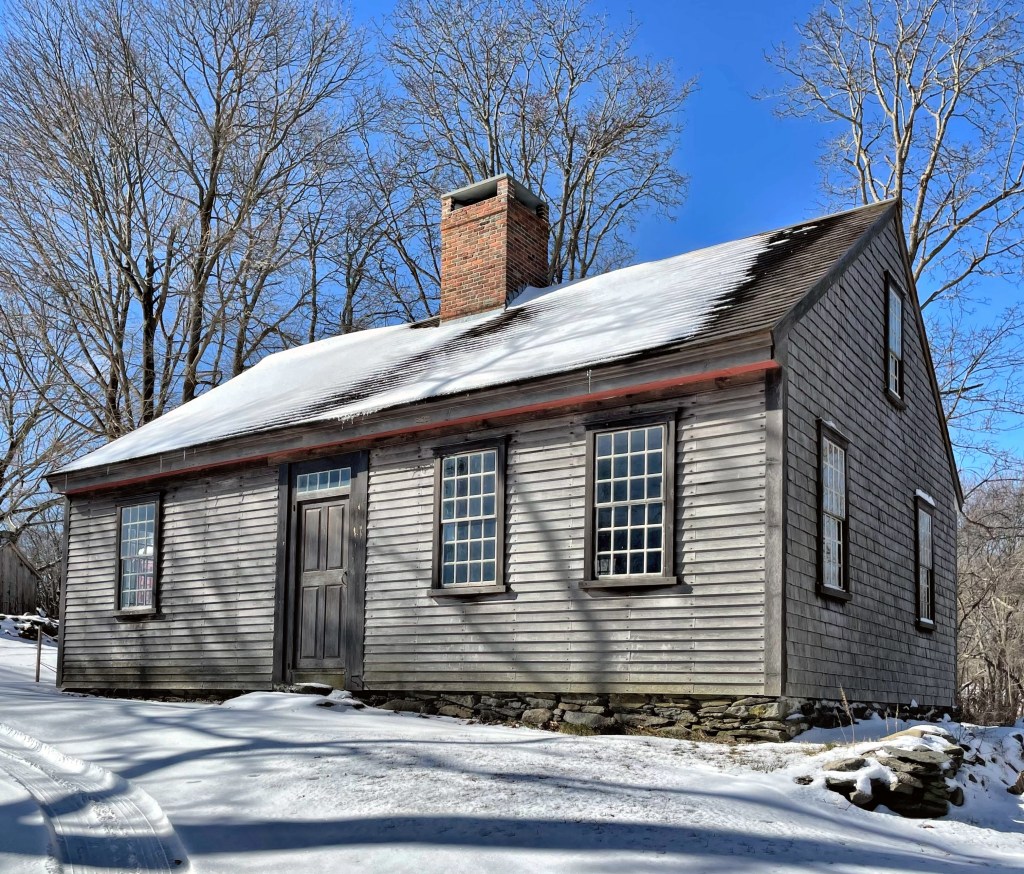
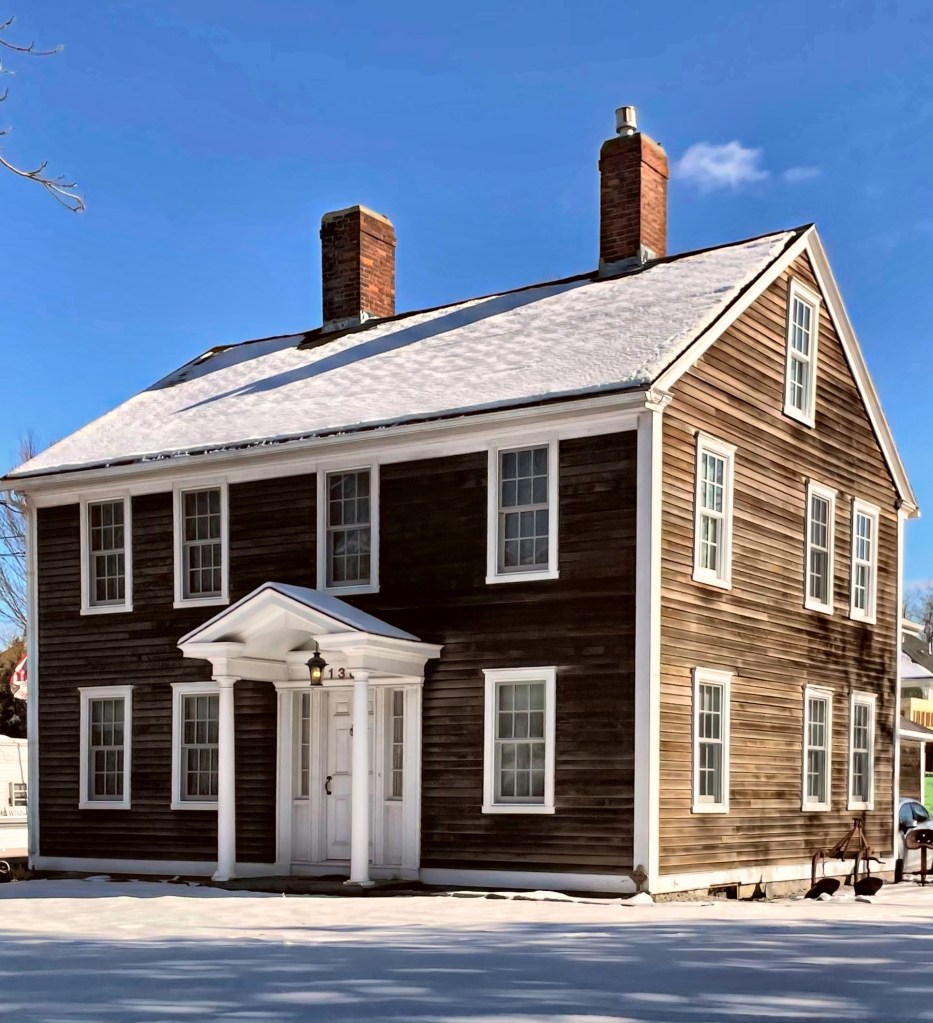
In 1687, William Throope 1637-1704, who migrated to Bristol from Barnstable, Massachusetts by way of England, purchased land in Bristol, Rhode Island. On it, he constructed a small, one-room deep, two-story house. Throope’s grandson, Thomas, Jr. (1710-1771), enlarged the house about 1760, when he constructed this four-bay Georgian home, adding the old 1687 Throope house to the rear. Interestingly, house moves were very common in America to the early 20th century, as materials such as glass, nails, and brick were more expensive while labor was much cheaper, making the reuse of original structures and materials common. The farm eventually passed to Isaiah Drown Simmons (1810-1882), a dairy farmer, in 1830, and remained in the Simmons family until 1922. Records show that the original 1687 house that was moved to the rear of the 1760 house was replaced in the 1830s by Simmons. The home remained in the Simmons Family until after the death of their only daughter Elizabeth, who died in 1914. It appears that the existing front portico was added after that time, which appears more Colonial Revival.
Joseph Reynolds House // 1698

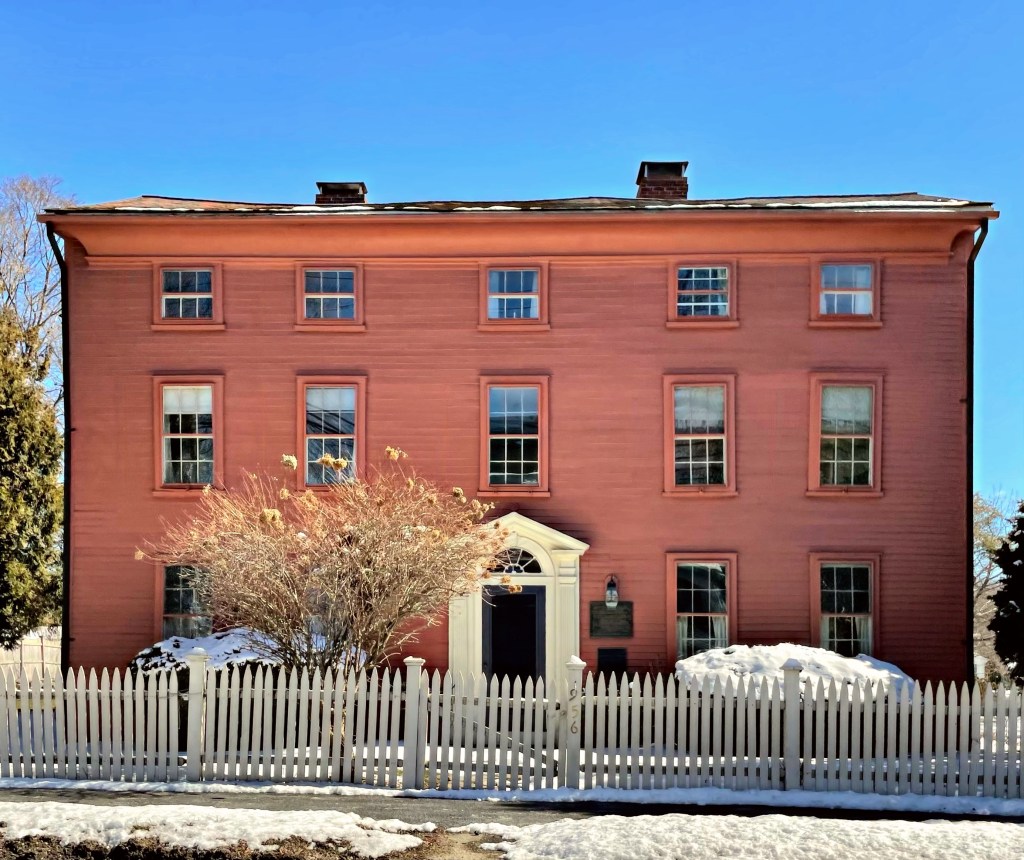
This three-story wood-frame house is one of the oldest buildings in Bristol and the oldest known three-story building in Rhode Island. The home was built by Joseph Reynolds (1679-1759), a patriarch in the Reynolds Family, who later built the Reynolds-DeWolf House I featured previously. The house is five bays wide and three deep with the roof extending lower to the rear, giving the house a classic New England saltbox appearance. Joseph built this house, and also operated a tannery and gristmill on his land. The home is nationally significant as during the ownership of the house by his son Joseph II, Marquis de Lafayette occupied the north parlor chamber. Lafayette was a general in the Continental Army and was responsible for the defense of Bristol and Warren from September 7 to 23, 1778 during failed military operations to drive the British from occupied Newport. The home was added onto and altered in 1790 to give it the current design, with Federal detailing. The home remained in the Reynolds Family until 1930.

Colt Dairy Barn // 1917

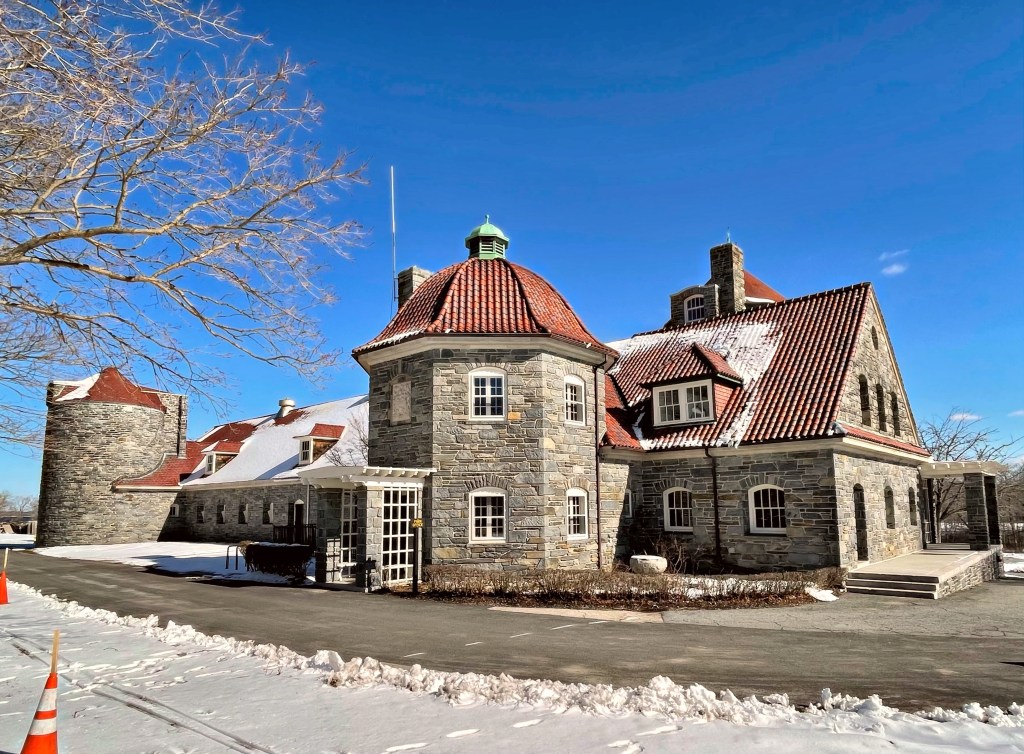
Samuel Pomeroy Colt (1855-1921), a Bristol industrialist, purchased three farms on Poppasquash Neck, in Bristol, Rhode Island in 1905. One of the farms he aquired, Coggeshall Farm, was featured in my last post. On the newly consolidated farmland, just outside the hustle-and-bustle of Bristol’s downtown core, Colt built a large summer dwelling called ‘The Casino’. He lived at his family estate in town a majority of the year, but used ‘The Casino’ as a gentleman’s farm and a space to raise his prize-winning Jersey cattle and Berkshire sows. Colt wished that the citizens of town share his enjoyment of the property and had an open invitation carved onto the marble piers at the estate entrance which reads, “Private Property, Public Welcome”; access was freely allowed at the farm and shoreline. The two marble piers at the entrance to the estate are topped with massive bronze bulls modeled after two of Colt’s bulls, and were cast in Paris by Val d’Onse Company. Colt died in 1921. His will specified that Colt Farm not be sold and that it remain accessible to the public. Though he left a sum to operate the farm, it ran a deficit. The Casino was demolished in the 1960s as it was consistently destroyed by vandals, and became a public safety concern. The lasting cow barn was built in 1917, from designs by architect Wallis E. Howe. The barn utilized field stone from existing stone walls on the property and is capped with a red tile roof. The barn is unlike anything I have ever seen, and now is park offices. In 1965, after approval by Bristol voters, the State of Rhode Island purchased 466 acres of the Colt estate and created the largest public park in the Bristol County, known as Colt State Park.

Coggeshall Farm // c.1750

Located on the Poppasquash Peninsula, in my favorite Rhode Island town of Bristol, the Coggeshall Farmhouse showcases the historic rural farming character of the town, which saw much development by the 19th century. In 1723, Samuel Viall (1667-1749 purchased farmland from Nathaniel Byfield, who had acquired most of the north part of Poppasquash as one of the original “founders” of Bristol (though the Wampanoag people had been already living here for centuries). Viall or a descendent likely had this small Georgian farmhouse built on the land, along with outbuildings to farm the beautiful land here. In the early nineteenth-century Wilbour and Eliza Coggeshall were tenant farmers at the farm. The Coggeshall’s son, Chandler Coggeshall, later became a politician and helped to found the Rhode Island College of Agriculture and Mechanic Arts in 1888, which became known as the University of Rhode Island. The farm eventually was acquired by industrialist Samuel P. Colt, nephew of firearms manufacturer Samuel Colt, who created a massive estate on the land. In 1965 the State of Rhode Island purchased the Colt Estate for use as a state park, and the Bristol Historical Society petitioned the state for permission to preserve the old Coggeshall farm house on the property as a museum. Coggeshall Farm Museum was established in 1973 to educate modern Americans about eighteenth century New England farm life.