Redwood Library & Athenaeum // 1750

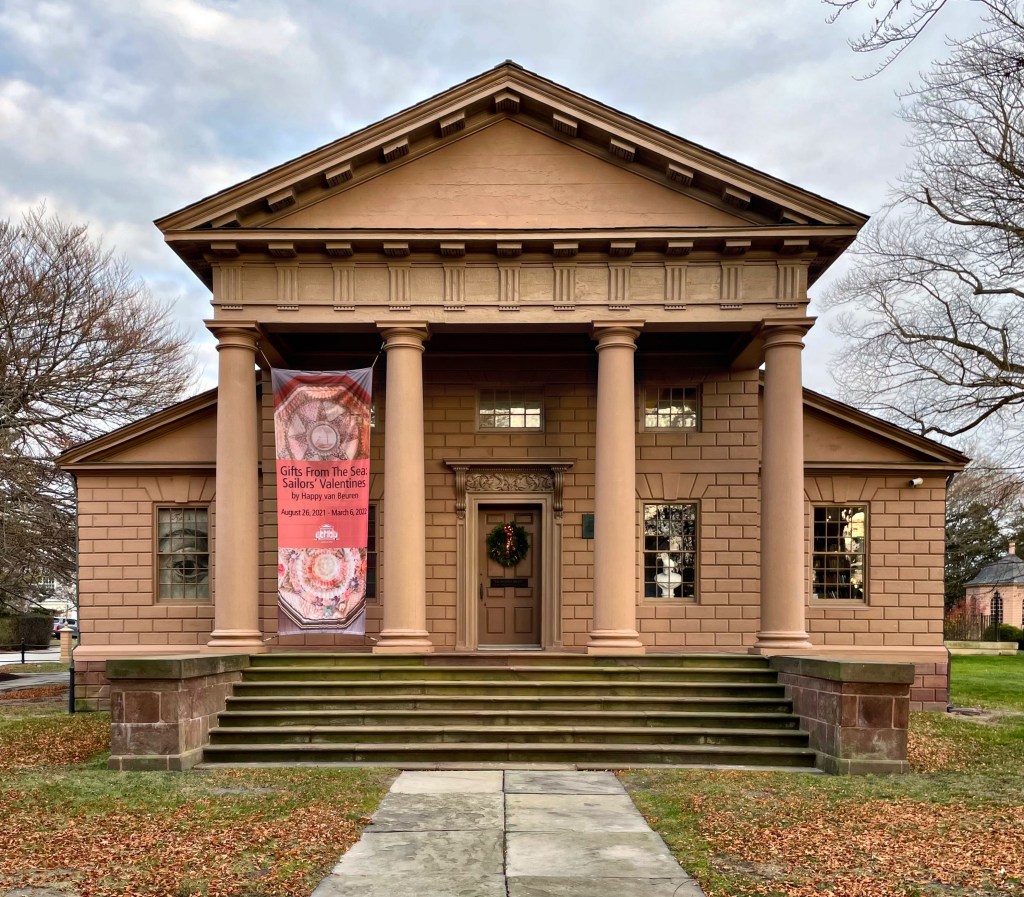
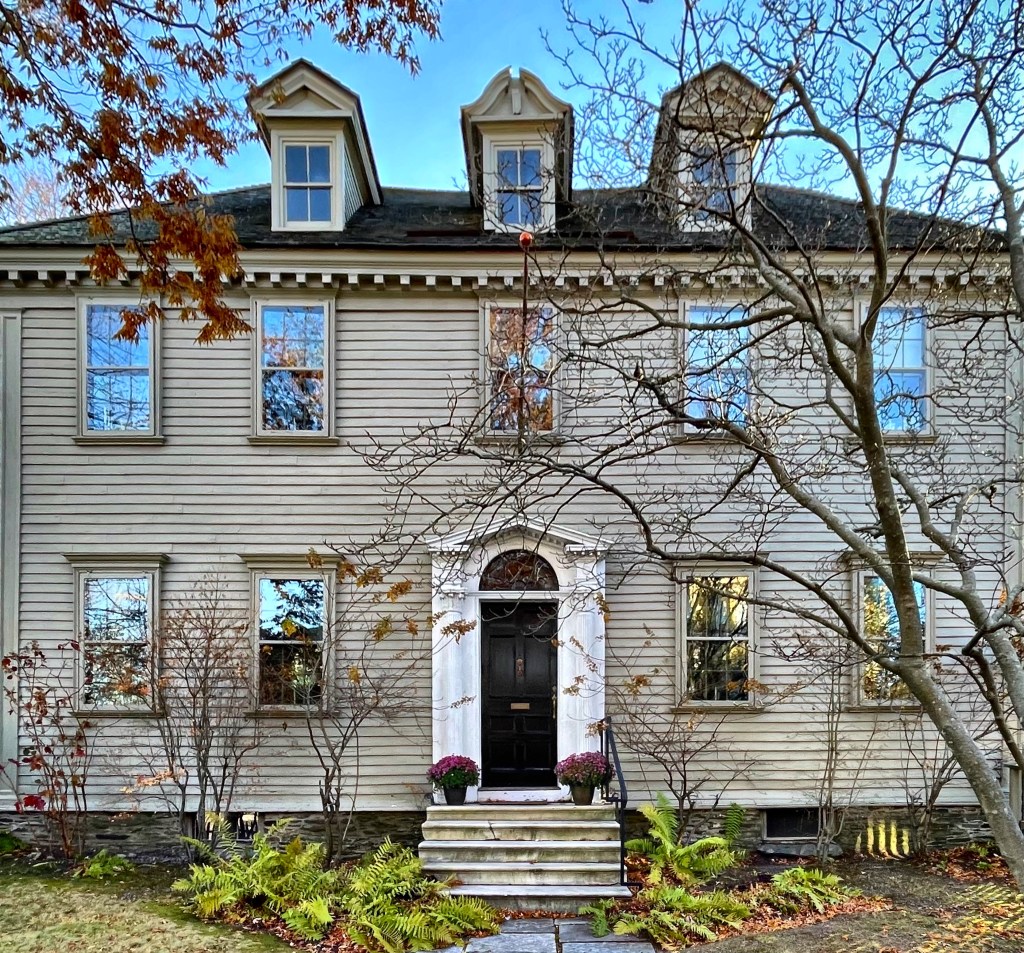
The Redwood Library and Athenaeum in Newport was built in 1750 and was the first purposely built library in the United States! This highly significant building is possibly the oldest neo-Classical building in the country and it was designed by British-born architect Peter Harrison, who is credited with bringing the Palladian architectural movement to the colonies. Harrison also designed the iconic Touro Synagogue in town (featured previously). The Redwood Library was established in 1747 by Abraham Redwood and 45 other wealthy residents with the goal of making written knowledge more widely available to the Newport community. The Redwood family had a large sugar plantation in Antigua. Abraham Redwood, Jr. was born in 1709 and he was active in the family sugar business from his teenage years. When his father died, the plantation – along with the over 200 enslaved people that worked it – were signed over to Abraham Redwood jr.

Rhode Island’s ties to slavery lasted much longer than other New England states. Many of the state’s wealthiest owned plantations in the Caribbean, where the conditions were comparable to that of the deep south. Once trafficked across the Atlantic arrived in the Caribbean islands, the Africans were prepared for sale. They were washed and their skin was oiled to be sold to local buyers. Often parents were separated from children, and husbands from wives. Upon his death in 1788, Redwood left his slaves in Newport and Antigua to his children and grandchildren, an inventory taken 22 years prior to his death listed 238 enslaved people in Antigua. I bring this history up because America was built on slavery, and I bet thousands walk by this architecturally beautiful building every year, with no idea about its namesake.

Linden Place // 1810

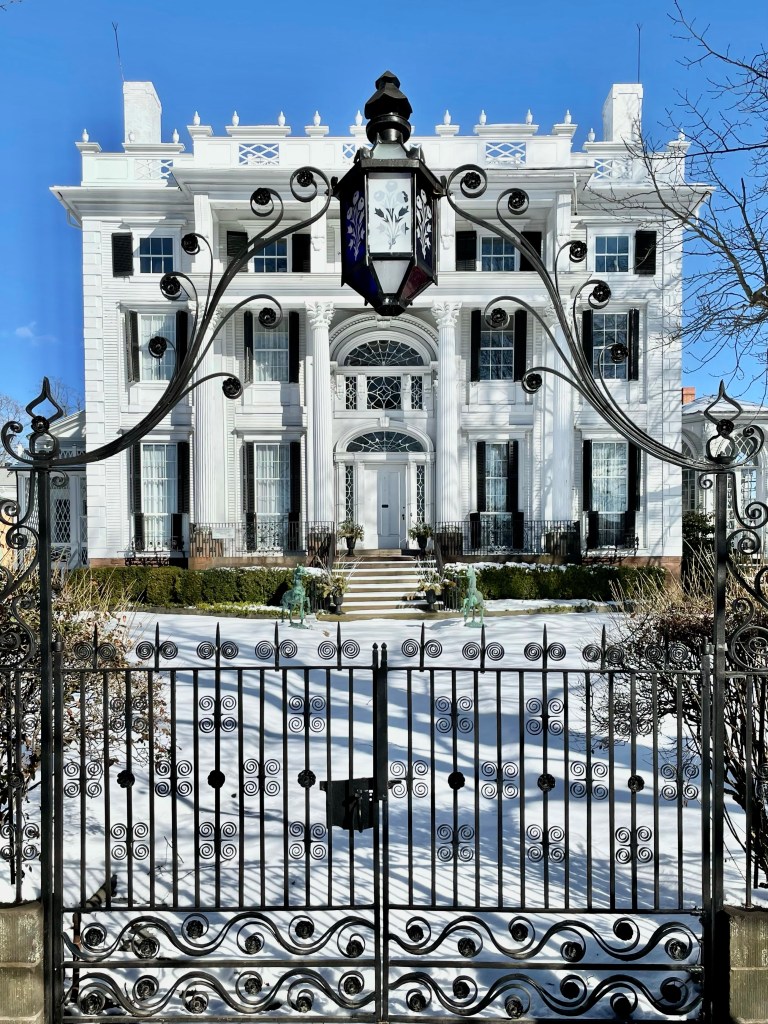
For the last post in this series on Bristol, Rhode Island, I am leaving you with a house that is architecturally stunning, but holds a dark history. Linden Place was built in 1810 by slave trader, merchant, privateer and ship owner George DeWolf and was designed by architect, Russell Warren. The DeWolfs of Bristol, who became the biggest slave-trading family in U.S. history, transported well over 11,000 Africans to the Americas between 1769 and 1820. The U.S. banned the slave trade in 1808, but the DeWolfs continued dealing in the slave trade until the 1840s by going through Cuba, where they had numerous plantations. They also got help from a DeWolf brother-in-law, who served as a customs inspector in Bristol — thus ensuring family slave ships continued to come and go. In 1825, George DeWolf suffered major financial hits and he and his family fled to his plantation in Cuba, where they’d be beyond reach of his creditors. Stories explain that with the possibility of legitimate payment out of the question, the townspeople sought compensation for George’s debts where they could, and they broke down the front door of Linden Place, and took everything, even peeling the silk wallpaper off the walls.

Following DeWolf’s bankruptcy, the house was bought by his uncle James DeWolf, who was alleged to have directed the murder of a female African slave in 1789 who was sick with smallpox on the slave ship Polly, which he commanded; she was bound to a chair and lowered overboard. James DeWolf was tried and effectively acquitted; which, sadly, should not surprise anyone based on historical precedent. In fact, James DeWolf financed another 25 slaving voyages, usually with other members of his family and was thought to be the second richest man in the United States upon his death in 1837. In later years the house passed to Samuel Pomeroy Colt, a grandson of George DeWolf (as well as the nephew of the inventor of the Colt revolver). His son Russell married actress Ethel Barrymore, who was the great-aunt of current actress Drew Barrymore, and lived in the home. Today, the grand estate is a house museum and event space.

Mount Hope Farm // 1745

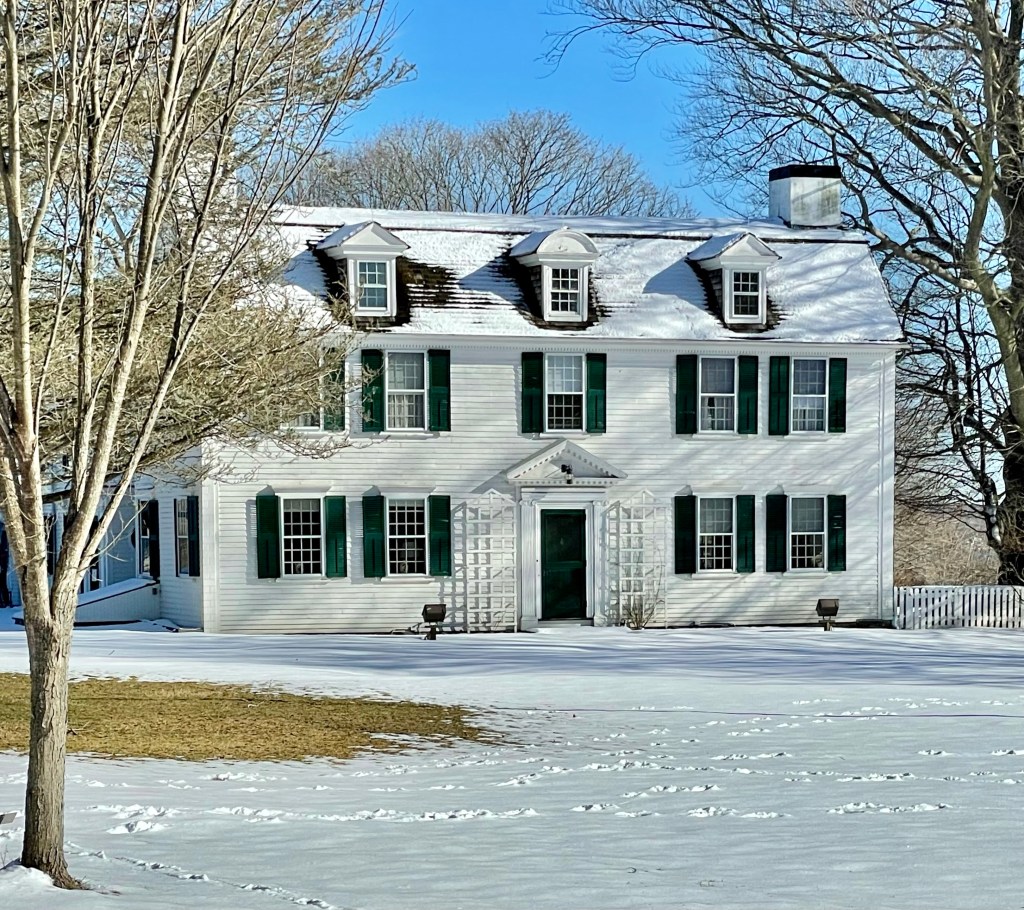
Land that Mount Hope Farm sits upon in Bristol, Rhode Island was formerly council lands of the Wampanoag Indians, where King Philip’s War of 1675 may be said to have begun and ended. For those of you who do not know about the war, it was an armed conflict running 1675–1678 between indigenous peoples of New England and New England colonists and their indigenous allies. Massasoit, leader of the Wampanoag, had maintained a long-standing alliance with the colonists. Metacom (c. 1638–1676) was his younger son, and he became “sachem” (elected chief) in 1662 after Massasoit’s death. Metacom, however, forwent his father’s alliance between the Wampanoags and the colonists and they fought back. Metacom’s forces could not beat the growing numbers of the colonists, and he was eventually killed near Mount Hope, in Bristol. After his death, his wife and nine-year-old son were captured and sold as slaves in Bermuda. Philip’s head was mounted on a pike at the entrance to Plymouth, Massachusetts, where it remained for more than two decades. His body was cut into quarters and hung in trees. This story, shows how American history is built upon death and suffering and has often been whitewashed to portray early settlers treating native peoples with respect and as equals, which was rarely the case.

Mount Hope Farm as we know in colonial times, was originally 550 acres in size, owned in 1680 by Nathaniel Byfield. In 1744, the estate was acquired by Isaac Royall. Royall began construction of the house soon after. Isaac Royall Jr. was the son of Isaac Royall Sr. (1677–1739) a slave owner, slave trader, and Antiguan plantation owner who had a home and slave quarters (both extant) in Medford, MA. After his father’s death, Royall Jr. inherited his immense wealth, built upon the backs of others, and built this Georgian farmhouse. It is unknown to me if he ever resided there or had slaves maintain the property, but the home was rented for some time. In 1776, Mount Hope Farm was confiscated by the state, after Royall, a loyalist to England, fled to Nova Scotia. The property was added onto in the 19th and 20th centuries and now sits on 127-acres of land, and is run as a park, inn, and event space.

Francis M. Dimond House // 1838

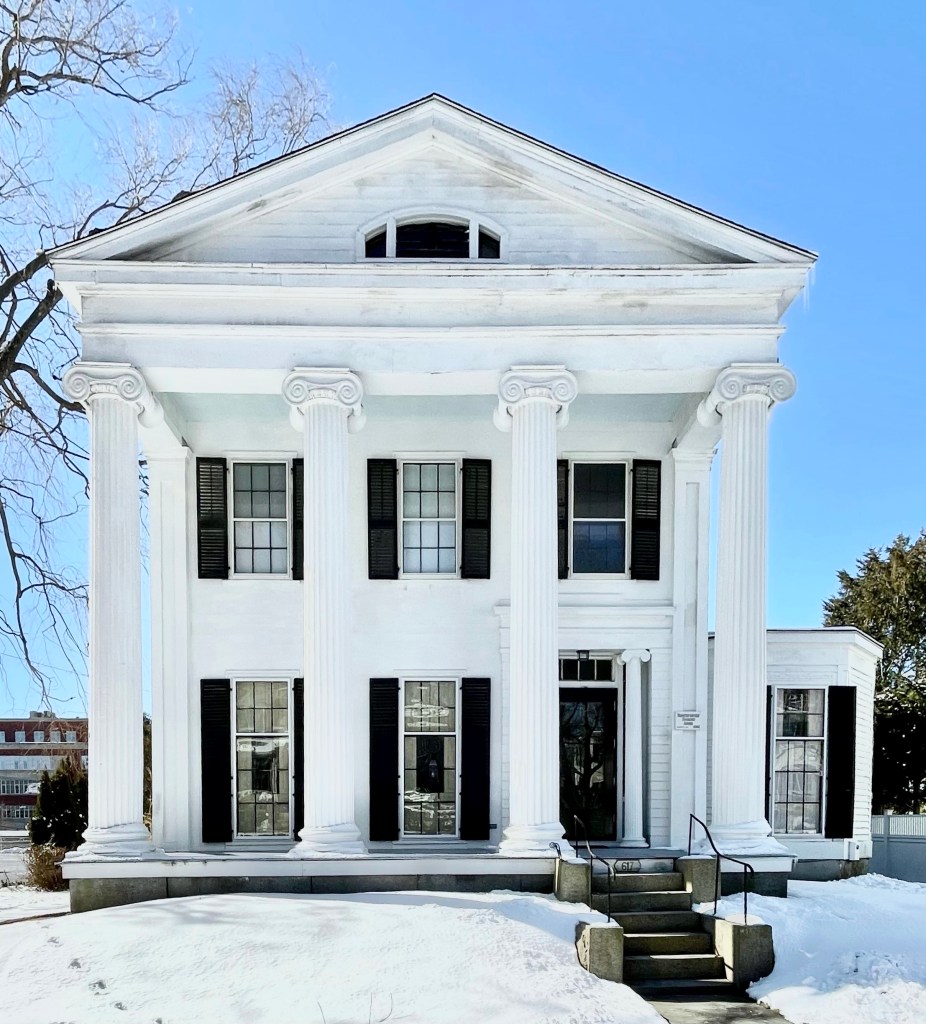
Built in 1838, just three years after the Talbot House in Bristol, Rhode Island, (just two houses away), the Dimond House remains as the other of the two remaining Greek, temple-front homes in town. Like the Talbot House, this home was also designed by Russell Warren, but is unique as it is in the tetrastyle (with four columns) and utilizes the Ionic order with the capitals featuring volutes (scrolls). Additionally, a polygonal bay can be seen on the right side of the home. Images show that the bay features stunning lancet windows! The home was designed for Francis Moore Dimond (1796-1859), who was born in Bristol, and later traveled to the Caribbean and served for several years (1832-1835) as the United States consul at Port-au-Prince. It is entirely possible that Dimond was involved in the slave trade, but I wasn’t able to find more than a couple articles referencing his connections to the infamous DeWolf Family. From 1842 to 1849, Dimond was United States Consul to the Mexican port city of Veracruz. When he returned to Rhode Island, he promoted the Southern Pacific Railway and presided over its construction. He was elected lieutenant governor of Rhode Island in 1853. He became the governor of Rhode Island when Philip Allen, then Governor, resigned to become a Senator. He held the governor’s office just one year. He moved back to Bristol and lived out his final days at his home.

William Throop Jr. House // 1805

While much of the downtown area of Bristol features early 19th century wood-frame houses, there are some substantial masonry homes providing a great layering of styles and materials in the neighborhood. This brick Federal style home was built in 1805 for William Throop Jr. (1771-1850), a stonemason and merchant, who had a shop on the DeWolf wharf in Bristol, where many slave ships set sail from. Throop himself was a descendant of William Throope, who built “Throope Place” (previously featured) on the north side of town. We understand that William Jr. likely had connections to the slave traders of Bristol based on his ties to the DeWolf Family, which is compounded by the fact his two daughters Juliana and Jane married Judge James Eppinger of Georgia. Juliana first married Eppinger in 1820, but died in 1859, and her younger sister Jane then married James Eppinger one year later. The Eppingers built a house in Bristol where they would spend time, and often brought enslaved with them to maintain their home. On October 12, 1829, Nancy Gindrat, a 22 year old slave to James and Juliana Throop Eppinger, escaped in Bristol. Eppinger frantically wrote to his father in-law William Throop and others that he would offer a large sum to anyone who could find her, though he never did. It was interesting to learn how inter-connected Rhode Island and Georgia were in the early 19th century, both bonded by the slave trade. The William Throop Jr. House remained in the family for a century until it was converted into a rooming house in the early 20th century, to house workers at the nearby industrial buildings. The home was restored and reverted back to a one-or-two-family residence in the 1970s.

“Longfield” // 1848

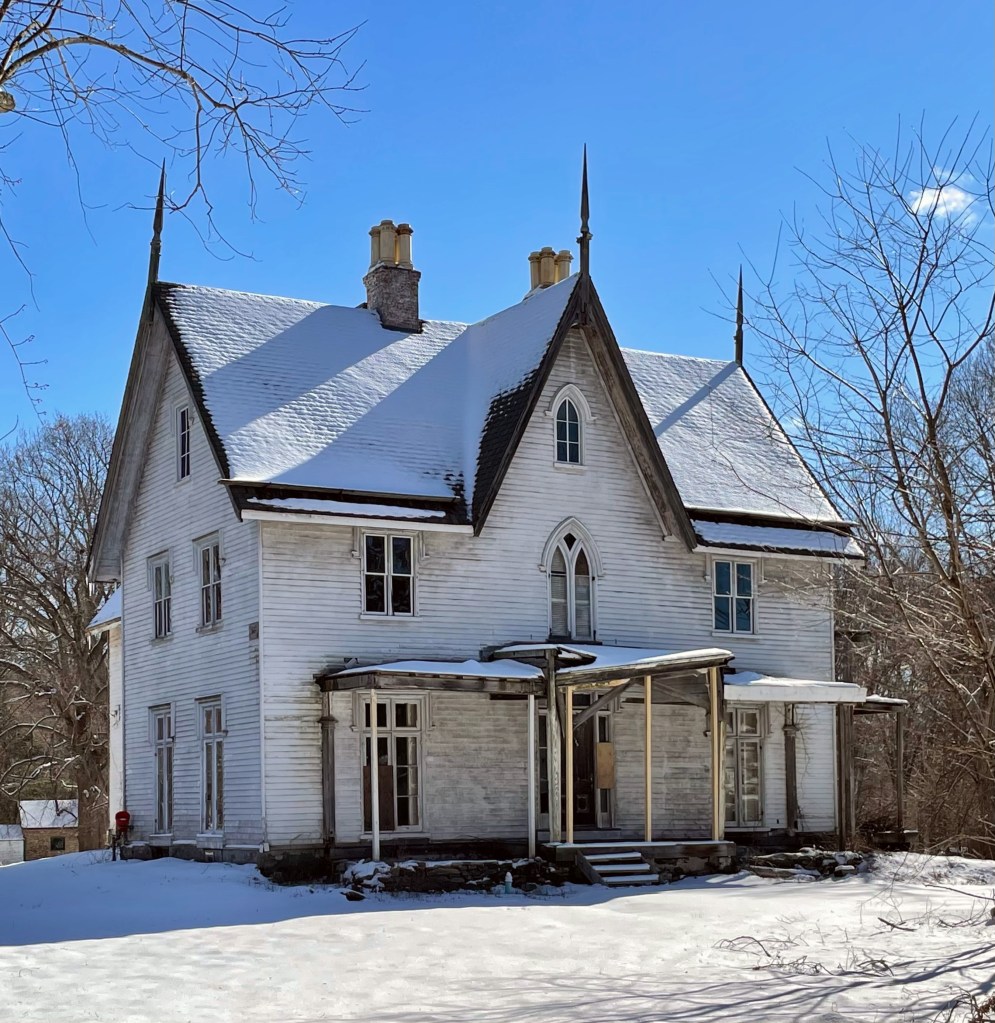
“Longfield”, aka the Abby DeWolf House was built in 1848 and is one of the finest homes in Bristol, Rhode Island. The home was completed from designs by Providence architect Russell Warren, who also designed other mansions in town (I’ll post those later on in this series), the Westminster Arcade in Providence, and “Hey Bonnie Hall” a since demolished Federal style home I featured a couple days ago. Longfield’s name derives from the 60-acre meadow, part of the 300-acre Henry DeWolf farm, given to Abby DeWolf when she married Charles Dana Gibson at just 21 years of age. The DeWolf Family paid for the home as a gift to Abby. The DeWolf Family is infamous for being highly active in the slave trade, and was believed to have transported over 11,000 enslaved people from Africa to the Americas before congress abolished the African Slave Trade in 1808, which “prohibited the importation of slaves into any port or place within the jurisdiction of the United States…from any foreign kingdom, place, or country.” This policy did little as many owners of slaves just kept children born into slavery and also opened plantations in the Caribbean and South America. After Abby died in 1901, the home went to her granddaughter who maintained the home. By the 1970s, the home was sold out of the family and began a period of decades of deterioration to its current state. The interior is effectively gutted, but some original woodwork and fireplaces remain. Recent calls for a townhouse development with ample parking was proposed and approved by the town a couple years ago, but would greatly diminish its siting and architectural integrity. Nothing has happened on the site, but here’s to an appropriate restoration!