Brookline Round Schoolhouse // 1822

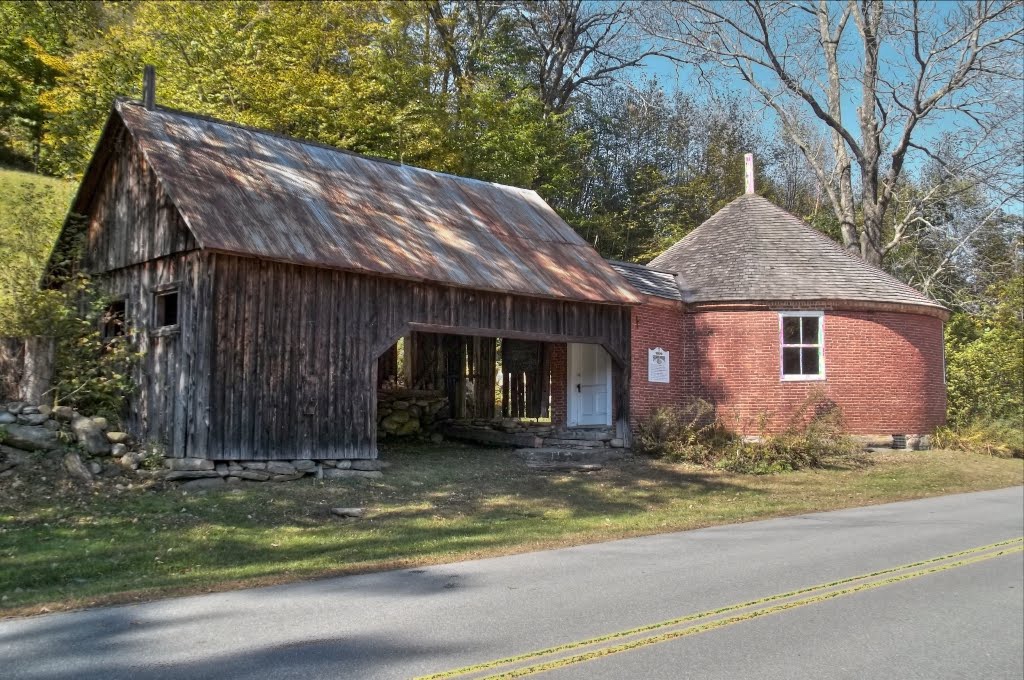
Historic schoolhouses in rural New England are often one-room wood-frame buildings, but not in Brookline, Vermont! The Brookline Round Schoolhouse is constructed of brick and… you guessed it, ROUND! The iconic building sits on the same road as the Baptist Church in town (last post) and likely built from bricks made at the same brickyard. The school was built in 1822 to replace a log school house originally built nearby. The plan for the round design was apparently made by Dr. John Wilson. Wilson, known as “Thunderbolt”, was reputed to have been a robber and highway-man who came from Scotland to escape punishment. He eventually settled in Vermont and had many occupations but settled on saying he was a doctor and began practicing. He eventually took up teaching and somehow convinced the town he should design the new school building. Local legend asserts that Wilson designed the school house round so that he could see from any position, all possible intruders. At the interior, the single-room originally contained sixty oak benches and desks arranged in a circular position facing a teacher’s desk near the door. The building is capped by a conical wood shingle roof, which appears in great condition. The structure functioned as a school until 1929, when a new school was built which conformed to state codes. At this time the round school was turned over to the town for use as a Town Hall, a use it held until the 1980s.
Reading Town Hall // 1911

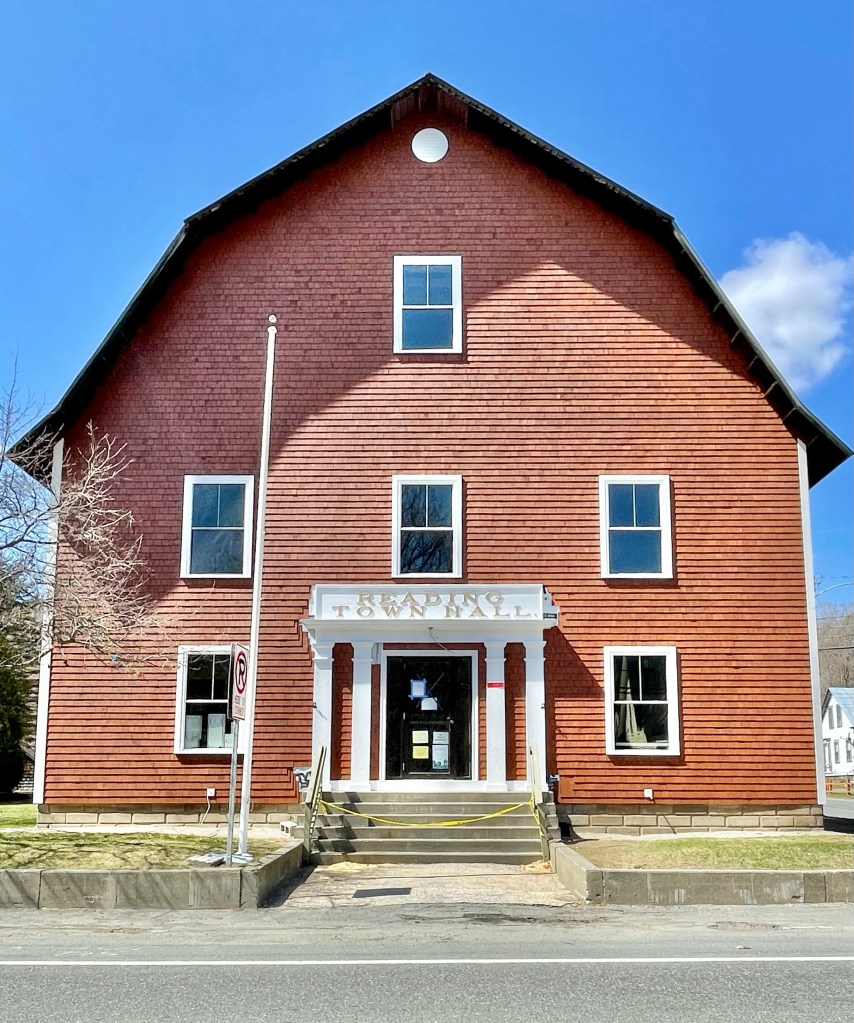
The Reading Town Hall in Reading, Vermont is an imposing shingle-clad, gambrel roof building which sits in the village of Felchville. The hall was built in 1911 as a gift to the citizens of Reading by Wallace F. Robinson. Wallace Robinson was born in Reading in 1832. He went to Boston as a young man and entered into the provisions (groceries) market, and became quite successful, expanding into the wholesale provisions business and meat packing. He was active in civic and business affairs of Boston, most notably as the President of the Boston Chamber of Commerce and as a State Representative in the Legislature for two terms. By around 1900, Robinson had retired and had taken up a life of philanthropy, spending much of his wealth on memorial buildings and to places that had a lasting impact on him, including Robinson Hall at Dartmouth College and renovations at UVM. The design for the Reading Town Hall is especially notable for the fact that it was designed to resemble historic gambrel roofed barns found in the state.

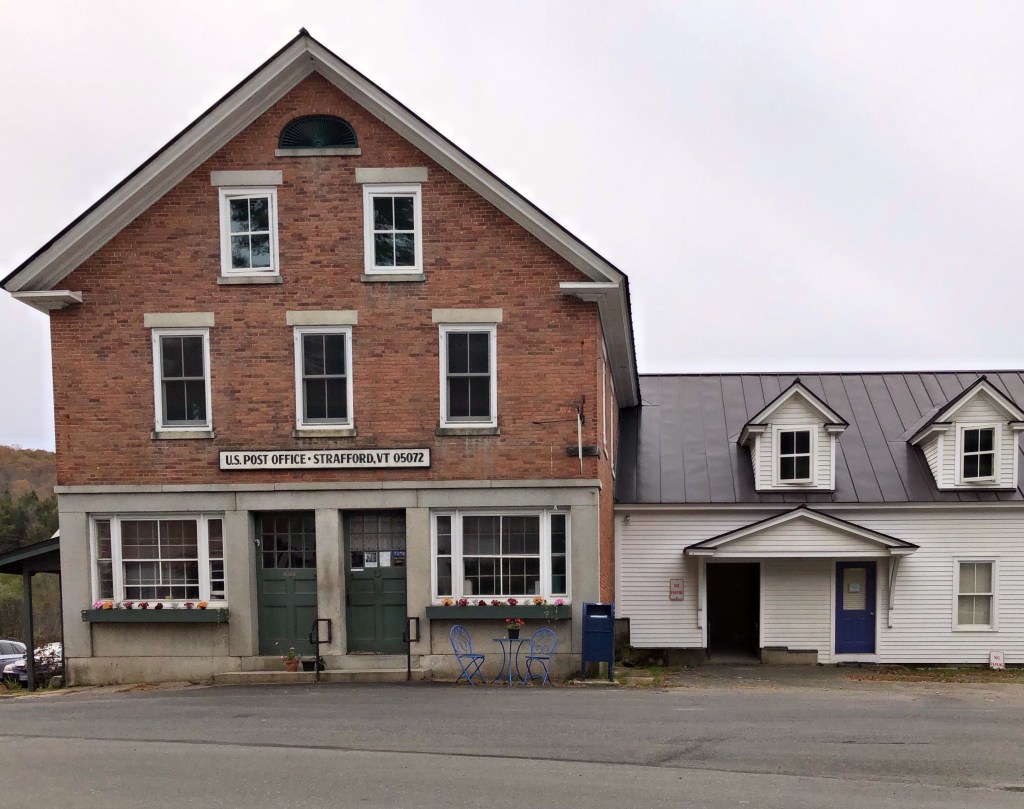
Harris Store // 1834

In 1833, Jedediah H. Harris, who had run a general store in Strafford village since 1803, commissioned a local contractor to build a new brick and granite store. Harris and his then-partner, Justin Morrill, opened the store in late fall 1834, selling provisions to locals and visitors to the small town. Morrill would later go on to construct a stunning Gothic home nearby and become a leading U.S. Senator. For more than one hundred years the store passed through a succession of owners, until C. William Berghorn Jr. closed it in 1951 to make it his residence. The building has since been converted to the local post office branch, with a residential unit likely above.

Strafford Town House // 1799

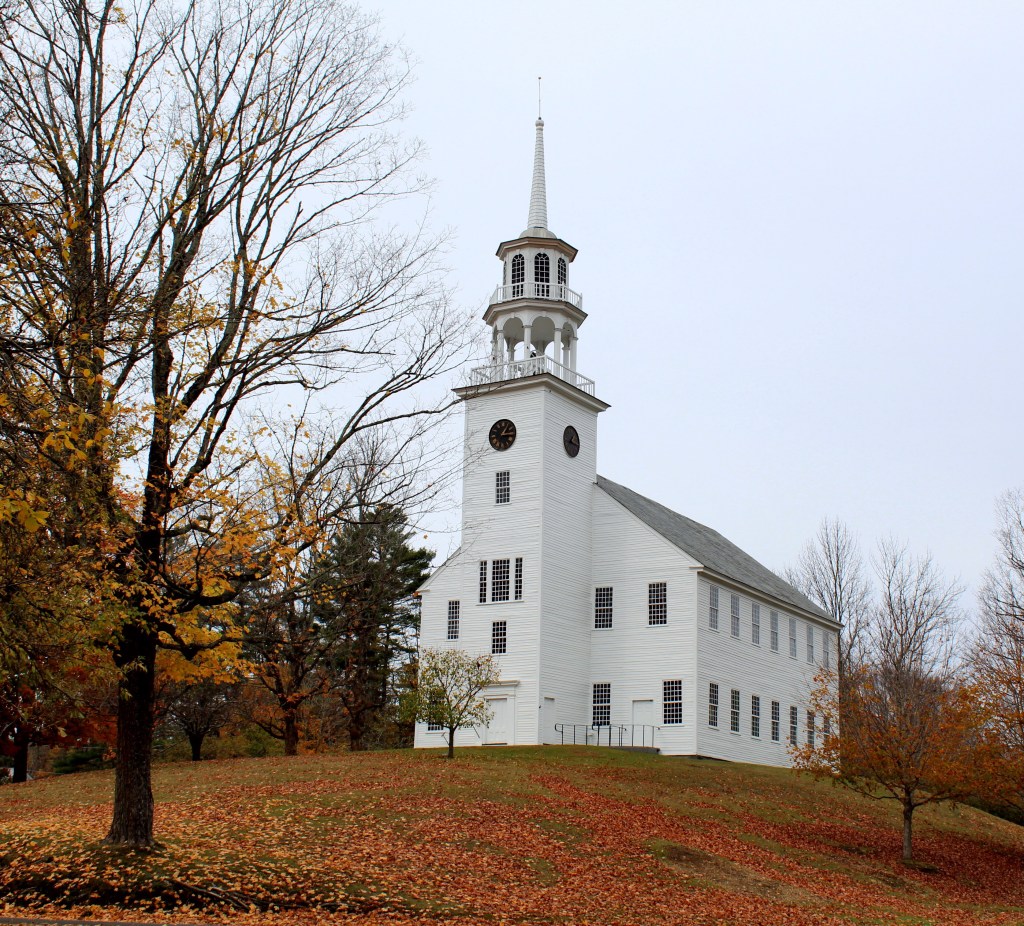
Perched atop a hill at the edge of the town common in Strafford, Vermont, the Strafford Town House epitomizes rural New England charm. The town house was constructed in 1799 by local carpenters as a place to do public business and served for a brief period in the early days as a meeting house for various local congregations. The building is one of the oldest meeting houses in Vermont and was one of the first meeting houses to put the entrance at the tower-end and the pulpit at the other end of the building. The change from a side-entrance orientation reflected a time when New Englanders were clearly deciding to separate their political business from their ecclesiastical affairs.

Pomfret Town Hall // 1845

The quaint town of Pomfret, Vermont sees flocks of “leaf-peepers” and Instagrammers every Fall who are in awe of the natural scenery and historic farms seen there. The town was first settled in 1770 when Bartholomew Durkee travelled from Pomfret, Connecticut, along with his family and friends and named the town “New Pomfret” at first to show their roots in Connecticut. The tiny town grew to its peak population in 1830 at just under 1,900 residents, declining steadily over time to roughly 900 today, greatly adding to the rural character of the town.

In Pomfret Center, the local Congregationalists sought a new place of worship and had this structure constructed as their church in 1845. Local builder Eli Buch constructed the Greek Revival edifice with its projecting portico, doric columns, and corner pilasters. As nearby Woodstock Vermont grew, many families moved there and the church sold their building to the Town of Pomfret in 1872 and the building has since been used as Pomfret’s Town Hall.

First Congregational Church, Thetford // 1785 & 1830

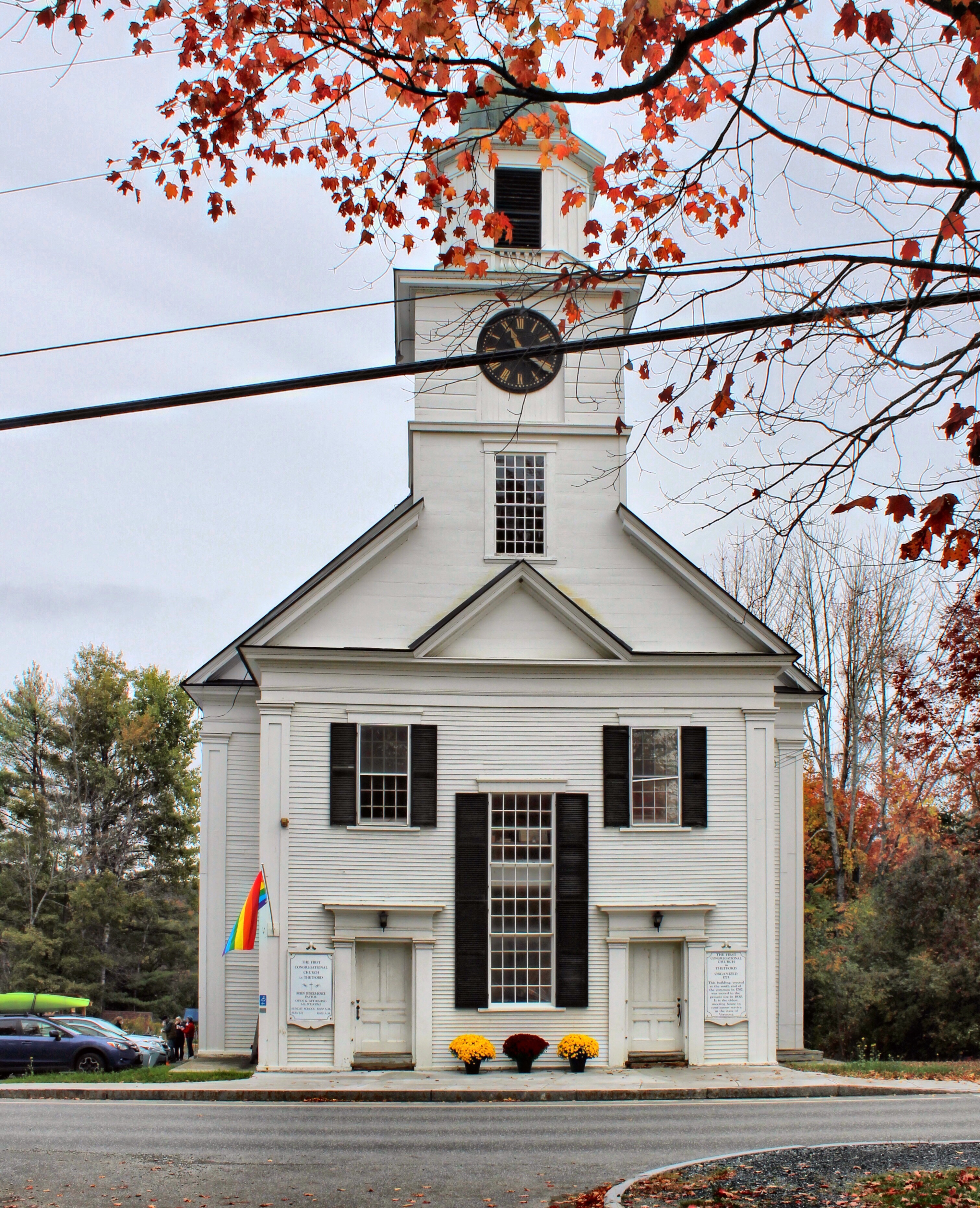
Attempts were made to organize the Congregational Church in Thetford, Vermont as early as 1771, making this congregation among the five earliest in the state. As was typical of the day, the meetinghouse was intended to serve both public and religious functions, before the separation of church and state. Following the customary dispute over the location of the meetinghouse in town, the structure was erected on the Town Common, marking the beginning of the village of Thetford Hill. Construction began on the meetinghouse in 1785, being completed within a couple years. Sometime between 1807 and 1812, the Congregational Church ceased to be supported by taxes as the separation of church and state resulted in the sale of the meetinghouse and its subsequent move in 1830, from the town-owned common to its present site just north of it. In 1830, the pavilion, tower, and pilasters were added to give the church a Greek Revival flair. The church is reportedly the oldest meetinghouse in the state still in continuous service.