Edwards-Machado House // 1807

Tucked away on Carpenter Street, one of my favorite Salem houses, the Edwards-Machado House stands out as the only brick house on the street, for good reason! In 1803, Joseph Edwards, a carpenter, purchased this piece of land and built a three-story wooden house for his family. Just three years later, a large fire destroyed the home, the family’s belongings, and at least two neighboring homes. Undeterred, Edwards built the present house to replace the one lost in the fire in 1807, once he received his insurance, but this time, he constructed the home of fireproof brick! He sold the house not long after, and the property went through many hands in the 19th century, many owners renting the property to families. In 1877, the property was sold to John Bertram, one of Salem’s greatest benefactors who lived at 370 Essex Street which he later gave his mansion to the city for use as a public library. Bertram rented out the former Edwards home to the Machado family.

Immigrants from Cuba, the patriarch, Juan (John) was a cattle rancher in Cuba. He came to the United States in the early 1850s to escape having to take the loyalty oath to Spain, as he believed in Cuban independence. In the U.S. he entered school in Manchester-By-the Sea in order to learn English. In Massachusetts, he met his future wife, Elizabeth, and took her back to Cuba where they remained for over ten years. In 1868, just before the beginning of the Ten Years War in Cuba, Juan, his wife and their children left for the final time after he had freed his slaves and distributed his cattle to various relatives. In Salem, he worked as a spanish teacher and translator. His son, Ernest, became famous as a prominent Cuban-American architect. Ernest attended MIT and studied architecture before entering the office of Shepley, Rutan & Coolidge, the successors of the great architect H. H. Richardson. In the late 1890’s Machado opened his own architectural firm, with offices in Salem and Boston, and designed many large Colonial Revival estates for wealthy New England families. Tragically, Ernest died in New Hampshire, when his canoe capsized, drowning at 39 years old.

Sippican Tennis Club // 1908

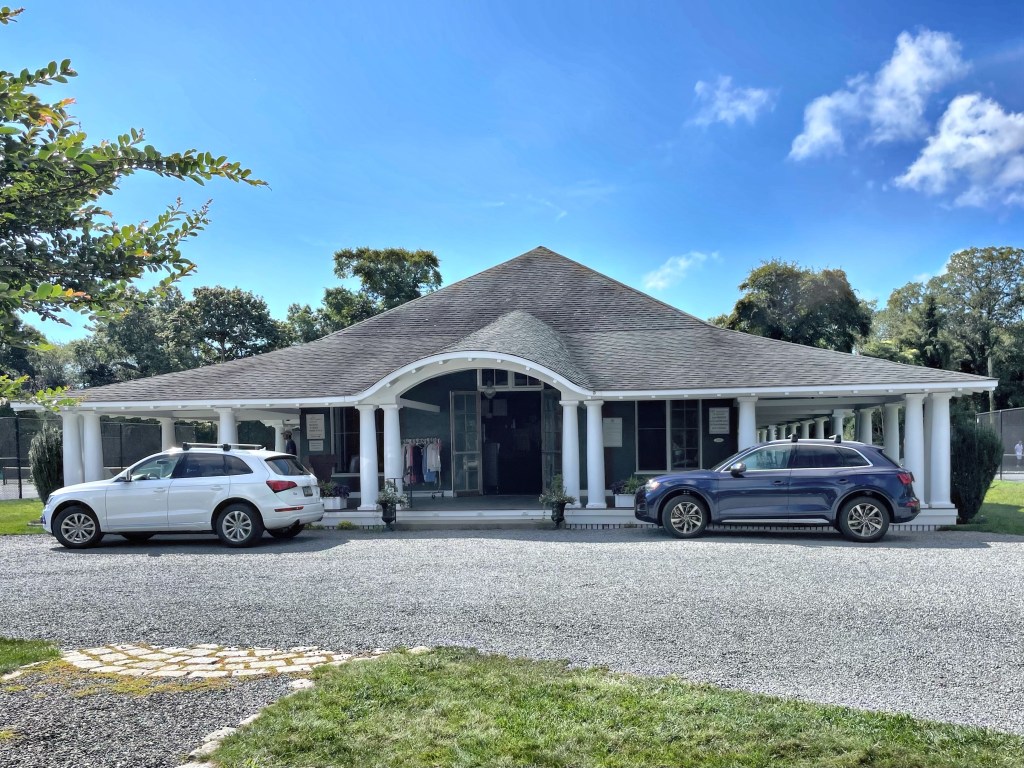
The Sippican Tennis Club in Marion, Massachusetts, was established in 1908 for the purpose of athletic exercise and a place for social gatherings in town. Historically, the town’s population surged in the summer months when wealthy city residents would flock here and stay in their waterfront mansions for a few months a year. The large hipped roof rectangular building was constructed just before the club opened in 1908, and it is flanked by eight tennis courts. Charles Allerton Coolidge, a principal in the well known firm, Shepley Rutan and Coolidge, was one of the original shareholders as well as the architect for the building. He also was a summer resident himself (his home was previously featured). The building is constructed of concrete and features paired, tapered columns which run the perimeter of the structure, supporting a deep porch. The broad elliptical arch and exposed rafters add to the Craftsman style flair of the building.
Charles Allerton Coolidge Cottage // 1891

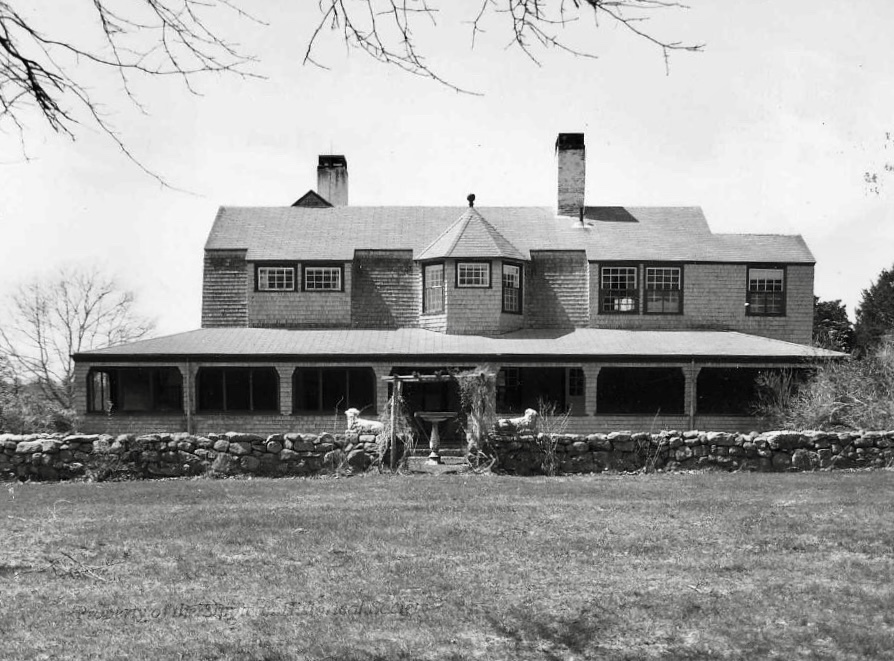
Charles Allerton Coolidge (1858-1936) was born in Boston and grew up in the iconic Beacon Hill neighborhood, known for its stunning architecture. Inspired by his surroundings, he attended Harvard and MIT and studied architecture, graduating in 1883. He entered into Henry Hobson Richardson’s architectural practice as a draftsman until Richardson’s death in 1886. Upon his death, Coolidge continued Richardson’s commissions as a partner, as Shepley, Rutan and Coolidge. Shepley married Richardson’s daughter; and Coolidge later married Shepley’s sister. It is likely that Coolidge became aware of Marion from Richardson’s earlier design of the Percy Browne Cottage in town. He must have liked the town so much, since he built this summer cottage in 1891 in a sparsely developed area across Sippican Harbor from the village. The Shingle style home was later rented to Isaac Henry Lionberger, a lawyer who served as assistant Attorney General of the United States by appointment of President Cleveland (who also summered in Marion). Lionberger, who spent most of his time at his home in St. Louis, married Coolidge’s wife’s sister, so the families often hung out at this home together. The summer cottage in Marion is still owned by Coolidge’s heirs to this day.

Turner Art Publishing Company Building // 1908

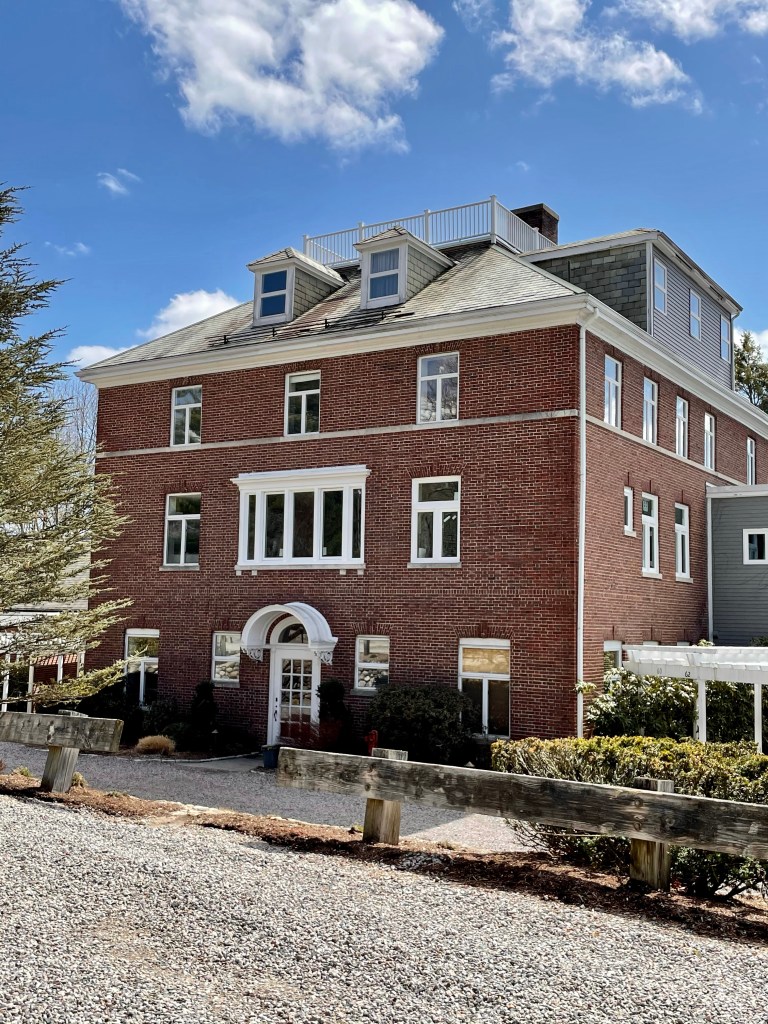
In 1907, the 86-acre Bigelow Estate (featured yesterday), was purchased by Horace K. Turner, owner of an art publishing company founded in Boston about 1904. Turner moved his workshops to the estate so the artists could work in healthy country surroundings. The firm required the long wings contoured into the hillside to provide ample natural light and views to the distance for the workers. In 1920, the entire property, including the Bigelow House and the bungalow workshops, were acquired by the New England Peabody Home, which had been located in Hyde Park for 25 years. It was set up as a school and hospital for “crippled children” and this brick building was added to the center section. Architects for this addition were Coolidge and Shattuck, successors to the firm of Shepley, Rutan, and Coolidge. The Peabody Home was among the first to use sun treatment as a cure for physical ills and the extensive porches were well suited to this purpose. The Peabody Home became obsolete and the property was sold off in the mid-20th century. In 1979, the Peabody Home was sold to Edward Leventhal, who converted the buildings into 22 condominiums. Architects for the project were Jung/Brannen.

Flour and Grain Exchange Building // 1892

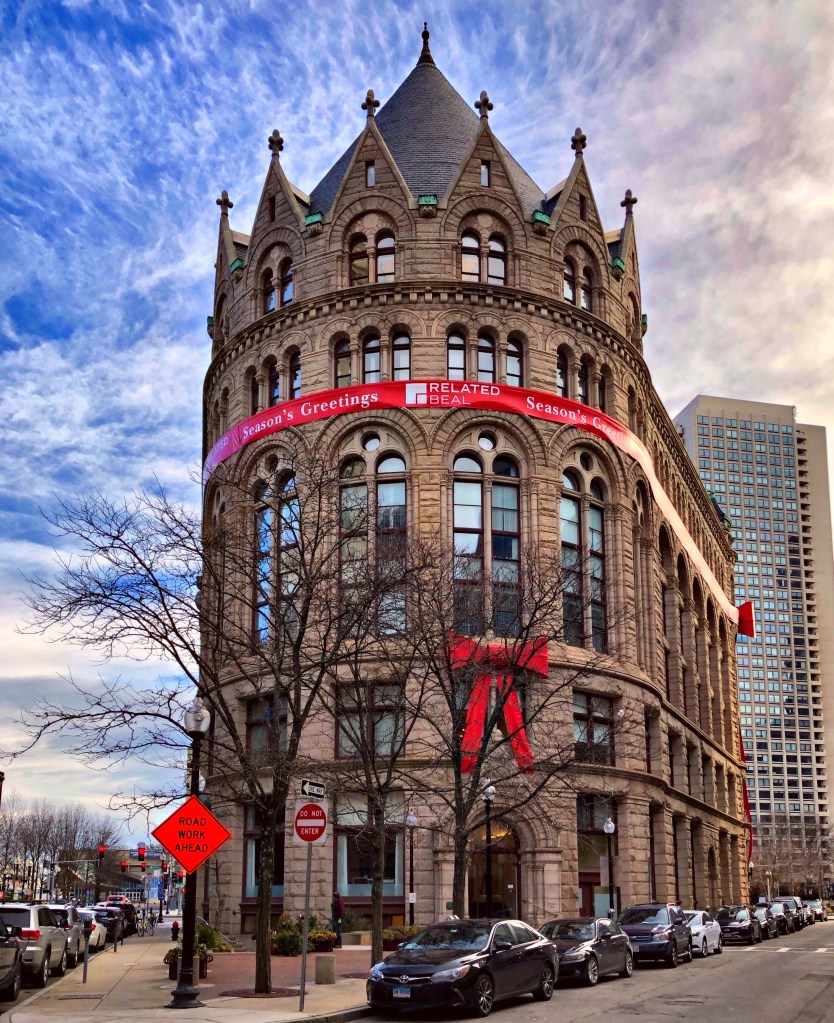
One of my favorite buildings in Boston (and always dressed up with a big red ribbon for the holidays) is the Flour and Grain Exchange Building in Downtown Boston. The third Boston Chamber of Commerce was incorporated in 1884 to promote just and equitable principles of trade, solve disputes between members and acquire and disseminate information related to mercantile interests. There was, however, a feeling among the members that the organization could not attain its full stature until it had a building of its own, one that would be both an ornament to the city and a credit to itself. In 1889, a triangular site was donated to the organization by members, who then hired prominent Boston architectural firm, Shepley, Rutan and Coolidge, the successor to Henry Hobson Richardson‘s practice. It appears the firm was inspired by H.H. Richardson’s F. L. Ames Wholesale Store which was built nearby just years before. The steel-frame building is constructed of rough hewn Milford granite pierced with engaged columns and arched openings, both common in Richardsonian Romanesque buildings. The prominent corner at Milk and India Streets features a rounded corner tower with conical roof, surrounded by a crown of dormers. The building was restored by owners Beal Properties in the late 1980s who own it to this day.

North Easton Savings Bank and Post Office // 1904

Located across the street from the Oakes Ames Memorial Hall and the Ames Free Library, the North Easton Savings Bank and Post Office building perfectly compliments the Romanesque Revival motif seen in the village. The building was constructed in 1904 in a Richardsonian Romanesque design with rough-faced granite ashlar walls with brownstone trim. The three-bay front façade contains centered entrances recessed behind a wide brownstone arch in the signature Richardsonian manner. The building was designed by Shepley, Rutan and Coolidge, a Boston-based architectural firm which grew out of Henry Hobson Richardson’s office, where they completed many of Richardson’s unfinished works after his death.