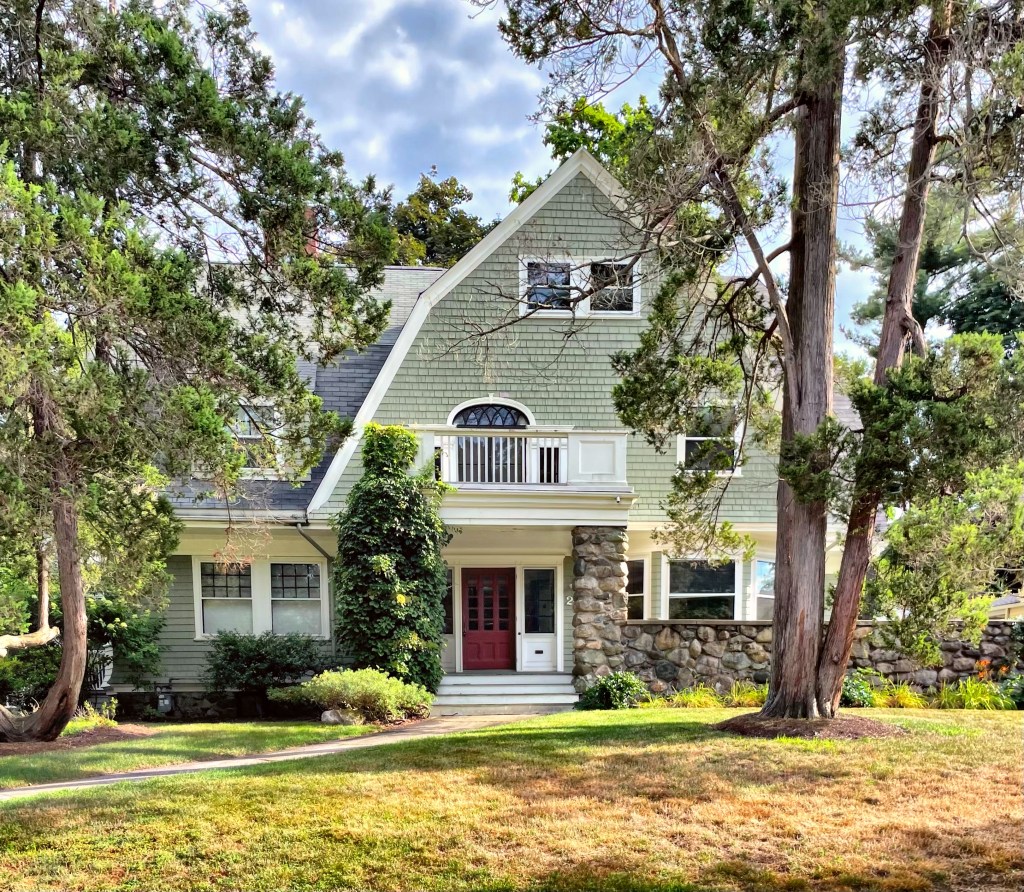
Benjamin H. Davidson, a wool merchant had this stunning property built in Waban for his family in 1897. Benjamin and his architect envisioned a large, Shingle style mansion, set back off the street. The house obviously exhibits shingle cladding along all surfaces including stone piers coming up from the ground at the porch, giving the house an organic feeling. The design also includes a large stairhall Palladian window, which is obscured from the street by a balustrade.
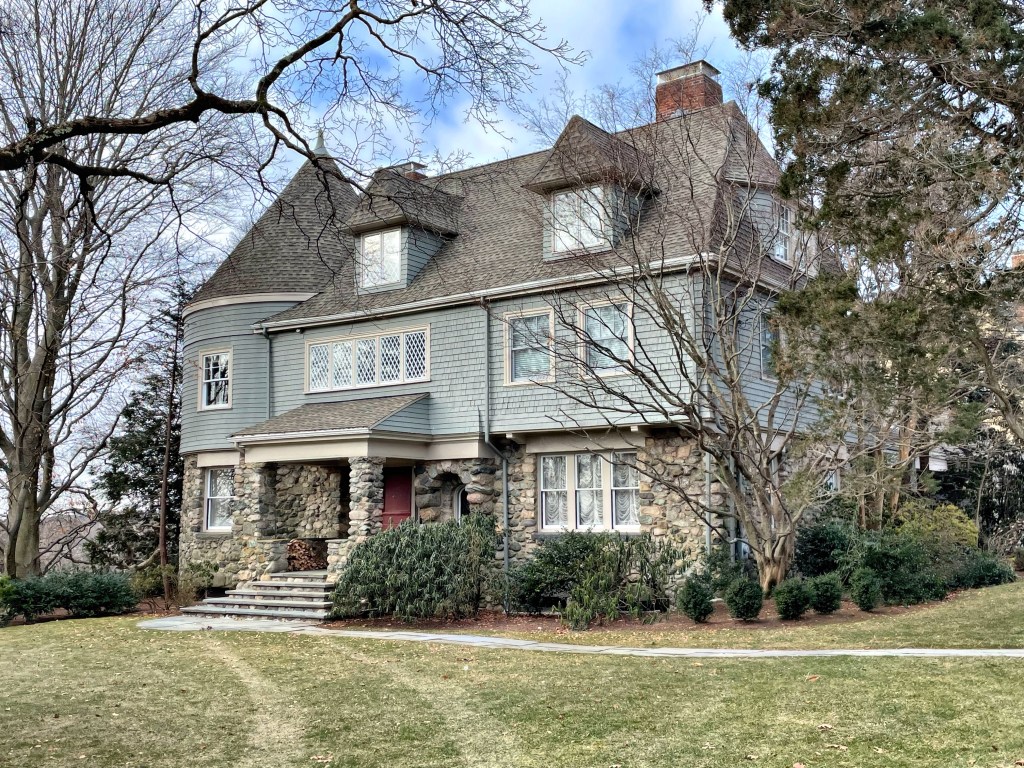
One of the best houses in Waban Village in Newton is this absolutely stunning Shingle style/Queen Anne home perched high on Moffat Hill. This house was built in 1888 for Louis K. Harlow, who began his career as a professional artist in 1880 and traveled Europe to study the work of prominent painters. Back in the Boston area, Harlow painted nature and landscapes and produced etchings that were shown in the Boston Art Club and sold worldwide. He later got into poetry and published multiple works. Harlow hired the firm of Longfellow, Alden, and Harlow, to design this country retreat. I assume there is a relation between Louis K. and the architect Alfred Branch Harlow, but I would love to find out the connection! The design is quintessentially Queen Anne, with the asymmetry, complex roof form, varied siding types, and diamond window sashes. The shingled second floor overhangs the fieldstone first floor which to me, evokes the Shingle style where the house seems to have grown out from the earth. I can only imagine how spectacular the interior is!
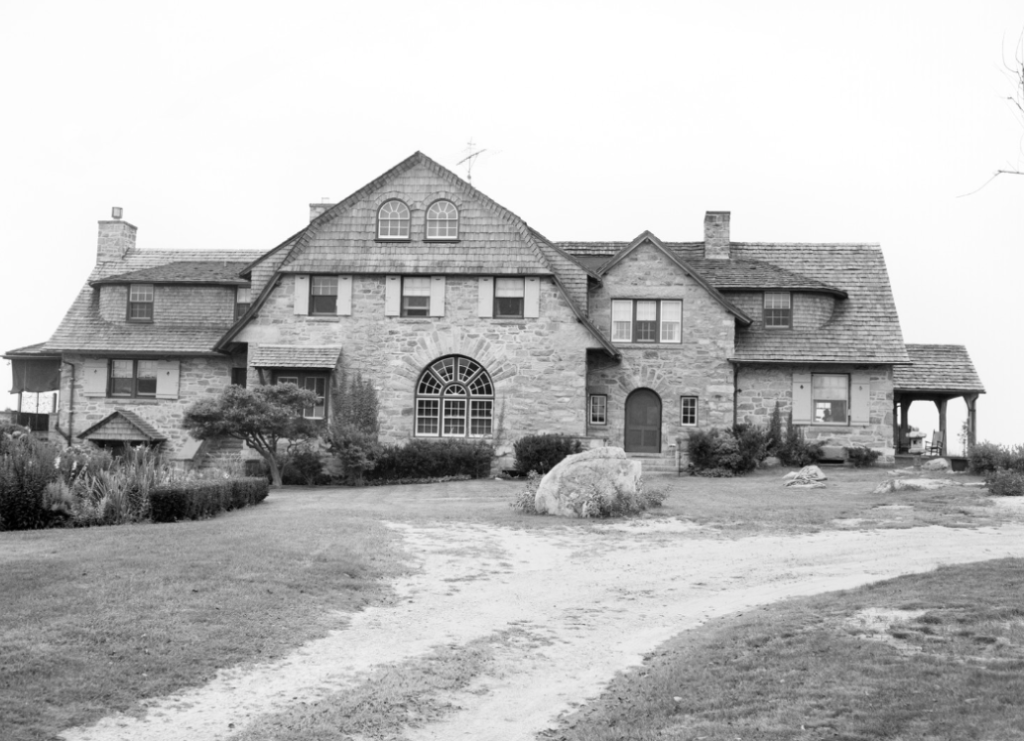
Henry Cooke White (1861-1952), the patriarch of an extremely artistic family, purchased undeveloped land on a coastal part of Waterford, Connecticut in 1891. When passing through the area he found a vantage point overlooking the water, he was overwhelmed by the panoramic view of Long Island Sound, writing in his memoirs, “…I was convinced that this was my Promised land.” Not long after, he built a summer cottage on what became known as White Point the following year. The Whites wintered with his parents in Hartford until they built a year-round home in Waterford in 1913, designed by Wilson Eyre, a Philadelphia architect, after he was inspired by Charles Lang Freer’s home in Detroit. The rustic Shingle style house was constructed of ashlar stone masonry with shingles above, which is sited perfectly on the rocky shoreline. Also on the site is a boat house and garage (which I could photograph from the street) in similar detailing. Henry‘s son and grandson both followed his footsteps: Nelson Cooke White (1900-1989), who was born at White Point, and inherited his father’s love of the sea, became a noted marine and landscape painter; and Nelson Holbrook White (1932-) who was taught by his grandfather and later studied in Italy how to perfect his painting.
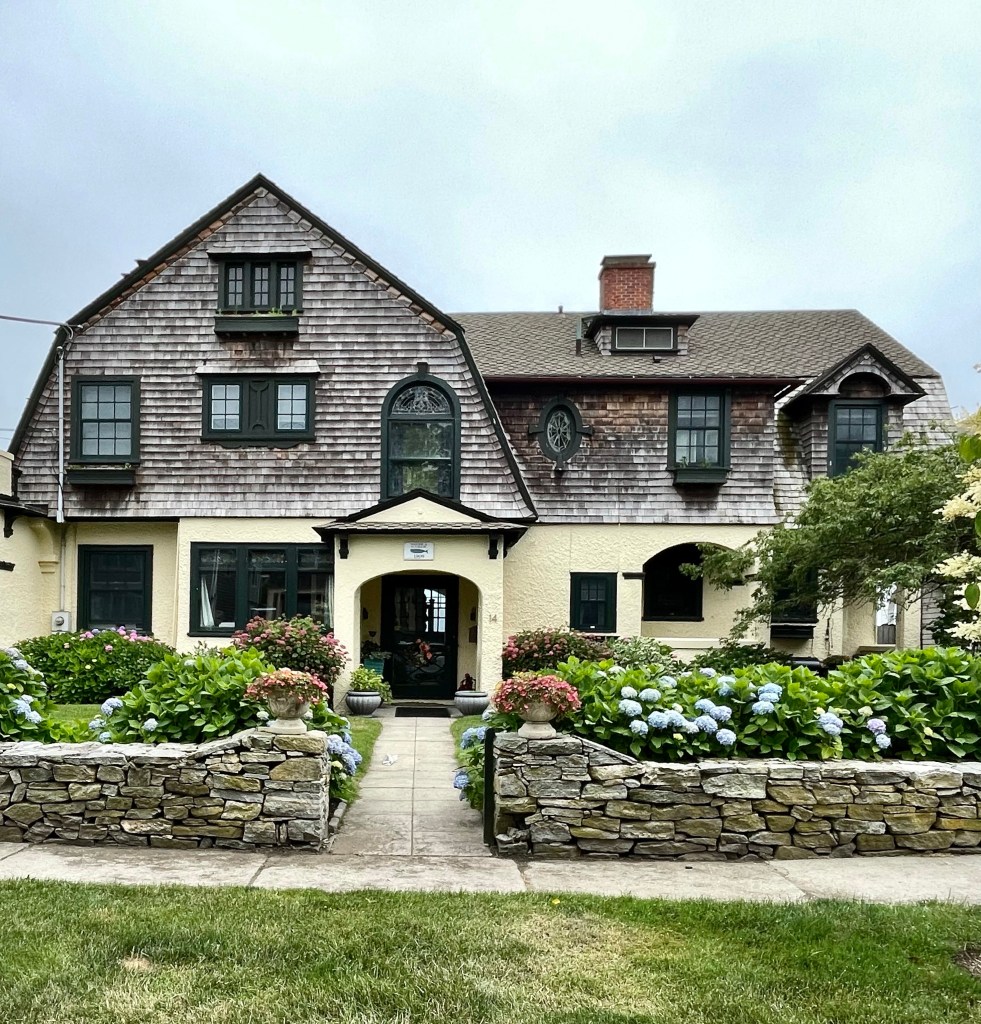
This summer cottage in the Neptune Park development of New London, Connecticut, was built around 1910 for Walter Garde, a resident of Hartford and New London. Walter built this home as a retreat from city-living where he could breathe the fresh sea breeze and not worry about smoke and pollution from the growing industrial cores of Hartford and New London. The home blends styles and forms elegantly with a stuccoed ground floor and shingles above. A cross-gambrel roof adds depth with windows in various shapes and sizes creating a pleasing composition at the street. Walter Garde was a businessman who notably opened the Garde Theatre (now Garde Arts Center) in Downtown New London.
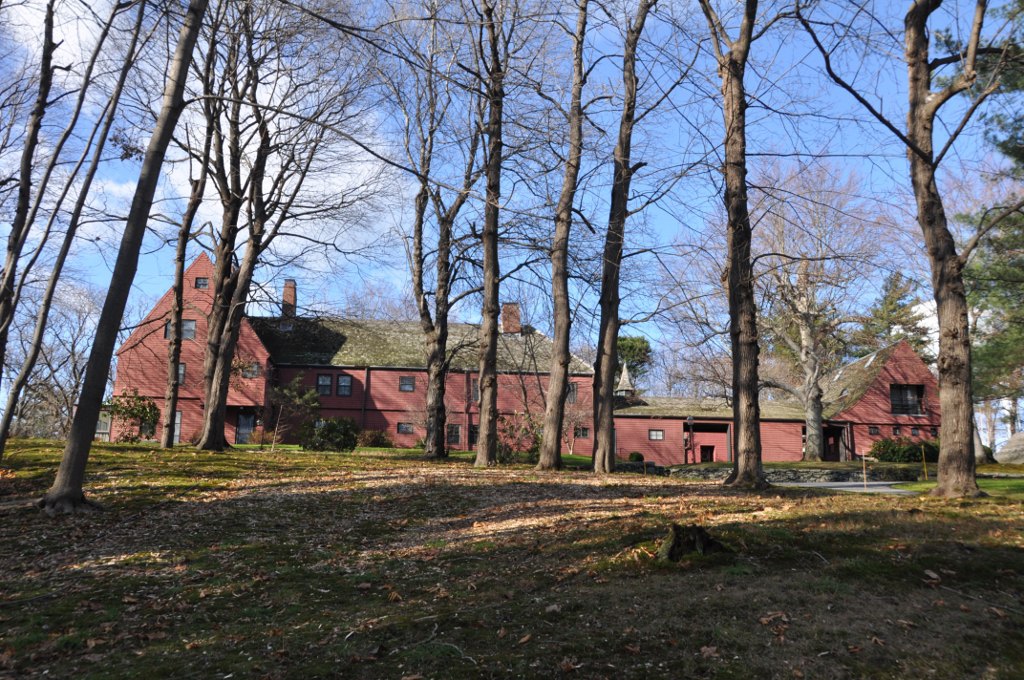
The Dr. Henry Jacob Bigelow House, sitting high on Oak Hill in Newton, is among the last designs (1886) of architectural icon Henry Hobson Richardson. If you already didn’t know, Richardson was one of the foremost architects of his day and is known both for bold Richardsonian Romanesque and Shingle style designs. He was hired by Dr. Henry Jacob Bigelow to provide plans for a sprawling country retreat from the noisy and cramped conditions in Boston. Dr. Bigelow was an eminent surgeon in Boston who earlier, helped facilitate the first public dose of ether as anesthesia on a patient, a breakthrough that led to the stunning Ether Monument in the Boston Public Garden. Bigelow only got to enjoy the country estate for a couple years until he died in the home in 1890. Years later, the estate (and nearby buildings) became home to the Peabody Home of Crippled Children, which worked as a sort of open-air hospital. Eventually, the home was vacated and sat, deteriorating on the hill. It was saved from demolition through the efforts of preservationists in Newton, and was restored as a part of “This Old House” with Bob Vila. It was restored as a set of five condominiums sited in a sunny interior courtyard.
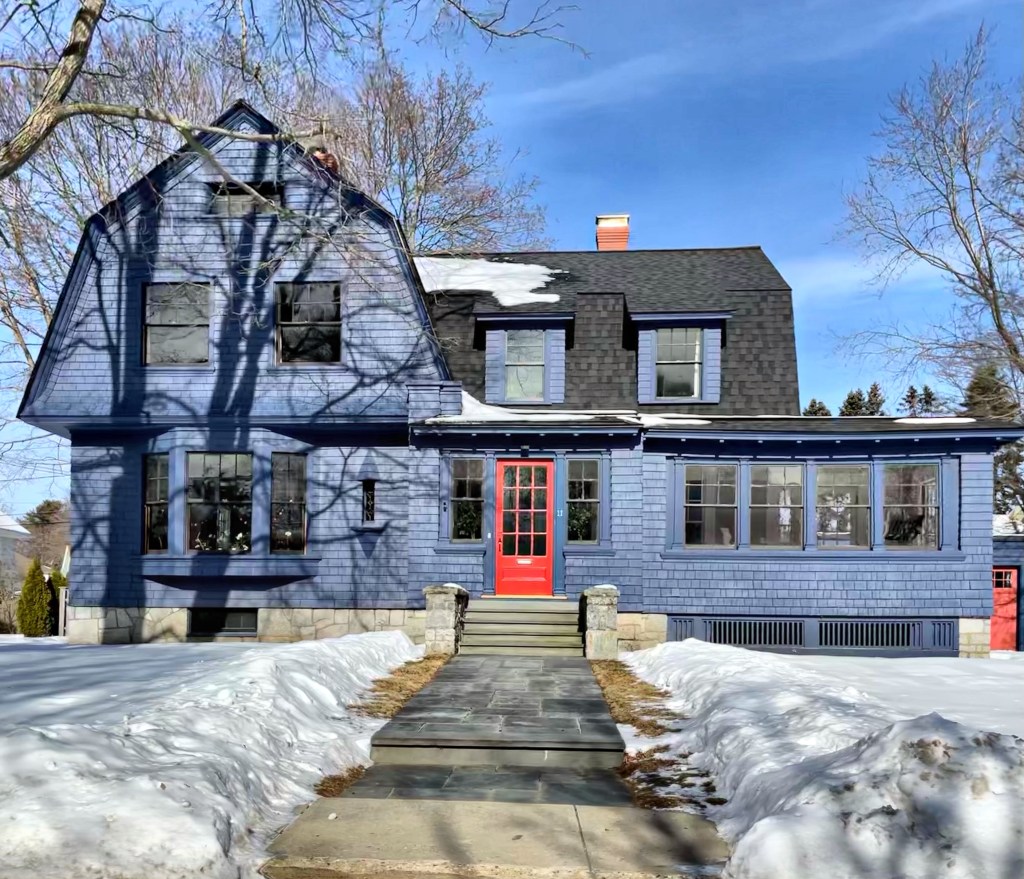
I normally am not a fan of dark houses, but I really like this one, but some of the amazing detail is harder to see due to the singular, dark paint color. This home in Cape Elizabeth was built in 1915, during the housing boom in the early 20th century when the formerly sleepy farming town saw massive development as it became a summer resort and bedroom community of Portland. Owner David A. Calhoun hired the Portland firm of Miller & Mayo to design this home, and they pulled out all the stops for a modest budget. Calhoun moved to Maine in the 1880s and became a founding member of the plumbing and heating firm of Willey & Calhoun, quickly making a name for himself. The two-story home has a shingled exterior, a cross-gambrel roof and a shed dormer on the front facade. The main entry door is flanked on either side by small windows. The house is a great blending of Colonial Revival and Shingle styles.