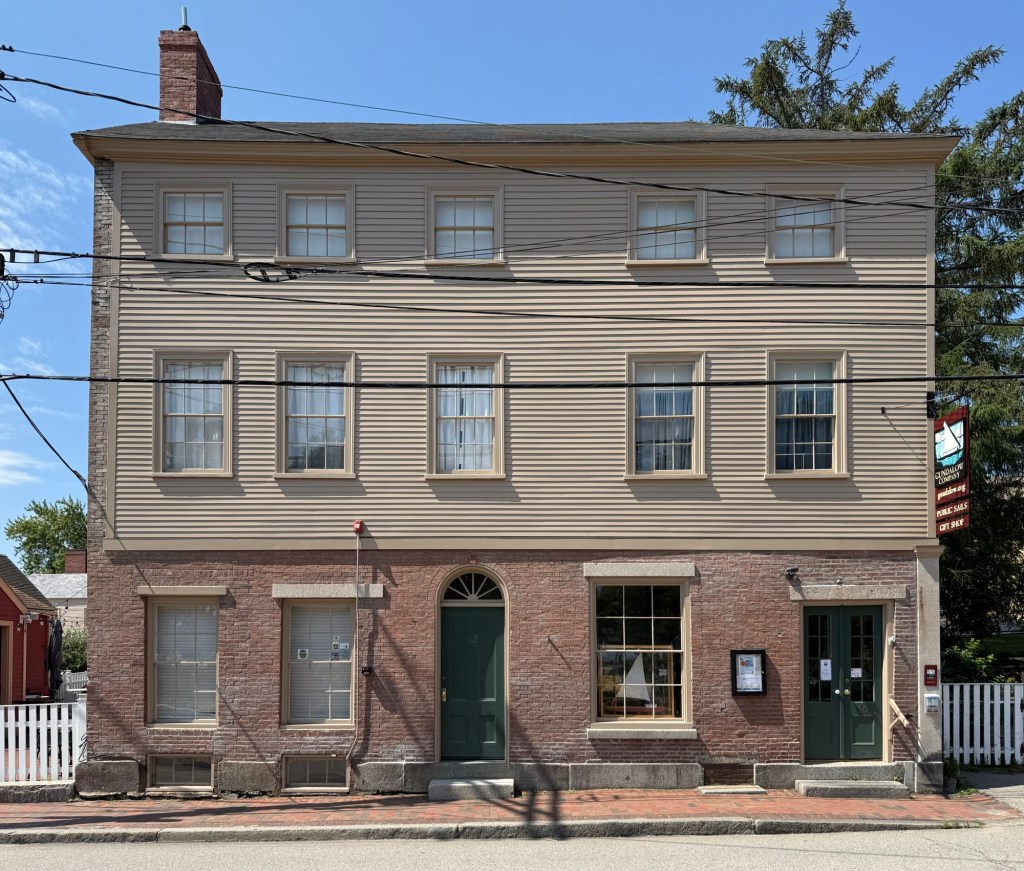
Jefferson House and Stores // c.1816

The Jefferson House and Stores on Marcy Street sits near the working port and harbor of Portsmouth, New Hampshire, as a historic Federal style mixed-use building. The structure dates to the early 19th century and consists of a brick first floor and clapboarded upper stories. Likely due to coastal flooding during storms, the brick ground floor with slightly raised granite foundation would provide some relief from floodwaters getting inside the building. The shortened windows at the third floor, fanlight over the main entrance, and form with shallow hipped roof, are all hallmarks of the Federal style. The building is today owned by Strawbery Banke and rented out to the Gundalow Company, a non-profit that seeks to, “protect the Piscataqua Region’s maritime heritage and environment through education and action.”
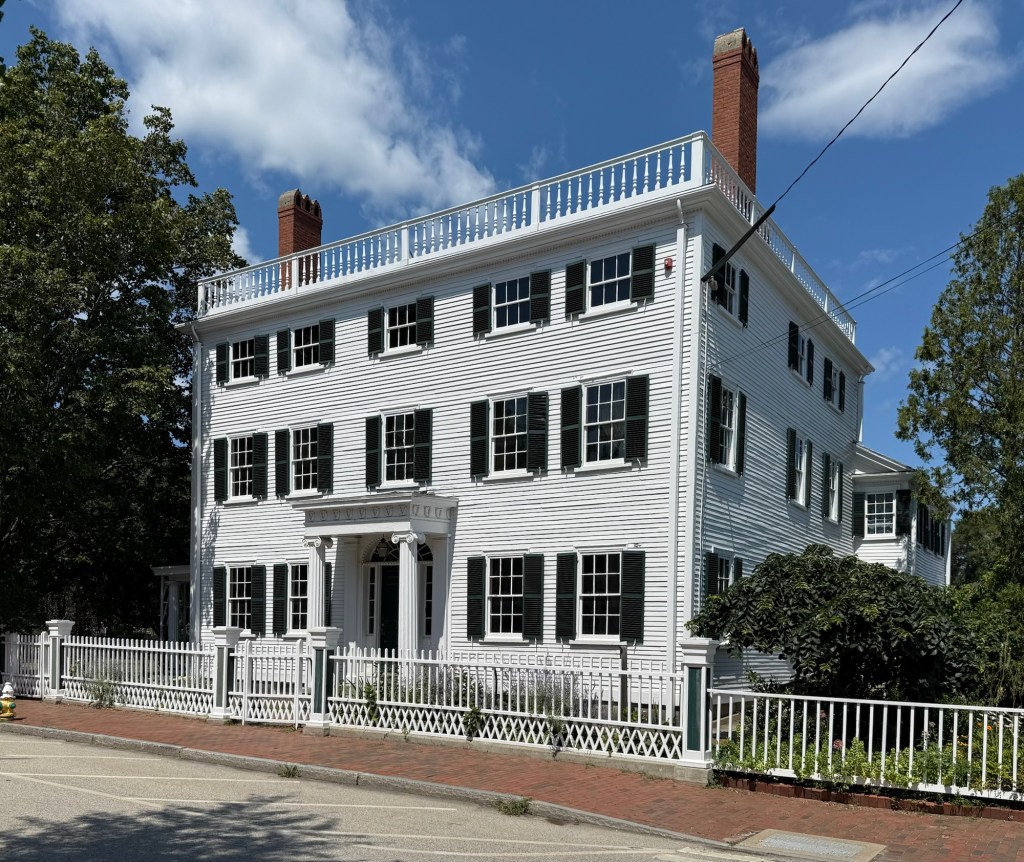
Governor Goodwin Mansion // 1811

The Goodwin Mansion of Portsmouth, New Hampshire, is a landmark example of the Federal style of architecture and served as the home of Ichabod Goodwin and his wife, Sarah Parker Rice Goodwin. The home was built in 1811 and was originally located elsewhere in town, across from Goodwin Park, until it was moved to Strawbery Banke, saving the home from demolition. Ichabod Goodwin (1794-1882), a retired sea captain, purchased the home in 1832 and moved in with his wife, Sarah, and daughter, Abigail. The same year, he partnered with Samuel Coues to establish the shipping firm of Coues & Goodwin, importing raw materials, such as cotton, produced by enslaved people in the Southern States and elsewhere. Mr. Goodwin was the governor of New Hampshire upon the outbreak of the Civil War and was a prominent businessman until his death. Ichabod’s wife, Sarah, raised their children and planned the elaborate garden, which Strawbery Banke recreated where the mansion stands today. The Goodwins kept their home updated with all the latest technology, such as gas lighting, coal grates and running water from the Portsmouth Aqueduct Company, which brought water into houses through wooden pipes. It remains a significant house museum and architectural landmark in Portsmouth.

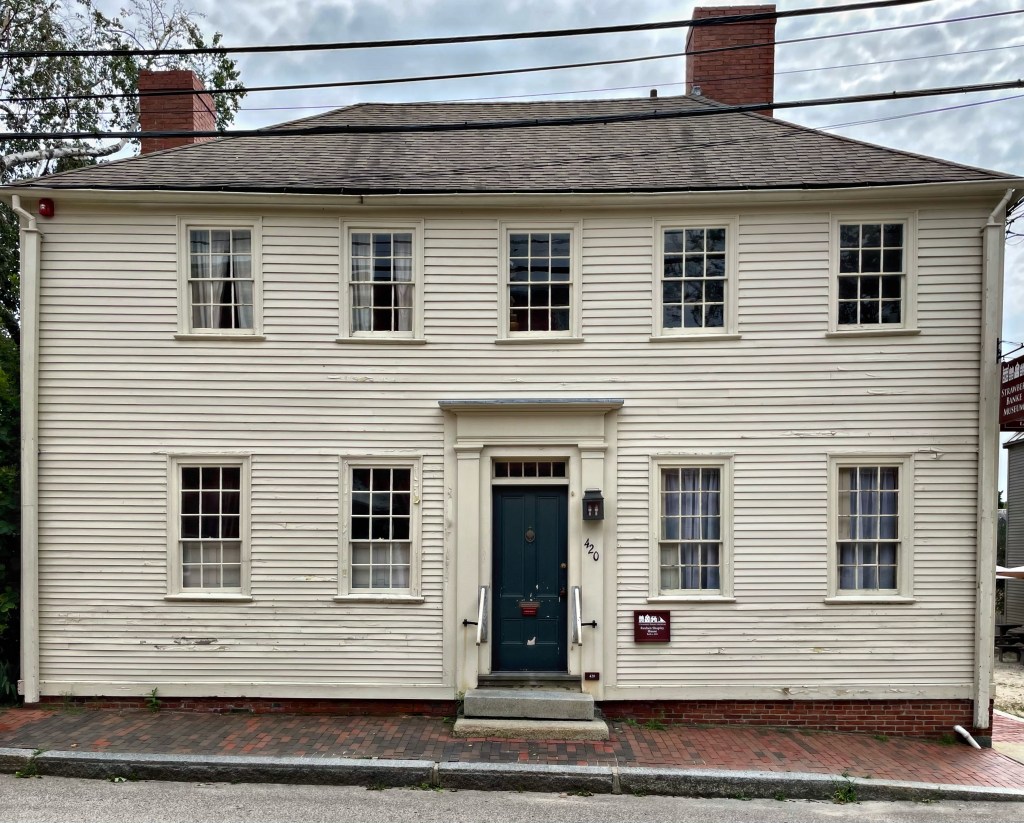
Reuben Shapley House // 1813

Captain Reuben Shapley (1750-1825) was a Portsmouth mariner, merchant, and shipbuilder born on the Isle of Shoals in 1750. He was married to Lydia Blaisdell Shapley, and they had one daughter, Nancy, who died in 1802 at the young age of 17. Shapley bought this house lot in 1790 and erected a barn or outbuilding on the lot, which was nextdoor to his main house. On the evening of August 13, 1811, a sailing ship owned by Captain Shapley, the Wonolanset, caught fire. According to Nathaniel Adams’ 1825 book, Annals of Portsmouth, the ship “had arrived from sea about an hour before, laden with hemp, cotton, molasses, naval stores and flour, and lay at Shapley’s Wharf.” Although townspeople tried to extinguish the blaze, the fire persisted, and they were forced to cut the vessel loose and let it drift safely out into the river and away from other vulnerable ships and warehouses. Captain Shapley’s loss was estimated at $12,000. After this, it appears Reuben got more involved in real estate, and either converted his old barn or built new, this house in 1813, Captain Shapley died in 1825, but the house continued as part of his estate until 1831. The house is now well-preserved and a part of Strawberry Banke’s campus in Portsmouth.

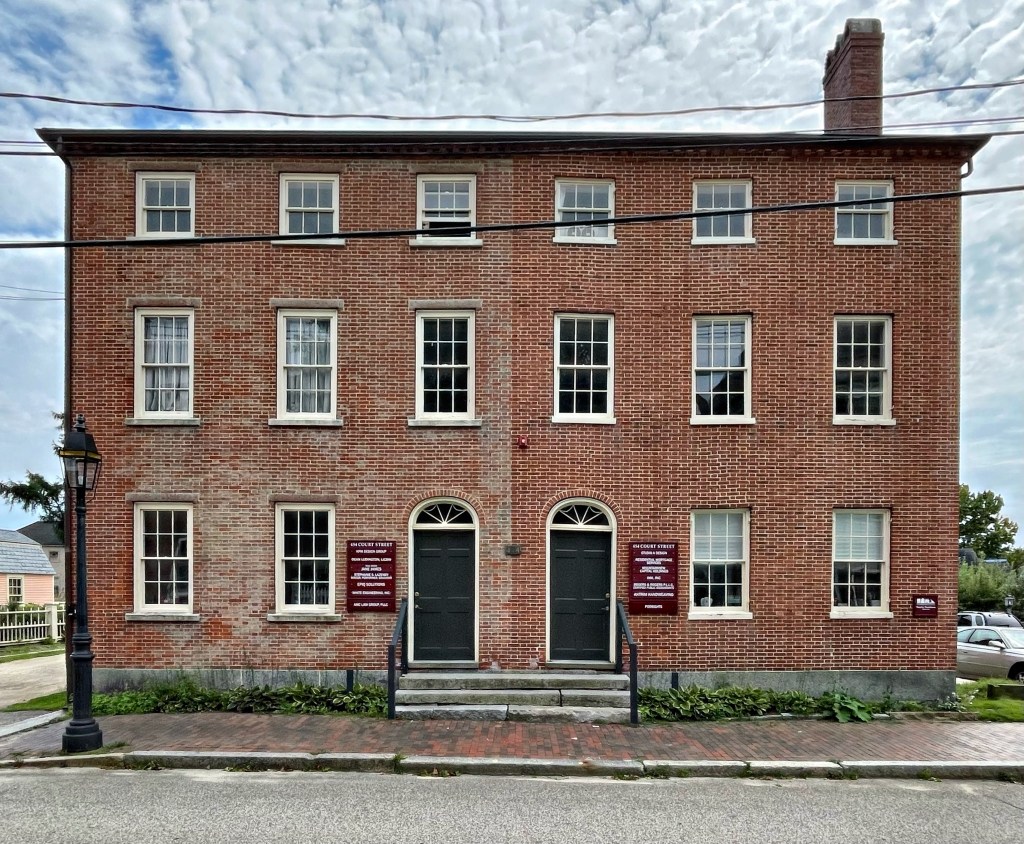
Shapley Townhouses // 1815

The Shapley Townhouses in Portsmouth, New Hampshire sit on Court Street and were built around 1814-15, after the Great Portsmouth Fire of 1813 had destroyed the center of town. It was constructed to conform with the new Brick Law that required all new buildings in downtown Portsmouth to be built of “fireproof” brick. The paired townhouses are unusual in the city as a particularly well-preserved example of a Federal period double-house. The house was built by Captain Reuben Shapley, a ship’s captain and merchant. In about 1973, this building was remodeled into a temporary home and counseling center for troubled youth. Suffering from deferred maintenance and the direct proximity to the Strawberry Banke Museum, the Strawberry Banke Foundation purchased the double-house who rent out spaces inside to offices, providing a revenue stream to maintain and further showcase the history of the port town.