Gardiner Train Depot // 1911

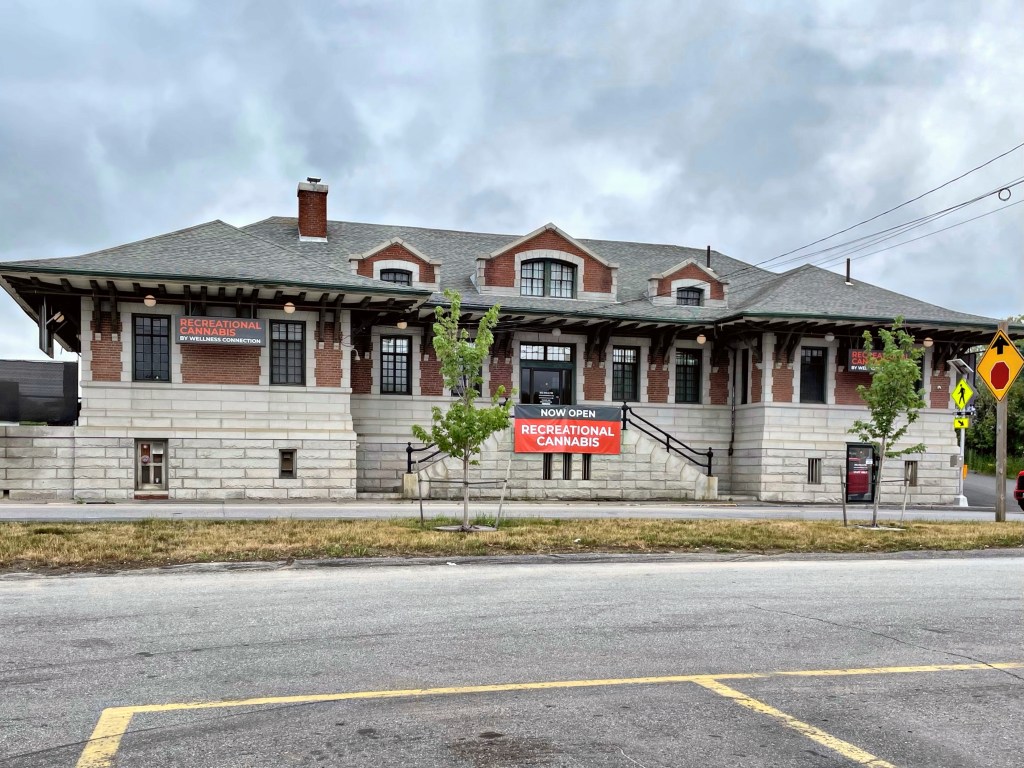
The first train arrived in Gardiner, Maine in 1851. Rail here introduced a new mode of transportation for passengers and freight, which previously relied on horse or ship up the Kennebec River. When the old station was deemed too small and outdated, the Maine Central Railroad Company decided to hire Portland architect, George Burnham to complete plans for a more fitting station. This building is a mix of styles, the two I would categorize it as are Romanesque Revival and Spanish Revival. The building incorporates a number of influences of the two along with a deep overhanging roof supported by large brackets, heavy rusticated granite blocks at the base, and quoining around the windows and corners. The station was in operation until about 1960 when rail service here halted. Since that time, the building has been adaptively reused as a retail store, today as a recreational cannabis dispensary. So you can get high and look at cool architecture!

Kneeland Street Station // 1847-1918

All Aboard!! The Kneeland Street Station was built at the southern edge of Downtown Boston in 1847 for the newly established Old Colony Railroad Company. By the early 1840s, the city of Boston had six major rail lines connecting it with other places including Lowell, Maine, Fitchburg, and Salem to the north, Worcester to the west and Providence to the southwest. The southeastern part of Massachusetts had yet to be served by a rail link to Boston. On March 16, 1844 the Old Colony Railroad Corporation was formed to provide a rail connection between Boston and Plymouth. Construction of the line began in South Boston in 1844 and the line opened to Plymouth in 1845. The company needed a more accessible station to the residents and businessmen of Downtown Boston, so they acquired a large parcel of land on Kneeland Street to extend the line. The corporation hired architect Gridley James Fox Bryant, who designed this stunning railroad station constructed of brick with strong stone trimmings. As was common, a large clock was affixed to the building to allow waiting passengers to know how long they would be waiting. From 1845 to 1893, the Old Colony railroad network grew extensively through a series of mergers and acquisitions with other established railroads, serving lines to Providence, Newport, Fall River, New Bedford and down the Cape. The railroad was acquired in 1893 by the New York, New Haven and Hartford Railroad, and sought to consolidate the many local stations into a larger building. They soon after began construction on Boston’s South Station, re-routing lines to that new building. They sold off the excess stations, including this one on Kneeland Street, and it was eventually demolished in 1918.

Southport Railroad Stations // 1884 & 1895

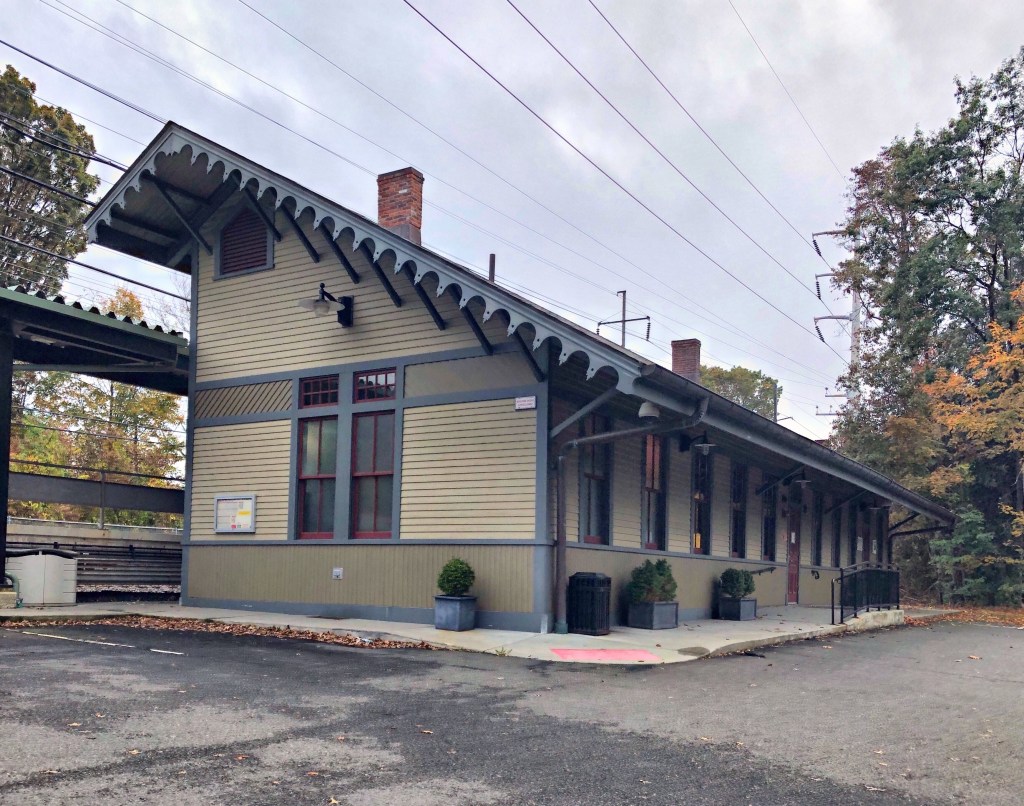
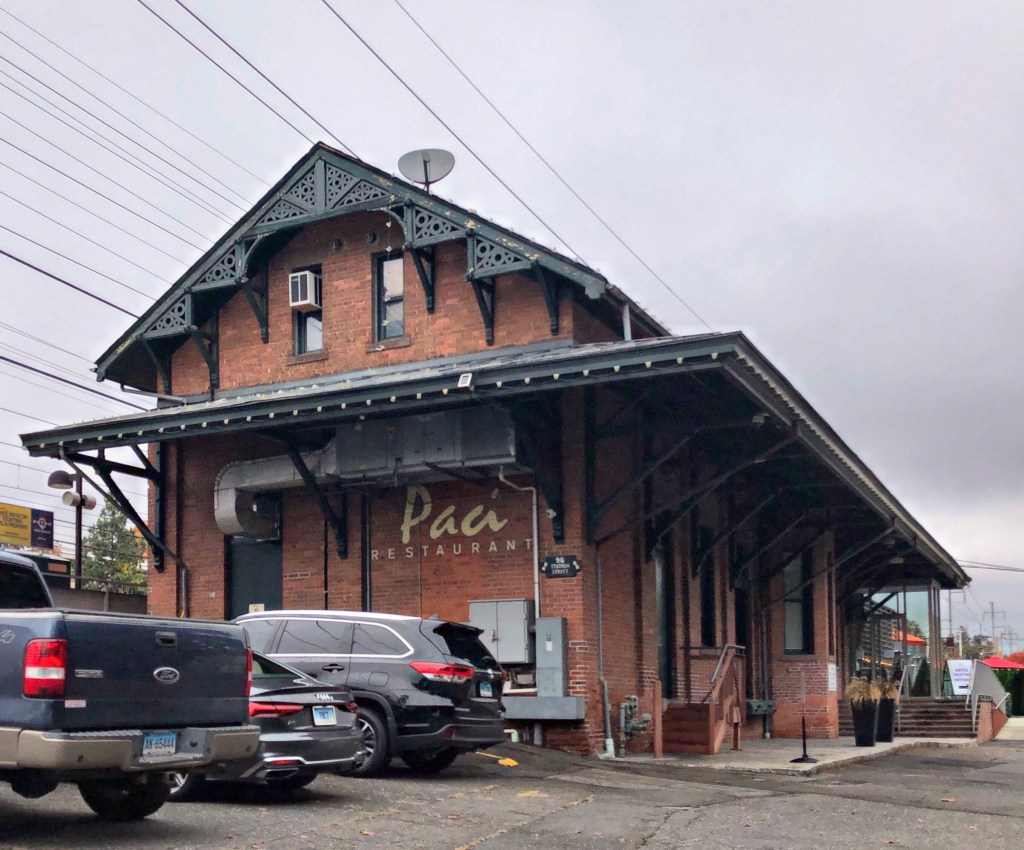
The Southport railroad stations in Fairfield, Connecticut, are reminders of the important role of railroad passenger service in the historical development of the town which continues to this day. In Southport, there are two stations, an east-bound and west-bound, one on either side of the tracks. The older east-bound station was built in 1884 to replace a depot destroyed by fire. It is typical of the substantial brick stations built at small-town stops throughout the state in the period. The use of brick was likely to prevent fire destroying yet another station. The stations were commonly large enough to accommodate spacious waiting rooms, ticket counters, offices, restrooms, and a baggage area. The brick station was converted to a restaurant, with a modern addition by Roger Ferris + Partners completed by 2017.

The wooden west-bound station was built around 1895 as part of a massive rebuilding of the New York, New Haven and Hartford Railroad’s main line. At this time, the railroad adopted a single design-concept for all the stations, reverting to wood construction, and limited the stylistic details. The Southport station has an interesting design however; with its saltbox-like roofline, bargeboards, and stick detailing. Imagine all the people and stories that passed through these buildings. Parents saying goodbye to children going off to college or war, businessmen and women commuting to and from work, or people like me who took it to Manhattan!

North Easton Railroad Station // 1884

Frederick Lothrop Ames (1835-1893) was born in Easton, MA, the son of Oliver Ames Jr. who ran the Ames Shovel Works in town. On the death of his father in 1877, Frederick became head of the Ames & Sons Corporation also inheriting upwards of six million dollars, which he invested in railroads. From this, he eventually became Vice President of the Old Colony Railroad and director of the Union Pacific railroad. At the time of his death, Ames was reported to be the wealthiest person in Massachusetts! Due to his role for the Old Colony Railroad, Ames had a rail station built in his hometown, adjacent to his family’s factory. Henry Hobson Richardson, who designed many other buildings in town for the Ames Family, designed this station in his signature Richardsonian Romanesque style with its large arches, varied rustication of stone, and brownstone trimming. The building was completed two years before Richardson’s death. Rail service here was cut in the 1950s, allowing the Ames family in 1969 to buy the station back from the consolidated New York Central Railroad, gifting it to the Easton Historical Society.