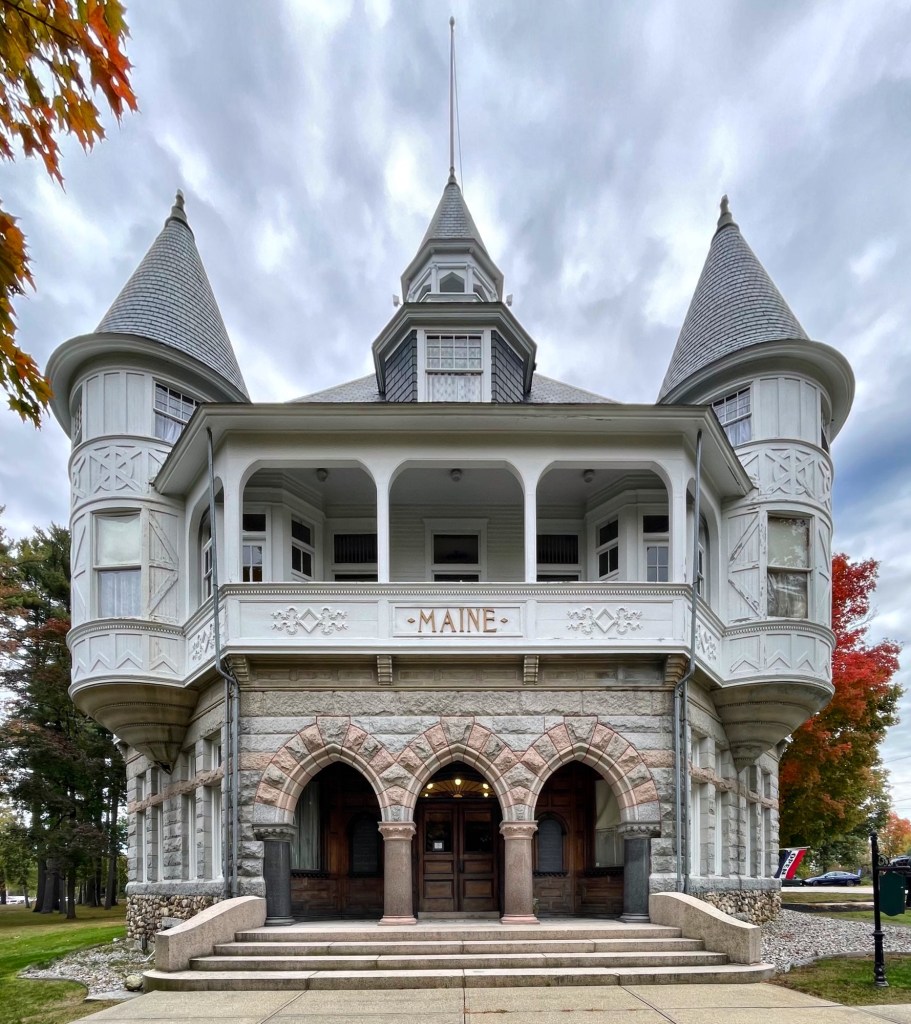
Maine State Building // 1893

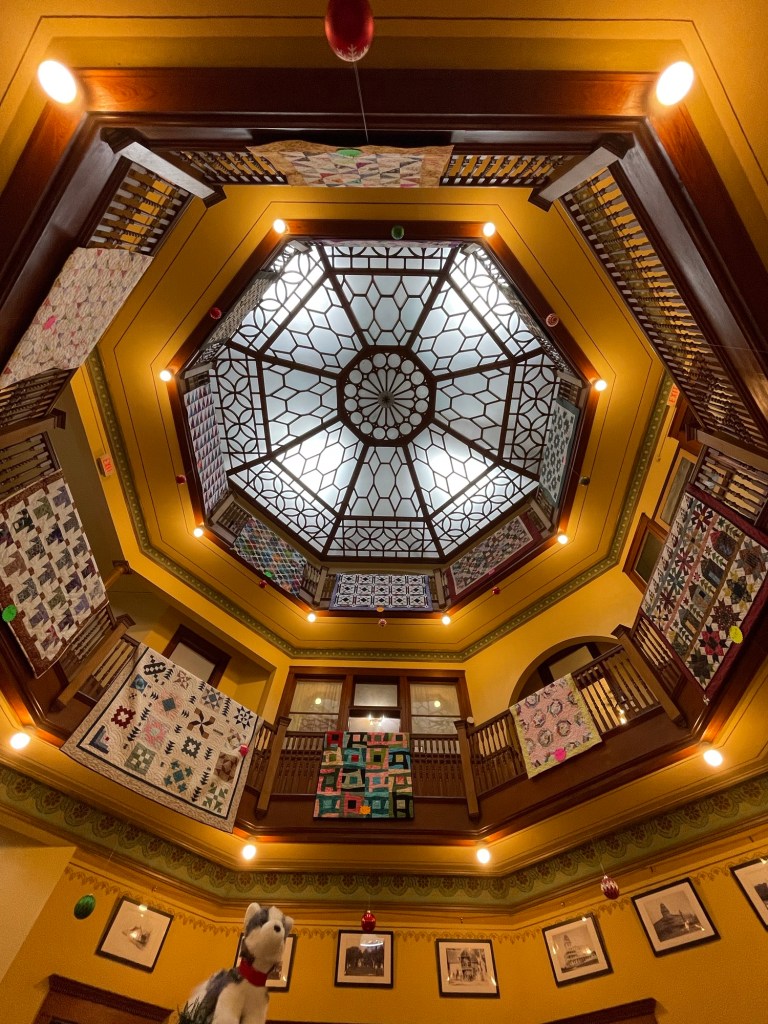
The Maine State Building is a one-of-a-kind landmark located in the Poland Springs Historic District of Poland, Maine, though it was not originally built in this location! The Victorian structure was built in 1893 at the Columbian Exposition in Chicago (aka the Chicago World’s Fair) as one of the State Buildings constructed by each U.S. state to highlight their history. Designed by Chicago architect Charles Sumner Frost, a Lewiston, Maine native and MIT graduate, the building was constructed of granite with a slate roof. After the close of the fair, the Ricker family of Poland Spring, purchased the building from the state. They had it dismantled, moved to Maine, and rebuilt on their resort, which brought even more visitors to their property. In Maine, it reopened in 1895 as a library and art gallery for their hotel guests. Along with the Norway Building in Norway, The Dutch House in Brookline (a personal favorite), the Palace of Fine Arts (now the Museum of Science and Industry) and World Congress Auxiliary Building (now the Art Institute of Chicago) in Chicago, the Maine State Building is one of the few remaining buildings from the 1893 World’s Fair, and the only State Building remaining. It has been lovingly preserved and operated by the Poland Spring Historical Society, who operate the building as a museum.
Boothbay Harbor Bridge House // 1902

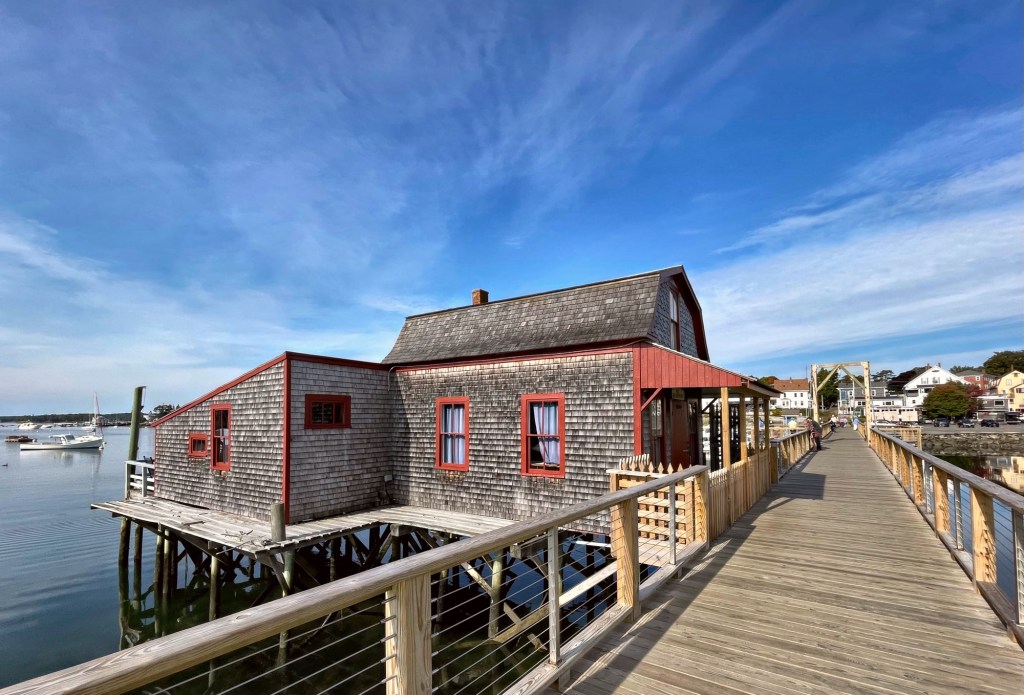
In 1901, a footbridge was built in Boothbay Harbor, Maine, connecting the downtown area with the Mt. Pisgah and Spruce Point areas, which both developed as summer colonies. Within a year, this bridge house was built and occupied by William Foster, the bridge-tender who likely operated some sort of swing to allow vessels to pass by until the footbridge was largely replaced after the Great Freeze of 1918, without a swing or draw. When Mr. Foster operated the footbridge, others in town suspected some wrongdoing. A local selectman began investigating and as the story goes, Mr. Foster had been smuggling liquor into town via ships to this bridge house through a trap-door in the floor of the building. Maine was a dry state, and William would have been able to bring in illegal alcohol to the town. Later uses of the building included a candy shop, gift shop, and the bridge house is now a private residence, with thousands passing by every summer.

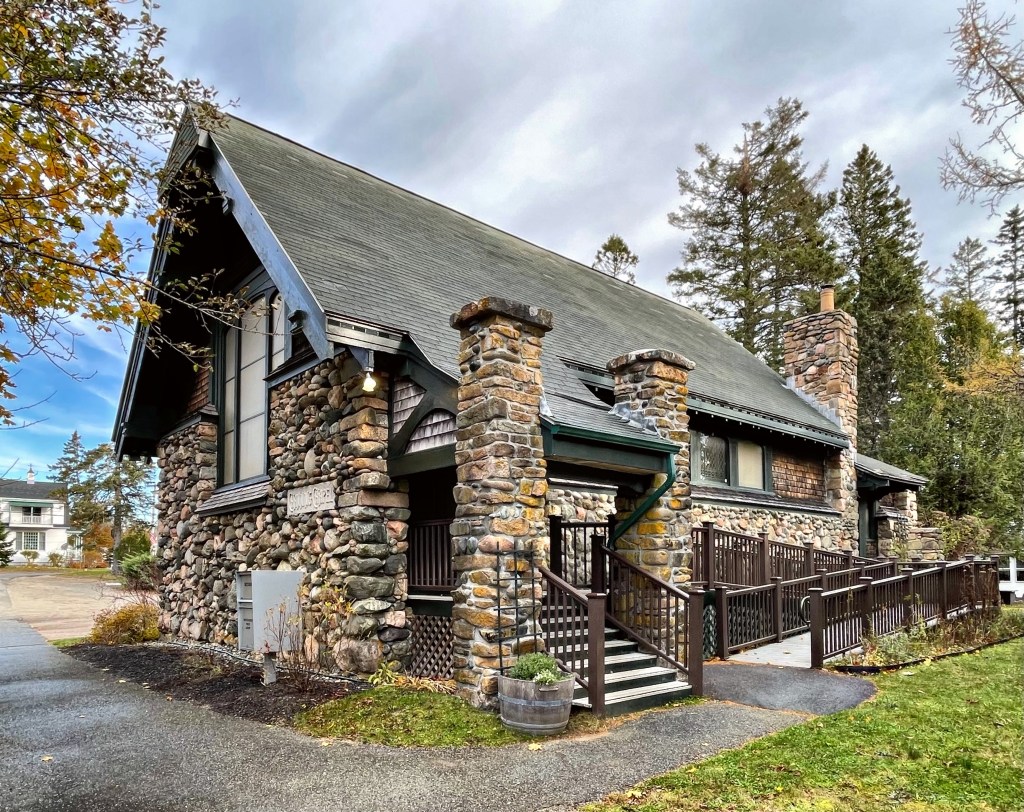
Channing Chapel – Winter Harbor Public Library // 1888

At a time before women could vote or be admitted to the American Medical Association, Almena Guptill (1842-1914) left her small home on Harbor Road to graduate from Boston University of Medicine in 1876 and become a respected Boston physician. She married David Flint (1816-1903), a successful lumber dealer and philanthropist. Almena met David when treating his late wife in Boston. The two, both widowers, married in 1891. Being a staunch follower of William Ellery Channing and believing that there was sufficient interest in Unitarianism here, Flint felt that there was need for a meeting place in his summer town of Winter Harbor. He had this chapel built adjacent to his summer house in the winter of 1887-1888, having field stones brought to the site of the future chapel by people of the village sliding them over ice in the winter. I could not locate the name of the architect of the building. The chapel was deeded to the American Unitarian Association and was later gifted by the association to the Town of Winter Harbor in 1958, the town would sell the property that year. In 1993, a preservation group purchased the chapel and sold it in 1999 back to the town. It now houses the Winter Harbor Public Library. Talk about full-circle!

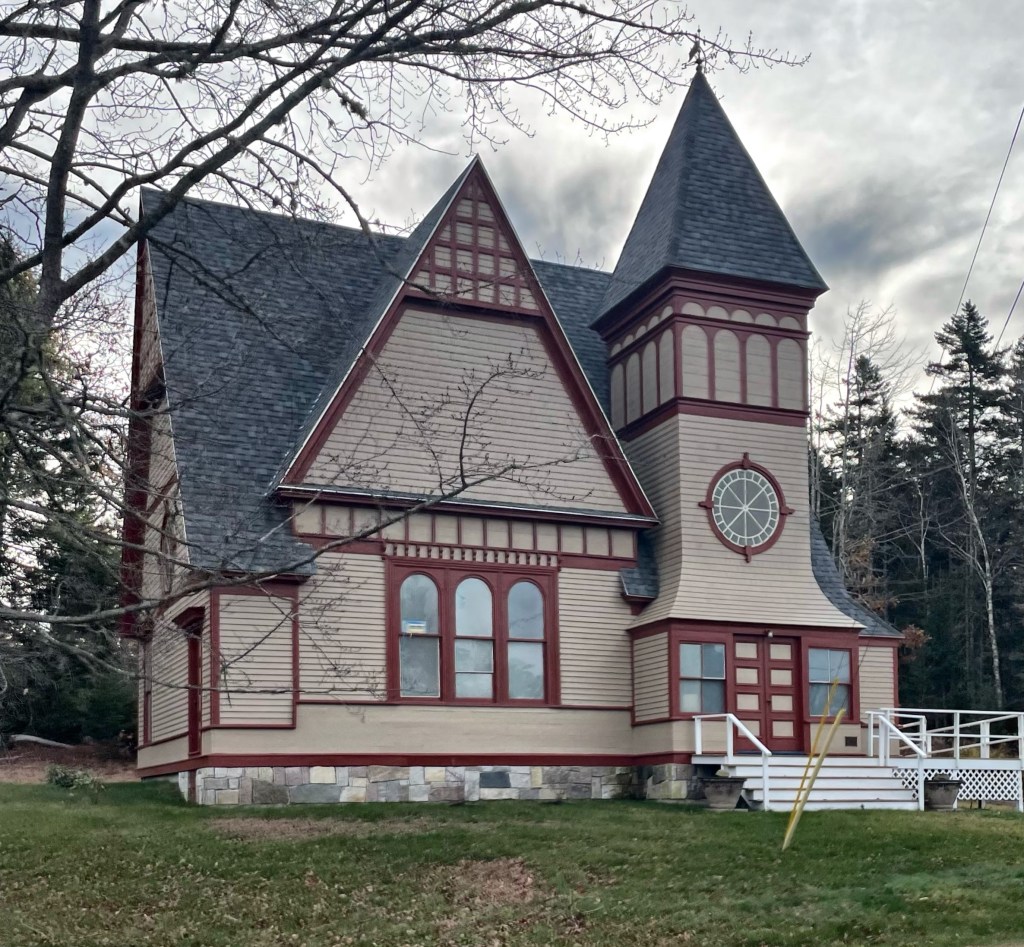
West Gouldsboro Union Church // 1888

In 1888, the West Gouldsboro Union Church Society had enough funds to build this Queen Anne style church, built completely from member donations. By November 1888, the exterior was completed, but so much money was spent on the detailing on the exterior, no funds were available for the exterior painting and interior spaces. In 1891, the new church was finally dedicated. The West Gouldsboro Union Church is a stunning example of a church in the Queen Anne style with varied siding forms, asymmetrical plan, and square tower capped by a pyramidal roof. My favorite part about this building is its historically appropriate paint colors. For a long time, the church was fully painted a bright white, but now its details really shine!

Pendleton House // 1826

Large commercial blocks like this can really transport you back a century or more! The Pendleton House in Blue Hill, Maine was built in 1826 by Jonah and Jeremiah Holt. The brothers were born in Beverly, Massachusetts and their family settled in Blue Hill, likely to work in the shipbuilding industry. Originally called the Brick Block, the building was a storefront for the Holts. In the 1870s, the building had fallen into disrepair, and was seized from its owner, Frederick Holt (Jeremiah’s son), by the Blue Hill Academy, from whom Nathan Pendleton purchased the building. As an 1877 issue of The Ellsworth American stated: “Blue Hill needs a hotel. There have never been so many strangers and visitors. Five hundred men are working in the quarries.” From the massive demand for lodging in town, tied to industry, Pendleton opened the building as a hotel in 1878, possibly adding the mansard roof at that time. The building became known as the Pendleton House for a number of years and was purchased by John M. Snow in 1888, who added porches to the building. Sadly, the porches were removed in the 20th century, but the old Pendleton House remains a fixture in Blue Hill and is home to small businesses with housing above.

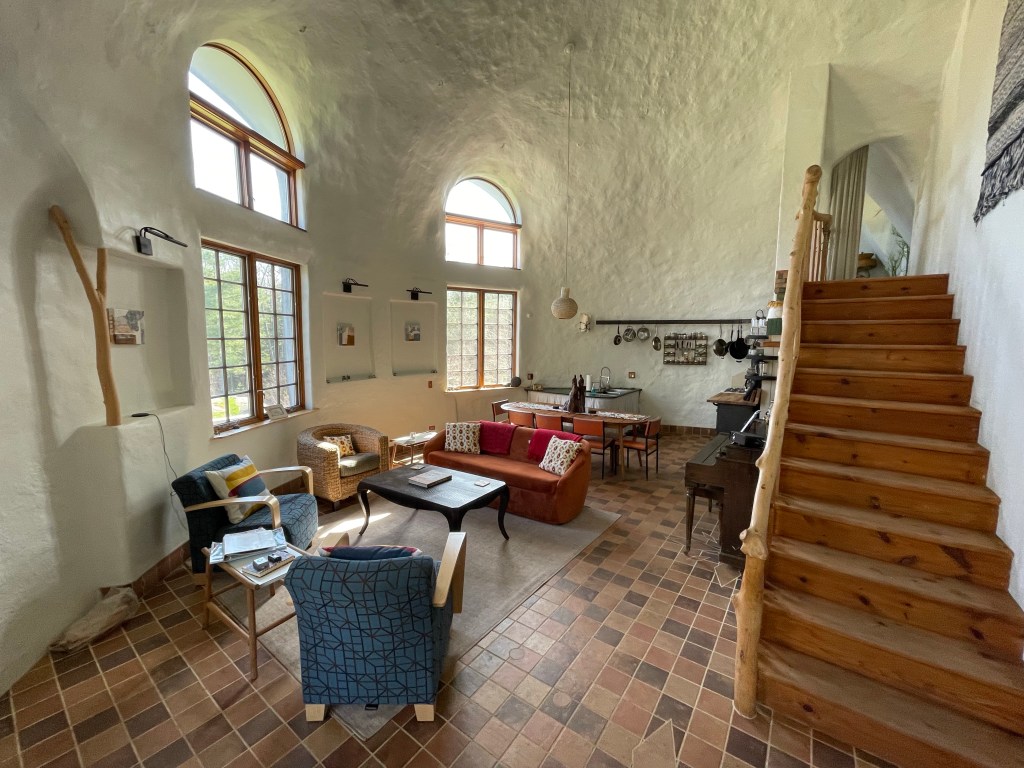
The Dome Home // 2003

This past weekend, I was lucky enough to stay at one of the most unique Airbnb’s in New England, the Dome Home in idyllic Kennebunkport, Maine! The house itself was hand-built in 2003 by trained architect and sculptor Daphne Pulsifer with her husband Daniel Bates, on 43-acres of forest just miles from the iconic Maine beaches. Inside, the house features numerous custom touches designed and built by the original owners, including light fixtures, floor tiling, hand-built oak doors, wall tiling, woodwork — much of it claimed from the property itself. The Dome Home is completely sustainable with solar panels providing all the power needed, making the property completely off-the-grid. The original owners sold the property in 2022 to the new owners who have lovingly updated the spaces, keeping the charm and unique qualities of the Dome. If you are ever in Kennebunkport and are looking for a unique, off-the-grid stay with all of the amenities of modern living, definitely check out the Dome!